 Feb, 14 2026
When you’re prescribed the selegiline transdermal patch (EMSAM) for depression, you might assume it’s safer than older antidepressants because it doesn’t require you to avoid cheese or red wine. That’s true - at the lowest dose, it doesn’t trigger the infamous "cheese effect." But here’s the catch: selegiline transdermal still carries a serious, sometimes deadly risk when mixed with common medications you might not even think twice about.
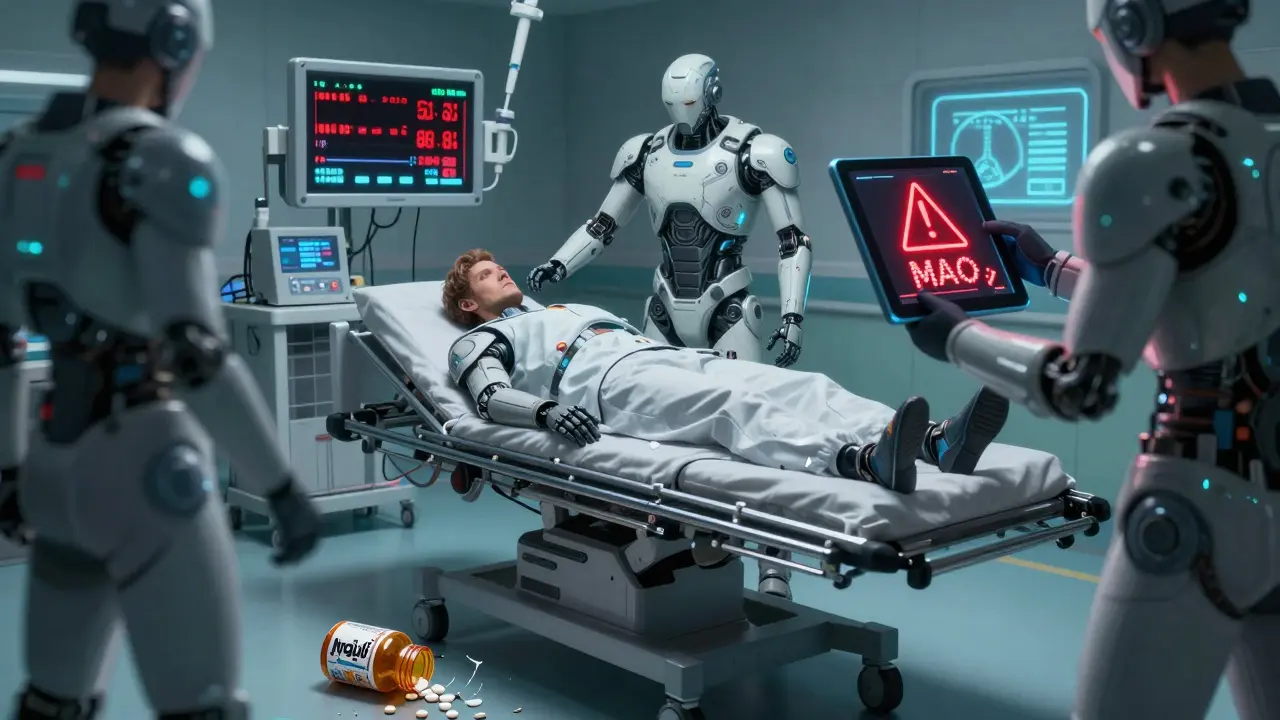
Serotonin syndrome isn’t a rare side effect. It’s a medical emergency. And it’s happening more often than you’d expect, even with patches like EMSAM. The symptoms come on fast: high fever, shaking, confusion, racing heart, muscle stiffness, vomiting, diarrhea. In severe cases, it leads to seizures, organ failure, or death. The problem? Many patients and even some doctors think the patch is "safe" to combine with other antidepressants, painkillers, or cold medicines. That’s a dangerous myth.
How Selegiline Transdermal Works - And Why It’s Still Dangerous
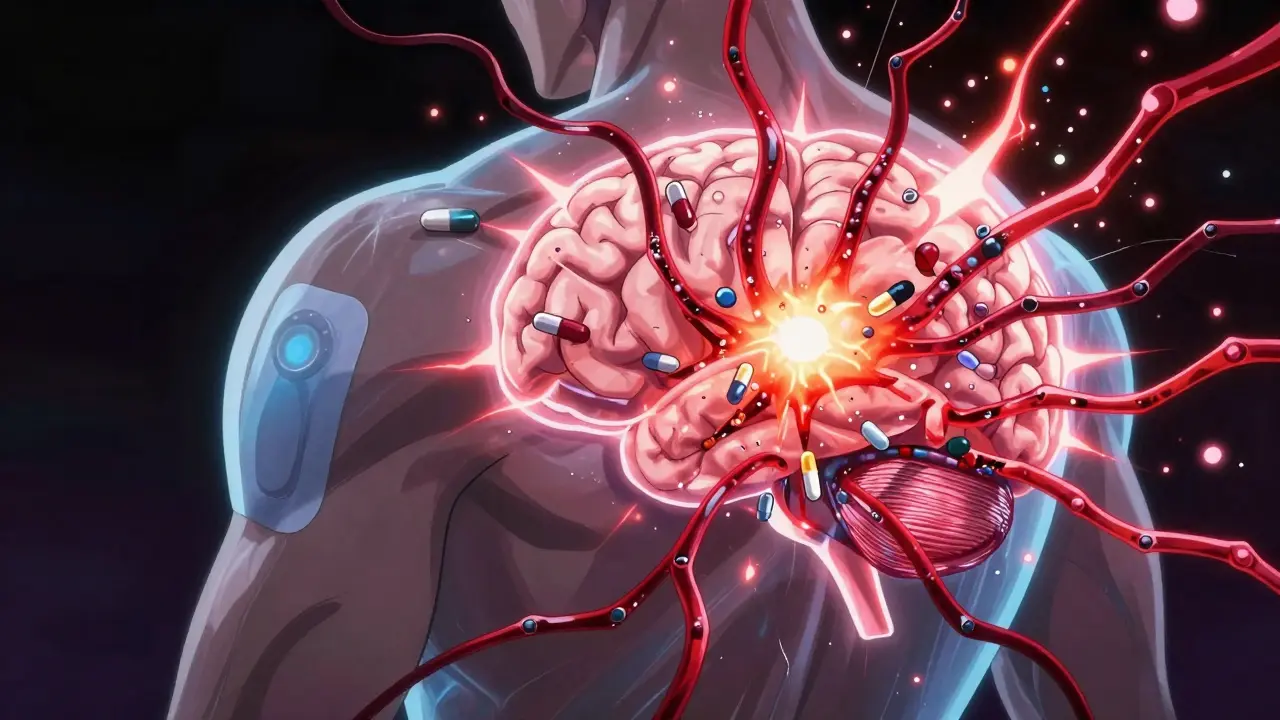
Selegiline transdermal delivers the drug through your skin, bypassing your liver. That’s why it’s different from oral MAOIs. Oral versions get broken down quickly, leaving high levels of metabolites that can cause side effects. The patch gives you about 75% of the drug in your bloodstream - far more than the 4.4% you get from swallowing a pill. But here’s the key: it still inhibits monoamine oxidase A (MAO-A), the enzyme that breaks down serotonin in your brain.
At the 6 mg/day dose, the patch barely touches MAO-A in your gut - that’s why you don’t need to avoid tyramine-rich foods. But in your brain? It’s still blocking serotonin breakdown. That means if you take another drug that increases serotonin - like an SSRI, SNRI, or even a common cough medicine - your brain gets flooded. Serotonin builds up. Too much. Too fast. And that’s when serotonin syndrome hits.
Which Drugs Can Trigger a Deadly Reaction?
The FDA list of dangerous combinations is long. But you don’t need to memorize all of them. Here are the ones you’re most likely to encounter:
- SSRIs - fluoxetine (Prozac), sertraline (Zoloft), escitalopram (Lexapro)
- SNRIs - venlafaxine (Effexor), duloxetine (Cymbalta)
- TCAs - amitriptyline, nortriptyline
- Triptans - sumatriptan (Imitrex), rizatriptan (Maxalt) - used for migraines
- Tramadol - a painkiller many people think is "safe"
- Dextromethorphan - found in Robitussin, NyQuil, DayQuil
- Buspirone - an anti-anxiety drug
- St. John’s Wort - an herbal supplement many take "naturally"
- Linezolid - an antibiotic that also blocks MAO
Even short-term use of these can trigger serotonin syndrome. One 2021 case report described a patient who developed life-threatening symptoms after receiving a single IV dose of ondansetron (Zofran) for nausea - while on a 9 mg/day EMSAM patch. No warning. No screening. Just one dose. That’s all it took.
Washout Periods: The Only Safe Way to Switch
You can’t just stop one drug and start another. You have to wait. And the waiting time isn’t arbitrary - it’s based on how long each drug stays in your system and how long it takes your body to rebuild the MAO enzymes that break down serotonin.
Here’s what you actually need to do:
- If you’re stopping EMSAM to start an SSRI/SNRI: Wait at least 14 days. For fluoxetine (Prozac)? Wait 5 weeks. Fluoxetine sticks around for months.
- If you’re stopping an SSRI/SNRI to start EMSAM: Wait 2 weeks after stopping most drugs. But again - if it’s fluoxetine? Wait 5 weeks.
- If you’re stopping EMSAM to start tramadol, triptans, or dextromethorphan: Still wait 14 days. No exceptions.
Here’s the hard truth: a 2023 study in the American Journal of Psychiatry found that even 14 days might not be enough. In some patients, MAO-A enzyme recovery took up to 28 days. That means the old guidelines are outdated. If you’re switching meds, err on the side of caution - wait 21 days. Or better yet, ask your doctor about genetic testing. A new diagnostic test is coming in 2024 that could tell you how fast your body regenerates MAO enzymes.
Why Most Doctors Get This Wrong
A 2020 study found that only 43% of electronic health record systems properly flag selegiline-transdermal interactions. That means your doctor’s computer might not even warn them when they try to prescribe an SSRI with EMSAM. And patients? Many aren’t told the full risks.
A 2023 survey on a mental health forum showed 68% of EMSAM users said they received "inadequate" warnings about drug interactions. Over 20% ended up with symptoms they later realized were caused by mixing EMSAM with over-the-counter cough syrup. One man took NyQuil for a cold, didn’t think twice, and spent three days in the ICU with serotonin syndrome. He’d been on EMSAM for six months. No one told him dextromethorphan was dangerous.
Even worse? Some clinicians think the 6 mg/day patch is "safe" to combine with other antidepressants. That’s false. At 6 mg, you still have full MAO-A inhibition in the brain. The patch reduces risk - it doesn’t eliminate it.
What You Must Do to Stay Safe
If you’re on EMSAM, here’s your action plan:
- Every time you see a new doctor - even a dentist or ER doctor - tell them you’re on EMSAM. Say it clearly: "I’m on a MAOI patch. I can’t take any serotonergic drugs."
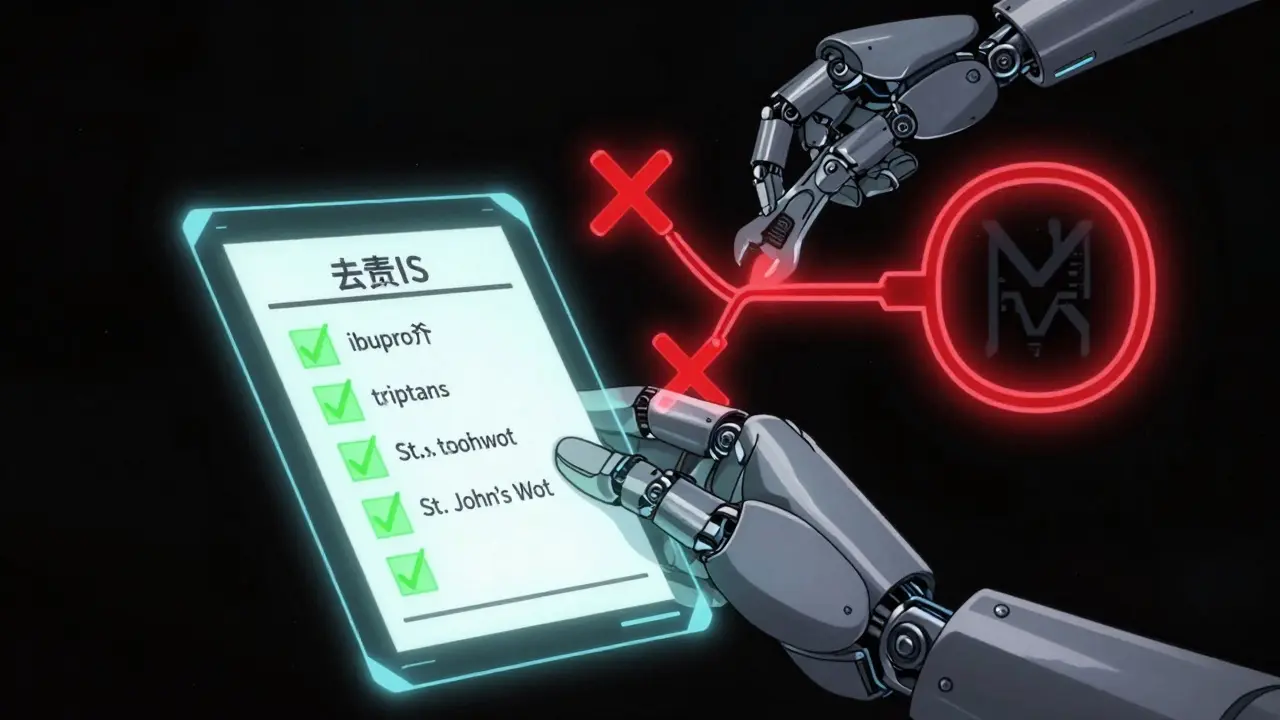
- Check every medication - prescription, OTC, or herbal. Look up every pill, every drop, every capsule. If it affects serotonin, assume it’s dangerous.
- Never self-medicate. No cold medicine. No sleep aids. No supplements. Not even "natural" ones like St. John’s Wort.
- Know the warning signs - fever, confusion, muscle twitching, rapid heartbeat, diarrhea. If you feel any of these after starting a new drug, go to the ER. Don’t wait.
- Keep a list of every drug you take. Update it weekly. Show it to your pharmacist. Ask: "Could this interact with EMSAM?"
The FDA requires EMSAM to come with a Medication Guide. Read it. Twice. Then read it again. If your pharmacy didn’t give you one, ask for it. If they say they don’t have it, call Mylan Pharmaceuticals directly. You have the right to it.
The Bottom Line
Selegiline transdermal is a powerful tool - but it’s not a "safer" MAOI. It’s a different one. The patch reduces dietary risks. It doesn’t reduce drug interaction risks. Serotonin syndrome is real. It’s fast. And it kills. You don’t need to be an expert to avoid it. You just need to be careful.
Every time you consider adding a new medication - even something small - pause. Ask. Verify. Wait. Your life isn’t worth the risk of assuming it’s "fine."
Can I take ibuprofen or acetaminophen with EMSAM?
Yes, ibuprofen and acetaminophen are generally safe with EMSAM. They don’t affect serotonin levels. But always check with your doctor before starting any new pain reliever, especially if you’re taking other medications. Some combination products (like Advil PM or Tylenol Cold) contain dextromethorphan or antihistamines that can be dangerous.
What if I accidentally take an SSRI while on EMSAM?
Stop the SSRI immediately and go to the emergency room. Do not wait for symptoms. Serotonin syndrome can develop within hours. Tell the ER staff you’re on EMSAM and took an SSRI. Bring your medication list. Early treatment with cyproheptadine and supportive care can prevent death.
Is the 6 mg EMSAM patch really safe for drug interactions?
No. The 6 mg patch avoids dietary restrictions because it doesn’t block MAO-A in your gut. But it still blocks MAO-A in your brain. That means it still prevents serotonin breakdown. Combining it with any serotonergic drug - even at this lowest dose - can trigger serotonin syndrome. The FDA and experts agree: no dose of EMSAM is safe to combine with SSRIs, SNRIs, triptans, or similar drugs.
How long does it take for EMSAM to leave my system?
Selegiline itself has a short half-life (about 1.4 hours), but it irreversibly blocks MAO enzymes. Your body must make new enzymes to replace them - which takes 10-14 days. However, newer research suggests full recovery, especially of MAO-A, may take up to 28 days. That’s why waiting 21 days before switching to another antidepressant is now recommended.
Can I use EMSAM with anxiety medications like Xanax or Klonopin?
Benzodiazepines like alprazolam (Xanax) and clonazepam (Klonopin) are not serotonergic, so they don’t directly cause serotonin syndrome. They are generally safe to use with EMSAM. However, always inform your prescriber that you’re on EMSAM - some anxiety meds may have other interactions or affect your mood in ways that require monitoring.
Are there any new tests to check if I’m at higher risk for interactions?
Yes. Mylan Pharmaceuticals is developing a genetic test expected to be submitted to the FDA in Q2 2024. It will identify variants in the MAO gene that affect how quickly your body regenerates MAO enzymes after stopping EMSAM. This could help personalize washout periods and reduce accidental overdoses. Ask your psychiatrist if you’re eligible for early access.
Chiruvella Pardha Krishna
February 15, 2026 AT 14:12The patch doesn’t make you safe-it makes you complacent. That’s the real danger. People think because it’s transdermal, it’s somehow gentler, like a spa treatment for depression. But your brain doesn’t care how the drug gets in. It only cares about the enzyme blockade. MAO-A inhibition is MAO-A inhibition. No matter the delivery system. The body doesn’t do ‘low-risk’ versions. It does ‘deadly’ or ‘not deadly.’ And mixing serotonergic drugs with this? That’s Russian roulette with a loaded chamber and no sight of the bullet.
They say ‘read the guide.’ But how many people actually read the 12-page FDA pamphlet before popping a NyQuil? We live in a world where ‘natural’ means ‘safe’ and ‘patch’ means ‘harmless.’ That’s not medicine. That’s marketing masquerading as science.
And yet, here we are. People dying because they trusted a system that never warned them properly. Not because they were careless. Because the system failed them. Again.
Erica Banatao Darilag
February 17, 2026 AT 04:15I’ve been on EMSAM for 18 months and I’ve never once taken anything without checking with my pharmacist first. I keep a printed list in my wallet. I show it to every provider-even my dentist. I know it sounds obsessive, but I’d rather be that person than the one who ends up in the ICU because they thought ‘just one pill’ wouldn’t matter.
My doctor didn’t even know about the 28-day washout study. I had to send it to them. It’s frustrating, but I’ve learned: if you want to stay alive, you have to be your own advocate. No one else will do it for you.
Kapil Verma
February 17, 2026 AT 06:57Western medicine is a circus. You give someone a patch, tell them ‘no cheese,’ and they think they’re cleared to take every OTC drug under the sun. Meanwhile, in India, we’ve been using ayurvedic herbs for centuries without this overcomplicated fear culture. No one here needs a 28-day washout period because we don’t combine drugs like a chemistry experiment.
Stop treating patients like fragile glass dolls. You don’t need a PhD to know not to mix antidepressants with cough syrup. Common sense still exists. Or at least it did, before America turned every medication into a legal liability.
And don’t get me started on St. John’s Wort. That’s just a fancy weed. If your brain can’t handle a little plant-based serotonin, maybe you shouldn’t be on antidepressants at all.
Michael Page
February 18, 2026 AT 17:19What’s interesting is how the patch’s pharmacokinetics create a false sense of security. The liver bypass reduces tyramine risk, yes-but the brain exposure remains high. That’s why the FDA’s interaction list is so long. The patch isn’t ‘safer.’ It’s ‘differently dangerous.’
And the washout periods? They’re based on outdated pharmacodynamic models. MAO-A regeneration isn’t linear. It’s stochastic. Some people rebuild enzymes in 10 days. Others take 40. We’re treating this like a clock, when it’s more like a lottery.
Genetic testing will change everything. But until then? Assume you’re the outlier. Assume you’re the one who takes 28 days. Assume your life depends on it-because it does.
Josiah Demara
February 18, 2026 AT 21:35Let’s cut the bullshit. This isn’t about ‘risk.’ This is about incompetence. You have a patch that’s been on the market for over a decade. You have a known lethal interaction profile. You have a 2023 study proving the washout period is wrong. And yet, EHRs still don’t flag it? Pharmacies don’t warn people? Doctors don’t know? That’s not negligence. That’s malpractice on an industrial scale.
And the people who say ‘just don’t take NyQuil’? You’re missing the point. The problem isn’t the patient. The problem is a healthcare system that treats drug interactions like a trivia question instead of a life-or-death protocol.
Every single person who died from this? They were failed by the system. Not by their own ignorance. By the system’s arrogance. And now we’re supposed to applaud the ‘awareness’ campaign? No. We should be demanding accountability. Not advice.
Kaye Alcaraz
February 20, 2026 AT 12:24You’re not alone in feeling overwhelmed. I’ve been there. I’ve stared at a list of 15 drugs and thought, ‘How do I even remember this?’
Here’s what helped me: I made a simple chart. One side: drugs I can take. Other side: drugs I never touch. I printed it. Laminated it. Put it in my purse. I even showed it to my sister so she could help me if I ever couldn’t speak.
And when I got a new prescription? I called my pharmacist first. Not my doctor. Not Google. The pharmacist. They’re the ones who see the interactions before the doctor even prescribes.
You’ve got this. One step at a time. You’re doing better than you think.
Sarah Barrett
February 22, 2026 AT 02:19The most terrifying part? It’s not the drugs. It’s the silence. No one talks about this. Not on TV. Not in ads. Not even in medical school, apparently. I’m a nurse, and I didn’t learn about EMSAM’s full interaction profile until I saw a patient crash in the ER. He’d been on it for a year. Took a Zofran for nausea. Three hours later, he was in septic shock from serotonin syndrome.
We didn’t even know he was on EMSAM until we found the patch in his pocket. The ER docs didn’t ask. The primary care doctor didn’t document it. The pharmacy didn’t flag it.
It’s not a patient problem. It’s a system failure. And until we start treating MAOIs like the nuclear option they are-not just ‘another antidepressant’-this will keep happening.
Charlotte Dacre
February 22, 2026 AT 23:41So let me get this straight: we’ve got a patch that’s marketed as ‘safe’ because you don’t have to avoid cheese… but you can’t take a cold medicine? What kind of joke is this? It’s like saying ‘this gun is safe as long as you don’t point it at your head.’
Someone should make a meme: ‘EMSAM: The patch that lets you eat cheese but kills you if you sneeze too hard.’
Esha Pathak
February 23, 2026 AT 08:47My psychiatrist told me to wait 21 days. I waited 28. Just in case. I didn’t want to risk it. I’ve seen what serotonin syndrome looks like. Not from a textbook. From my cousin. She didn’t make it.
So yeah. I’m the person who calls every pharmacy before buying Advil. I’m the one who asks ‘is this serotonergic?’ three times. I’m the weirdo who reads the Medication Guide like it’s scripture.
And you know what? I’m okay with that.
Because I’m still here.
And they’re not.