 Feb, 19 2026
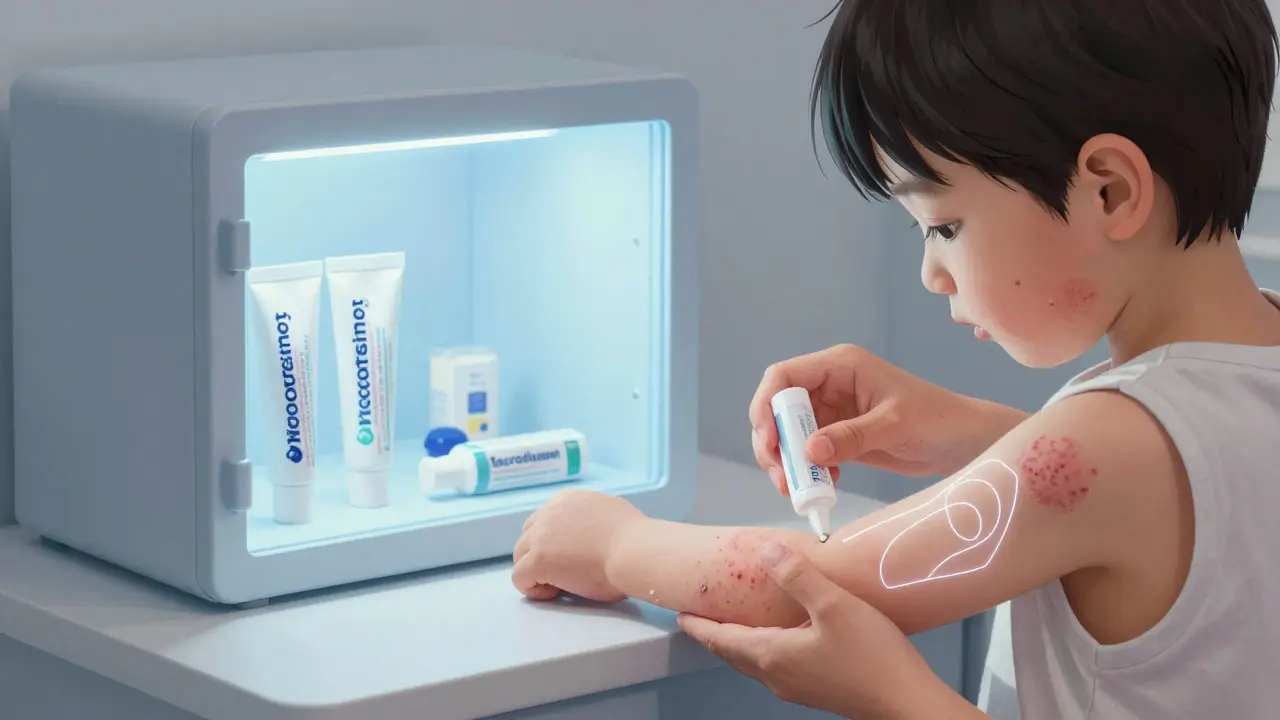
When your child has a rash, eczema flare-up, or minor skin irritation, it’s tempting to reach for the nearest cream or ointment. But what seems like a simple fix can turn dangerous if you don’t know how to use topical medications safely in children. Unlike adults, kids absorb medicine through their skin at much higher rates - sometimes 3 to 5 times more. And for babies under one year? That number jumps even higher. A thick layer of hydrocortisone cream, a dab of lidocaine gel, or even a teething gel might seem harmless. But in the wrong hands - or on the wrong skin - they can cause serious harm.
Why Kids Are More Vulnerable
Children’s skin isn’t just smaller skin. It’s different. Their outer layer, called the stratum corneum, is thinner. Their surface-area-to-body-weight ratio is bigger. That means when you put medicine on their skin, more of it gets into their bloodstream. This is especially true for infants. A 6-month-old baby has skin that absorbs topical drugs far more easily than a 10-year-old. And if the skin is cracked, red, or inflamed - like in eczema - absorption can spike by 10 to 15 times. What’s safe on an adult’s arm might be toxic on a baby’s leg.One of the biggest dangers? Accidental ingestion. Kids don’t understand what’s medicine and what’s lotion. If a tube of lidocaine cream is left on the bathroom counter after you use it, your toddler will find it. The U.S. Consumer Product Safety Commission reports that 78% of pediatric topical medication exposures happen because the product was left within reach after use. In 1994, after 10 children died from swallowing topical anesthetics, the CPSC required child-resistant packaging for products with more than 0.5 mg of lidocaine or dibucaine. But here’s the problem: many over-the-counter creams still don’t have it. A 2022 FDA check found 32% of retail lidocaine products sold without child-safe caps.
Topical Corticosteroids: The Most Common - and Riskiest
Corticosteroid creams are the go-to treatment for eczema, diaper rash, and allergic reactions in kids. But not all are created equal. They’re ranked by strength: Class I (super potent) to Class VII (very mild). The problem? Parents often grab the strongest one they have - maybe from an older child’s prescription - and apply it to a baby.Very potent steroids (Class I-II) like clobetasol or betamethasone carry black box warnings. They can suppress the hypothalamic-pituitary-adrenal (HPA) axis - the body’s natural hormone system - when used too often or too widely. One study of over 12,000 children found that 15.8% of those using strong steroids developed HPA suppression. That’s 7 times higher than with low-potency options. And it doesn’t take much. Applying a thick layer to just 20% of a baby’s body surface can be as powerful as giving them oral prednisone.
Here’s what you need to know:
- Never use Class I or II steroids on children under 2 years unless a doctor specifically says so.
- Low-potency options (Class VI-VII), like 0.5% or 1% hydrocortisone, are safer for short-term use on small areas.
- Use the fingertip unit (FTU) method: squeeze a line of cream from the tube that stretches from the tip of your finger to the first crease. That’s enough to cover two adult hand-sized areas. One FTU = about 0.5 grams. For a 10kg child, don’t use more than 2 grams total per day.
- Never cover the area with plastic wrap or tight clothing unless your doctor tells you to. Occlusion can boost absorption by 300-500% - a recipe for overdose.
Benzocaine and Lidocaine: The Teething Trap
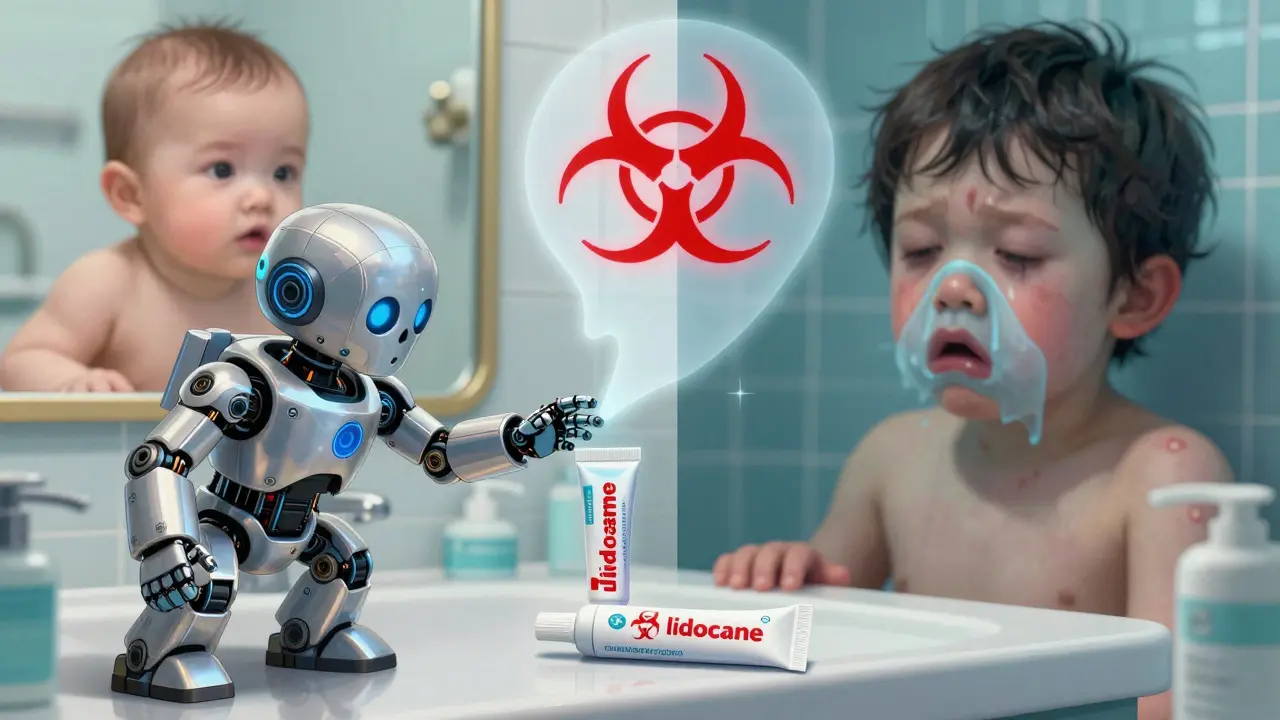
You’ve probably seen ads for teething gels. They promise quick relief for sore gums. But the FDA banned benzocaine in teething products for children under 2 years in 2018. Why? Because it causes methemoglobinemia - a rare but deadly condition where the blood can’t carry oxygen properly. Symptoms appear within minutes: bluish lips, fatigue, trouble breathing. In severe cases, oxygen levels drop to 70-80%. There have been over 400 documented cases since 2006. No child has ever died from a chilled rubber teether. But dozens have from benzocaine.Lidocaine is safer - but still risky. It’s approved for newborns, but only in strict doses: no more than 3 applications in 24 hours, and no more than 1.2 grams total for kids under 3. Damaged skin - like a broken rash or burn - can turn lidocaine absorption from 3% to 60%. At doses over 3mg per kg, it can cause seizures. The World Health Organization recommends avoiding routine lidocaine use in babies under 12 months. Some hospitals use it for needle procedures with careful monitoring. But for home use? Skip it.
Alternatives That Work - Without the Risk
You don’t need strong chemicals to treat common skin issues. For eczema, the American Academy of Pediatrics now recommends topical calcineurin inhibitors - tacrolimus (0.03%) and pimecrolimus - as first-line for facial rashes in children over 3 months. These don’t suppress hormones like steroids do. They reduce inflammation with 72% less systemic absorption. Yes, they have a black box warning about cancer risk. But after 15 years of use, there’s not one confirmed case linking them to cancer in kids.For diaper rash, zinc oxide paste works better than most creams. For dry skin, plain petroleum jelly or fragrance-free moisturizers are safer than medicated lotions. For teething? A chilled (not frozen) teether, a cold washcloth, or gentle gum massage are proven, effective, and risk-free.

Dosing, Storage, and What to Watch For
Dosing isn’t guesswork. It’s science. A “pea-sized” amount means nothing. One FTU = 0.5g. That’s the amount you need for a hand-sized patch. Use a measuring spoon if you’re unsure. Never apply medicine to large areas or for more than 7 days without checking in with your pediatrician.Storage is just as important. Always lock topical meds away after use. Even if you think you’re being careful - if the tube is on the counter while you’re applying it, your child can grab it. The CPSC found 63% of ingestions happen during application. Keep all products in their original child-resistant containers. Don’t transfer them to pill organizers or unmarked jars.
Watch for signs of trouble:
- Unusual sleepiness or drowsiness
- Difficulty breathing or rapid breathing
- Bluish or grayish skin (especially lips or fingertips)
- Seizures or muscle twitching
If you see any of these, call 911 or go to the ER immediately. For benzocaine poisoning, methylene blue is the antidote - but only if given fast.
What’s Changing - and What You Should Expect
The FDA is pushing for better labeling on all topical products. By 2026, new packaging will include exact age limits, maximum body surface area allowed, and duration of use - not just “for external use only.” There’s also new research into nanoparticle delivery systems that cut absorption by 70-80% while keeping the treatment effective. These are in late-stage trials and could be on the market by 2027.But the biggest change? Awareness. Parents aren’t the only ones at fault. A 2023 survey found that 22% of pediatric dermatology visits were due to misuse of prescription creams shared by relatives. Grandparents giving their grandchild “that cream that helped your mom” is still common. The Consumer Healthcare Products Association is now rolling out QR codes on OTC packages that link to real-time safety info - including age restrictions and dosing charts - right from your phone.
Topical medications can be lifesavers. But they’re not candy. They’re medicine. And in kids, the margin between help and harm is razor-thin. The safest choice isn’t always the strongest one. It’s the one that’s used correctly - and only when necessary.
Can I use adult topical creams on my child?
No - not without a doctor’s approval. Adult formulations often contain higher concentrations of active ingredients and may include additives like fragrances or preservatives that can irritate children’s skin. Even low-potency steroid creams meant for adults can be too strong for babies. Always check the label for pediatric use or ask your pediatrician.
How much cream should I apply to my child’s skin?
Use the fingertip unit (FTU) method. Squeeze a line of cream from the tube that reaches from the tip of your index finger to the first crease - that’s about 0.5 grams. One FTU covers an area the size of two adult palms. For a 10kg child, don’t use more than 2 FTUs per day. Applying more doesn’t make it work faster - it just increases the risk of side effects.
Is it safe to use lidocaine cream before vaccinations?
Some pediatric clinics use lidocaine cream before shots, but only under strict guidelines. It must be applied 30-60 minutes before, on a small area (like the thigh), and never covered with plastic. For infants under 12 months, the WHO recommends avoiding it unless necessary. Always ask your provider if it’s appropriate for your child - and never use it at home without clear instructions.
What should I do if my child swallows topical cream?
Call Poison Control immediately at 1-800-222-1222 (U.S.) or your local emergency number. Do not wait for symptoms. If the product contains lidocaine, dibucaine, or benzocaine, seek emergency care even if your child seems fine. Symptoms like drowsiness, blue lips, or trouble breathing can appear within minutes. Keep the product container handy - the ingredients list will help responders.
Are natural or herbal topical treatments safer for kids?
Not necessarily. Many natural creams contain essential oils, plant extracts, or unregulated ingredients that can cause allergic reactions or skin burns. Some herbal products have been found to contain hidden steroids or heavy metals. Always check with your pediatrician before using any non-pharmaceutical product on your child’s skin - even if it’s labeled "natural" or "organic."
Maddi Barnes
February 20, 2026 AT 05:40Taylor Mead
February 22, 2026 AT 00:02Michaela Jorstad
February 22, 2026 AT 12:19Greg Scott
February 24, 2026 AT 03:49Jayanta Boruah
February 24, 2026 AT 08:01Scott Dunne
February 25, 2026 AT 17:35Jonathan Rutter
February 26, 2026 AT 15:45Jana Eiffel
February 27, 2026 AT 07:24aine power
February 27, 2026 AT 13:06Robin bremer
March 1, 2026 AT 02:45Jeremy Williams
March 3, 2026 AT 00:45Ashley Paashuis
March 3, 2026 AT 01:26Amrit N
March 3, 2026 AT 23:39