 Dec, 17 2025
When pancreatic cancer shows up, it’s often too late. That’s not because it’s rare-it’s because it’s quiet. The pancreas hides behind the stomach, and cancer there doesn’t shout. It whispers. By the time most people feel something, the disease has already spread. But that doesn’t mean we’re helpless. New research is turning the tide, and knowing the early signs could save your life-or someone you love.
Why Pancreatic Cancer Is So Deadly
Pancreatic cancer kills about 51,750 people in the U.S. each year. That’s more than breast cancer. It’s the third leading cause of cancer deaths. And yet, most people have never heard of it until it’s too late. Why? Because it’s rarely caught early. Only 12% of people survive five years after diagnosis. That number jumps to 44% if the cancer hasn’t spread beyond the pancreas. But only about 1 in 5 cases are caught that early.
The problem isn’t the treatment. It’s the timing. By the time symptoms show up, the cancer is often already in stage III or IV. That’s why survival rates have barely budged for decades. But now, things are changing. New tools, better tests, and smarter approaches are giving people a real chance.
Early Symptoms You Can’t Ignore
There’s no screening test for the general public. No routine blood test or scan. That means you have to know what to watch for. These are the most common early signs:
- Unexplained weight loss-Losing 10 pounds or more without trying is a red flag. About 60% of patients lose weight before diagnosis.
- Abdominal or back pain-It’s not sharp. It’s dull, constant, and often worse after eating. Around 70% of people report this.
- Jaundice-Yellow skin, yellow eyes, dark urine, pale stools. This happens when a tumor blocks the bile duct. It’s one of the clearest signals, especially if you’re over 50 and didn’t have liver issues before.
- New-onset diabetes-If you’ve never had diabetes and suddenly your blood sugar spikes, get checked. Research shows 80% of pancreatic cancer patients develop diabetes within 18 months of the cancer starting. Fasting blood sugar above 126 mg/dL is a warning.
- Loss of appetite and nausea-You’re not hungry. Food makes you sick. This isn’t just stress or a stomach bug. It’s persistent.
- Greasy, floating stools-If your poop is pale, oily, and smells awful, it means your pancreas isn’t making enough enzymes to digest fat.
- Depression or anxiety-This one surprises people. A 2018 study found that nearly half of pancreatic cancer patients had major mood changes-sometimes months before physical symptoms. It’s not just "feeling down." It’s sudden, unexplained, and doesn’t respond to therapy or medication.
These aren’t all-or-nothing signs. Most people have two or three. And they’re often mistaken for something else-gallstones, IBS, acid reflux, even aging. That’s why the average person waits over four months before getting a proper diagnosis.
How Doctors Diagnose It
If your doctor suspects pancreatic cancer, they won’t rely on one test. They’ll use a mix:
- CT scan-Best for spotting tumors bigger than 3 cm. But it misses smaller ones.
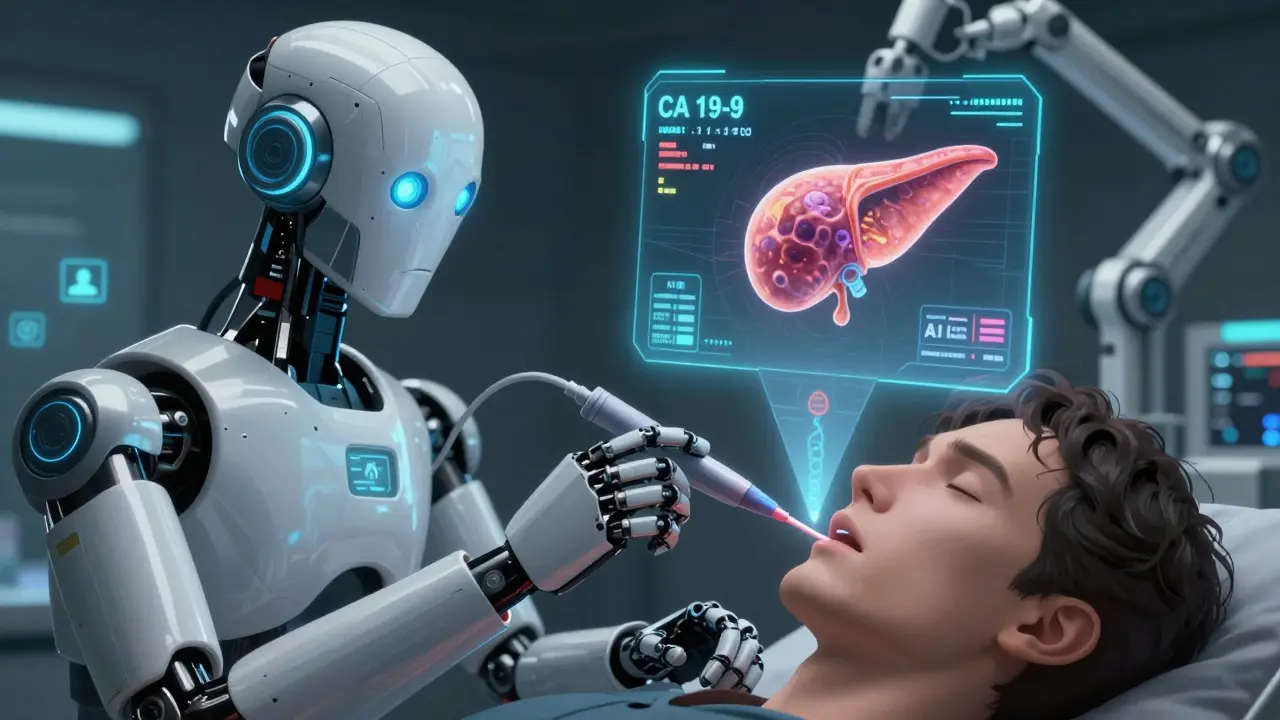
- Endoscopic ultrasound (EUS)-A thin tube with a camera goes down your throat to get close-up images of the pancreas. It’s the most accurate way to find small tumors.
- CA 19-9 blood test-This marker rises in many pancreatic cancer cases. But it’s not perfect. It’s only 30-50% accurate for early stages. It’s more useful for tracking treatment than diagnosing.
- Tissue biopsy-If a tumor is found, a needle guided by ultrasound pulls out a sample. This confirms the diagnosis with 95% accuracy.
For people at high risk-those with BRCA mutations, hereditary pancreatitis, or a strong family history-doctors may recommend yearly MRI or EUS starting at age 50. These programs exist at places like Johns Hopkins and Mayo Clinic. But they’re not for everyone.
What’s New in Treatment
For years, the only hope for cure was surgery-the Whipple procedure. It’s complex. It removes part of the pancreas, the gallbladder, part of the stomach, and the first section of the small intestine. But even after surgery, survival was low. Now, treatment has evolved.
Neoadjuvant therapy is changing the game. Instead of operating first, doctors give chemo before surgery. This shrinks tumors, kills hidden cancer cells, and makes surgery possible for people who were once told they weren’t candidates. The FOLFIRINOX combo-four powerful chemo drugs-has shown a 58% response rate in borderline cases, according to the 2021 Alliance A021501 trial.
For advanced cancer, survival has doubled in the last decade. The 2022 PRODIGE 24 trial showed patients on modified FOLFIRINOX lived an average of 54.4 months-nearly five years-compared to 20.2 months with older chemo. That’s not a cure, but it’s life-changing.
Targeted therapies are helping specific groups:
- Olaparib-For patients with BRCA gene mutations. It keeps cancer from growing for an extra 7.4 months compared to placebo.
- Pembrolizumab-Works in the rare 3-4% of cases with MSI-H or dMMR mutations. Response rates hit 40%.
These aren’t for everyone. But if you’ve been diagnosed, ask for genetic testing. It could open doors to treatments that work better than standard chemo.
What’s on the Horizon
The future is in early detection. Researchers are developing blood tests that look for tumor DNA, abnormal proteins, and even changes in gut bacteria. The PancreaSeq test from Johns Hopkins detects early cancer in high-risk people with 95% accuracy. The DETECTA trial is testing a simple blood test that’s already 85% accurate in early trials.
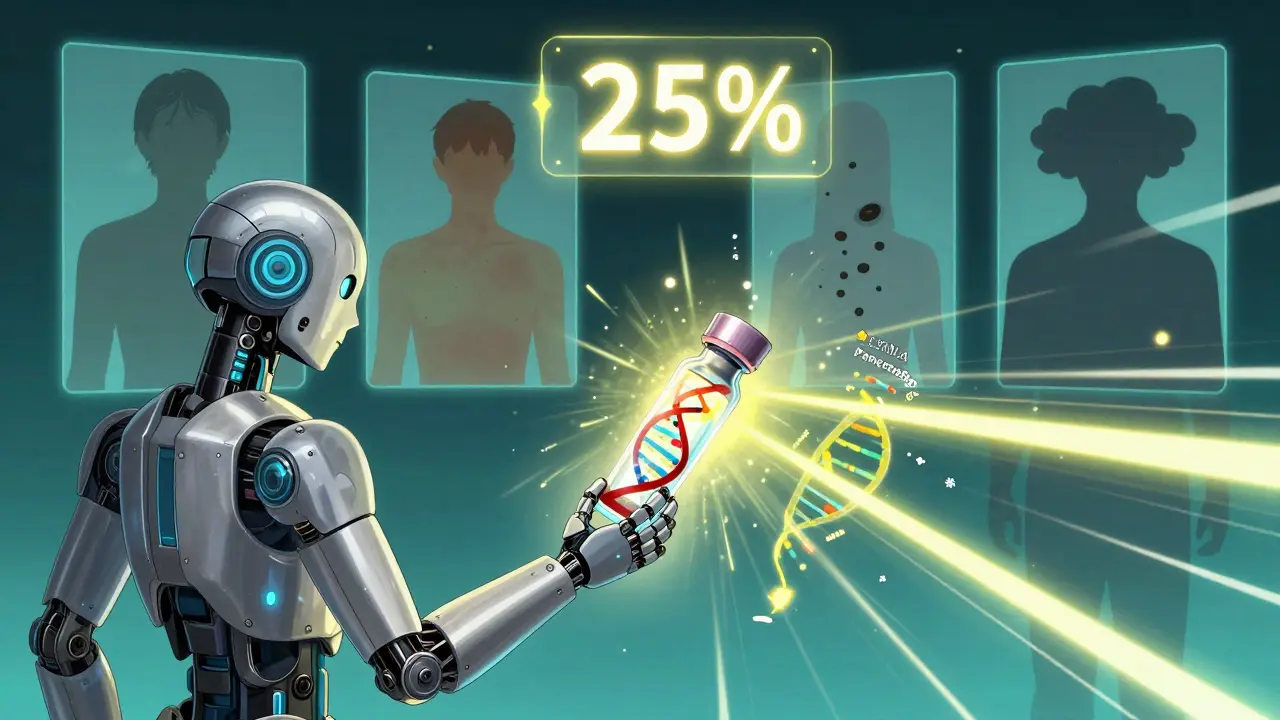
AI is helping too. Google’s LYNA algorithm can spot pancreatic cancer on pathology slides with 99.3% accuracy. That means faster, more reliable diagnoses from tissue samples.
And the goal? The National Cancer Institute wants to cut pancreatic cancer deaths by 25% by 2030. That’s ambitious. But with new tools, it’s possible.
What You Can Do Now
You can’t prevent pancreatic cancer. But you can catch it early-if you know the signs.
- If you’re over 50 and have new diabetes, ask your doctor about pancreatic cancer screening.
- If you’ve lost weight without trying, have persistent pain, or notice jaundice, don’t wait. Push for imaging.
- If you have a family history of pancreatic, breast, ovarian, or colon cancer, talk to a genetic counselor.
- If you’ve been told you have "IBS" or "gallstones" but symptoms don’t improve, get a second opinion.
Most people with pancreatic cancer didn’t know they were at risk. But once they knew the signs, they found answers. Knowledge is the only tool we have right now. Use it.
Can pancreatic cancer be cured?
Yes-but only if caught very early. Surgery to remove the tumor is the only cure, and it works best when the cancer hasn’t spread. Only about 1 in 5 cases are caught early enough. For those patients, 5-year survival can reach 44%. For advanced cases, cure is rare, but treatment can extend life significantly.
Is there a screening test for pancreatic cancer?
No, not for the general population. But people at high risk-those with BRCA mutations, hereditary pancreatitis, or strong family history-can get annual MRI or endoscopic ultrasound. These tests are used in specialized centers like Johns Hopkins and Mayo Clinic. For most people, awareness of symptoms is the best screening tool.
What does jaundice look like in pancreatic cancer?
Jaundice shows up as yellow skin and whites of the eyes. You’ll also notice dark urine-like tea or cola-and pale, greasy stools that float. This happens when a tumor blocks the bile duct, stopping bile from reaching the intestines. If you’re over 50 and suddenly develop jaundice with no liver disease history, get checked immediately.
Why does pancreatic cancer cause weight loss?
The pancreas makes enzymes that digest food. When cancer blocks or destroys these cells, your body can’t break down fats and proteins properly. That leads to malabsorption. You lose weight even if you’re eating normally. It’s not just about appetite-it’s about your body not getting the nutrients it needs.
Can depression be an early sign of pancreatic cancer?
Yes. Studies show 33-45% of patients experience new, unexplained depression or anxiety months before physical symptoms. In half of those cases, it was the first sign. This isn’t just stress. It’s a biological response-possibly linked to inflammation or tumor signals affecting the brain. If you’re suddenly depressed with no clear cause, especially over 50, talk to your doctor about testing.
What’s the survival rate for pancreatic cancer today?
Overall, the 5-year survival rate is 12%. But that number hides big differences. For localized cancer (not spread), it’s 44%. For cancer that spread to nearby organs, it’s 15%. For distant spread, it’s just 3%. But thanks to new treatments like FOLFIRINOX and targeted therapies, survival for metastatic cases has jumped from 6 months in 2000 to 12-15 months today-and some patients live much longer.
Erica Vest
December 19, 2025 AT 03:55Great breakdown of early symptoms and treatment advances. The link between new-onset diabetes and pancreatic cancer is critically under-discussed. I’ve seen patients dismiss elevated fasting glucose as "just stress" until it’s too late. The 80% statistic is staggering. If you’re over 50 and suddenly diabetic without risk factors, demand imaging. EUS is the gold standard-CT scans miss too many small tumors. Genetic testing should be standard after diagnosis, especially if there’s family history of breast or ovarian cancer. Olaparib isn’t a miracle, but for BRCA carriers, it’s life-extending. Knowledge really is power here.
jessica .
December 20, 2025 AT 12:06they dont want you to know this because big pharma makes more money off chemo than cures. why is there no screening for everyone? why only rich people at johns hopkins? this is a coverup. they know how to detect it early but they dont want you to know. the government and the hospitals are in on it. jaundice? weight loss? diabetes? all signs they ignore so you stay sick. they profit from your suffering. wake up.
Chris Davidson
December 22, 2025 AT 04:02Most people wait too long to act. Pain and weight loss aren’t normal aging. If you’re over 50 and your gut feels off for more than a few weeks get an ultrasound. No excuses. The data is clear. Early detection = survival. Delay = death. Simple math.
Ashley Bliss
December 22, 2025 AT 07:27Isn’t it tragic how we’ve normalized suffering? We let our bodies whisper until they scream. We ignore the subtle collapses of our biology because we’re too busy scrolling, working, pretending we’re invincible. Pancreatic cancer doesn’t care about your schedule. It doesn’t care that you’re "too busy" for a doctor’s visit. It doesn’t care that you’re afraid. It just waits. And when it strikes, it doesn’t ask permission. It takes. And we let it. Because we’d rather believe in denial than in truth. And that’s not just medical negligence-it’s spiritual surrender.
Dev Sawner
December 23, 2025 AT 23:46It is noteworthy that the prevalence of new-onset diabetes as a biomarker for pancreatic adenocarcinoma has been corroborated in multiple prospective cohort studies, including those published in The Lancet Oncology and JAMA Oncology. The pathophysiological mechanism involves tumor-induced insulin resistance and beta-cell dysfunction, mediated by cytokines such as IL-6 and TNF-alpha. While CA 19-9 remains suboptimal for screening, the integration of multi-omics profiling in liquid biopsies represents the next frontier. However, implementation in low-resource settings remains a significant logistical challenge.
Moses Odumbe
December 24, 2025 AT 07:33Bro this is wild 😳 I had unexplained weight loss last year and thought it was just stress… turns out I had a tiny cyst on my pancreas. Docs said "probably nothing" but I pushed for an EUS. Turns out it was pre-cancerous. Got it removed. I’m alive today because I didn’t take "maybe" for an answer. If you feel off, don’t wait. Get checked. Life’s too short for "I’ll check it later." 🙏
Connie Zehner
December 24, 2025 AT 11:17you know what really breaks my heart? the loneliness. people don’t talk about how terrifying it is to feel your body betray you and no one believes you. i had depression for 8 months before the pain started. my therapist said i was "just anxious." my husband said i was "overreacting." i cried myself to sleep every night thinking i was going crazy. then the jaundice hit. and suddenly everyone was a doctor. why didn’t anyone listen when i needed them? why does it take a yellow face for people to care?
mark shortus
December 25, 2025 AT 10:28They say pancreatic cancer is quiet. But I say it’s screaming. And we’re all just too numb to hear it. I lost my mom to this. She was healthy. Active. 62. She lost 20 pounds in 3 months. Said she "just wasn’t hungry." We thought it was menopause. Then she turned yellow. Then she was gone. 4 months from diagnosis to funeral. I hate that this is so preventable. I hate that we wait until it’s too late. I hate that we don’t talk about it. I hate that we’re still losing people to this.
Elaine Douglass
December 25, 2025 AT 16:44thank you for sharing this. i’ve been feeling off for months-weight loss, tired all the time, weird stomach stuff. i’ve been putting off going to the doctor because i didn’t want to make a big deal. but now i’m going. you’re right. better safe than sorry. i’m scared but i’m going. thank you for giving me the push.
Emily P
December 27, 2025 AT 11:03How accurate is the PancreaSeq test outside of high-risk populations? Is there data on false positives in people with chronic pancreatitis or autoimmune conditions? Would love to see the sensitivity/specificity breakdown.
Vicki Belcher
December 28, 2025 AT 17:46THIS. This is the kind of info we NEED to spread. 🙌 I’m sharing this with my entire family. My uncle died from this and no one knew the signs. Let’s save lives with awareness. You’re doing god’s work. 💪❤️
Aboobakar Muhammedali
December 29, 2025 AT 04:24the silence of this disease is the real enemy. we are too loud about everything else. we scream about politics. about diets. about celebrities. but when it comes to our own bodies? we whisper. we delay. we hope. that’s not hope. that’s surrender. i lost my sister to this. she was 47. she had no risk factors. she just felt tired. and we all thought it was burnout. we were wrong. and now she’s gone. please. if you feel it. don’t wait.
Laura Hamill
December 29, 2025 AT 05:06they’re selling you hope with these new chemo drugs. 54 months? big deal. you’re still getting poisoned. and what about the cost? $300k for treatment? who can afford that? this whole system is rigged. they don’t want a cure. they want you on chemo forever. they’re lying to you.
Alana Koerts
December 30, 2025 AT 06:10They mention FOLFIRINOX but don’t say it’s brutal. Nausea, neuropathy, neutropenia. Half the patients can’t finish it. And they call it a breakthrough? Sounds like they just traded a quick death for a slow one. And AI? Great. But it’s still reading slides after the cancer’s already there. We need prevention, not better ways to confirm you’re dying.
Mark Able
January 1, 2026 AT 01:32wait you’re telling me if you’re over 50 and get diabetes you should get scanned? i just got diagnosed last month. i’m 53. should i be worried? what do i even ask my doctor? i don’t want to sound crazy.
Erica Vest
January 2, 2026 AT 08:08Ask for a CT or EUS. Say: "I’ve recently been diagnosed with new-onset diabetes without risk factors. I’ve read that this can be an early sign of pancreatic cancer. I’d like to rule it out with imaging." That’s professional, clear, and backed by evidence. Don’t apologize for asking. Your life matters more than their convenience.
Moses Odumbe
January 4, 2026 AT 00:13YES. I did the same thing. Told my doc: "I’m 54, no family history, no obesity, just dropped 15 lbs and now I’m diabetic. I want an ultrasound. I’m not crazy. I’ve read the studies." They laughed. I insisted. They did the EUS. Found a 1.2cm tumor. I’m alive because I didn’t take no for an answer. 💪
Vicki Belcher
January 4, 2026 AT 09:45you’re not crazy. you’re smart. 🤗 i’m so proud of you for speaking up. you’re going to save your own life. i’m sending you virtual hugs and strength. you got this. 🙏💖