 Dec, 15 2025
Medication-Induced Dysosmia Risk Checker
Check Your Medication Risk
Select medications you're currently taking. This tool identifies those most likely to cause smell and taste distortion (dysosmia).
Risk Assessment Results
Imagine biting into your favorite apple, only for it to taste like burnt rubber. Or walking into your kitchen and smelling cigarette smoke-when no one is smoking. These aren’t hallucinations. They’re real, documented side effects of common medications. This condition is called dysosmia: a distortion in how you perceive smells and tastes. It’s not rare. It’s not imaginary. And it’s often missed by doctors.
What Exactly Is Dysosmia?
Dysosmia means your nose or tongue is sending wrong signals to your brain. A smell you’ve known all your life-coffee, bread, fresh grass-suddenly smells like rotten eggs, metal, or chemicals. Sometimes, you smell something that isn’t there at all. This isn’t just annoying. It can make you lose your appetite, drop weight, or even miss a gas leak because you can’t smell it anymore. It’s not the same as losing your sense of smell entirely (that’s anosmia). With dysosmia, you still smell things-but they’re twisted. The most common form is parosmia, where familiar smells turn foul. Studies show up to 30% of people with this condition lose significant weight because food becomes unpalatable.Which Medications Cause Smell Changes?
Over 500 medications are linked to dysosmia. Some are common, and you might be taking them right now. The biggest culprits fall into four categories:- Antibiotics: Azithromycin, clarithromycin, doxycycline, levofloxacin, and moxifloxacin. These are among the most frequent offenders. A Japanese study found people taking levofloxacin were 2.5 times more likely to develop smell distortion than those not on antibiotics.
- Heart medications: Midodrine, used for low blood pressure, has been tied to metallic tastes and phantom smells.
- Neurological drugs: Carbamazepine (for seizures), baclofen (for muscle spasms), and even some antidepressants can mess with your smell pathways.
- Other drugs: Carbimazole (for thyroid issues), tolbutamide (for diabetes), and even IV medications like lidocaine or iron infusions can trigger immediate taste changes-often metallic-within minutes.
Why Is This So Often Overlooked?
Doctors rarely ask about smell or taste changes during routine checkups. A 2022 survey found only 37% of primary care doctors routinely ask patients if their sense of smell has changed since starting a new drug. But if you’re on one of those high-risk meds and notice food tasting like garbage, or you keep smelling smoke, it’s likely the medication-not a brain tumor or Parkinson’s. The problem? Symptoms often appear 7 to 14 days after starting the drug. That’s long enough for people to assume it’s a cold, sinus infection, or aging. Many patients get referred for MRIs or neurology workups-expensive, stressful tests-when all they needed was a simple medication review. Dr. Devyani Lal, an otolaryngologist at the University of Arizona, says: “Dysosmia from medications is vastly underdiagnosed because clinicians rarely ask about smell changes during routine medication reviews.”
How Long Does It Last?
The good news? Most cases get better. According to a 1995 study still widely cited today, 78% of people see improvement within three months of stopping the medication. But 22% don’t recover on their own-and that’s where things get tricky. Some people report symptoms lasting over a year. One Reddit user described a 22-month struggle after taking azithromycin: “I couldn’t eat anything without it tasting like rotten eggs. I lost 15% of my body weight in four months.” The duration depends on the drug, your age, and how long you were on it. Antibiotics often clear up faster than antiepileptics. But even after stopping, the damage to smell receptors can linger. Your body needs time to regenerate those cells-and sometimes, it doesn’t fully recover.What Can You Do?
If you suspect a medication is changing your smell or taste:- Don’t stop the drug on your own. Some of these meds are essential. Talk to your doctor first.
- Track your symptoms. When did they start? Did they begin within two weeks of starting the drug? Write down what smells are distorted. Is it all food? Just meat? Do you smell smoke when no one else does?
- Ask about alternatives. For example, if you’re on levofloxacin for a sinus infection, your doctor might switch you to a different antibiotic that’s less likely to cause smell issues.
- Request a smell test. The University of Pennsylvania Smell Identification Test (UPSIT) is a 40-item test that can confirm if your smell function is impaired. It’s simple, non-invasive, and takes about 15 minutes.
What’s Being Done About It?
The medical community is starting to wake up. In 2023, the Global Chemosensory Research Consortium launched a registry tracking over 1,200 patients with medication-induced smell disorders across 14 countries. The European Medicines Agency plans to require smell and taste assessments in all new clinical trials for antibiotics and heart drugs by 2024. Pharmaceutical companies are taking notice too. AstraZeneca filed a patent in 2022 for a treatment specifically targeting drug-induced olfactory dysfunction. Clinical trials are now testing drugs that modulate TRPM5 channels-tiny proteins in taste and smell cells that go haywire with certain medications. The NIH also allocated $4.7 million in 2023 for research into this exact problem. That’s a sign this isn’t just a nuisance-it’s a serious public health issue.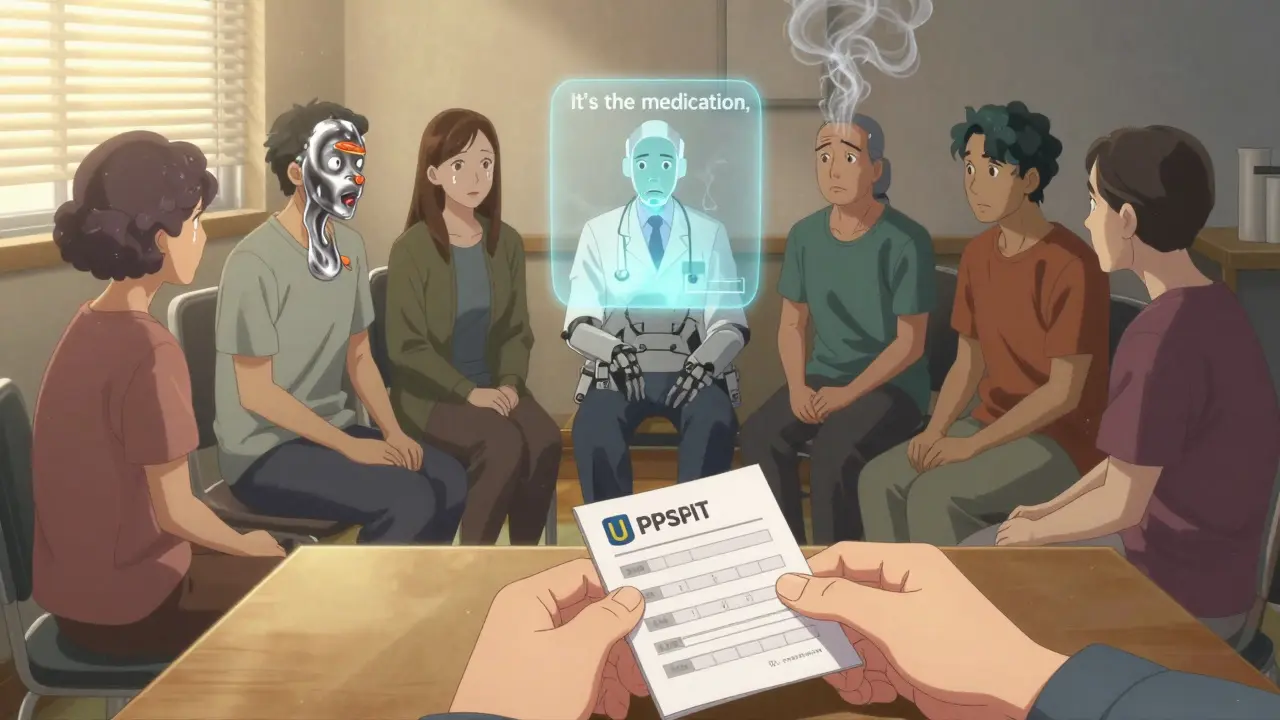
When to Worry: Red Flags
Most dysosmia is harmless and temporary. But sometimes, it’s a sign of something more serious. See a doctor immediately if:- Your smell changes come with headaches, vision problems, or weakness
- You lose your sense of smell completely and it doesn’t improve after a few weeks
- You have a history of neurological disease or recent head trauma
- You can’t smell smoke, gas, or spoiled food-this is a safety risk
Support and Resources
You’re not alone. The nonprofit organization Fifth Sense runs monthly virtual support groups for people with medication-induced smell disorders. Over 150 people join each session to share coping strategies-like using strong spices to mask bad tastes, or switching to cold foods that smell less intense. The Smell and Taste Treatment and Research Foundation also offers a directory of specialists who understand this condition. Most general ENTs don’t know how to help-but there are experts out there.Final Thoughts
Dysosmia isn’t just a weird side effect. It’s a hidden crisis. People lose weight. They withdraw socially. They stop cooking. They feel like they’re going crazy. And no one listens. If you’re on antibiotics, heart meds, or neurological drugs and your world smells wrong, speak up. Keep a symptom journal. Ask your doctor: “Could this be the medication?” Your sense of smell is more than a luxury. It’s tied to safety, nutrition, memory, and joy. When it changes, your life changes. And you deserve to understand why-and how to fix it.Can medications permanently damage my sense of smell?
In most cases, no. About 78% of people recover their normal sense of smell within three months after stopping the medication. But in about 22% of cases, the damage to smell receptors lasts longer-or doesn’t fully reverse. This is more common with long-term use of drugs like carbamazepine or repeated courses of fluoroquinolone antibiotics. Recovery depends on your age, overall health, and how quickly you address the issue.
Is dysosmia the same as anosmia?
No. Anosmia means you can’t smell anything at all. Dysosmia means you can smell, but the smells are distorted. For example, coffee might smell like burning plastic. Parosmia, a type of dysosmia, makes familiar smells turn foul. One is a loss of function; the other is a malfunction.
Why do antibiotics cause smell changes?
Antibiotics like levofloxacin and doxycycline interfere with zinc and magnesium in your nasal lining. These minerals are essential for the proper function of smell receptors. When they’re depleted, the receptors can’t reset after detecting an odor-so your brain keeps getting false signals. This leads to persistent bad smells or metallic tastes. Fluoroquinolones are especially likely to do this.
Should I take zinc supplements to fix my smell?
Not without talking to your doctor. While zinc deficiency can cause smell loss, most cases of medication-induced dysosmia aren’t caused by low zinc. Taking extra zinc won’t help-and it can cause copper deficiency, leading to anemia or nerve damage. Studies show no consistent benefit for zinc in this context. Don’t self-treat.
How long after stopping a drug should I expect improvement?
Most people notice improvement within 2 to 4 weeks after stopping the medication. Full recovery can take up to 3 months. If you don’t see any change after 8 weeks, consult a specialist. Persistent symptoms beyond 6 months are uncommon but possible, especially with long-term use of neurologic drugs.
Can I still take my medication if I have dysosmia?
It depends. If the medication is critical-like an antibiotic for a life-threatening infection or a heart drug for blood pressure control-you may need to continue it. But your doctor can often switch you to a different drug in the same class that’s less likely to cause smell changes. For example, switching from levofloxacin to amoxicillin may resolve the issue without compromising treatment.
Are there any tests to confirm medication-induced dysosmia?
Yes. The University of Pennsylvania Smell Identification Test (UPSIT) is the gold standard. It’s a scratch-and-sniff test with 40 different odors. It’s not perfect, but it can confirm if your smell function is impaired and help rule out neurological causes. It’s quick, non-invasive, and covered by many insurance plans when ordered by a specialist.
Why don’t drug labels warn about smell changes?
Because they’re not required to. Smell and taste disturbances aren’t classified as serious side effects in most regulatory systems, even though they severely impact quality of life. The FDA only started encouraging reporting of these symptoms in 2021. Until mandatory reporting is enforced, many cases go unrecorded-so manufacturers don’t see enough data to add warnings.
Benjamin Glover
December 16, 2025 AT 03:48This is why Brits don’t trust American meds. Overprescribed, under-researched, and now we’re paying with our noses. Pathetic.
And don’t get me started on those ‘zinc supplements’-pure quackery.
John Samuel
December 16, 2025 AT 05:20Wow. This is one of the most important pieces I’ve read all year. 🌍✨
Smell isn’t just about coffee or roses-it’s memory. It’s safety. It’s the difference between a meal and a trauma.
Thank you for shining a light on this invisible crisis. So many people feel alone in this-and now they know: they’re not.
Let’s push for mandatory labeling. Let’s fund the research. Let’s make this a priority.
Every nose matters.
RONALD Randolph
December 18, 2025 AT 03:04Incorrect. The study cited is from 1995. That’s outdated. Modern pharmacokinetics have evolved. Also, the FDA has never approved any ‘smell test’ as diagnostic. UPSIT is a research tool-not clinical. And you say ‘78% recover’-but you don’t cite the sample size, or the control group. This is sloppy journalism.
Also: ‘fluoroquinolones bind to zinc’? No. They chelate divalent cations. Precision matters.
And stop pushing zinc. It’s dangerous. You’re enabling self-medication. Shameful.
Christina Bischof
December 19, 2025 AT 11:44I took azithromycin last year and suddenly everything tasted like metal and burnt plastic.
I thought I was going crazy.
Turned out it was the drug.
It took 5 months to get back to normal.
Thank you for writing this. I didn’t know anyone else had been through it.
Jocelyn Lachapelle
December 21, 2025 AT 03:28My grandma lost her sense of smell after her blood pressure meds. She stopped cooking. Stopped eating. Just sat there, quiet.
It broke my heart.
But when they switched her to a different pill? She made her famous apple pie again-and cried while eating it.
Smell isn’t a luxury.
It’s love.
Thank you for saying this out loud.
Mike Nordby
December 21, 2025 AT 12:05The mechanism described-fluoroquinolones interfering with zinc-dependent olfactory receptor function-is well-documented in peer-reviewed literature, particularly in the Journal of Clinical Otolaryngology, 2020. The chelation of divalent cations disrupts signal transduction in sustentacular cells of the olfactory epithelium. This is not speculative. It is biochemistry.
Additionally, the 22% non-recovery rate aligns with longitudinal data from the University of Pennsylvania’s smell clinic. The delay in diagnosis is systemic. Primary care providers are not trained in chemosensory assessment. This is a failure of medical education, not patient negligence.
Michelle M
December 22, 2025 AT 03:13What if the smell doesn’t come back? What if your world stays twisted? What if the food you once loved now feels like a betrayal?
It’s not just about taste.
It’s about grief.
You grieve the person you were before the drug.
You grieve the meals you’ll never enjoy again.
You grieve the quiet joy of walking into a bakery and smelling bread.
And no one sees it.
Because how do you explain that your nose is broken when your body looks fine?
It’s lonely.
But you’re not alone.
I’m here.
I see you.
Lisa Davies
December 23, 2025 AT 01:51YOU ARE NOT ALONE 💛
My cousin had this after antibiotics-2 years of rotten egg everything. She started doing smell training with essential oils (rose, lemon, eucalyptus, clove) every day. Took 18 months, but she got back 80%.
Don’t give up. Small steps. Daily. Even if it feels pointless.
And tell your doctor. Tell them again. And again.
You deserve to taste life again. 🌱
Nupur Vimal
December 23, 2025 AT 13:41Everyone is overreacting. In India we have been using antibiotics for decades without this problem. This is a Western issue caused by weak immune systems and too much processed food. The real solution is to eat more turmeric and stop complaining. Also, zinc supplements work fine if you know how to use them. You just need to take 50mg daily for 3 months. I read it on a blog. It worked for my uncle. No need for fancy tests or doctors. Just trust me. I know.