 Jan, 17 2026
Serotonin Risk Checker
Are You at Risk?
This tool helps you understand your risk of serotonin syndrome when combining L-tryptophan with your current medications.
Serotonin syndrome is a potentially life-threatening condition caused by excessive serotonin in your body.
Risk Assessment
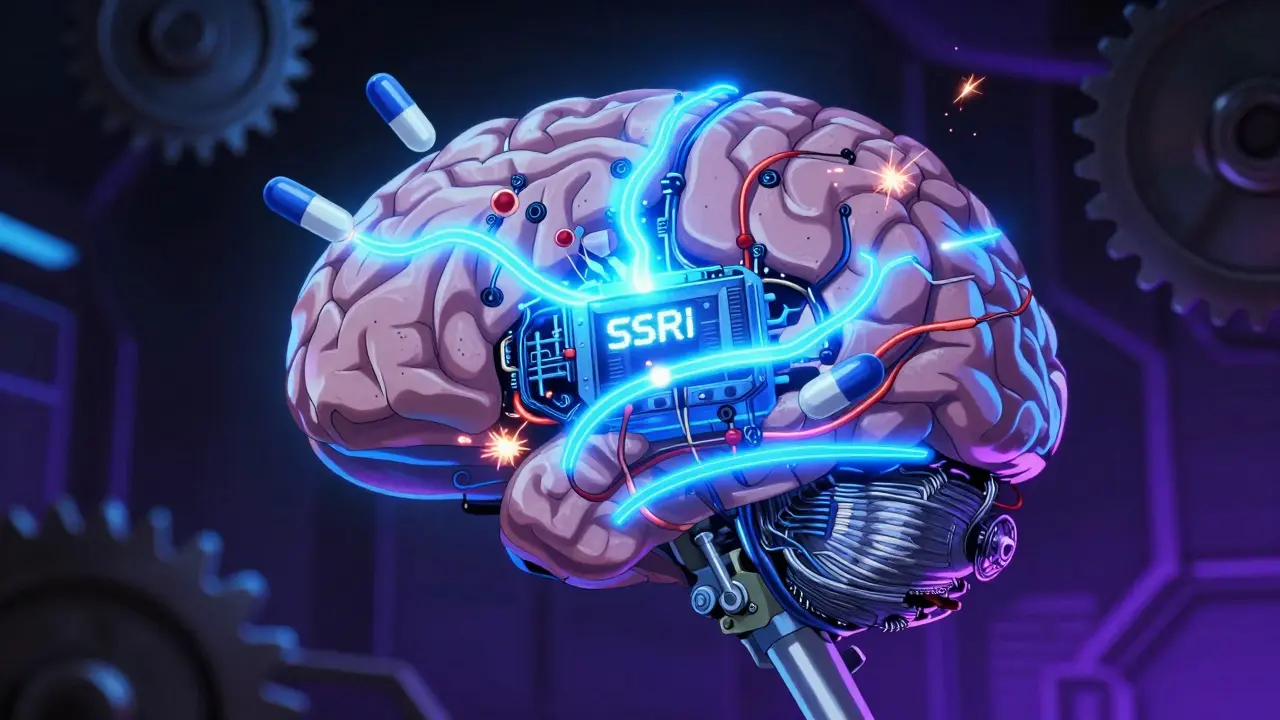
When you take an antidepressant like Prozac or Zoloft, you’re not just changing your mood-you’re tweaking the chemistry of your brain. One key player in that process is L-tryptophan, an amino acid your body can’t make on its own. It’s the starting point for serotonin, the neurotransmitter most antidepressants aim to boost. But here’s the catch: if you’re already on an antidepressant and start taking L-tryptophan supplements, you could be walking into dangerous territory.
How L-Tryptophan Becomes Serotonin
L-tryptophan doesn’t just float around in your blood. It has to cross the blood-brain barrier, compete with other amino acids, and then get converted-first into 5-HTP, then into serotonin. That process depends on two enzymes: tryptophan hydroxylase and aromatic L-amino acid decarboxylase. If your plasma tryptophan levels drop, your brain makes less serotonin. Studies show acute depletion can cut brain serotonin production by 95% in under seven hours.
This isn’t theoretical. Researchers use a method called rapid tryptophan depletion (RTD) to test how sensitive someone’s mood is to serotonin changes. They give patients a mix of amino acids-everything except tryptophan. Within hours, serotonin plummets. And in people on SSRIs or MAOIs, that drop often triggers a return of depression symptoms.
The Real Risk: Serotonin Syndrome
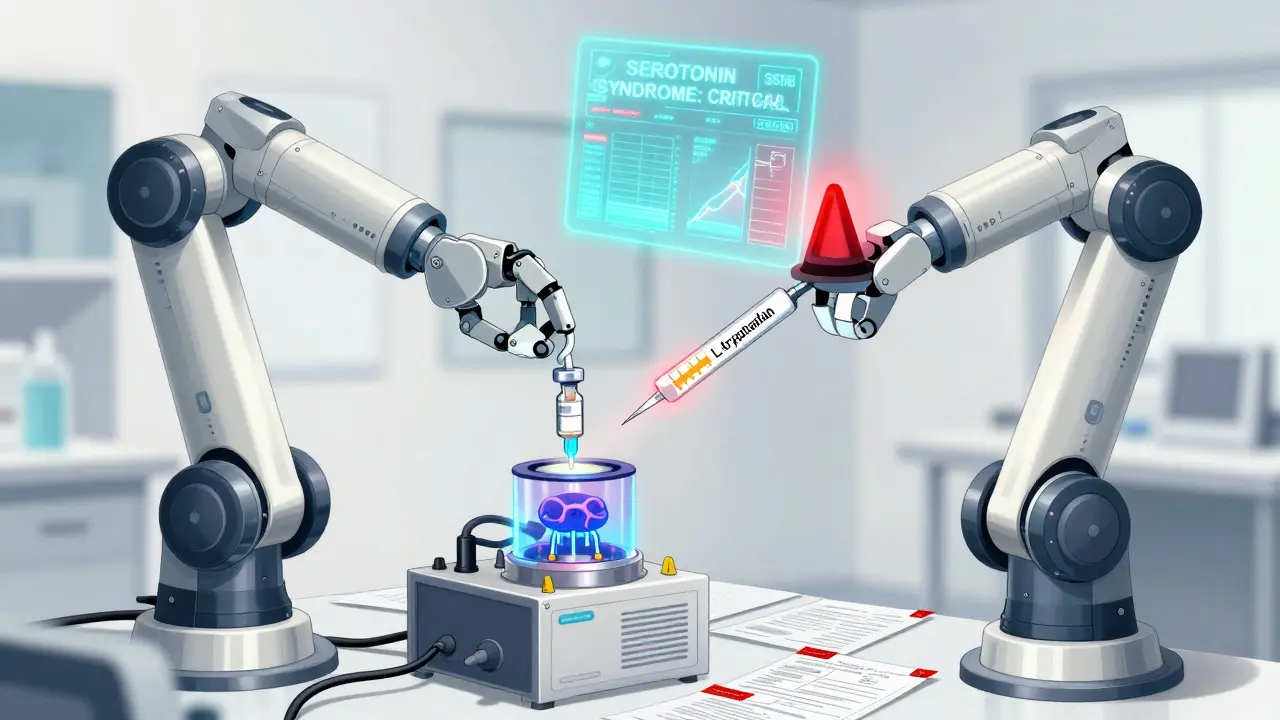
Combining L-tryptophan with SSRIs, SNRIs, MAOIs, or even some over-the-counter cold meds can push serotonin levels too high. That’s serotonin syndrome-a potentially life-threatening condition. Symptoms include agitation, rapid heart rate, high blood pressure, sweating, tremors, and in severe cases, seizures or loss of consciousness.
It’s not rare. A 2023 analysis of 1,200 Amazon reviews found that 15% of users who took L-tryptophan with antidepressants mentioned serotonin syndrome concerns. And it’s not just anecdotal. Between 1989 and 2005, the FDA banned L-tryptophan supplements after a contaminated batch caused over 1,500 cases of eosinophilia-myalgia syndrome, killing 37 people. Even though the ban was lifted in 2005, safety warnings remain patchy. A 2021 FDA inspection found 41% of tryptophan products didn’t even include the required serotonin syndrome warning.
Not All Antidepressants Are the Same
Here’s where things get nuanced. Not every antidepressant interacts the same way with L-tryptophan. SSRIs and MAOIs block serotonin reuptake or breakdown, so adding more precursor (tryptophan) can cause a dangerous buildup. But bupropion? It works on dopamine and norepinephrine, not serotonin. Studies show zero relapse in patients on bupropion after tryptophan depletion.
Even among SSRIs, responses vary. In one study, 47% of patients who were partially recovered on SSRIs relapsed after tryptophan depletion. That’s nearly half. But if you’re off meds entirely or fully remitted? Only 9% relapsed. That tells us something important: your brain’s baseline serotonin function matters more than the drug itself.
Tricyclic antidepressants like amitriptyline and desipramine also interact differently. In the 1980s, researchers found these drugs boosted the prolactin response to tryptophan-meaning they made the serotonin system more sensitive. But after stopping amitriptyline, that effect lingered for weeks. Desipramine didn’t. These subtle differences explain why some patients handle supplements better than others.
Who Might Benefit? Who Should Avoid It?
Some clinicians do use L-tryptophan as an add-on. In a 2018 study, 63% of SSRI partial responders improved when given 3 grams per day of tryptophan for six weeks. But here’s the fine print: they had to stabilize their SSRI dose first. No mixing. No sudden changes. And they monitored plasma tryptophan levels to keep them between 80-120 μmol/L. Too low? No effect. Too high? Risk of toxicity.
That’s why most psychiatrists-73% according to a 2022 survey of 487 doctors on Sermo-won’t recommend tryptophan while you’re on an SSRI. It’s not worth the gamble. Even if you feel fine, your serotonin system might be on a razor’s edge.
Who might consider it? Only people under close medical supervision. Those with documented low serotonin markers. Those who’ve tried everything else. And even then, only after a 7-10 day washout from other serotonergic drugs.
For most people? Skip it. If you’re on an antidepressant and want better sleep or mood, focus on proven methods: regular sunlight, consistent sleep, exercise, therapy. These don’t carry the same risk.
What the Science Really Says About Depression
Here’s the twist: the whole serotonin theory of depression is being questioned. In 2022, a massive review of 17 studies involving over 116,000 people found no solid evidence that depression is caused by low serotonin. Brain scans didn’t show consistent drops in serotonin transporter binding. Some people with depression have normal or even high serotonin levels.
So why does tryptophan depletion still trigger relapse in some people? Maybe it’s not about absolute serotonin levels-it’s about system stability. People with a history of depression may have a fragile serotonin system. Even small changes can break it. That’s why tryptophan depletion causes a 28% spike in impulsive aggression in teens with ADHD, regardless of their baseline symptoms.
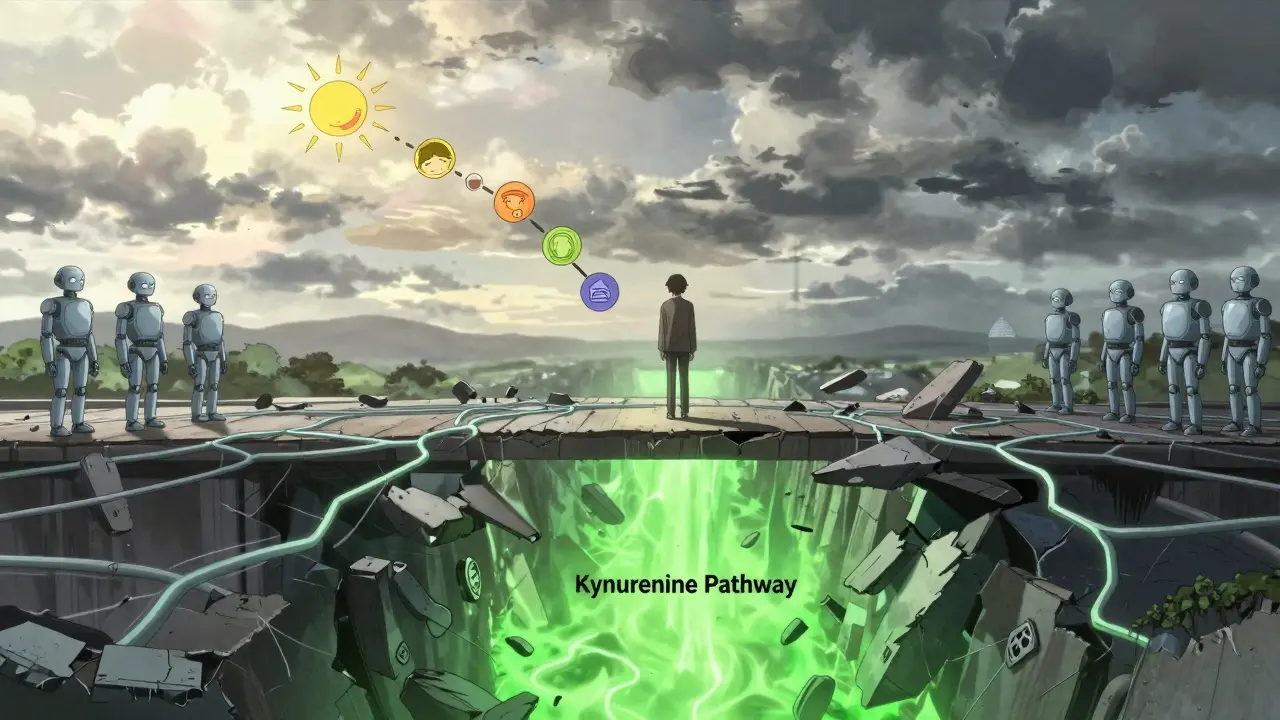
And now, researchers are looking elsewhere. The kynurenine pathway-a different way the body breaks down tryptophan-is showing stronger links to depression than serotonin itself. High kynurenine-to-tryptophan ratios correlate with worse symptoms. That could mean the problem isn’t too little serotonin, but too much inflammation or stress pushing tryptophan down the wrong metabolic path.
Practical Advice: What to Do Right Now
If you’re on an antidepressant and thinking about trying L-tryptophan:
- Don’t do it without talking to your doctor. Even if it’s labeled "natural," it’s not safe to mix.
- Check your medication label. If it’s an SSRI, SNRI, or MAOI, avoid tryptophan entirely.
- Watch for symptoms. If you start feeling restless, shaky, sweaty, or your heart races after taking a supplement, stop immediately and seek help.
- Don’t trust supplement labels. Over 40% of tryptophan products don’t warn about serotonin syndrome. That’s not your fault-but it’s your risk.
- Consider alternatives. 5-HTP is even riskier. Omega-3s, vitamin D, and cognitive behavioral therapy have better safety profiles and solid evidence.
If you’re off meds and considering tryptophan for sleep or low mood, start low-500 mg max. Most people report better sleep at that dose. But don’t assume it’s harmless. It’s still a powerful biochemical tool. Your brain isn’t a light switch. It’s a delicate ecosystem.
Market Reality: Supplements vs. Science
The global L-tryptophan supplement market hit $348 million in 2022 and is growing fast. Marketing calls it a "natural mood booster." But the science doesn’t back most claims. The European Food Safety Authority only allows a claim for "maintenance of normal psychological functions" at 1 gram per day. The FDA doesn’t allow any therapeutic claims at all.
Meanwhile, in Germany, tryptophan is prescribed as a treatment for depression under the name Trankimazin. In the U.S., it’s sold in gas stations and online with no oversight. That gap between regulation and marketing is where people get hurt.
Bottom line: Just because something is natural doesn’t mean it’s safe-especially when it’s interacting with psychiatric drugs. The science is clear. The risks are real. And the consequences can be serious.
kenneth pillet
January 18, 2026 AT 16:58Jodi Harding
January 19, 2026 AT 20:51Danny Gray
January 21, 2026 AT 19:21Tyler Myers
January 22, 2026 AT 13:06Kristin Dailey
January 23, 2026 AT 21:23Wendy Claughton
January 25, 2026 AT 11:36rachel bellet
January 27, 2026 AT 06:38Jake Moore
January 27, 2026 AT 14:06Ryan Otto
January 28, 2026 AT 01:12Max Sinclair
January 28, 2026 AT 14:32Praseetha Pn
January 30, 2026 AT 12:38Nishant Sonuley
January 30, 2026 AT 14:59Emma #########
January 31, 2026 AT 08:36Andrew Short
January 31, 2026 AT 22:36