 Jan, 12 2026
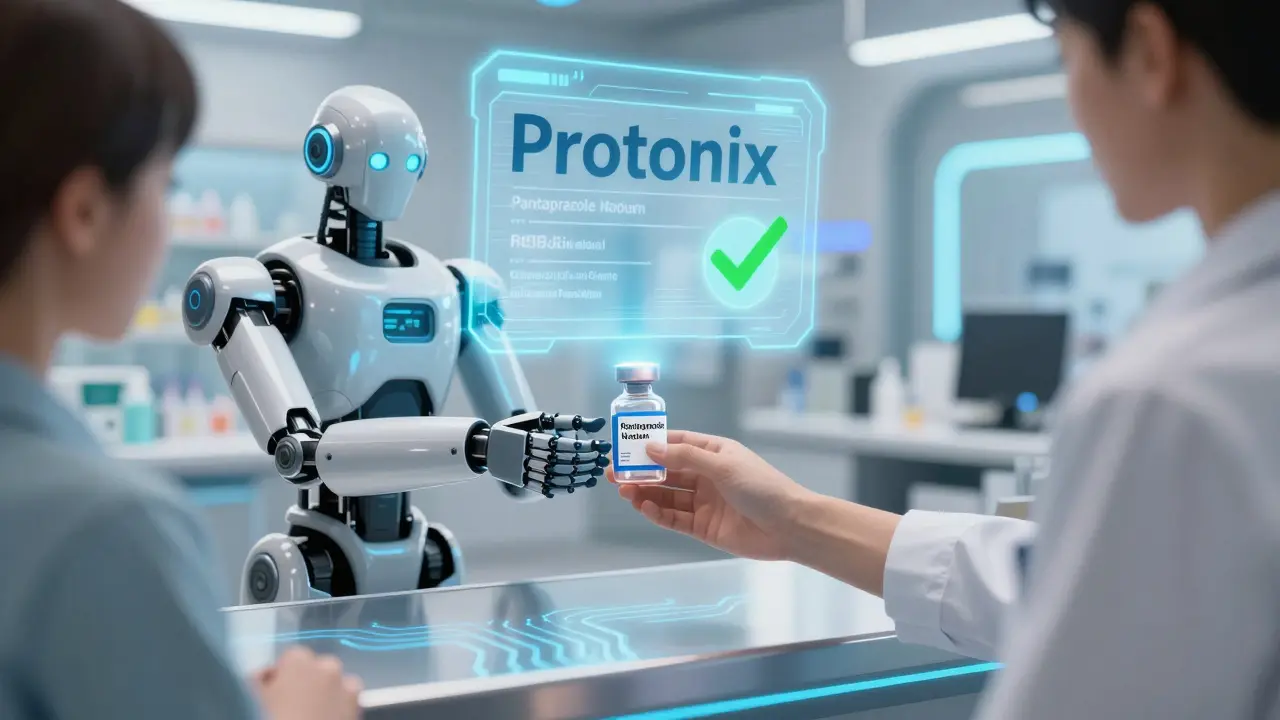
When you fill a prescription for a brand-name drug like Protonix or Yasmin, you might be surprised to find a pill that looks different but works exactly the same. That’s an authorized generic-a drug made by the original brand manufacturer but sold without the brand name, at generic prices. For insurers, this isn’t just a cost-saving trick. It’s a strategic tool to control spending without risking patient outcomes. But not all plans handle it the same way. Understanding how authorized generics fit into formulary placement can mean the difference between a $10 copay and a $50 one.
What Exactly Is an Authorized Generic?
An authorized generic isn’t a knockoff. It’s the exact same drug, made on the same生产线, in the same factory, with the same active and inactive ingredients as the brand-name version. The only difference? The label doesn’t say "Protonix"-it says "pantoprazole sodium" and has a different color or shape. The FDA defines it as a drug approved under the original New Drug Application (NDA), not through the Abbreviated New Drug Application (ANDA) used by most generics. That means no bioequivalence studies are needed. It’s already proven identical.This isn’t a loophole. It’s a legal pathway created by the Hatch-Waxman Act of 1984. Brand manufacturers can launch an authorized generic the moment their patent expires-or even before. That gives them a way to keep market share while letting insurers pay less. As of 2023, the FDA listed 147 active authorized generics, including drugs for high blood pressure, thyroid conditions, and birth control.
Why Insurers Care About Formulary Placement
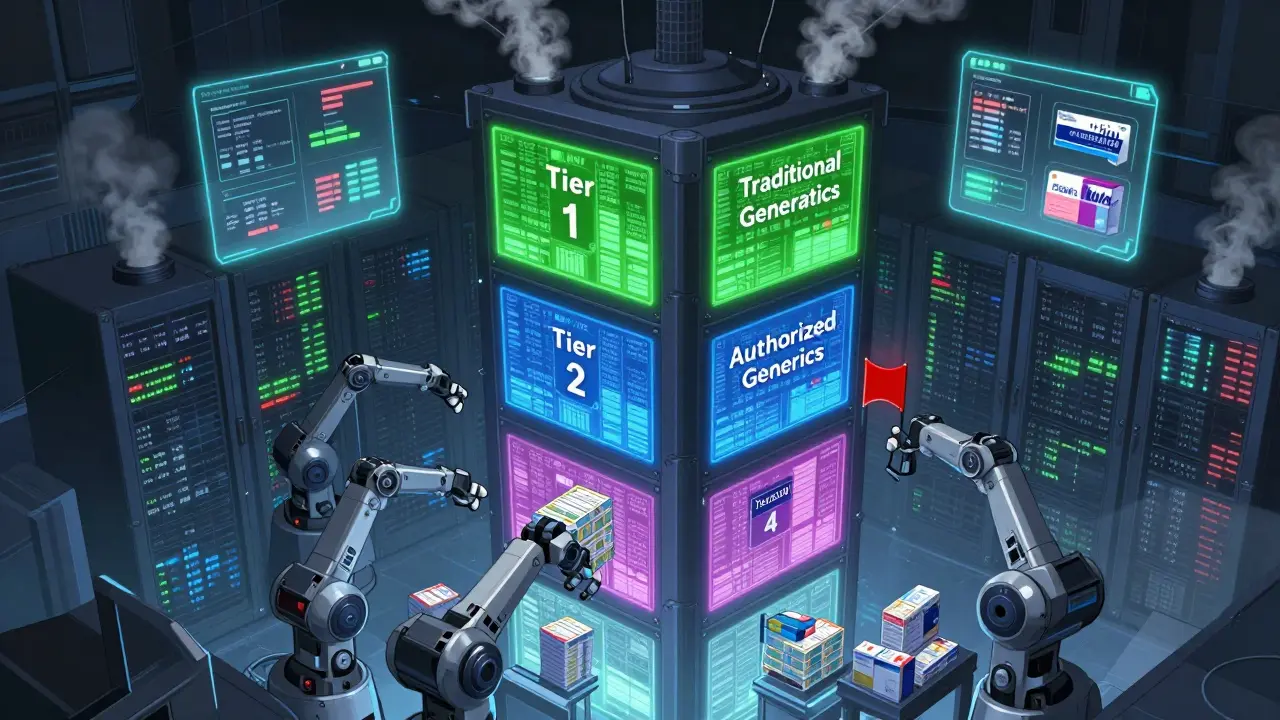
Formulary tiers determine how much you pay. Tier 1 is usually cheapest (basic generics). Tier 2 is higher-cost generics. Tier 3 and 4 are brand-name drugs with higher copays. Most insurers put authorized generics in Tier 2-same as traditional generics. That’s because they’re therapeutically equivalent. There’s no clinical reason to charge more.A 2022 study of 1,247 Medicare Part D plans found that 87% of them placed authorized generics in the same tier as conventional generics. Only 12% treated them like brand-name drugs. That matters because patients on high-cost medications-like those with autoimmune diseases or chronic conditions-can save hundreds a month if their plan covers the authorized version.
But here’s the catch: not every plan makes this clear. Some pharmacy benefit managers (PBMs) don’t update their systems fast enough. A patient might get denied coverage because the system doesn’t recognize the NDC code for the authorized generic. That’s why 34% of patients in a 2022 GoodRx survey reported confusion when their pharmacy switched them to an authorized generic without telling them.
Authorized Generics vs. Traditional Generics: The Real Difference
Most people think all generics are the same. They’re not. Traditional generics are made by different companies and must prove they’re bioequivalent to the brand. Authorized generics are made by the brand company itself. That means:- Same ingredients, same manufacturing process
- No delay in market entry-can launch the day the patent expires
- No 180-day exclusivity period like first-filer generics
- Often priced the same as traditional generics, sometimes slightly lower
This matters for patients with narrow therapeutic index drugs-like warfarin or levothyroxine-where even tiny variations in inactive ingredients can cause problems. An authorized generic eliminates that risk. You get the exact same drug you were on, just cheaper.
But here’s the downside: only 15-20% of brand-name drugs have authorized generic versions. For most medications, you’re stuck with either the brand or a traditional generic. That’s why insurers can’t rely on them alone to control costs. They still need a mix of strategies.
How PBMs Are Changing Their Rules
Big pharmacy benefit managers are starting to treat authorized generics as a priority. In January 2023, OptumRx launched an "Authorized Generic First" policy for 47 high-cost drugs. That means if an authorized generic exists, it’s the default option unless the doctor specifies otherwise. Express Scripts added special flags to their formulary system in late 2022 to flag authorized generics separately, making it easier for pharmacists to identify them.These changes aren’t just about savings-they’re about accuracy. Before, many systems treated authorized generics as brand-name drugs because they were made by the same company. That meant higher copays. Now, with better coding and updated databases, claims for authorized generics are approved 89% of the time on the first try, according to Express Scripts’ 2023 report. That’s only slightly lower than traditional generics (92%) and much higher than brand-name drugs (76%).
CVS Caremark’s 2022 implementation guide says it takes 30-45 days from product launch to full formulary integration. That’s a long time for a patient waiting to save money. Some pharmacies, like Walgreens, reported a 12% error rate in initial processing because their systems didn’t recognize the NDC codes. The fix? Using tools like Prime Therapeutics’ AG Tracker, which covers 98% of available authorized generics as of mid-2023.
What Patients Are Saying
On Reddit’s r/Pharmacy community, users share stories about how authorized generics saved them. One person wrote: "My insurance denied Synthroid but approved the authorized generic with a $10 copay. I’ve been stable for three years now-no side effects, no issues." Another said their allergy-prone child switched from a brand-name asthma inhaler to the authorized version and had zero reactions.But not all experiences are smooth. Some patients were switched without notice and had to call their insurer to get coverage reinstated. Others found their copay suddenly jumped because their plan didn’t update the formulary. That’s why clear communication from pharmacists and insurers is critical. Patients should always check the drug name on the label and ask: "Is this an authorized generic?" If it is, and they’re being charged like it’s a brand, they should push back.
The Bigger Picture: Costs, Competition, and Regulation
The U.S. authorized generic market hit $4.7 billion in 2022-about 3.2% of the total generic drug market. That number is expected to grow at 8.4% per year through 2027. Why? Because manufacturers see it as a way to keep revenue flowing after patent expiration.But there’s controversy. Some experts, like Dr. Peter Bach from Memorial Sloan Kettering, argue that authorized generics can delay real generic competition. In 22% of cases studied, the presence of an authorized generic discouraged other companies from entering the market with their own versions. The FTC flagged this as a potential anti-competitive practice in 2022.
On the flip side, the Inflation Reduction Act of 2022 is pushing Medicare Part D to favor lower-cost options. CMS projects a 15-20% increase in authorized generic usage by 2025. Large employers are following suit. According to the Kaiser Family Foundation’s 2023 survey, 68% plan to differentiate coverage between authorized generics and traditional generics in 2024-possibly offering even lower copays for the authorized version.
What You Need to Do Now
If you’re on a brand-name drug and paying a high copay:- Check the FDA’s list of authorized generics to see if your drug has one.
- Ask your pharmacist: "Is there an authorized generic version of this?"
- If yes, ask your insurer: "Is it covered at the generic tier?"
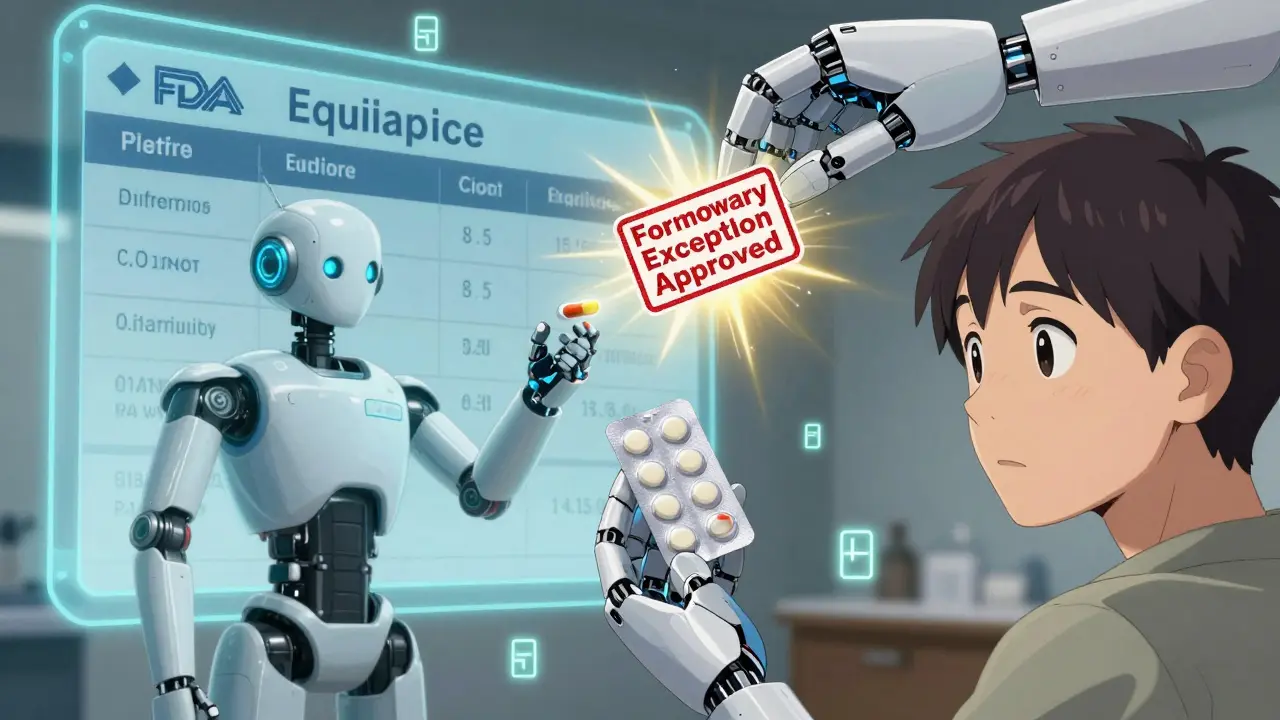
- If they say no, request a formulary exception. Cite FDA equivalence and the 2021 CMS guidance that authorized generics qualify as generics under Medicare Part D.
- If your pharmacy switches you without notice, ask for the original brand if you’re concerned.
Doctors and pharmacists need to be trained on this too. Many still don’t know the difference between authorized generics and traditional ones. That’s why the FDA’s GDUFA III rules, updated in 2023, are trying to improve transparency. Better labeling, clearer NDC codes, and public databases will help.
Authorized generics aren’t magic. They won’t solve all drug pricing problems. But for the 1 in 5 brand-name drugs that have them, they’re one of the most reliable ways to cut costs without sacrificing safety. If your plan ignores them, it’s not just missing a savings opportunity-it’s leaving money on the table for you.
Are authorized generics the same as brand-name drugs?
Yes. Authorized generics contain the exact same active and inactive ingredients, are made in the same facility, and follow the same manufacturing process as the brand-name version. The only difference is the label and packaging-they don’t carry the brand name. The FDA considers them therapeutically equivalent.
Why are authorized generics cheaper than brand-name drugs?
They’re cheaper because they don’t carry the marketing, advertising, and research costs associated with brand-name drugs. The manufacturer already recouped those costs during the patent period. Since the drug is already approved under the original NDA, there’s no need for expensive bioequivalence testing. That savings gets passed on to insurers and patients.
Do all insurance plans cover authorized generics at the generic tier?
Most do-87% of Medicare Part D plans in 2022 placed them in the same tier as traditional generics. But not all. Some plans still treat them like brand-name drugs due to outdated systems or lack of awareness. Always check your plan’s formulary or call customer service to confirm.
Can I request an authorized generic if my pharmacy gives me the brand?
Yes. You have the right to ask for the lowest-cost option that’s covered by your plan. If an authorized generic exists and is covered at a lower tier, your pharmacist can usually switch it. If they refuse, ask for a formulary exception or contact your insurer.
Why don’t all drugs have authorized generics?
Only about 15-20% of brand-name drugs have authorized generic versions. It’s up to the brand manufacturer to decide whether to launch one. Many choose not to, especially for drugs with low sales volume or complex manufacturing. Oncology drugs, for example, rarely have authorized generics because of their complexity and high cost.
Are authorized generics safe for people with allergies?
Yes. Because they’re identical in ingredients to the brand-name version, they’re safe for people with allergies to specific inactive ingredients-like dyes or fillers. That’s why many patients with sensitivities prefer them over traditional generics, which may use different fillers.
Randall Little
January 13, 2026 AT 13:20So let me get this straight - the brand manufacturer makes the exact same pill, slaps on a generic label, and suddenly it’s cheaper? And we’re supposed to be impressed? This isn’t innovation, it’s corporate theater. They’re just gaming the system to keep profits while pretending to help patients. The FDA calls it ‘therapeutically equivalent’ - sure, but that’s like calling a BMW and a Hyundai ‘equivalent’ because both have four wheels and an engine. The brand still owns the recipe, the patents, and the market leverage. This isn’t competition - it’s a controlled demolition of real generic entry.
Kimberly Mitchell
January 13, 2026 AT 19:48Authorized generics are a formulary optimization lever, not a patient-centric innovation. The PBM-driven tiering architecture still reflects legacy contracting incentives, and NDC code misalignment remains a systemic operational friction point. Until CMS enforces standardized labeling protocols under GDUFA III and mandates real-time formulary synchronization across PBMs, patient confusion and coverage denials will persist as structural artifacts of fragmented reimbursement infrastructure.
lucy cooke
January 15, 2026 AT 00:16Oh honey, let me tell you - I switched to the authorized generic of my antidepressant last year and my therapist said I ‘seemed more emotionally available.’ Coincidence? I think not. The brand version always made me feel like a zombie in a corporate spreadsheet. The generic? I cried during a sunset. I felt alive. Maybe it’s the same chemical, but the *energy* is different. I think the placebo effect is just the soul remembering what it feels like to be free.
Angel Molano
January 16, 2026 AT 22:33Stop overcomplicating it. If it’s the same pill, take it. Stop whining about labels.
Rosalee Vanness
January 17, 2026 AT 13:29I’ve been on levothyroxine for 12 years. I used to panic every time my pharmacy switched me to a new generic - one made me jittery, another gave me brain fog. Then my pharmacist said, ‘Try the authorized version - it’s made by the same company as Synthroid.’ I did. Zero side effects. I’ve been stable since. I know it sounds weird, but for people with narrow therapeutic index meds, this isn’t just about cost - it’s about peace of mind. If your insurer won’t cover it at generic tier, fight them. Your body deserves consistency, not corporate bureaucracy.
James Castner
January 17, 2026 AT 15:13Let’s step back from the tactical noise and examine the philosophical underpinnings of pharmaceutical pricing in America. The authorized generic is not merely a commercial maneuver - it is a symptom of a deeper malaise: the commodification of biological integrity. We have allowed the state to outsource healthcare to profit-maximizing entities that treat human physiology as a variable in a supply-chain algorithm. The fact that a pill made in the same factory, with the same excipients, under the same GMP standards, is labeled differently - and thus priced differently - reveals a fundamental moral failure. The FDA’s equivalence doctrine is technocratic. But what does it mean when the body cannot distinguish between ‘brand’ and ‘generic’ but the insurance formulary can? Are we patients, or are we data points in a risk-adjusted reimbursement model? The authorized generic doesn’t solve drug pricing - it exposes the lie that pricing is ever about value. It’s always about power.
laura Drever
January 19, 2026 AT 10:27my pharmacy switched me to the ag version and my copay went from 10 to 50 bc they didnt update the code. called for 3 weeks. finally got it fixed. why is this so hard. everyone knows this happens. fix the system not the patient.
Diana Campos Ortiz
January 21, 2026 AT 07:15Just wanted to say thank you to the pharmacist at my local CVS who actually explained what an authorized generic was. I had no idea. I thought all generics were the same. She took 10 minutes to walk me through the difference and even showed me the FDA list. That kind of care matters. It’s rare. Please don’t underestimate how much that helped me feel less like a number.
Acacia Hendrix
January 23, 2026 AT 00:29It’s fascinating how the authorized generic ecosystem operates as a quasi-monopolistic buffer within the post-patent landscape. The manufacturer leverages its incumbent advantage to preempt generic entry by deploying a proprietary version under a different label - effectively creating a first-mover advantage in the post-exclusivity window. This subverts the Hatch-Waxman Act’s original intent, which was to incentivize independent generic competition. The FTC’s 2022 findings confirm this as a structural anticompetitive vector, yet regulatory inaction persists due to the opacity of NDA-ANDA boundary enforcement. The result? A market where price erosion is artificially constrained by the very entity that originally held the monopoly.
Adam Rivera
January 24, 2026 AT 22:22Hey, I’m just a guy who takes blood pressure meds. I didn’t know any of this until my buddy told me to check the label. Found out my $45 brand was actually a $12 authorized generic. Called my insurance, they said ‘oh yeah, we cover that at Tier 1’ - and I got my money back. No drama. No paperwork. Just ask. Seriously, if you’re paying more than $20 for a med that’s been around for 10 years, you’re probably getting scammed. Don’t be shy. Ask your pharmacist. It’s your money.