 Feb, 7 2026
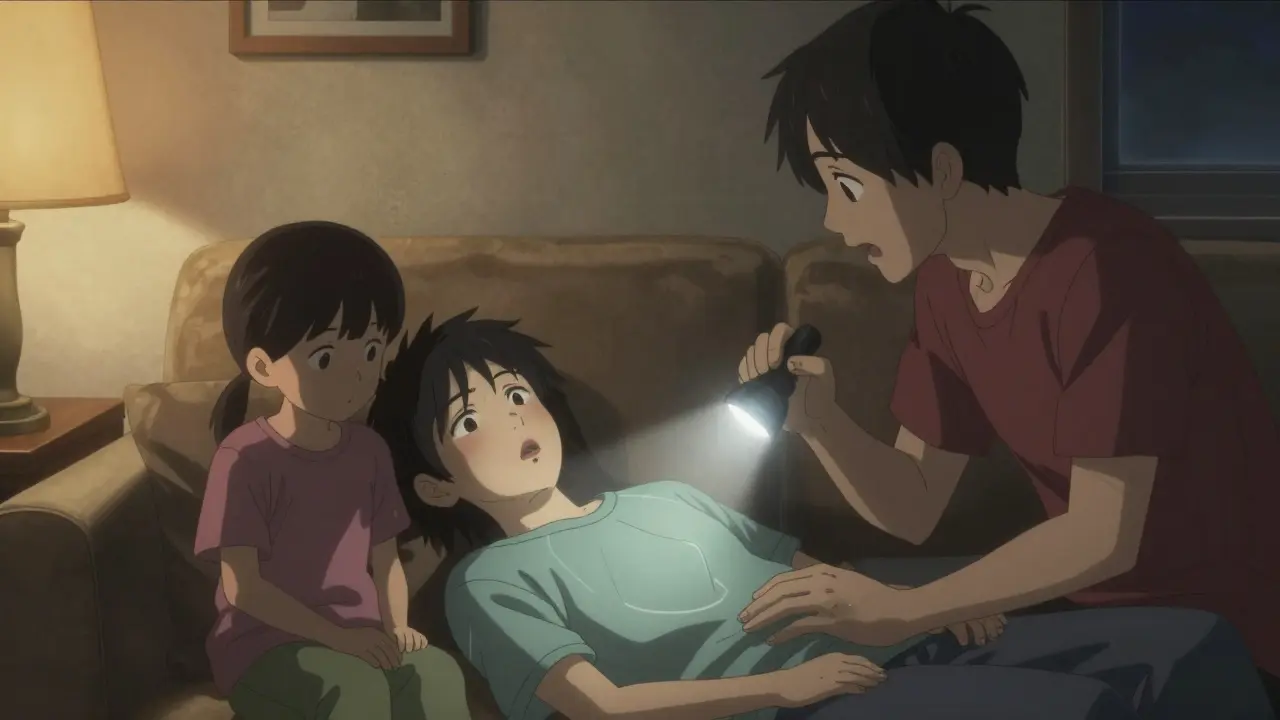
When someone you love is using drugs, knowing what to look for could save their life. Most overdoses happen at home-not in hospitals or on the street. That means family members are often the first and only responders. And if you don’t know the signs, you might think your loved one is just asleep, high, or sick. You might wait too long. You might panic. Or worse-you might do nothing. But learning how to recognize an overdose isn’t complicated. With the right training, anyone can spot the warning signs and act fast.
What an Overdose Really Looks Like
An overdose isn’t always someone slumped over with a needle in their arm. That’s the movie version. Real overdoses are quieter, messier, and harder to spot. The most common cause of overdose deaths in the U.S. is opioids-like heroin, fentanyl, or prescription painkillers. But stimulants like cocaine or meth can also kill. Each has different signs.For opioids, look for the triad: unresponsiveness, slow or stopped breathing, and bluish or grayish skin. If you shake their shoulder and shout their name and they don’t move? That’s a red flag. If their chest isn’t rising and falling every few seconds? That’s dangerous. If their lips or fingernails look blue, purple, or ashen? That’s a sign their body isn’t getting oxygen.
But here’s what most people miss: skin tone matters. On lighter skin, blue or purple is obvious. On darker skin, those colors don’t show the same way. Instead, look for gray, ashen, or pale skin-especially around the lips, tongue, or nail beds. A 2022 study from California found that training programs that taught this difference cut misidentification errors by over 60%.
Other signs include: limp arms and legs, cold and clammy skin, gurgling or snoring sounds (like they’re drowning), and vomiting while unconscious. If someone is breathing once every 10 seconds-or not at all-they’re in an overdose. This isn’t intoxication. This is a medical emergency.
Stimulant Overdose: Different Signs, Same Danger
Overdoses from cocaine or meth aren’t about slowing down-they’re about exploding. The body goes into overdrive. Look for: extremely high body temperature (over 104°F), seizures, chest pain, or a heartbeat that feels like it’s racing or skipping. These people might be twitching, sweating, or screaming. They might seem hyper, paranoid, or aggressive. But if they collapse, stop responding, or stop breathing? It’s an overdose too.Many families confuse stimulant highs with overdoses. A person who’s high on meth might be awake, talking fast, and sweating. But someone overdosing? They’ll go from hyper to unconscious in seconds. If they’re not reacting to pain (like a firm rub on the sternum), they’re not just high-they’re dying.
How to Teach Family Members: Three Proven Methods
You can’t just hand someone a pamphlet and expect them to remember. Studies show that people retain 73% more when they practice-not just listen. Here’s what works:- Scenario-Based Practice: Use real-life situations. Say, “Your son is passed out on the couch. His breathing is slow. His lips are gray. What do you do?” Then walk through the steps. Repeat this with different scenarios-different times of day, different locations, different people.
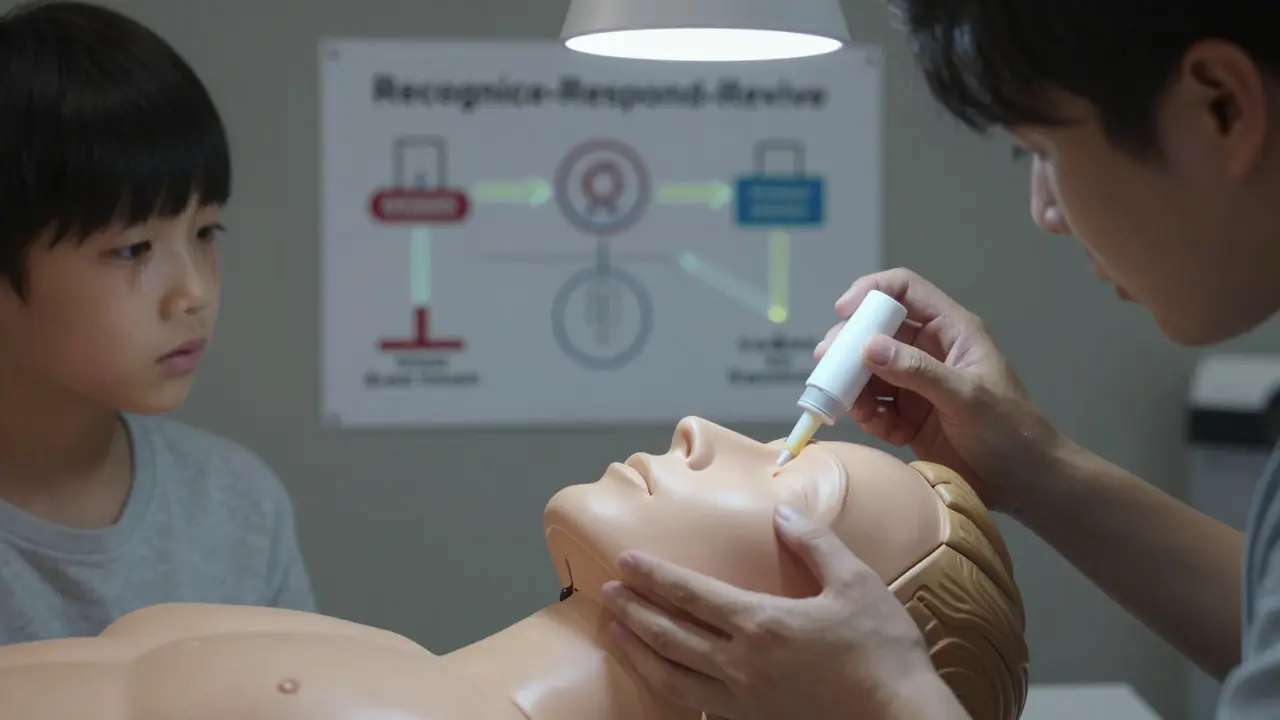
- Hands-On Training with Naloxone: Get a training naloxone kit (they cost about $35 and don’t contain any drugs). Practice giving the nasal spray on a mannequin. Learn how to tilt the head back, insert the nozzle, and press the plunger. Muscle memory saves lives. One father on Reddit said after practicing three times with his training kit, he recognized his son’s overdose and saved him before EMS arrived.
- The Recognize-Respond-Revive Framework: This is the standard used by over 40 state health departments. Break it down simply:
- Recognize: Look for unresponsiveness, slow breathing, skin color change.
- Respond: Call 911. Then give naloxone. Don’t wait. Don’t check their phone. Don’t try to wake them with cold water. Give the naloxone first.
- Revive: After giving naloxone, keep giving breaths if they’re not breathing. Stay with them. Even if they wake up, they still need medical help. Naloxone wears off in 30-90 minutes. The drug might still be in their system.
Programs that use this method have a 94% accuracy rate in helping families identify overdoses. That’s not luck. That’s training.
Why Naloxone Is Non-Negotiable
Naloxone (brand name Narcan) is a nasal spray that can reverse an opioid overdose in minutes. It’s safe. It doesn’t work on stimulants, but it won’t hurt anyone if given accidentally. It’s available without a prescription in 31 states. You can get it at pharmacies, community centers, or online through harm reduction groups.Time is everything. If naloxone is given within four minutes of breathing stopping, 98% of opioid overdoses are reversed. After that? The chances drop fast. That’s why practicing the spray is as important as recognizing the signs. You can’t fumble with a box in a crisis. You need to know how to open it, hold it, and press it without thinking.
Overcoming Emotional Barriers
Many families avoid training because they’re scared. They think, “If I learn this, maybe it’ll make it happen.” Others feel guilty. Or ashamed. Or overwhelmed. That’s normal. But here’s the truth: training doesn’t invite disaster-it prevents it.A 2023 survey of nearly 3,000 family members found that 34% were hesitant to train at first. But after doing it? 92% said they wished they’d done it sooner. One woman told researchers, “I thought I’d be too emotional. But when we practiced, I realized-I could be calm. I could help.”
Start small. Watch a 10-minute video together. Get the training kit. Practice once. Then again. Don’t wait for the “perfect” moment. The perfect moment is now-before it’s too late.
What to Keep on Hand
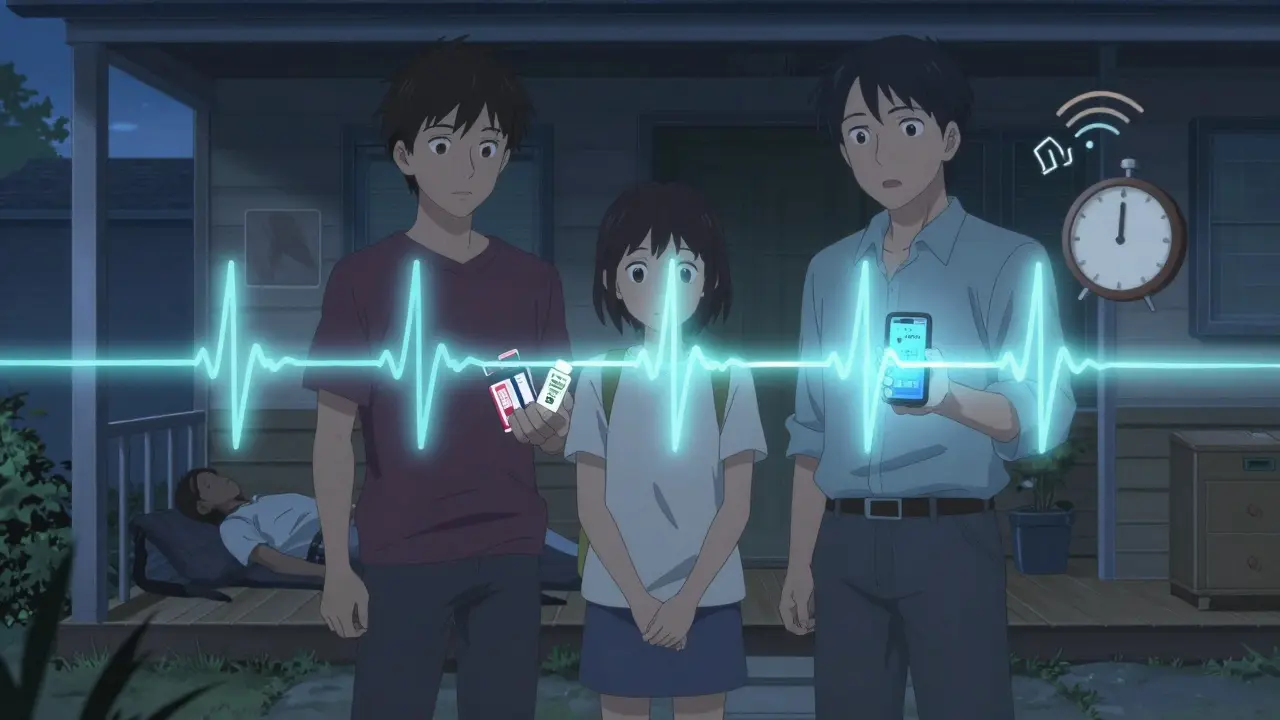
Build a simple emergency kit:- Two naloxone nasal sprays (one for backup)
- A phone with 911 pre-dialed
- A small flashlight (to check skin color better)
- A printed copy of the Recognize-Respond-Revive steps
- A list of local harm reduction resources
Keep it in the same place every day-like the bathroom or kitchen drawer. Make sure everyone in the house knows where it is. If your loved one is alone sometimes, leave a kit with them too.
What to Do If You Suspect an Overdose
Don’t guess. Don’t wait. Don’t hope it’s not real. Follow these steps:- Check for responsiveness: Shake their shoulders. Shout their name. Rub your knuckles hard on their sternum (center of chest). If they don’t move, assume overdose.
- Call 911: Say, “I think someone is overdosing.” Don’t apologize. Don’t sugarcoat. Just say it.
- Give naloxone: Spray one dose into one nostril. If you have a second dose, use it after 2-3 minutes if they’re still not breathing.
- Give rescue breaths: Tilt the head back, pinch the nose, give one breath every 5 seconds. Keep going until they breathe on their own or help arrives.
- Stay with them: Even if they wake up, don’t let them walk around or go to sleep. They can relapse into overdose. Wait for EMS.
That’s it. No fancy tools. No medical degree. Just steps anyone can learn.
Where to Get Free Training
You don’t have to pay for this. Most training is free:- Your local health department offers free family overdose training
- Harm Reduction Coalition provides free training kits and videos
- The Overdose Lifeline app (downloaded over 147,000 times) has step-by-step video guides
- YouTube channels like Overdose Lifeline and NIDA have short, real-world demos
Search “overdose training near me” or call 211 (the national helpline). They’ll connect you to someone who can train you in person or online.
Can naloxone hurt someone who isn’t overdosing?
No. Naloxone only works if opioids are in the system. If someone is just drunk, high on stimulants, or asleep, naloxone won’t do anything harmful. It’s safe to give even if you’re unsure.
What if I’m scared to call 911 because of legal trouble?
In every state, Good Samaritan laws protect people who call 911 during an overdose. You won’t get arrested for drug possession if you’re trying to save a life. Emergency responders are there to help, not punish. Saving a life comes first.
How often should we practice?
Practice every 3-6 months. Skills fade. Even if you’ve saved someone before, keep practicing. Use the training kit. Go through the steps. Make it routine-like checking smoke alarms.
Is training only for opioid overdoses?
The core recognition steps-checking responsiveness and breathing-apply to all overdoses. Naloxone only reverses opioids, but calling 911 and giving breaths helps with stimulant overdoses too. Knowing the signs for both types makes you prepared for anything.
Can kids learn this too?
Yes. Children as young as 10 can learn to recognize the signs and call 911. Training can be adapted for age. For younger kids, focus on: “If someone doesn’t wake up, call 911. Don’t leave them alone.” That simple step saves lives.
Teaching your family how to recognize an overdose isn’t about fear. It’s about power. It’s about knowing that when everything else feels out of control, you have the tools to act. And sometimes, that’s the only thing that stands between life and death.
Sam Dickison
February 7, 2026 AT 12:50Just got my naloxone kit last week after my cousin OD’d. Practiced with my sister on a mannequin while watching Netflix. Weird? Yeah. But now I can do it blindfolded. The first time I used it, I didn’t even think-I just grabbed it, tilted the head, and pressed. No panic. Just action. That’s what this post is saying: training turns fear into muscle memory. Seriously, if you’re on the fence, just do it. It’s cheaper than a gym membership and saves lives.
Karianne Jackson
February 8, 2026 AT 22:43I cried reading this. My brother died last year and I didn’t know what was happening. I thought he was just passed out. I kept shaking him like he’d wake up if I yelled loud enough. I wish someone had told me about the gray skin thing. I wish I’d known about the gurgling. I wish I’d known it wasn’t sleep. I’m so mad at myself. But now I’m telling everyone. Everyone. This is not optional. This is survival.
Jacob den Hollander
February 10, 2026 AT 14:07Hey, I’m a paramedic in rural Ohio. We’ve been doing family trainings for years. The thing nobody tells you? It’s not about the naloxone. It’s about the *moment* you stop treating addiction like a moral failure. When you sit down with your kid’s aunt and say, ‘Let’s practice this,’ something shifts. You’re not preparing for death-you’re preparing for a chance. And that changes everything. One grandma I trained? She saved her grandson three times. Third time, she didn’t even call 911 first. She sprayed him, started breaths, then called. She said, ‘I knew what to do. I didn’t have time to be scared.’
Andy Cortez
February 11, 2026 AT 04:21Y’all are missing the real issue. Why are we putting the burden on families? Why aren’t the feds distributing naloxone for free in every damn pharmacy? Why is this even a thing we have to teach? This is a systemic failure. The government lets fentanyl flood the streets, then tells moms to learn how to save their kids with a nasal spray. That’s not empowerment. That’s negligence. And don’t get me started on how they market Narcan like a Band-Aid for a bullet wound.
Ryan Vargas
February 11, 2026 AT 15:09Let’s be brutally honest: this whole ‘family training’ narrative is a distraction. It’s the neoliberal solution to a Marxist problem. We’re not going to save lives by teaching grandma to recognize bluish lips while the pharmaceutical industry profits from addiction, the prison-industrial complex criminalizes users, and Congress blocks safe injection sites. This post? It’s beautifully written. It’s emotionally compelling. But it’s also a trap. It makes you feel like you’re doing something-when what you’re really doing is patching a sinking ship with duct tape. The real answer isn’t naloxone-it’s decriminalization, universal healthcare, and dismantling the war on drugs. Until then, you’re just organizing better funeral arrangements.
And yes, I know this sounds like a rant. But I’ve been doing harm reduction since 2012. I’ve seen 17 people die because someone didn’t know to call 911. I’ve also seen 17 people die because the system refused to treat them as human beings. Training is good. But it’s not enough. And pretending it is? That’s the real tragedy.
Kathryn Lenn
February 12, 2026 AT 10:21Lol. So now we’re telling people to practice giving nasal spray like it’s a yoga pose? What’s next? A TikTok challenge: #NaloxoneRoutine? I’m all for awareness, but this feels like a corporate wellness program gone rogue. ‘Hey, your kid might OD, so let’s do a 10-minute drill after brunch!’ Meanwhile, the real problem is that fentanyl is in everything now-M&Ms, counterfeit Adderall, even vape cartridges. No amount of training helps if you don’t know what’s in the pill you just took. And who’s checking? Not you. Not me. Not the government. So yeah, go ahead and memorize the triad. But don’t be surprised when it doesn’t matter.
Chelsea Cook
February 13, 2026 AT 14:18Okay but y’all. I just got back from a training. We did role-play with a mannequin and fake vomit. I laughed. I cried. I hugged the instructor. I didn’t know I needed this until I got there. It’s not scary. It’s not heavy. It’s just… necessary. Like knowing where the fire extinguisher is. Or how to do CPR. We don’t wait until the house is burning to learn. So why do we wait until someone’s not breathing? I’m telling my whole family. My mom. My brother. My 14-year-old niece. She’s gonna learn how to call 911. And she’s gonna be proud of herself. Because she’s not a victim. She’s a lifesaver. And you can be too.
Alex Ogle
February 14, 2026 AT 02:06I’ve been sober for 8 years. I didn’t OD, but I watched my best friend die in front of me. He was on the floor. I thought he was sleeping. I didn’t even check his breathing. I just… sat there. For 15 minutes. I thought he’d wake up. I thought he’d be fine. I didn’t know. And that’s the thing. No one teaches you this. Schools don’t teach it. Parents don’t talk about it. You have to find it on your own. So I’m grateful for this. But I’m also angry. Because I wish someone had told me before it was too late. And now? I tell everyone I meet. Not to scare them. But to give them a chance. You don’t need to be a hero. You just need to know what to do.
Elan Ricarte
February 15, 2026 AT 00:18Let me tell you something real. I used to sell pills. I didn’t know they were laced with fentanyl until three people died in my neighborhood. One was 17. He bought them from me. I didn’t even know what I was selling. I thought it was just ‘stronger than Xanax.’ I felt like shit. So I started handing out naloxone kits with every sale. I didn’t care if they used. I just didn’t want them dead. Now I run a free training group out of my garage. We do it every Tuesday. Bring your own mannequin. Bring your fear. Bring your guilt. We’ll hold space for it. You don’t have to be a saint. You just have to show up. And if you do? You’re already part of the solution.
Tricia O'Sullivan
February 16, 2026 AT 20:30While I appreciate the sentiment and practical guidance presented herein, I must respectfully note that the efficacy of such training initiatives is contingent upon structural support mechanisms, including equitable access to emergency medical services and pharmacological interventions. In rural and underserved communities, the availability of naloxone remains inconsistent, and the cultural stigma surrounding substance use disorders often impedes community engagement. Thus, while individual preparedness is commendable, it cannot supplant the necessity of systemic reform.
John Watts
February 17, 2026 AT 13:44My niece is 12. She asked me why people die from drugs. I didn’t give her a lecture. I showed her a video. We practiced on a stuffed animal. She said, ‘So if someone’s not breathing, I just press this?’ I said, ‘Yeah. And then call 911.’ She said, ‘That’s easy.’ And you know what? It is. It’s not magic. It’s not science. It’s just steps. And she’s not scared. She’s ready. That’s what this is about. Not fear. Not guilt. Not politics. Just… readiness. So go get the kit. Practice once. Then again. Don’t wait for the perfect moment. The perfect moment is now. And you? You’ve got this.
Ryan Vargas
February 18, 2026 AT 01:47Response to @7591: You’re right-it’s not scary. But it’s not glamorous either. It’s messy. It’s loud. It’s the sound of someone choking while you’re trying to give breaths. It’s the smell of vomit and sweat and fear. It’s the silence after the spray. And then? The ambulance siren. And then? The cops showing up. And then? The questions. And then? The guilt. Training doesn’t erase that. It just gives you a chance to survive it. So yeah-do it. But don’t pretend it’s a feel-good story. It’s a survival manual. And you’re not a hero. You’re just someone who refused to look away.