 Jan, 20 2026
Every time you pick up a prescription, the label on that bottle holds life-or-death information - if you know where to look. Too many people glance at the dosage, toss the label in their bag, and forget about it. But that label isn’t just instructions - it’s a warning system. Drug interactions can turn a harmless medicine into a danger. They can cause internal bleeding, heart problems, or make your treatment completely useless. And the worst part? Most of them are preventable.
What You’re Looking For on the Label
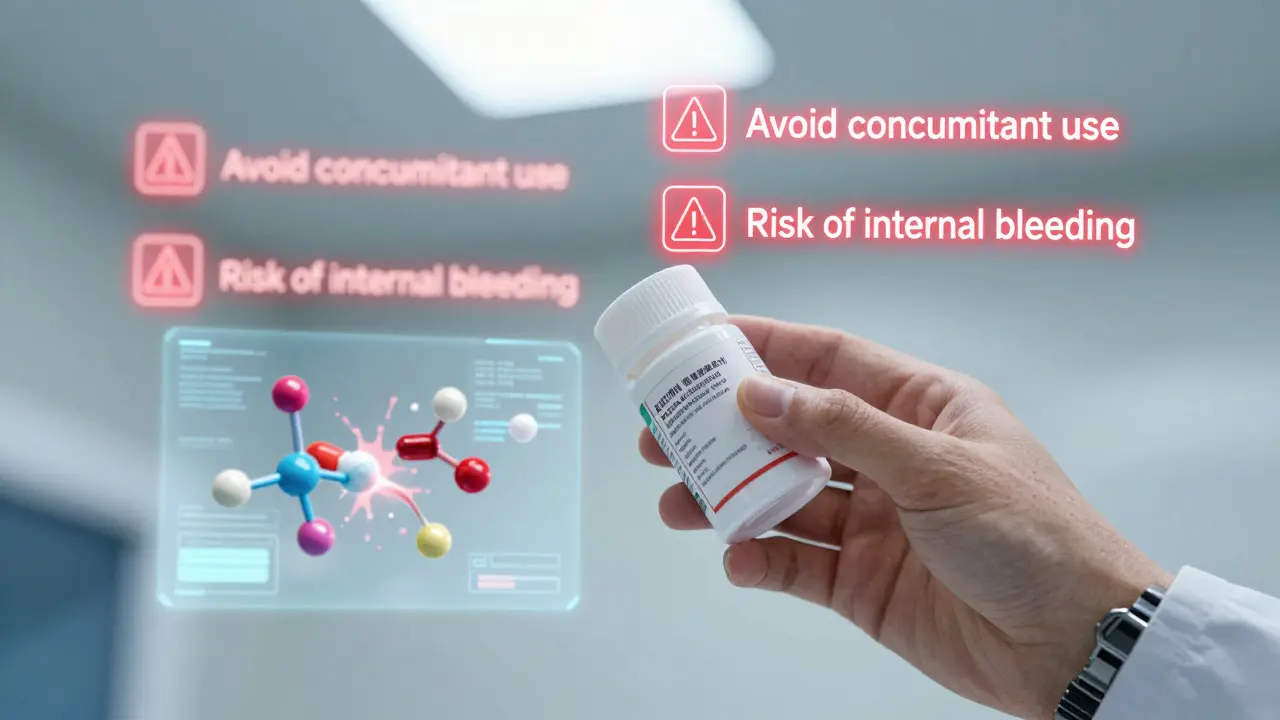
Prescription labels aren’t random text. They follow strict rules set by the FDA. The most important section for avoiding interactions is called Drug Interactions. It’s usually Section 7 on the printed sheet that comes with your medicine. This isn’t just a list of names - it’s a clear guide on what to avoid and what to do. Look for phrases like:- Avoid concomitant use of [Drug A] with [Drug B]
- Reduce dosage of [Drug A] when used with [Drug B]
- Monitor for [symptom] - such as dizziness, bleeding, or irregular heartbeat
Over-the-Counter Medicines Are Just as Risky
You might think only prescriptions matter. But that’s a mistake. Over-the-counter (OTC) drugs like ibuprofen, antacids, or sleep aids can interact just as badly. The FDA requires the same kind of interaction warnings on OTC labels - they’re just tucked under the Warnings section. Take a common example: ibuprofen. If you’re on a blood thinner like warfarin, taking ibuprofen can increase your risk of internal bleeding. The label says so - if you read it. But a 2023 study found only 57% of people even look at the OTC warnings. That’s over 4 in 10 people walking into danger because they didn’t check the bottle. And it’s not just painkillers. Cold medicines often contain antihistamines or decongestants that can spike your blood pressure if you’re on heart medication. Even antacids can stop your other drugs from being absorbed. The label will tell you. You just have to read it.Supplements and Herbal Products Are Hidden Risks
Here’s where things get tricky. Most prescription labels don’t mention herbal supplements. That’s a huge gap. Ginkgo biloba, garlic pills, St. John’s wort - these aren’t harmless. They’re powerful. And they interact with common drugs in ways that can kill. A 2023 Harvard study tracked 147 cases where people on warfarin (a blood thinner) ended up in the hospital after taking ginkgo biloba. None of their prescription labels warned them. Why? Because supplements aren’t regulated like drugs. But the risk is real. The same goes for St. John’s wort - it can make antidepressants, birth control, and even cancer drugs stop working. The fix? Always tell your doctor and pharmacist about everything you take - vitamins, herbs, teas, even CBD oil. Write it down. Bring the bottles. Don’t assume they’ll ask. Most won’t.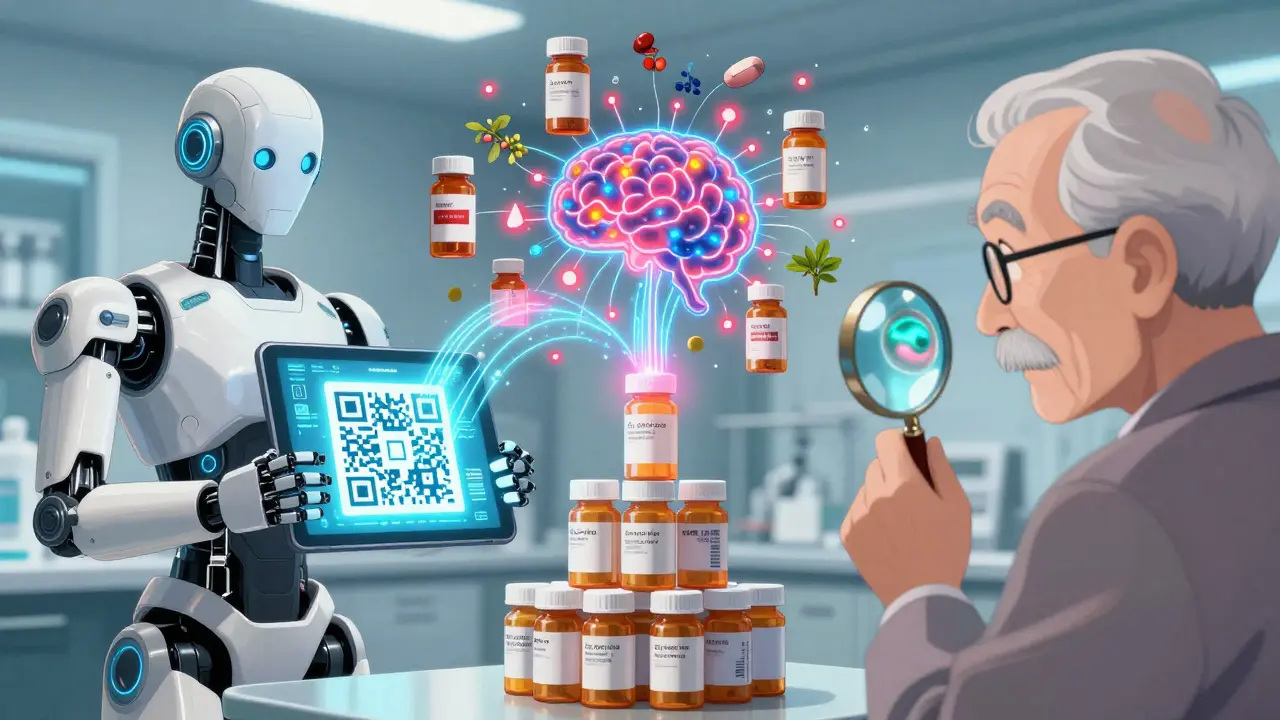
Use the Label, But Don’t Rely on It Alone
Prescription labels are the law. They’re detailed. But they’re not perfect. A 2023 Duke-Margolis study found that even doctors struggle to find critical interaction info on labels within 30 seconds. And if a doctor can’t find it fast, what chance does a patient have? Labels also assume you understand medical language. Words like “concomitant use” or “pharmacokinetic interaction” aren’t everyday terms. A 2024 CDC report says 45 million American adults can’t read at a 10th-grade level. That means nearly 1 in 5 people are reading labels they don’t fully understand. That’s why you need backup tools - not to replace the label, but to support it.- Use Drugs.com Drug Interactions Checker. It’s free. Enter every pill, supplement, and OTC drug you take. It flags risks the label might not highlight.
- Ask your pharmacist. When you pick up a new prescription, bring all your current meds. Pharmacists review interactions for 22% of patients who do this - and catch things doctors miss.
- Use your phone. Take a photo of every label. Put them in a folder called “My Meds.” When you see a new drug, compare it to your photos before taking it.
What to Do When You’re Taking 5+ Medications
If you’re on five or more drugs - and 67% of seniors are - your risk goes up dramatically. A CDC survey found that 68% of people on five or more meds couldn’t identify potential interactions from their labels alone. That’s not your fault. It’s a system failure. Here’s what works:- Make a master list. Write down every pill, liquid, patch, and supplement - including doses and times. Update it every time something changes.
- Share it with every provider. Your doctor, pharmacist, even your dentist. If you’re getting a new prescription, hand them the list before they write it.
- Label your bottles. Stick a small note on each bottle: “For high blood pressure,” “For sleep,” “For anxiety.” This cuts down mix-ups. One study found 12% of errors happen because people confuse similar-sounding drugs like Klonopin and clonidine.
- Check every new medicine. Even if it’s from a different doctor. Don’t assume they checked your full list.
Special Cases: Kids and Seniors
Children are especially vulnerable. The CDC says 67% of dosing errors in kids happen because parents misread the label - wrong unit, wrong spoon, wrong concentration. The fix? Use the measuring tool that comes with the medicine. Never use a kitchen spoon. Read the label twice. Say the dose out loud: “5 milliliters, twice a day.” Seniors face the opposite problem: too many labels. A 2023 BeMedWise study found that 67% of seniors take five or more daily medications. That’s a lot of bottles, a lot of warnings, and a lot of chances for something to go wrong. The solution? Simplify. Ask your pharmacist if any pills can be combined or eliminated. Many seniors are on drugs they don’t need anymore - but no one ever reviewed their list.
What’s Changing Soon
The FDA just updated its labeling rules in June 2024. Starting in 2025, drug makers must make interaction warnings clearer. Critical warnings will be in bold. The label will say: “There’s a problem. Here’s how bad it is. Here’s what to do.” No more buried details. By 2026, pharmacies will start testing QR codes on prescription bottles. Scan it, and you’ll get a plain-language summary of interactions, side effects, and what to avoid - in your language. Pilot programs are already running in 150 pharmacies across the U.S. But you don’t have to wait. The tools are here now. You just need to use them.Simple Checklist to Prevent Interactions
Before you take any new medicine - even one from your own cabinet - do this:- Read the Drug Interactions and Warnings sections on the label.
- Check for any OTC drugs, supplements, or herbs you’re taking.
- Compare your list with the Drugs.com checker.
- Call your pharmacist and ask: “Could this interact with anything else I take?”
- Write down the reason you’re taking each drug and stick it on the bottle.
What should I do if I accidentally take two drugs that interact?
Stop taking both medications immediately. Call your pharmacist or doctor. If you feel dizzy, have chest pain, unusual bleeding, or trouble breathing, go to the ER. Don’t wait. Even if you feel fine, the interaction could still be building. Keep a list of all your meds handy - it helps medical staff act fast.
Can I trust drug interaction apps more than the prescription label?
No. Apps like Drugs.com are great tools, but they’re not legal documents. The prescription label is the only source that’s been reviewed and approved by the FDA for your specific medication. Apps can miss details, especially about dosage changes or rare reactions. Use apps to double-check, not replace, the label.
Why don’t prescription labels mention herbal supplements?
Because the FDA doesn’t require supplement manufacturers to prove safety or interactions like they do with prescription drugs. That’s a loophole. Supplements can be just as dangerous - ginkgo, garlic, and St. John’s wort are known to interact with blood thinners, antidepressants, and heart meds. Always tell your doctor and pharmacist about every supplement you take - even if it’s labeled “natural.”
What if I can’t read the small print on the label?
Ask your pharmacist for a large-print version. Most pharmacies can print a simplified version with bigger text and plain language. You can also ask them to explain the label out loud. Don’t guess. If you can’t read it, you’re at risk. Your health isn’t worth the inconvenience.
Should I keep old prescription labels?
Yes - for at least 30 days after you finish the bottle. If you have a reaction or need to see a doctor, they’ll want to know exactly what you took and when. Even if you’ve thrown the bottle away, keep the label. Take a photo of it and store it in a “Medications” folder on your phone. It’s the best record you’ll ever have.
MARILYN ONEILL
January 22, 2026 AT 01:47Wow. Finally someone who gets it. I mean, I read the label like it’s a sacred text. Like, if you don’t know what 'concomitant use' means, maybe you shouldn’t be taking pills? I once saw a guy take ibuprofen with warfarin and he ended up in the ER. He said he 'didn’t think it mattered.' Honey, if your label says 'avoid,' it’s not a suggestion. It’s a death sentence waiting to happen.
Also, supplements? Please. 'Natural' doesn’t mean safe. Ginkgo biloba is basically liquid blood thinner. I told my cousin this and she laughed. Now she’s on a new blood thinner because her INR was through the roof. Don’t be her.
And QR codes? Finally. Took them long enough. The FDA should’ve done this 20 years ago. But hey, better late than dead.
Also, I take a photo of every label. I have a folder called 'Don’t Die Today.' You should too. Just sayin'.
PS: If you can’t read the small print, ask for big letters. Don’t be proud. Your life is worth more than your ego.
Steve Hesketh
January 22, 2026 AT 13:03This is the kind of post that makes me believe in humanity again. Seriously. I’m from Nigeria, and here, people take medicine like it’s candy-no labels, no questions, just pop it and hope. But this? This is the kind of clarity we need everywhere.
I’ve seen grandmas take herbal teas with blood pressure meds and wonder why they feel dizzy. I’ve seen kids given adult doses because the bottle looked 'close enough.'
You didn’t just write an article-you gave people a lifeline. Thank you. Please keep doing this. The world needs more of this, not less.
And yes-I’m printing this out and handing it to my auntie. She’s on seven meds. She thinks the pharmacist 'knows what she’s doing.' Spoiler: they don’t always ask. But now? Now they’ll have to listen.
shubham rathee
January 23, 2026 AT 14:41Sangeeta Isaac
January 25, 2026 AT 05:34So I just Googled 'what does concomitant use mean' and now I feel like a genius. Also I took a photo of my pill bottle and now I have a folder called 'Things That Might Kill Me (But At Least I Read The Label)'
Also I tried to take a nap after my 3pm pill and my cat stared at me like I was a traitor. I think she knows I didn’t check for interactions with her tuna.
Also St. John’s wort? Yeah I took that for 'mood support' last winter. My antidepressant stopped working and I cried for three days straight. Turns out my 'natural remedy' was basically a drug saboteur. Lesson learned. Never trust a plant with a fancy name again.
Alex Carletti Gouvea
January 26, 2026 AT 19:44Why are we letting the government control our medicine? This is socialism disguised as safety. You don’t need QR codes or apps. You need discipline. You need to stop being lazy. If you can’t read a label, maybe you shouldn’t be taking pills. This country is falling apart because people won’t take responsibility.
And supplements? Who cares? If you’re dumb enough to mix ginkgo with warfarin, you deserve what you get. Stop coddling people. The label is there. Read it or die. Simple.
Coral Bosley
January 26, 2026 AT 23:59I used to ignore labels. I thought I was fine. Then I had a panic attack after taking melatonin with my anxiety med. I thought it was just stress. Turns out it was serotonin syndrome.
I spent three days in the hospital. My mom cried. My dog didn’t eat for a week.
I don’t take anything anymore without checking the label. I print it out. I highlight it. I read it out loud.
I’m not okay. But I’m alive. And I’m not letting anyone else make the same mistake.
Dee Monroe
January 28, 2026 AT 00:11There’s something deeply spiritual about reading a prescription label. It’s not just information-it’s a contract between your body and the universe. Every word on that bottle carries the weight of centuries of medical trial, error, and sacrifice.
We live in a world that tells us to hurry, to skip, to trust algorithms. But the label? It asks you to pause. To be present. To honor the complexity of your own biology.
When I read my label, I don’t just see warnings-I see a quiet invitation to self-respect. To slow down. To care. Not because someone told me to, but because I’m worthy of that care.
And if you’re reading this and you’ve never looked at your label before? Don’t judge yourself. Just start today. One bottle. One breath. One life.
You don’t need a PhD to live. You just need to look.
Ben McKibbin
January 29, 2026 AT 11:44Love this. But let’s be real-the system is broken. Labels are written by lawyers, not doctors. And if you’re elderly, low-income, or non-native English? You’re screwed.
I work in a clinic. I’ve seen people squint at labels with reading glasses taped to their faces. I’ve seen people hand me a bottle and say, 'I think this is for my knee?'
QR codes are a start. But we need pharmacists on every corner offering free 5-minute label walkthroughs. We need multilingual audio labels. We need someone to sit with people and say, 'Let me explain this to you like you’re my grandma.'
This isn’t about being smart. It’s about being human. And right now, the system is failing that.
Melanie Pearson
January 30, 2026 AT 00:50While I commend the intent of this piece, I must point out the fundamental flaw in its premise: the assumption that the layperson is capable of interpreting clinical pharmacological data. The FDA’s labeling standards are not designed for public comprehension-they are designed for regulatory compliance and legal defensibility.
Furthermore, the reliance on third-party apps like Drugs.com introduces unverified, non-standardized data into the clinical decision-making process. This is not merely irresponsible-it is a liability.
Patients should not be expected to act as pharmacists. The onus must remain on prescribers to conduct comprehensive medication reviews and to communicate risks in plain, actionable language. The current model is an abdication of professional duty.
Until systemic reform occurs, this is merely performative patient education.
Uju Megafu
January 31, 2026 AT 09:41Oh my GOD. I KNEW it. I KNEW the system was rigged. I’ve been saying this for years. Big Pharma doesn’t want you to understand your meds. They want you confused. They want you coming back. They want you dependent.
And now they’re putting QR codes on bottles? That’s not convenience-that’s surveillance. They’re tracking who reads what. Who asks questions. Who fights back.
And don’t even get me started on supplements. Ginkgo? St. John’s wort? They’re natural. They’re ancient. They’ve been used for centuries. But the FDA? They’re scared of anything that doesn’t have a patent.
I’m not taking any more pills. I’m going herbal. I’m fasting. I’m meditating. I’m not playing their game anymore.
And if you’re still trusting the label? You’re already lost.
Barbara Mahone
January 31, 2026 AT 12:55My grandmother taught me to read every label like a poem. Slow. Careful. With respect.
I still do it. Even now, at 32. I take a breath before I swallow anything. I say the name out loud. I check the date. I ask myself: why am I taking this?
It’s not paranoia. It’s reverence.
My mother died because no one checked her pills. I won’t let that happen again.
Thank you for writing this. Not because it’s new-but because it’s necessary.
Kelly McRainey Moore
February 1, 2026 AT 14:59Steve Hesketh
February 3, 2026 AT 08:56Just read your comment about the QR codes. I love that. But here’s a thought-what if we started a community project? Like, volunteers who go door to door in senior centers and help people read their labels? No tech. Just a person sitting with them, saying, 'Let me help you understand.'
I’ve done it in my neighborhood. One woman cried because no one had ever explained her meds to her before. She said she felt like a child again. Not dumb. Just unseen.
We don’t need apps to fix this. We need each other.