 Jan, 26 2026
Every year, millions of pregnant women turn to the internet for answers about what medications are safe. But here’s the hard truth: online pregnancy medication advice is often wrong - and sometimes dangerously so. A 2019 study found that just over half of online posts about medication use in pregnancy matched the official safety guidelines. That means nearly half the advice you read could be putting you or your baby at risk. You’re not alone if you’ve felt confused, scared, or overwhelmed. You’re not crazy for double-checking. You’re being smart.
Why Online Advice Is So Often Wrong
It’s not that people mean to mislead. Most of the time, it’s well-intentioned advice from other moms sharing their experiences. But pregnancy isn’t like choosing a new phone. What works for one person might not work for another. And when it comes to medications, even small misunderstandings can have big consequences. Take paracetamol, for example. Some websites say it’s completely safe. Others warn it might cause autism. The truth? A 2021 study of 95,000 pregnancies found no link between paracetamol use and neurodevelopmental issues. But if you only read the scary posts - the ones with emotional headlines and no citations - you might stop taking it when you actually need it. That’s risky. Untreated pain or fever during pregnancy can harm fetal development just as much as unproven drug risks. The problem gets worse with prescription drugs. For medications that require careful use - like lamotrigine for epilepsy or salbutamol for asthma - misinformation rates hit 60%. Many women stop taking these because they read a Reddit post claiming it causes birth defects. But the real data shows these drugs are often safer than the conditions they treat. Stopping them can lead to seizures, preterm birth, or even stillbirth.The Gold Standard: Teratology Information Services (TIS)
If you want to know if a medication is safe in pregnancy, you need to check the source. The most trusted system in the world is called Teratology Information Services (TIS). It doesn’t just say “safe” or “dangerous.” It gives you four clear categories:- Safe - Proven safe in multiple human studies
- Contraindicated - Known to cause harm, avoid completely
- On strict indication or second-line - Only use if benefits clearly outweigh risks
- Insufficient knowledge - Not enough data yet - proceed with caution
Where to Find Reliable Sources
Not all websites are created equal. Here’s where to look - and where to avoid.- Trust these: MotherToBaby.org (run by OTIS), LactMed.nih.gov (updated weekly), ACOG.org (American College of Obstetricians and Gynecologists), FDA.gov
- Avoid these: Personal blogs, Instagram influencers, Facebook groups, commercial sites selling supplements

How to Spot a Fake Expert
You might see a post from “Dr. Sarah, Naturopathic Doctor” saying herbal teas are better than prescription meds. Sounds reasonable, right? But here’s the problem: naturopaths aren’t trained in pregnancy pharmacology. They don’t have the same education as an OB-GYN or clinical pharmacologist. Look for credentials. Does the author have an MD, PharmD, or PhD? Are they board-certified in obstetrics or maternal-fetal medicine? Check their profile on the American Board of Medical Specialties website. If you can’t find them there, take what they say with a huge grain of salt. Also watch for hidden agendas. Nearly half of “educational” websites have undisclosed ties to drug companies or supplement sellers. A 2024 study found 42% of sites claiming to give neutral advice were funded by pharmaceutical marketers. They’ll say “this medication is safe” - but only if you buy it from them.The TRIAD Method: Your 5-Minute Safety Check
You don’t need a medical degree to spot bad advice. Use this simple three-step system every time you read something:- Teratology - Does the source reference TIS categories? If not, it’s not using the gold standard.
- Review - Are there real studies cited? Look for author names, journal titles, years, and sample sizes. If it just says “studies show,” it’s probably not real.
- Date - Is the information less than two years old? Medical understanding changes fast. A 2019 article might be outdated now.
What About “Natural” Remedies?
“Natural” doesn’t mean safe. In fact, it often means the opposite. Herbal supplements, essential oils, and traditional remedies aren’t tested for pregnancy safety the way prescription drugs are. The FDA doesn’t review them before they hit shelves. Only 0.3% of herbal products have any pregnancy safety data. A 2023 study found 63% of pregnant women believed herbal supplements needed FDA approval. They don’t. And that’s dangerous. Some herbs can cause uterine contractions, liver damage, or even fetal death. Chamomile, peppermint, and ginger are often called “safe,” but even these can interact with medications or affect hormone levels. If you’re considering an herbal remedy, check LactMed or MotherToBaby first. Don’t assume because it’s from a plant, it’s harmless.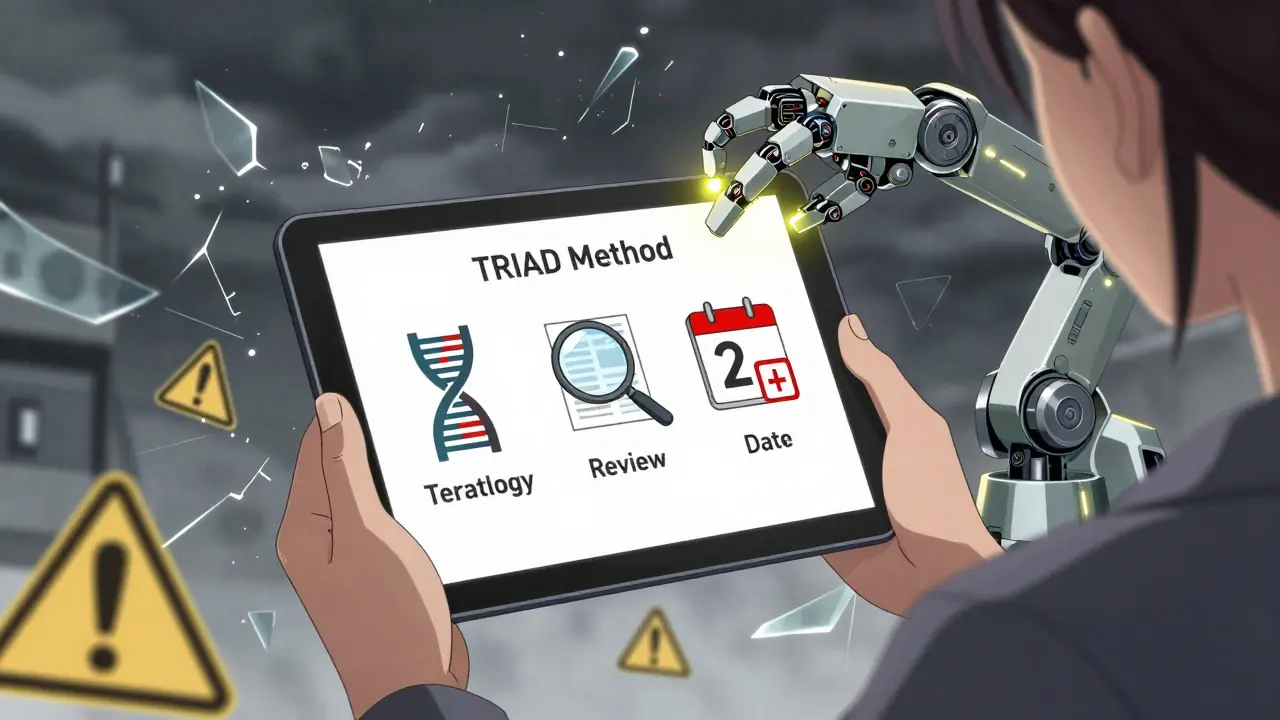
What to Do If You’re Already Taking Something
If you’re on medication right now - antidepressants, asthma inhalers, thyroid pills, seizure meds - don’t stop. Not because you’re being reckless, but because stopping without medical guidance is riskier than continuing. A 2024 Reddit thread in r/BabyBumps documented 87 cases where women quit their antidepressants after reading misinformation. Twenty-nine of them ended up in emergency psychiatric care. That’s not a coincidence. That’s a direct result of bad advice. Talk to your doctor. Bring the website or post you read. Ask: “Is this accurate?” If they don’t know, ask them to check MotherToBaby or LactMed with you. You’re not being difficult. You’re being responsible.What’s Changing in 2026
The good news? Things are getting better. In January 2025, the NIH launched a $4.7 million project to build browser extensions that automatically check pregnancy medication claims against the OTIS database. By late 2025, a new API from the University of Washington can score a website’s accuracy in real time - 91% accurate in early tests. The FDA’s new Digital Health Software Precertification Program, rolling out in 2026, will require pregnancy apps to prove their advice is based on current science before they can be sold. That could cut misinformation by 60% in the next two years. But until then, you’re still your own best defense. No app, no algorithm, no government rule will replace your ability to ask: “Where did this come from? Who says so? When was this written?”Final Checklist: Your Quick Safety Audit
Before you trust any online advice about pregnancy medication, ask yourself:- Is this from .gov, .edu, or MotherToBaby.org?
- Does it cite a real study with authors, journal, and year?
- Is the info less than two years old?
- Does it acknowledge uncertainty - like “current evidence suggests” instead of “this is 100% safe”?
- Does it mention TIS categories or FDA PLLR guidelines?
- Is it trying to sell me something?
You didn’t get pregnant to guess. You got pregnant to protect. Trust the data. Trust the experts. Trust yourself enough to ask the hard questions.
Can I trust advice from my OB-GYN if they say a medication is safe?
Yes - but only if they’re using current guidelines. Many doctors still rely on outdated pregnancy categories (A, B, C, D, X) that were retired in 2015. Ask them if they’ve checked the FDA’s Pregnancy and Lactation Labeling Rule (PLLR) or consulted MotherToBaby. If they haven’t, ask them to. You have the right to know their source.
Are pregnancy apps reliable for medication advice?
Only a small fraction are. In 2024, only 12% of pregnancy apps underwent independent accuracy reviews. Most just pull data from blogs or user reviews. Look for apps linked to MotherToBaby, ACOG, or the FDA. Avoid apps that promote supplements or have ads for pregnancy products - those are often paid promotions, not medical advice.
What should I do if I’ve already stopped a medication because of online advice?
Don’t panic, but act quickly. Contact your doctor or midwife immediately. If you stopped an antidepressant, seizure med, or asthma inhaler, you may need to restart under supervision. The risk of uncontrolled illness during pregnancy often outweighs the unproven risk of the medication. Your provider can help you safely resume treatment and correct any misinformation you’ve absorbed.
Is it safe to take over-the-counter meds like ibuprofen or cold medicine?
Ibuprofen and most NSAIDs are not recommended after 20 weeks of pregnancy - they can affect fetal kidney development and reduce amniotic fluid. Cold medicines often contain multiple ingredients, some of which are unsafe. Always check LactMed or MotherToBaby before taking anything, even if it’s sold on the shelf. Paracetamol (acetaminophen) is generally considered the safest option for pain and fever.
Why do some websites say a drug is safe while others say it’s not?
Because not all sources are equal. One might be citing a 2021 study of 95,000 pregnancies. Another might be quoting a 2008 animal study or a personal blog. Always check the date and source. The most accurate sites explain why there’s disagreement - they don’t pretend there’s a single answer. If a site sounds certain, it’s probably wrong. Real science embraces uncertainty.
Candice Hartley
January 27, 2026 AT 13:03Just read this and cried. I stopped my antidepressants after a Reddit post scared me. Turned out I was spiraling worse than before. Thank you for saying what I needed to hear.
😭
Conor Flannelly
January 29, 2026 AT 10:18It's funny how we trust strangers on the internet more than we trust peer-reviewed journals. We'll scroll through 50 Instagram posts about 'natural cures' but ignore a 10-year meta-analysis because it's 'too dry.'
Science isn't sexy. Anecdotes are. But sexy doesn't save lives.
Also - if someone says 'it's just herbs' like it's harmless, ask them if they'd give their toddler chamomile tea before a surgery. The answer tells you everything.
suhail ahmed
January 30, 2026 AT 09:29Man, I came here looking for a quick fix, but this? This is the kind of post that makes you sit back and rethink everything.
People think pregnancy is just about avoiding sushi and wine - but it's a whole new world of silent decisions. One wrong click, one emotional headline, and you’re ditching meds that keep you alive.
And the worst part? The people who push 'natural' stuff never get to see the aftermath. They don’t see the ER visits, the panic attacks, the stillbirths. They just post a pretty picture of ginger tea and call it wisdom.
Shoutout to MotherToBaby. I just called them last week. They didn’t judge me. They just gave me the facts. That’s rare.
Anjula Jyala
February 1, 2026 AT 07:37Teratology Information Services is the only legitimate framework. Everything else is noise. The FDA PLLR replaced the outdated A-B-C-D-X system in 2015. If your OB is still using those categories, they’re practicing 20th-century medicine. You deserve better.
Also - 'natural' is not a regulatory term. It’s a marketing loophole. Herbs are pharmacologically active compounds. They’re not tea. They’re drugs with unregulated dosing. End of story.
Kegan Powell
February 2, 2026 AT 16:57I used to think if something was on the internet it was true
then I got pregnant
now I check every single thing against MotherToBaby
even my mom's advice
she says ginger tea is fine
turns out it can thin blood
so now I ask before I sip
and I'm not ashamed to say I don't know
that's the whole point of this post
we're not supposed to guess
we're supposed to check
❤️
Paul Taylor
February 3, 2026 AT 17:55Let me tell you about my cousin's friend's doula who swears by black cohosh for labor prep
she took it at 38 weeks
got contractions every 2 minutes
ended up in the hospital with preterm labor
baby was fine but mom was traumatized
and the doula? She still posts about it on Facebook like it's a miracle
no one ever talks about the near-disasters
only the happy endings
and that's why we need real data
not stories
not vibes
not 'my friend had a healthy baby after taking this'
because that's not science
that's Russian roulette with a fetus
and we can do better
we owe it to the next generation to be smarter than this
Patrick Merrell
February 5, 2026 AT 07:39They say 'trust your gut' but your gut doesn't know pharmacokinetics. Your gut doesn't know what a teratogen is. Your gut gets scared by a scary headline.
And now we have AI bots generating fake 'studies' that look real. I saw one yesterday - '2024 Harvard Study: Ibuprofen Causes Autism.' No author. No journal. No DOI. Just a stock photo of a crying baby.
That's not misinformation.
That's warfare.
And we're losing.
Murphy Game
February 6, 2026 AT 21:27They're all in on it. Big Pharma, the FDA, MotherToBaby - it's all a cover. The real data? Suppressed. They don't want you to know that paracetamol crosses the placenta and alters fetal serotonin. They don't want you to know that 70% of autism cases are linked to prenatal exposure. They just want you to keep taking the pills so you don't sue them later.
Read the whistleblower reports. Read the leaked emails. Read the 2023 Congressional hearing on OTIS funding. It's all connected.
Trust no one. Not even this post.
Kirstin Santiago
February 7, 2026 AT 15:22My OB didn't know about the PLLR either. I had to print out the FDA guidelines and show her. She apologized. Said she hadn't updated her training since residency.
It's not her fault. The system is broken.
But we can fix it - one question at a time.
Ask your doctor where they got their info. Ask them to check LactMed with you. Ask them to explain the risk numbers.
Don't be polite. Be persistent.
You're not being difficult.
You're being a parent.
Conor Murphy
February 9, 2026 AT 11:20When I was pregnant, I spent 3 months researching every pill, herb, and supplement. I read every study. I called MotherToBaby twice. I asked my doctor 17 questions.
And you know what? I didn't feel like a burden.
I felt like I was doing my job.
Because pregnancy isn't just about growing a baby.
It's about becoming the kind of person who won't let fear or convenience make decisions for you.
That’s the real legacy we leave.
Not just a healthy child.
But a thoughtful one.
Who asks questions.
Who checks sources.
Who refuses to accept 'everyone says so.'
That’s the gift we give them.
Not just life.
But wisdom.