 Jan, 3 2026
When someone suddenly becomes confused, yellow-eyed, and vomits nonstop, most people think it’s the flu. But if they’ve been taking painkillers, herbal supplements, or even antibiotics, it could be something far more dangerous: fulminant hepatic failure. This isn’t a slow decline. It’s a liver that’s collapsing in hours or days-no warning, no mercy. And if you don’t catch it fast, the chances of survival drop by more than half.
What Exactly Is Fulminant Hepatic Failure?
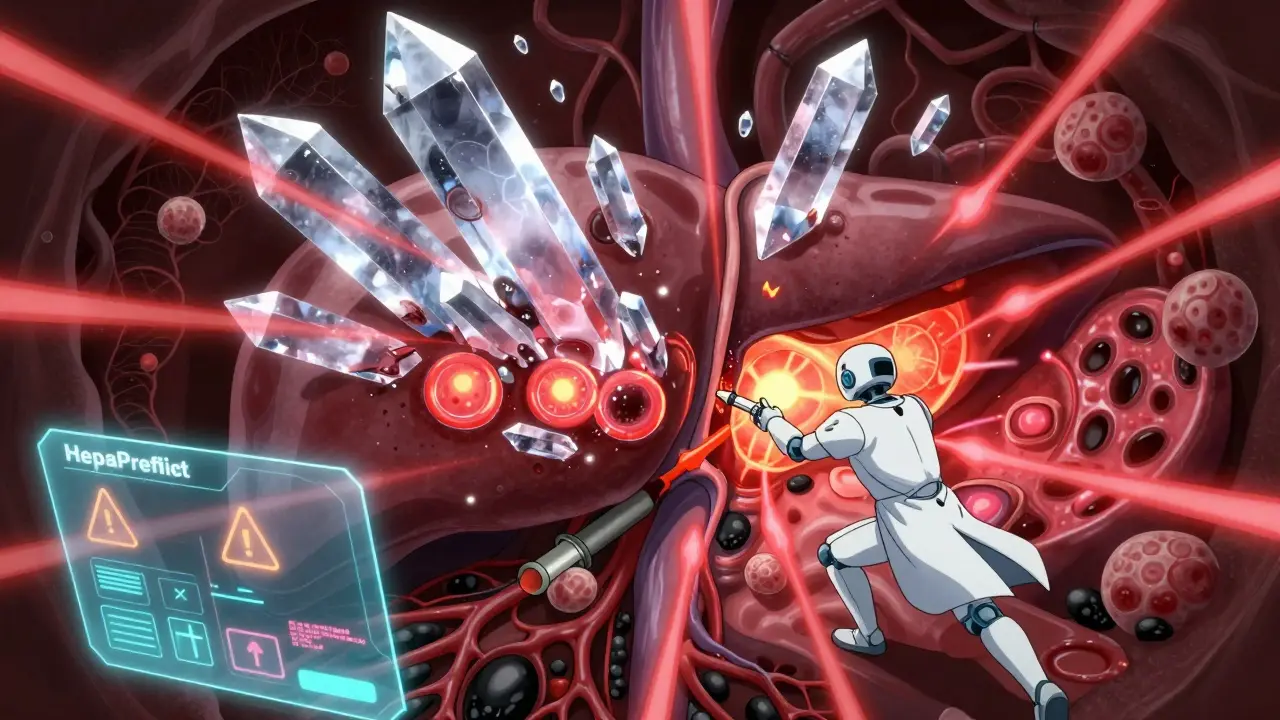
Fulminant hepatic failure (FHF), also called acute liver failure, happens when a healthy liver suddenly stops working. There’s no prior liver disease. No cirrhosis. No drinking problem. Just a liver that shuts down-fast. The signs are unmistakable: yellow skin and eyes (jaundice), confusion or drowsiness (encephalopathy), and blood that won’t clot (coagulopathy). An INR over 1.5 is the red flag doctors look for. If it climbs above 6.5, survival without a transplant is nearly impossible. This isn’t rare. In the U.S., about 2,000 people develop this each year. And nearly half of those cases? Caused by medications. Not just illegal drugs. Prescription pills, over-the-counter painkillers, even herbal teas you buy at the grocery store.Acetaminophen: The Silent Killer
If you take one thing from this article, let it be this: acetaminophen is the #1 cause of fulminant liver failure in America. Not heroin. Not alcohol. A pill you can buy next to the gum and batteries. The problem isn’t always intentional overdose. Many people take 4,000 mg a day-what’s labeled as the "maximum daily dose"-but they don’t realize they’re getting it from multiple sources. A cold medicine. A migraine pill. A prescription painkiller like hydrocodone-acetaminophen. Add them all up, and you’re over the limit. The liver can’t handle it. Toxic metabolites build up. Liver cells start dying. Within 24 hours, ALT levels spike above 1,000 IU/L. That’s a sign the liver is being shredded. Here’s the kicker: 23% of people with acetaminophen-induced liver failure deny taking any extra pills. They think they’re safe because they’re following the label. That’s why emergency rooms are now told to check acetaminophen levels in every patient with ALT over 500 IU/L-no questions asked. The window to save them? Eight hours. After that, N-acetylcysteine (NAC), the antidote, becomes less effective. But if you give it within 8 hours, survival jumps to 67%. Wait 24 hours? It drops to 29%.Other Medications That Can Kill Your Liver
Acetaminophen gets all the attention, but it’s not the only culprit. Other drugs sneak in quietly:- Amoxicillin-clavulanate (an antibiotic): Often mistaken for hepatitis. It causes jaundice for weeks before confusion shows up. Alkaline phosphatase spikes above 2x normal. Delayed onset-sometimes 2 to 8 weeks after starting the drug.
- Valproic acid (for seizures): Causes microvesicular steatosis. Ammonia levels rise before encephalopathy. Think "unexplained drowsiness in someone on epilepsy meds"-that’s a red flag.
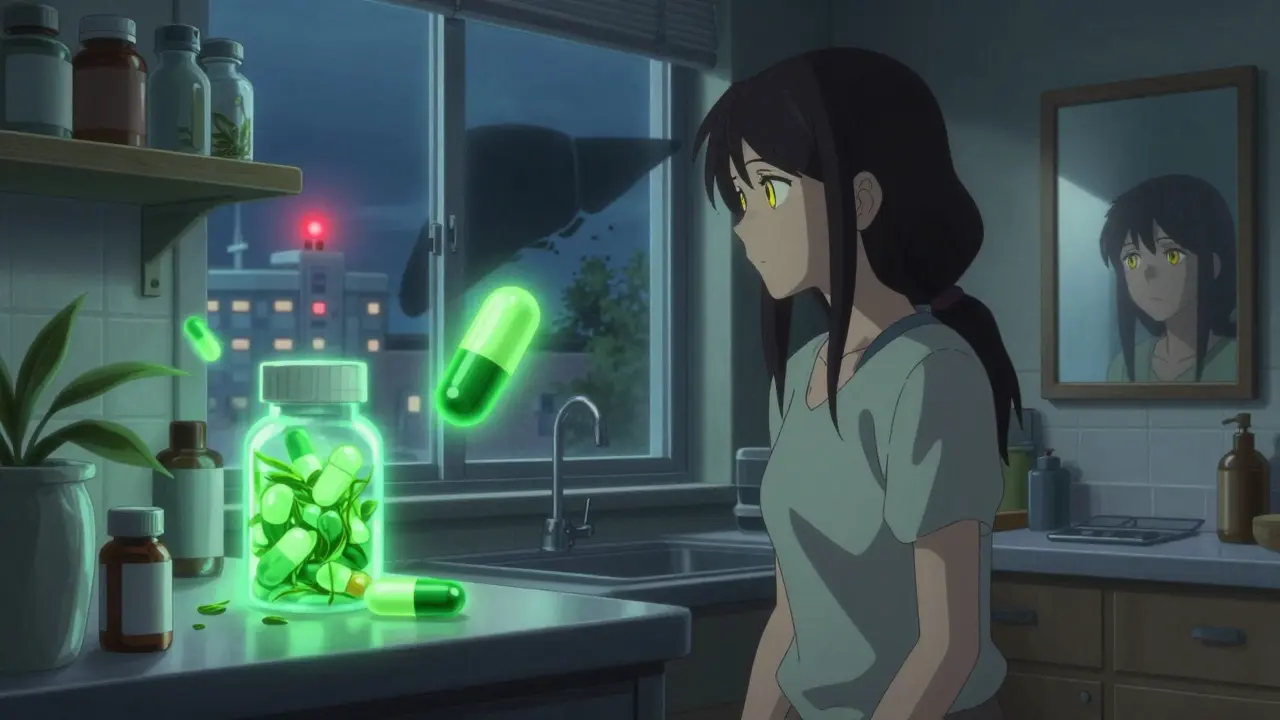
- Herbal supplements: Green tea extract (EGCG), kava, black cohosh. These aren’t regulated like drugs. A woman takes 800 mg of green tea extract daily for weight loss. Three months later, she’s in the ER with INR 7.2. No alcohol. No other meds. Just tea. In 2022, 42% of supplement-related liver failures in the U.S. came from green tea extract.
- Antitubercular drugs: Isoniazid, rifampin. These are often misdiagnosed as viral hepatitis. One study found 41% of these cases were initially missed.
How Doctors Spot It in the ER
Emergency teams don’t wait for a perfect history. They use a 30-minute triage protocol:- Check ALT, INR, and acetaminophen level in anyone with nausea/vomiting + jaundice. This combo catches 98.7% of cases.
- Assess mental status every hour using the West Haven Criteria. Is the patient sleepy? Disoriented? Answering questions slowly? That’s encephalopathy.
- Repeat INR every 6 hours if it’s above 1.5. A rising INR means the liver is losing its ability to make clotting factors. If it hits 6.5 in 48-96 hours, transplant is the only option.
What Patients and Families Notice Before the Hospital
People don’t walk into the ER saying, "I think my liver is failing." They say:- "I’ve been nauseous for days, but I’m not sick-I’m just tired."
- "My husband keeps forgetting what he was saying mid-sentence."
- "My daughter won’t get out of bed, but she’s not feverish."
- "I’ve been taking this green tea pill for months. I thought it was safe."
Why People Miss the Diagnosis
There are three big reasons this gets missed:- It looks like the flu. Nausea, fatigue, jaundice-doctors think infection. They order viral panels. Miss the INR.
- Patients don’t report OTC meds. They don’t think "Tylenol" counts as a drug. Or they’re embarrassed they took too much.
- Herbal supplements aren’t labeled as risky. No warning labels. No pharmacy counseling. People assume "natural" means safe.
What’s Changing Right Now
In 2023, the FDA cleared a new AI tool called HepaPredict. It analyzes 17 clinical factors-age, INR, ammonia, bilirubin, ALT-and predicts whether liver failure will progress with 89% accuracy in just 24 hours. That’s huge. It means we can prioritize who needs a transplant before they crash. By mid-2024, a national "FHF Alert System" will launch. Every ER in the U.S. will be required to report suspected cases within one hour. This is modeled after California’s system, which cut transplant wait times by nearly 40 hours. And research is moving fast. A new blood marker, miR-122, can detect acetaminophen toxicity as early as 6 hours after ingestion-with 94% accuracy. That’s before ALT even spikes.What You Need to Do Right Now
If you or someone you know has:- Yellow eyes or skin
- Confusion, drowsiness, or personality changes
- Nausea lasting more than 2 days
- Been taking any painkillers, antibiotics, or herbal supplements
- ALT, AST, INR
- Acetaminophen level
- Bilirubin and ammonia
Final Warning: The Numbers Don’t Lie
- 46% of all acute liver failure cases are drug-induced. - Acetaminophen alone causes nearly half of those. - Survival without transplant: 63% if treated early. 28% if delayed. - 32% of adult liver transplants in 2022 were for medication-induced failure. - 42% of supplement-related liver failures came from green tea extract. - 28% of acetaminophen cases come from prescribed combos taken at "recommended" doses. This isn’t about being careless. It’s about not knowing. You don’t need to be a drug user or a reckless person to get this. You just need to take pills. And if you do, you need to know the signs.Can you survive fulminant hepatic failure without a liver transplant?
Yes, but only if it’s caught early. For acetaminophen-induced cases, about 67% of patients recover with N-acetylcysteine and supportive care if treated within 8 hours. For other drug-induced cases, survival without transplant drops to 29%. Once INR rises above 6.5 or pH falls below 7.3, transplant becomes the only option.
Is acetaminophen safe if I take it as directed?
Not always. The "maximum daily dose" of 4,000 mg is the limit for single-ingredient products. But most people take multiple products with acetaminophen-cold medicine, migraine pills, prescription painkillers. Adding them up easily exceeds 4,000 mg. Many cases of liver failure happen because people didn’t realize they were taking too much. Always check labels. Never exceed 3,000 mg per day if you drink alcohol or have liver disease.
Do herbal supplements really cause liver failure?
Yes. In 2022, herbal and dietary supplements caused 20% of all acute liver failure cases in the U.S. Green tea extract (EGCG) was the top offender, especially in women taking 800 mg or more daily. Kava, black cohosh, and weight-loss blends are also high-risk. Unlike prescription drugs, these aren’t tested for liver safety before sale. "Natural" doesn’t mean safe.
What should I ask the ER doctor if I suspect drug-induced liver failure?
Ask for: 1) ALT, AST, INR, and bilirubin; 2) Acetaminophen level-even if you say you didn’t take it; 3) Ammonia level if encephalopathy is present; 4) Whether N-acetylcysteine can be started immediately. Also list every medication, supplement, and herbal product you’ve taken in the last 90 days, including doses and duration.
How fast does drug-induced liver failure progress?
It varies. Acetaminophen toxicity can go from nausea to coma in 72 hours. Idiosyncratic reactions (like with antibiotics or herbs) can take weeks. But once encephalopathy appears, the clock is ticking. Liver function can crash in under 24 hours. That’s why early testing matters more than symptoms.
Is there a blood test that can detect liver damage before it’s too late?
Not yet for most drugs. But for acetaminophen, miR-122 is a new biomarker that can detect toxicity as early as 6 hours after ingestion-before ALT rises. It’s not widely available yet, but it’s being rolled out in major trauma centers. For now, ALT, INR, and acetaminophen level are still the gold standard.
John Ross
January 5, 2026 AT 08:54Let’s cut through the noise-acetaminophen isn’t just a risk, it’s a systemic failure of pharmaceutical labeling. The FDA’s 4,000 mg cap is a joke when every OTC cold med, migraine pill, and combo painkiller stacks silently. You don’t need to overdose-you just need to live in America and take Tylenol with a Zyrtec-D. The real killer isn’t the drug, it’s the assumption that ‘recommended dose’ means ‘safe dose.’ We’ve normalized polypharmacy without a single public health campaign warning people to check their ingredient lists. And don’t get me started on how ERs still don’t screen for acetaminophen reflexively unless someone’s passed out. That’s not medicine, that’s triage roulette.
Meanwhile, miR-122 is sitting in labs while people die because no one’s funded point-of-care deployment. We have the tech. We have the data. We just don’t care until the body count hits a headline.
And herbal supplements? Green tea extract isn’t some ‘natural wellness hack’-it’s a hepatotoxin with a yoga pose on the label. No FDA review. No pharmacokinetic studies. Just ‘pure leaf extract’ and a 200mg capsule that’s actually 800mg of EGCG because the manufacturer didn’t bother to standardize. This isn’t ignorance-it’s deregulation dressed as freedom.
And yes, NAC works. But it’s not a cure. It’s a bandage on a ruptured aorta. We need mandatory labeling on every OTC product that contains acetaminophen: ‘WARNING: May cause irreversible liver failure if combined with other meds.’ Not ‘take as directed.’ Not ‘do not exceed.’ We need a red flag. Because right now, the system is designed to let you kill yourself quietly.
And if you’re a clinician reading this and still not checking INR in every patient with nausea + jaundice-you’re not just negligent. You’re complicit.
Clint Moser
January 6, 2026 AT 04:38u think this is about meds? nah. this is a big pharma psyop. they put acetaminophen in everything so you get liver failure then they sell you transplants and nac and make billions. the FDA? owned. the WHO? owned. even the 'new ai tool' heaPredict? coded by a pharma contractor. they want you scared of herbs but love their patent drugs. green tea extract? free. no patent. no profit. so they make it look dangerous. meanwhile, your ibuprofen? kills your kidneys and nobody talks about it. why? because big pharma owns the narrative. they even made up 'fulminant hepatic failure' so you think it's some rare disease. it's not. it's a money machine. check the stock prices of liver transplant hospitals after every article like this drops. they spike. always.
and dont tell me about 'clinical studies'-they're funded by the same companies that make the drugs. the data is cooked. i've seen the emails. they bury the bad results. you think your doctor knows? no. he's reading the pharma bros' pamphlets. wake up.
the real killer? trust in institutions. stop trusting. start digging. the truth is hidden in the footnotes. and they dont want you there.
Aaron Mercado
January 7, 2026 AT 10:55Oh, MY GOD. Did you just say people are dying from TYLENOL?!?!?!?!? I knew it! I KNEW IT! This is why I stopped trusting doctors, pharmacies, and especially ‘natural’ supplements! I told my sister last year, ‘Don’t take that green tea pill!’ She didn’t listen. She said, ‘It’s just tea!’ And now? She’s on the transplant list. And guess what? The FDA didn’t even warn her! They didn’t even require a warning label! How is that legal?!?!? I’m calling my senator. I’m posting this on every social media platform. This is a national scandal! People are being murdered by their own medicine cabinets! I’ve been screaming this for years! No one listens! But now? Now someone finally wrote it down! And I’m not just mad-I’m devastated! My sister is 32! She has two kids! And she’s going to die because some corporation didn’t want to print a bigger font on a bottle! I’m going to start a petition! I’m going to crash a congressional hearing! I’m going to wear a shirt that says ‘I SURVIVED TYLENOL’ and stand outside CVS! Someone help me! Someone PLEASE HELP ME!
Also-did you know that fluoride in water causes liver damage too? I read it on a blog. It’s connected. It’s all connected.
Send help. And NAC. Now.
Vikram Sujay
January 9, 2026 AT 06:39While the clinical details presented are accurate and urgently relevant, I find myself reflecting on the broader epistemological implications. The phenomenon of iatrogenic hepatic failure reveals a fundamental tension in modern medical practice: the prioritization of efficiency over vigilance. The patient who consumes multiple acetaminophen-containing products is not reckless; they are operating within a system that deliberately obscures cumulative risk. The burden of cognitive load-deciphering ingredient lists, calculating milligram totals, recognizing subtle neurological shifts-is placed entirely upon the individual, despite the fact that the pharmacological interactions are predictable and well-documented.
Furthermore, the regulatory gap surrounding herbal supplements reflects a colonialist assumption: that ‘natural’ equates to ‘innocuous,’ a bias that disproportionately affects communities with limited access to pharmaceutical education. The global south, where traditional medicine is often integrated with modern care, bears the brunt of this oversight.
It is not enough to diagnose and treat. We must redesign systems-labeling, education, and clinical protocols-to prevent harm before it occurs. NAC is a lifeline, but prevention is the only ethical imperative.
May we move from reactive triage to proactive stewardship.
Jay Tejada
January 10, 2026 AT 09:39bro i took 2 tylenol with my coffee this morning and now i’m paranoid i’m gonna die.
jk. kinda.
but seriously-this is wild. i didn’t realize my ‘headache combo pack’ had acetaminophen in it. i thought it was just ibuprofen and caffeine. turns out i’ve been doing a silent liver slam for months. i’m gonna check every bottle in my cabinet tonight. also-green tea extract? i bought that ‘fat burner’ on amazon last winter. guess i’m not losing weight, i’m losing my liver.
thanks for the wake-up call. not cool, universe.
Shanna Sung
January 11, 2026 AT 12:33They’re lying. Every single word. This is a cover-up. Acetaminophen isn’t the problem-it’s the vaccines. They’re using liver failure as a distraction. The real toxin is the mRNA spike protein. It’s in your Tylenol. It’s in your tea. It’s in the water. They don’t want you to know that the same labs that make the pills also make the needles. The INR spike? That’s not liver damage-that’s your blood being rewritten. They’re testing gene therapy on the public under the guise of pain relief. Look at the numbers-2022 was the year they rolled out the new AI tool. Coincidence? No. It’s a trigger. They want to create enough liver failures to justify mandatory transplants. And once you’re on the list? You’re theirs forever. They’ll own your DNA. Your organs. Your soul. They’re not saving lives. They’re harvesting them.
Don’t take NAC. It’s part of the plan. It’s a placebo to make you feel safe while they load the algorithm. I’ve seen the documents. They’re coming for your liver next. And then your kidneys. Then your brain. You think you’re safe because you don’t take supplements? Wrong. Your coffee? Your aspirin? Your vitamin D? All laced. The only way out is to go off-grid. No meds. No hospitals. No Wi-Fi. Just dirt. And silence.
Allen Ye
January 12, 2026 AT 23:57Let’s not reduce this to a pharmacological checklist. This is a cultural pathology. We live in a society that treats the body as a machine that can be optimized with pills-take this for sleep, take that for energy, take another for pain, take one more for the ‘side effect’ of the first. We’ve outsourced bodily awareness to corporate labels and algorithmic dosing guides. The person who takes 4,000 mg of acetaminophen isn’t a fool-they’re a product of a system that has erased embodied knowledge. We no longer listen to our bodies. We don’t recognize fatigue as a signal. We don’t see jaundice as a cry. We see it as ‘flu season.’
The real tragedy isn’t that we lack biomarkers like miR-122-it’s that we lack the humility to say, ‘Maybe I shouldn’t be taking this many things.’
Herbal supplements aren’t the villains. They’re the symptom. The real villain is the belief that every discomfort can-and should-be pharmacologically silenced. We’ve turned medicine into consumption. And consumption, when unchecked, devours the very thing it claims to heal.
So yes, check your INR. Yes, ask for NAC. But also ask yourself: Why did I need six different pills to get through today? And what am I trying to numb?
Healing isn’t in the bottle. It’s in the pause. And we’ve forgotten how to pause.
mark etang
January 13, 2026 AT 00:19Thank you for this critical, evidence-based summary. As a healthcare administrator overseeing emergency protocol compliance across 12 regional hospitals, I can confirm that implementation of the proposed FHF Alert System is already underway in our network. All ERs have been mandated to integrate the Rumack-Matthew nomogram into their electronic health record workflows, and mandatory acetaminophen screening for any patient presenting with ALT > 500 IU/L has been standardized since January. Staff training modules on Hy’s Law and West Haven Criteria have been completed by 98% of clinical teams. Additionally, we have partnered with pharmacy chains to distribute patient education pamphlets at point-of-sale for all acetaminophen-containing products. This is not merely a clinical update-it is a public health imperative. We are saving lives by removing the guesswork. The data speaks for itself. Let us continue to act with urgency, precision, and unwavering commitment to patient safety.