 Dec, 9 2025
PMI Safety Check Tool
Check Your Medication Safety Info
Enter your prescription name to see if it meets the new FDA Patient Medication Information (PMI) standards.
Your Medication Safety Check
This medication meets most FDA PMI standards. Important: Your PMI won't include effectiveness rates or why your doctor prescribed this drug. If you have questions about benefits, ask your doctor or pharmacist.
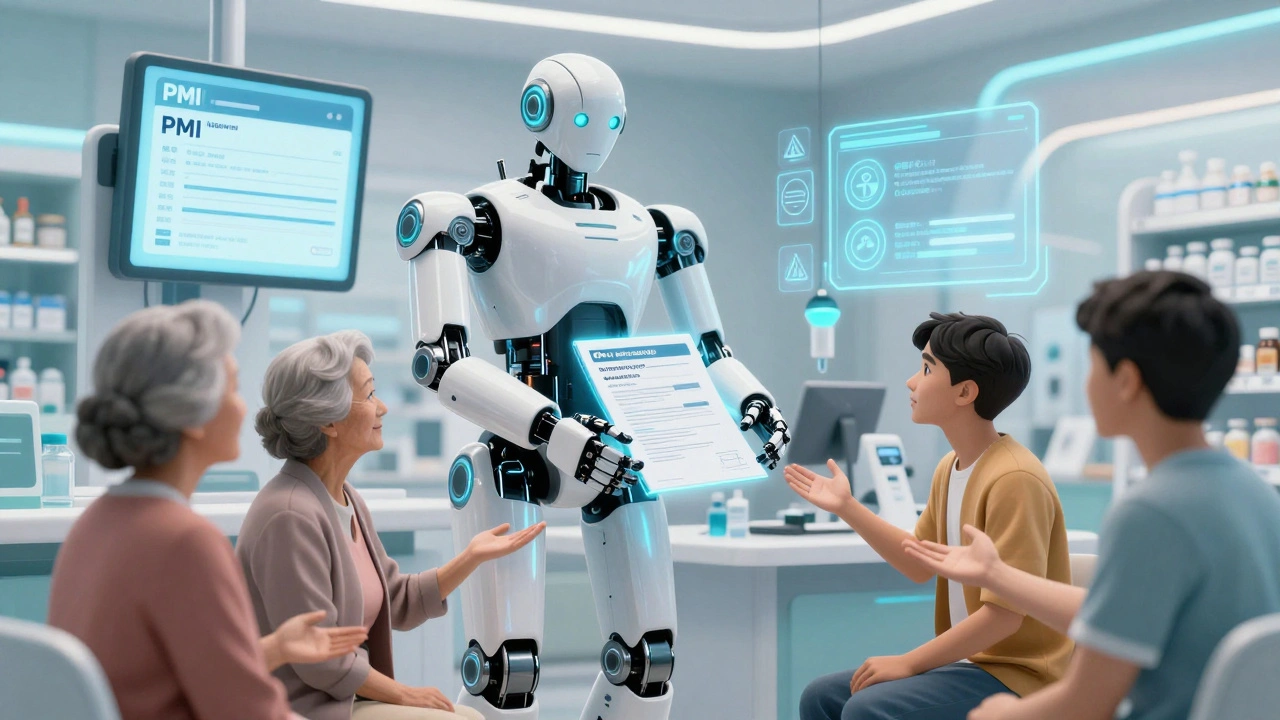
The U.S. Food and Drug Administration (FDA) is pushing forward with a major change to how prescription drugs are explained to patients. Right now, most people get a small paper slip with their meds - if they get one at all. But soon, nearly every prescription you pick up could come with a single-page, standardized Patient Medication Information (PMI) document. This isn’t just a tweak. It’s a complete overhaul of how drug safety info is delivered, and it could change how you take your meds - for the better.
Why the FDA Is Making This Change
Right now, only about 150 out of thousands of prescription drugs in the U.S. come with a Medication Guide. These are usually reserved for drugs with serious risks - like blood thinners, opioids, or cancer treatments. But what about the other 99%? Patients get pharmacy-generated labels that focus on dosing, refills, and billing codes. Safety info is buried. And it’s inconsistent. One pharmacy might list side effects in bold. Another might leave them out entirely. That’s a problem. According to the Institute of Medicine, medication errors cause about 1.3 million injuries and 7,000 deaths every year in the U.S. Many of those mistakes happen because patients don’t understand what they’re taking - or how to take it safely. The FDA’s new PMI rule is meant to fix that. It’s not about adding more words. It’s about making the right words easier to find, read, and remember.What the New PMI Will Look Like
The PMI is designed to be one page, printed in 12-point font, using plain language anyone can understand. No jargon. No fluff. No marketing. Just the facts - clearly organized. Here’s what every PMI must include:- A bold header: “Use exactly as prescribed”
- Clear instructions on how to take the drug - including when, how often, and whether to take it with food
- How to store the medication - like keeping it away from heat or moisture
- How to safely dispose of unused pills - no more flushing them down the toilet
- Key safety warnings - like avoiding alcohol, not driving, or checking for allergic reactions
- Common side effects - listed plainly, without vague terms like “may occur”
It’s Not Just Paper Anymore
The new rule doesn’t force you to take a paper copy. You can choose to get your PMI electronically - via email, a pharmacy app, or a secure patient portal. That’s a big shift. It matches how people live now. But the FDA insists paper must still be available. Not everyone has a smartphone. Not everyone trusts digital systems. Accessibility isn’t optional. It’s required by law.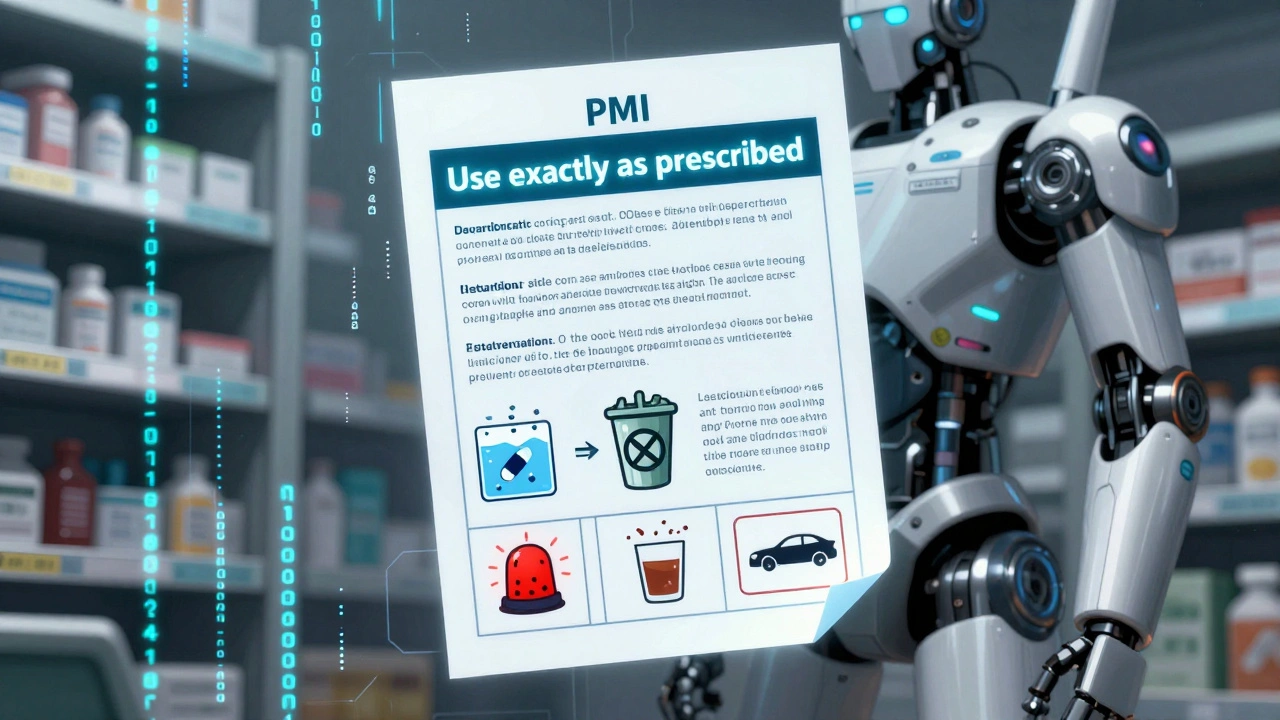
What’s Missing - And Why It Matters
Here’s where things get tricky. The FDA’s PMI focuses on safety and instructions. But it doesn’t tell you how well the drug works. Or how common benefits are. Or why your doctor picked this one over another. Researchers at the University of Pittsburgh tested a different version called the “Decision Critical PMI.” For a drug like mifepristone, instead of saying “headache is a common side effect,” their version said: “43% of patients experience headache.” That kind of specificity helps people make real decisions. One patient told them: “If I know 48% get a fever, I can decide if that’s something I can handle.” The FDA’s version doesn’t include numbers like that. Critics say that’s a missed opportunity. If you’re deciding whether to take a drug with serious side effects, knowing the odds matters. Right now, the FDA assumes your doctor already explained the benefits. But what if you didn’t hear it clearly? Or forgot? Or were too anxious to ask questions?Who’s Affected - And How
This change hits everyone:- Patients: You’ll get consistent, easy-to-read info with every prescription - no matter where you fill it.
- Pharmacies: They’ll need to print or send out PMIs for every outpatient prescription. That’s about 6.7 billion prescriptions a year. Pharmacists estimate it’ll add 30 to 60 seconds per prescription. Some worry about delays during busy hours.
- Drugmakers: They’ll have to create, submit, and update PMIs for every single drug they sell in outpatient settings. That could mean thousands of documents per company. The FDA will provide templates, but the work is massive.
- Doctors: They won’t be directly responsible, but they’ll need to be ready to answer questions patients bring in - especially if the PMI doesn’t explain why the drug was chosen.
Costs and Timeline
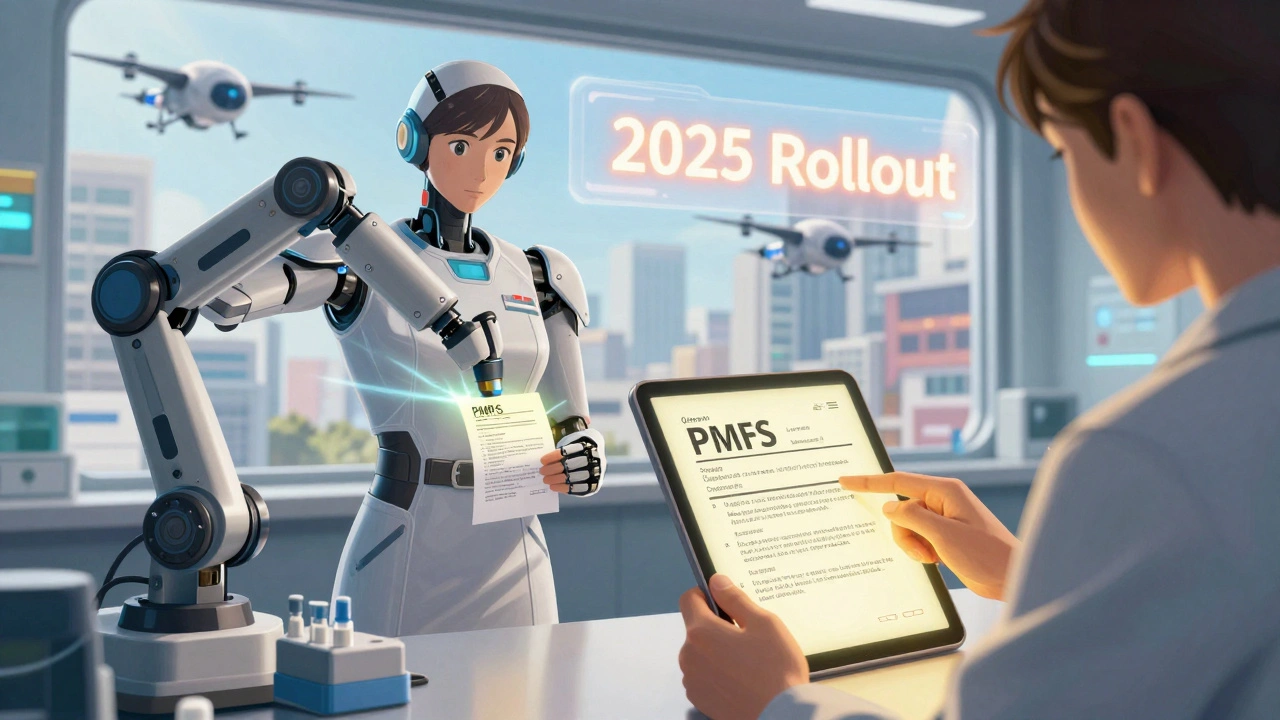
The FDA expects the final rule to be published in early 2024. Full rollout will start in 2025. Big drug companies have 24 months to comply. Smaller ones get 36 months. Total costs? Around $1.2 billion over five years. Most of that - 65% - falls on manufacturers. Pharmacies pay 25% for system updates and staff training. Providers cover the rest. Training for pharmacy staff? Two to four hours upfront, plus one hour every year. That’s doable. But for small, independent pharmacies? That’s a strain. The National Community Pharmacists Association warns that 15% of them might struggle to afford the changes without financial help.What’s Next?
The FDA got over 1,200 public comments on the proposal. Some from patient groups cheering it on. Others from industry asking for more time. A few from researchers pushing for better benefit data. The FDA says it’s listening. They’ve already hinted they might expand the PMI in the future - possibly adding effectiveness rates or how the drug works in the body. That could come in a second phase. For now, the goal is simple: make sure no one takes a pill without knowing how to use it safely. And if you’ve ever been confused by a prescription label - you’re not alone. This change is meant to fix that.What This Means for You
If you take any prescription meds - even just one - this affects you. Next time you pick up a refill, look for that one-page sheet. It’ll be different from what you’re used to. Shorter. Clearer. More focused on what you need to know to stay safe. Don’t ignore it. Read it. Ask your pharmacist if something’s unclear. If you get it electronically, save it. Share it with a family member who helps you manage your meds. This isn’t just a government rule. It’s a tool - one that could help you avoid a dangerous mistake. And that’s worth paying attention to.Will every prescription drug come with a PMI?
Yes - starting in 2025, all outpatient prescription drugs, including blood products given outside hospitals, will come with a standardized Patient Medication Information (PMI). This includes common medications like blood pressure pills, antibiotics, and diabetes drugs. Only inpatient hospital medications are exempt.
Can I still get a paper copy if I prefer it?
Absolutely. The FDA requires pharmacies to offer the PMI in paper form, even if you choose to receive it electronically. This ensures accessibility for people without smartphones, internet access, or those who simply prefer physical copies.
Why doesn’t the PMI include how well the drug works?
The FDA’s current design focuses on safety and usage to keep the document simple and quick to read. Critics argue this leaves out key decision-making info, like effectiveness rates. The FDA acknowledges this feedback and has signaled potential future updates to include benefit data, possibly in a second phase of the rule.
How will pharmacies handle the extra time needed?
Pharmacies will need to integrate PMI distribution into their workflow. The FDA estimates this adds 30-60 seconds per prescription. Staff will need training, and some pharmacies may adjust staffing or timing during peak hours. Electronic delivery options can help reduce in-person delays.
What if the PMI conflicts with what my doctor told me?
Always follow your doctor’s advice. The PMI is meant to reinforce - not replace - what your provider tells you. If there’s a mismatch, call your doctor or pharmacist. The PMI is based on the official prescribing information, but your treatment plan may be personalized. Don’t assume the document overrides your care team’s guidance.
Is the PMI available in languages other than English?
The FDA requires PMIs to be available in English, but encourages manufacturers to provide translations in languages commonly spoken in their patient populations. Pharmacies are also encouraged to offer multilingual support. While not federally mandated, many large manufacturers already provide Spanish, Chinese, and other translations.
Will this reduce medication errors?
Evidence suggests it will. Studies show patients who receive clear, standardized medication instructions have up to 30% higher adherence rates. The National Patient Safety Foundation estimates the PMI could prevent 30% of the 770,000 outpatient medication errors that happen each year in the U.S.
Rich Paul
December 10, 2025 AT 20:26so the fda finally figured out ppl cant read tiny print? lol. theyre gonna make us all read a whole PAGE now? i used to just glance at the bottle and hope for the best. now i gotta learn what 'take with food' actually means? smh. also, who the hell is gonna print 6.7 BILLION of these? pharmacies are gonna turn into paper factories.
Delaine Kiara
December 12, 2025 AT 15:35OMG this is literally the most important thing to happen since TikTok made me realize my coffee is making me anxious. I’ve been taking blood pressure meds for 7 years and never knew I wasn’t supposed to drink grapefruit juice with them until my cousin yelled at me at a BBQ. This PMI? It’s a GODSEND. Also, if they don’t put a little emoji next to 'avoid alcohol' like 🚫🍷 I’m gonna scream.
Ruth Witte
December 12, 2025 AT 18:54YES YES YES 🙌 I’ve been begging my pharmacist for years to just TELL me what the side effects mean in real life. Not 'may cause dizziness' but 'you might feel like you’re on a boat that’s on fire.' This is the change I’ve been praying for. Also, PLEASE make the paper version thick and glossy so it feels like a VIP pass to not dying. 🥹💖
Noah Raines
December 13, 2025 AT 15:32They’re finally doing something right. I don’t care if it costs a billion. If it stops some kid from mixing Adderall with energy drinks and ending up in the ER, it’s worth it. The only thing I’d add? A QR code that links to a 30-second video of someone actually taking the pill with water. Visuals > text. Also, paper is fine but I want the app version to auto-save to my health vault. 📱💊
Sarah Gray
December 13, 2025 AT 19:05While the intention is laudable, the implementation is fundamentally flawed. The FDA’s reliance on 'plain language' is a capitulation to linguistic mediocrity. 'Use exactly as prescribed' is not language-it’s a slogan. True patient empowerment requires nuanced understanding of pharmacokinetics, not dumbed-down bullet points. This is not progress; it’s the commodification of health literacy.
Michael Robinson
December 15, 2025 AT 11:06People don’t need more words. They need to know one thing: this pill won’t kill you if you take it right. And if you take it wrong, it might. That’s it. Everything else is noise. If this one-page thing helps even one person not end up in the hospital because they thought 'once a day' meant 'whenever I remember'… then it’s already a win.
Kathy Haverly
December 15, 2025 AT 17:36Oh great. More government paperwork. Now I have to read a pamphlet every time I get a prescription, while the same companies that made me addicted to opioids are now printing the 'safety guide' for the very drugs that ruined my life. This isn’t safety-it’s PR theater. And don’t get me started on the 'electronic option.' My grandma’s phone dies at 3pm. What’s she supposed to do? Call 911 because she forgot to take her pill?
Evelyn Pastrana
December 16, 2025 AT 10:23Y’all are acting like this is the first time someone tried to make meds not confusing. Remember when they tried to put pictures on pill bottles? We got a picture of a skull and crossbones and everyone thought it was a Halloween thing. This is better. But honestly? If I see 'common side effects' and it says 'headache' without saying '43% of people get it'… I’m gonna side-eye the whole thing. 😏
Nikhil Pattni
December 17, 2025 AT 05:02As someone from India where we have 10 different brands of the same medicine with different instructions on each packet, I can tell you this is a dream. In my village, people take antibiotics until they feel better, then stop-because they think the bottle says 'take until cured.' But what is cured? No one knows. This PMI? It’s not just for Americans-it’s for the whole world. Also, can we get Hindi translation? My aunt still thinks 'take with food' means 'eat a whole banana before the pill.' 😅
Arun Kumar Raut
December 18, 2025 AT 12:25I’ve worked in a pharmacy for 20 years. I’ve seen people cry because they didn’t know their medicine could make them dizzy. I’ve seen grandpas mix their meds with soda because the label said 'take with water' and they thought 'water' meant 'whatever’s in the fridge.' This PMI? It’s not perfect. But it’s the first time the system actually tried to speak to the person, not the paperwork. Let’s not overthink it. Just make it happen.
precious amzy
December 20, 2025 AT 08:30The FDA’s proposal is a symptomatic treatment of a systemic pathology. The underlying epistemological crisis in pharmaceutical communication lies not in the format of the document, but in the ontological separation between the prescriber and the patient as subjects of medical discourse. To reduce therapeutic agency to a one-page infographic is to institutionalize epistemic infantilization under the guise of accessibility. The inclusion of efficacy metrics is not merely an 'opportunity'-it is an ethical imperative. The absence of such data constitutes a form of epistemic violence.