 Jan, 24 2026
Drug Desensitization Protocol Selector
Select Your Situation
Your Recommended Protocol
Key Information
Important: This tool provides general information only. Always consult with a board-certified allergist or immunologist to determine the appropriate protocol for your specific medical situation.
When a life-saving medication makes you sick - really sick - what do you do? You can’t just stop taking it. But you also can’t risk another reaction. This is where drug desensitization comes in. It’s not magic. It’s not a workaround. It’s a carefully controlled medical process that lets people who’ve had severe allergic reactions safely take the exact drug they need.
What Exactly Is Drug Desensitization?
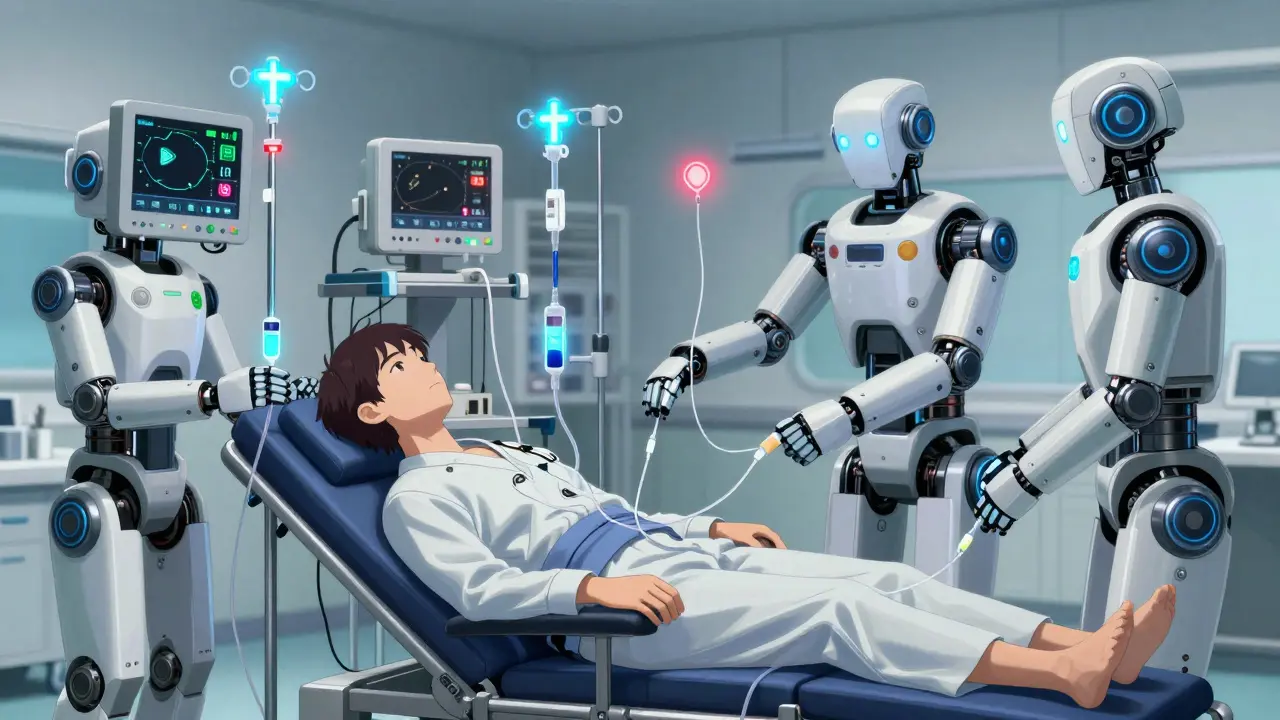
Drug desensitization is the process of slowly introducing a medication to someone who’s had a serious allergic reaction to it - in tiny, increasing doses - until their body temporarily stops reacting. It doesn’t cure the allergy. It doesn’t change your immune system forever. It just gives you a window of time to get the treatment you need. This isn’t something you do at home. It’s done in a hospital setting, under constant monitoring. You’ll be hooked up to heart and oxygen monitors. Nurses and allergists will watch you like a hawk. If your blood pressure drops or your throat starts to swell, they’re ready to act - fast. The technique was developed in the 1960s, but it wasn’t until Dr. Mariana Castells and her team at Brigham and Women’s Hospital in Boston created standardized protocols in the 2000s that it became widely used. Today, it’s the go-to solution when there’s no other option.When Do Doctors Use It?
Desensitization isn’t for every allergic reaction. It’s reserved for situations where the drug is absolutely essential - and no safe alternative exists. Common scenarios include:- Penicillin or other antibiotics for serious infections like osteomyelitis or endocarditis - especially when the patient is allergic and alternatives are less effective or more toxic.
- Chemotherapy drugs like paclitaxel or carboplatin - where up to 20% of cancer patients develop hypersensitivity, but stopping treatment isn’t an option.
- Monoclonal antibodies for autoimmune diseases or cancer - many of these drugs carry a high risk of infusion reactions.
- Aspirin or NSAIDs for patients with chronic conditions like asthma or cardiovascular disease who need daily use.
Two Types of Protocols: Fast and Slow
There are two main ways to do this - and which one you get depends on the type of reaction you had. Rapid Drug Desensitization (RDD) is for immediate reactions - the kind that happen within minutes: hives, swelling, trouble breathing, low blood pressure. These are usually IgE-mediated, meaning your immune system reacts fast and hard. RDD follows a strict, timed schedule. You start with a dose that’s 1/10,000th of the full therapeutic amount. Every 15 minutes, the dose doubles. After 12 steps, you’ve reached the full dose. The whole process takes about 4 to 6 hours. It’s intense, but it works. Success rates? 95% to 100% when done correctly. Slow Drug Desensitization (SDD) is for delayed reactions - the kind that show up hours or days later: rashes, fever, blistering skin. These involve T-cells, not IgE antibodies. There’s no standard protocol here. Dosing intervals vary. Some take 2 to 3 days. Aspirin desensitization, for example, might involve taking a tiny dose every 2 to 4 hours over multiple days. The route matters too. IV is most common for antibiotics and chemo. Oral is used for aspirin, NSAIDs, and some antibiotics. IV moves faster. Oral takes longer. Both require the same level of supervision.How Safe Is It?
It’s not risk-free. But it’s far safer than most people think - if done right. In properly managed settings, severe reactions during desensitization happen in less than 2% of cases. Most side effects are mild: flushing, itching, nausea. In one study of 42 patients getting penicillin desensitization, only 8% had minor reactions. Zero deaths. Zero anaphylactic events. But here’s the catch: if you try this without the right equipment, training, or monitoring, things can go wrong fast. A 2021 survey found that 12% of bad outcomes happened in community clinics where staff weren’t allergy specialists. Complication rates were three times higher than in academic hospitals. That’s why you need an allergist or immunologist running the show. Not a general practitioner. Not a nurse practitioner. A specialist who’s done at least 15 to 20 of these procedures under supervision.
What Doesn’t Work as Well
Some doctors try to avoid desensitization by using premedication - giving antihistamines or steroids before the drug. But this isn’t the same thing. Premedication masks symptoms. It doesn’t stop the reaction at its source. In one study, 10% of cancer patients still had severe reactions to taxanes even after taking steroids and antihistamines. Desensitization, on the other hand, succeeded in 98% of those same cases. Substituting drugs sounds safer - until you realize many alternatives are less effective, more toxic, or cause cross-reactions. For example, if you’re allergic to penicillin, you might be switched to a cephalosporin. But up to 20% of people with penicillin allergies react to those too. Desensitization lets you use the best drug, not just the safest one.Who Shouldn’t Try It
Desensitization isn’t for everyone. It’s absolutely contraindicated in patients who’ve had:- Stevens-Johnson syndrome
- Toxic epidermal necrolysis
- Severe delayed skin reactions with organ damage
What Happens After?
Here’s the big limitation: the tolerance doesn’t last. If you stop taking the drug for more than 48 to 72 hours, your body “forgets” it’s okay with the medication. The next time you need it - whether it’s days or weeks later - you’ll have to go through the whole process again. That’s why it’s not a cure. It’s a bridge. A temporary pass to get you through the treatment you need. Patients who’ve gone through it often describe it as life-changing. One cancer patient on Reddit said, “After 20 years of being labeled allergic, the 4-hour protocol let me finally take the best antibiotic for my osteomyelitis.” Another oncology patient called it “life-saving.” But it’s not easy. The process is long. Anxiety is common. One survey found 63% of patients felt nervous before the procedure. The average IV desensitization takes nearly 5 hours. You’re stuck in a hospital chair, monitored every 15 minutes, waiting for the next dose.
TONY ADAMS
January 26, 2026 AT 00:36bro i got penicillin allergy and they made me do this thing at the hospital and i cried the whole time but it worked lmao
George Rahn
January 27, 2026 AT 10:54One must contemplate the metaphysical implications of this medical rite: the body, once a temple of immune sovereignty, is coerced into temporal capitulation-a sacrament of survival orchestrated by the priesthood of immunology. This is not therapy; it is a pact with the biological unknown, where the self is both victim and vessel.
Napoleon Huere
January 29, 2026 AT 04:03It’s wild to think that we’re basically tricking our immune system into forgetting it hates something. Like, evolution spent millions of years building this defense mechanism and now we’re just hacking it with a stopwatch and a syringe. We’re not curing anything-we’re just buying time. And that’s kind of beautiful in a terrifying way.
It’s like telling your brain, ‘Hey, this thing that used to kill you? It’s fine now. Just trust me.’ And for a few days, it does. But the moment you stop? Boom. It remembers. We’re living in a liminal space between life and death, and this is the bridge.
Uche Okoro
January 30, 2026 AT 10:24It is imperative to underscore that the immunological reprogramming induced via desensitization protocols constitutes a transient immunomodulatory phenomenon, predicated upon the downregulation of IgE-mediated mast cell degranulation pathways. The temporal window of tolerance, bounded by 48–72 hours, reflects the absence of durable T-cell anergy, thereby necessitating protocol reinitiation upon re-exposure.
Furthermore, the clinical efficacy of rapid desensitization is contingent upon stringent adherence to dose escalation kinetics, wherein deviation beyond ±10% of standardized intervals precipitates heightened risk of anaphylactoid sequelae.
shivam utkresth
January 31, 2026 AT 23:46Back home in India, my uncle had to go through this for his chemo-he was allergic to paclitaxel, and the docs here didn’t even know what desensitization was. We had to fly him to Mumbai, pay out the nose, and wait three days. It’s insane that in the US this is routine, but in places like mine, it’s a luxury. We need this knowledge to spread, not just stay in fancy hospitals.
Also, the way you described the difference between premedication and real desensitization? Spot on. So many doctors just throw in steroids and call it a day. My uncle’s first attempt failed because of that. Second time, proper protocol? He got through it like a champ.
Kipper Pickens
February 1, 2026 AT 14:21There’s a quiet revolution happening in immunology that most people don’t see. Desensitization isn’t just about bypassing allergies-it’s about redefining the boundaries between ‘safe’ and ‘necessary.’ When you’re staring down a terminal diagnosis and the only drug that works is the one that nearly killed you before, the line between risk and redemption gets very thin.
And yet, the infrastructure to support this is still fragmented. Academic centers have protocols, staff, and training. Community hospitals? They’re scrambling. This isn’t just a medical issue-it’s a systemic equity problem.
Aurelie L.
February 3, 2026 AT 11:25I had to do this for carboplatin. Four hours. I thought I was gonna die. I cried. I screamed. I begged them to stop. They didn’t. I’m alive because they didn’t.
Joanna Domżalska
February 4, 2026 AT 02:53So let me get this straight-you’re telling me we’re not curing allergies, we’re just tricking the body into pretending it’s not allergic for a few days? And we call this medicine? Sounds like a placebo with IVs and monitors. Why not just develop new drugs instead of playing Russian roulette with people’s immune systems?
Also, 95% success rate? That’s just 1 in 20 people who might drop dead during the procedure. And you call that ‘safe’? I’d rather die of infection than risk that.
Josh josh
February 4, 2026 AT 07:32so i did this for penicillin last year and honestly the nurses were chill as hell they just kept saying ‘you good? you good?’ every 15 min and i was like yeah im fine but my heart was beating like a drum
also the chair was hard and my butt went numb but worth it
bella nash
February 4, 2026 AT 15:04It is worth noting that the physiological phenomenon under discussion constitutes a temporary immunological accommodation rather than a true therapeutic intervention. The absence of permanent immunological memory alteration renders the procedure inherently transient, thereby necessitating repeated administration under controlled conditions. This raises profound ethical and logistical considerations regarding resource allocation and patient autonomy.
Curtis Younker
February 5, 2026 AT 23:48Man, I can’t even imagine going through this. I had a friend who got cancer and was allergic to the chemo, and she did this thing-4 hours straight, hooked up to machines, watching the clock tick. She said the hardest part wasn’t the pain-it was the fear. Every time they gave her the next dose, she’d close her eyes and say ‘please don’t kill me.’ And then they’d say ‘you’re good, one more.’
She’s been in remission for five years now. She still talks about it like it was a war. And you know what? She calls it the day she got her life back. Not the chemo. Not the surgery. The desensitization. That’s the moment they let her live.
People think medicine is just pills and needles. But sometimes? It’s just someone sitting next to you, saying ‘you got this,’ while your body tries to kill you. That’s the real miracle.
And yeah, it’s not perfect. It’s not cheap. It’s not easy. But if you’re one of those people who’s been told ‘you’re allergic to the only thing that can save you’? This is your lifeline. Don’t let anyone tell you it’s too much. It’s everything.