 Feb, 2 2026
What Happens When Your Body Reacts to Chemo
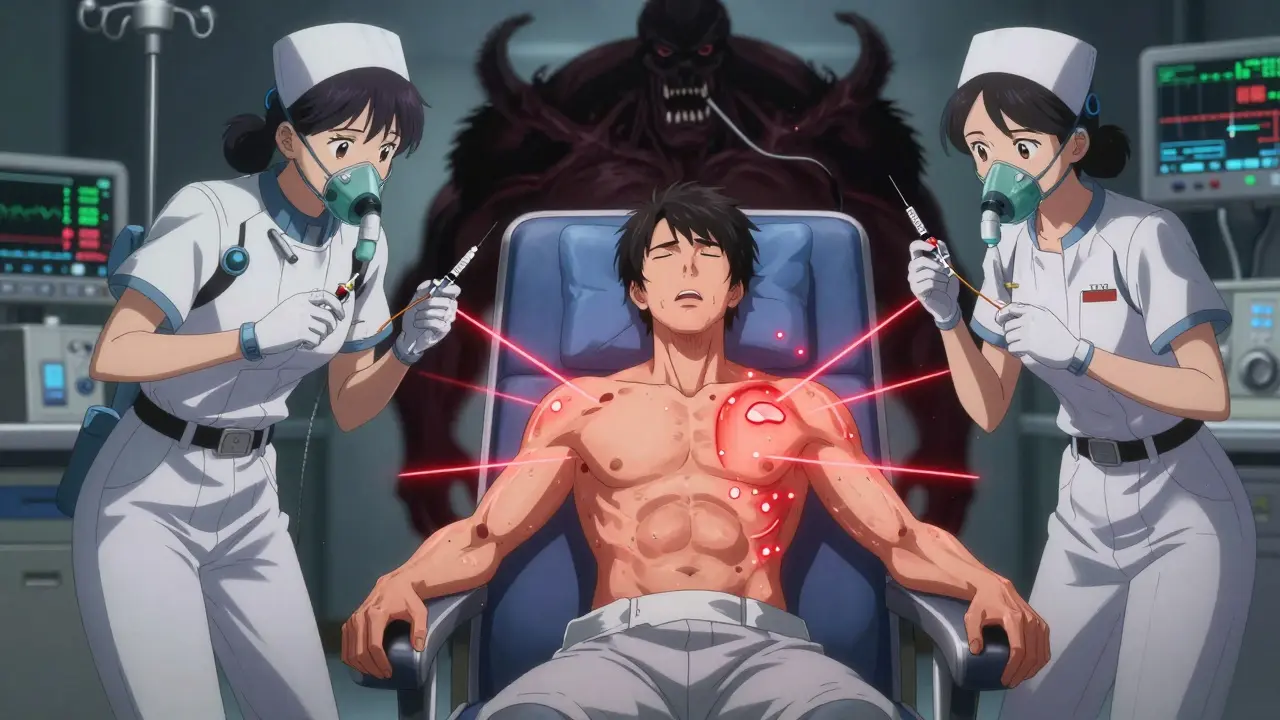
Chemotherapy saves lives, but for some people, the drugs meant to kill cancer can trigger a dangerous immune response. These are called chemotherapy hypersensitivity reactions. They’re not just nausea or fatigue - they’re real allergic reactions that can turn life-threatening in minutes. About 5% of people getting chemo will have one. Most are mild, but a few can cause breathing failure, low blood pressure, or cardiac arrest. The key isn’t avoiding chemo - it’s knowing the signs and acting fast.
How You’ll Know It’s Happening
Reactions don’t always look the same. Some start with a tickle in your throat. Others begin with a rash or a sudden flush of heat across your chest. Here’s what to watch for, broken down by how your body responds.
- Head and neck: Itchy eyes, runny nose, swelling around your lips or tongue, or a strange metallic taste in your mouth. These might seem small, but they’re early warnings.
- Respiratory: Shortness of breath, wheezing, chest tightness, or coughing that comes out of nowhere. If you’re not sick with a cold and suddenly can’t catch your breath, don’t ignore it.
- Heart and circulation: Dizziness, fainting, rapid heartbeat, or a sudden drop in blood pressure. You might feel like the room is spinning or your vision is tunneling. This isn’t just being tired - it’s your body going into shock.
- Stomach and gut: Nausea, vomiting, cramps, or diarrhea. These are common with chemo, but if they hit hard and fast during an infusion, they’re part of the reaction.
- Skin: Hives, redness, itching, or flushing. About 72% of people report itching. That’s not just dry skin - it’s histamine flooding your system.
- Mind and nerves: A sudden sense of dread, anxiety, or feeling like something terrible is about to happen. Nearly half of people in severe reactions describe this. It’s your body screaming for help before your brain catches up.
Some reactions start mild and explode within minutes. Others creep in hours later. That’s why you need to stay alert even after the IV is done.
Which Chemo Drugs Are Most Likely to Cause This?
Not all chemo drugs are equal when it comes to allergic reactions. Some are far more likely to trigger them - especially if you’ve had them before.
- Platinum drugs: Carboplatin is the biggest culprit. After your sixth treatment, the risk jumps from under 1% to nearly 7%. By the eighth or ninth cycle, it’s over 25%. Cisplatin and oxaliplatin also carry risks, especially with repeated use.
- Taxanes: Paclitaxel and docetaxel are common causes. Up to 30% of people get some kind of reaction, though severe cases are rare.
- Monoclonal antibodies: Drugs like cetuximab, rituximab, and trastuzumab can cause reactions even on the first infusion. These are different from traditional chemo - they’re designed to target cancer cells, but your immune system sees them as invaders.
- Others: L-asparaginase, bleomycin, procarbazine, and cytarabine also show up on the high-risk list.
The more times you get treated, the higher your risk - especially with platinum drugs. That’s why nurses watch you extra closely after cycle five or six.
When It’s an Emergency - The Anaphylaxis Checklist
Anaphylaxis isn’t just a bad reaction. It’s a full-body shutdown. If you have two or more of these, it’s an emergency:
- Low blood pressure (systolic under 90)
- Wheezing or trouble breathing
- Swelling of the tongue or throat
- Rapid heartbeat or fainting
- Sudden skin rash with dizziness
Don’t wait for all of them. If you feel like you’re dying - even if you’re not sure why - tell your nurse immediately. Anaphylaxis doesn’t get better with antihistamines alone. It needs epinephrine. Fast.
What the Team Does When a Reaction Happens
Every chemo unit should have a plan. Here’s what happens when a reaction hits.
- Stop the infusion. No exceptions. Even if it’s just a little itching, they stop the drug.
- Call for help. Nurses alert the team. Anaphylaxis kits are pulled - epinephrine, oxygen, IV fluids.
- Give epinephrine. If it’s severe, they inject 0.3-0.5 mg into your thigh. This is the only thing that can reverse airway swelling and low blood pressure. It works in seconds.
- Support your body. Oxygen through a mask, IV fluids to raise blood pressure, antihistamines like diphenhydramine, and steroids like dexamethasone to calm the immune response.
- Monitor you closely. Your heart rate, blood pressure, and oxygen levels are tracked nonstop for at least an hour after symptoms fade.
For mild reactions, they might slow the drip and restart after 30 minutes. For severe ones, the chemo is stopped for good - unless you go through a special desensitization process.
How They Try to Prevent Reactions Before They Start
Prevention isn’t luck. It’s a routine.
For drugs like paclitaxel or docetaxel, you’ll get premeds before the infusion:
- Dexamethasone (20 mg IV) - 12 and 6 hours before
- Diphenhydramine (50 mg IV) - 30 minutes before
- Famotidine (20 mg IV) - 30 minutes before
This combo reduces the chance of a reaction by up to 70%. Slower infusion rates also help. Instead of dumping the drug in 15 minutes, they stretch it over an hour or more.
If you’ve had a reaction before, your team will avoid that drug unless there’s no other option. Then, they’ll use desensitization - slowly giving you tiny amounts of the drug over 4 to 12 hours while watching you like a hawk. It’s risky, but it lets people keep using a drug that works.
What You Need to Do - Even After Treatment Ends
You’re not safe just because the IV is out.
Some reactions show up hours later. You might feel fine leaving the clinic, then get a rash or chest tightness at home. That’s why every patient gets the same warning: Call your nurse if you feel anything unusual - even if it’s not what you’ve felt before.
Keep a list of every chemo drug you’ve had and any reaction you had. Bring it to every appointment. Tell every new doctor, nurse, or pharmacist. Write it in your phone. Don’t assume they’ll know.
And if you’ve had a severe reaction, make sure your family knows the signs. If you collapse at home, they need to know to call 999 and use your epinephrine auto-injector if you have one.
Why This Matters More Than You Think
Chemotherapy hypersensitivity isn’t rare. It’s predictable. And it’s preventable - if you know the signs and speak up.
Too many people dismiss early symptoms as "just side effects." But itching, flushing, or dizziness during chemo aren’t normal fatigue. They’re your body’s alarm system. Nurses are trained to catch them. But they can’t read your mind.
If you feel off - even a little - say something. If you’ve had a reaction before, remind them. If you’re scared, say that too. Your voice could save your life.
Can chemotherapy hypersensitivity happen on the first treatment?
Yes. While some reactions build up over time - especially with platinum drugs - others like monoclonal antibodies (cetuximab, rituximab) can trigger a reaction on the very first infusion. That’s why all patients are closely monitored during the first dose, even if they’ve never had an allergy before.
Is a chemo reaction the same as a chemo infusion reaction?
Not always. Infusion reactions can be caused by the drug itself irritating your body - not your immune system. These might cause fever, chills, or muscle aches. Hypersensitivity reactions are true allergic responses, triggered by your immune system releasing histamine and other chemicals. The symptoms overlap, but the treatment differs. Anaphylaxis requires epinephrine; a simple infusion reaction might just need a slower drip.
How do they test for a chemo allergy?
There’s no simple skin test like for peanuts. Doctors use a mix of clinical history and lab tests. Blood tests can check for elevated tryptase (a marker of mast cell activation) or specific IgE antibodies to the drug. Basophil activation tests, which measure how your immune cells react to the drug in a lab, are also used in specialized centers. But often, the diagnosis comes from what happened during the infusion - symptoms plus timing.
If I had a reaction, will I ever get that chemo again?
Usually, they avoid the drug that caused the reaction. But if it’s the best option for your cancer, you might go through a desensitization protocol. This means getting tiny, increasing doses over several hours under close watch. It’s not risk-free, but it lets people keep using life-saving drugs they’re allergic to. This is only done in hospitals with the right equipment and staff.
What should I carry with me after having a chemo reaction?
Always carry a list of the chemo drugs you’ve had and which ones caused reactions. If you’ve had a severe reaction, ask your oncologist if you should carry an epinephrine auto-injector (like an EpiPen) and a medical alert bracelet. Make sure your family knows where it is and how to use it. Don’t assume emergency responders will know your history unless you tell them.
Can I prevent chemo reactions with over-the-counter antihistamines?
No. Taking Benadryl on your own before chemo won’t help - and might mask early warning signs. Only use medications given by your oncology team. Premedication is carefully timed and dosed based on the drug you’re getting. Self-medicating could delay recognition of a serious reaction and put you at greater risk.
Wendy Lamb
February 3, 2026 AT 10:48Just had my 7th cycle of carboplatin last week. Started with a weird metallic taste and itchy palms-ignored it thinking it was just "chemo vibes." Thank god the nurse noticed the flush and stopped it. They gave me epinephrine and I was fine. Don’t brush off the small stuff. Your body knows before your brain does.
Prajwal Manjunath Shanthappa
February 5, 2026 AT 09:45Oh, for heaven’s sake! Another ‘personal anecdote’ masquerading as medical advice? The data is clear: hypersensitivity reactions are statistically predictable, not some mystical intuition! You don’t ‘feel’ it-you monitor IgE titers, tryptase levels, and basophil activation! And yet, here we are, reduced to folk wisdom and ‘itchy palms’-pathetic.
Also, why do people think epinephrine is a magic bullet? It’s a vasoconstrictor with arrhythmogenic potential! You need a protocol, not a panic button! And don’t get me started on ‘desensitization’-it’s a gamble dressed in white coats!
And who approved this article? It’s practically a pamphlet for hypochondriacs. ‘Call your nurse if you feel anything unusual’? What’s unusual? The existential dread of being a human-shaped tumor bag?!
Antwonette Robinson
February 6, 2026 AT 11:43So let me get this straight: if your skin itches during chemo, it’s not ‘side effects’-it’s your body screaming for help? Wow. I didn’t realize cancer treatment was just a haunted house ride with IVs.
Also, why is everyone suddenly an expert on anaphylaxis? I’ve seen more people post ‘I had a reaction!’ on Reddit than I’ve seen actual epinephrine auto-injectors in the wild. 72% of people report itching? Cool. So does my dog when he eats cheese.
Ed Mackey
February 7, 2026 AT 07:16Just wanted to say thanks for this. My mom had a reaction to docetaxel last year-she got hives and started wheezing right after the drip started. We didn’t know what was happening until the nurse yelled ‘STOP THE INFUSION!’
She’s fine now, but I wish we’d known the signs sooner. I printed this out and taped it to the fridge. My sister keeps forgetting to tell new nurses about her history. Now she has no excuse.
Jhoantan Moreira
February 8, 2026 AT 21:15This is so important ❤️ I’ve seen too many people minimize early symptoms because they don’t want to be ‘that patient’ who ‘makes a fuss.’ But honestly? The best patients are the ones who speak up. You’re not being difficult-you’re saving your life. And nurses? They *want* you to tell them. We’re not mad-we’re relieved.
Also, shoutout to the med teams who do desensitization. That’s next-level care. 🙌
Justin Fauth
February 9, 2026 AT 04:11Why are we letting Big Pharma get away with this? These drugs are poison-plain and simple. They’re not ‘saving lives’-they’re just prolonging suffering so the stock prices stay up. Epinephrine? Antihistamines? You’re just patching the leak while the whole boat sinks!
And why do they keep giving you the same poison over and over? That’s not medicine-that’s torture with a clipboard. If you react once, they should switch you to something REAL. Not more chemo.
Meenal Khurana
February 10, 2026 AT 13:05My aunt had a reaction to cetuximab on her first infusion. They stopped it immediately. She’s on a different drug now and doing great. Always speak up. Always.
Joy Johnston
February 11, 2026 AT 06:35As an oncology nurse for 14 years, I can confirm: the premed regimen for taxanes (dexamethasone, diphenhydramine, famotidine) is non-negotiable. Skipping even one component increases reaction risk by 40-60%. We’ve seen it repeatedly.
And yes-reactions can occur hours later. One patient developed urticaria and hypotension at 3 a.m. after leaving at noon. We now give discharge instructions in writing, verbally, and via video. No assumptions.
Also: epinephrine is the only life-saving intervention for anaphylaxis. Antihistamines are adjuncts. Never substitutes. Please, if you’re reading this-remember that.
Shelby Price
February 11, 2026 AT 14:03Wait, so if I get a weird taste in my mouth during chemo, that’s not just ‘chemo mouth’? 😳 I thought that was normal…
Also, why does no one talk about how scary it is to be hooked up to a machine that could kill you? Like, I know it’s supposed to save me, but… what if it doesn’t? What if it just… flips a switch?
Anyway. Thanks for the info. I’ll tell my nurse next time I feel ‘off.’
Sherman Lee
February 13, 2026 AT 07:23They say it’s ‘hypersensitivity’… but what if it’s not? What if it’s the chemo *itself* triggering a hidden immune collapse? What if the ‘reaction’ is actually the body trying to purge the toxin? And what if the ‘desensitization’ is just forcing the immune system to accept poison?
And why do they never mention the 2018 CDC report linking platinum drugs to long-term mast cell activation syndrome? No one talks about that. Why?
They’re hiding something. They always are.
Zachary French
February 14, 2026 AT 05:25Let me just say-this article reads like a corporate wellness blog written by a grad student who binge-watched Grey’s Anatomy.
‘Itchy palms? Call your nurse!’ Oh, I’m sorry, did your chemo come with a customer service hotline? Did you get a laminated card with a QR code to ‘report unusual feelings’?
And ‘desensitization’? That’s not medicine-that’s Russian roulette with a syringe. You think they’re helping you? They’re just trying to squeeze one more round out of a drug that’s already bankrupted your insurance.
And ‘premeds’? Yeah, right. That’s just a placebo cocktail to make you feel better while they pump you full of poison. Wake up.
Daz Leonheart
February 14, 2026 AT 08:45I know this stuff is scary. I’ve been through it. But you’re not alone. Every time you speak up, you’re not being difficult-you’re helping everyone else too. Your voice gives someone else permission to say ‘I’m not okay.’
You got this. And if you need to talk, I’m here. No judgment. Just a listening ear.
Coy Huffman
February 15, 2026 AT 03:16It’s strange, isn’t it? We’re told to trust science, to rely on protocols… but when your body screams, the system asks you to quiet down. We’re taught to be passive patients. But survival doesn’t come from obedience-it comes from noticing, speaking, insisting.
Maybe the real cure isn’t in the drug… but in the courage to say ‘this isn’t right.’
And maybe… that’s the most powerful medicine of all.