 Dec, 2 2025
What Happens When CBD Meets Your Prescription Medications?
You might have heard CBD helps with sleep, anxiety, or pain. But if you’re taking any prescription meds, you need to pause before reaching for that tincture or gummy. CBD doesn’t just sit quietly in your system-it actively interferes with how your body processes many common drugs. This isn’t speculation. It’s backed by clinical reports, FDA warnings, and liver enzyme data from real patients.
Why CBD Interacts With So Many Drugs
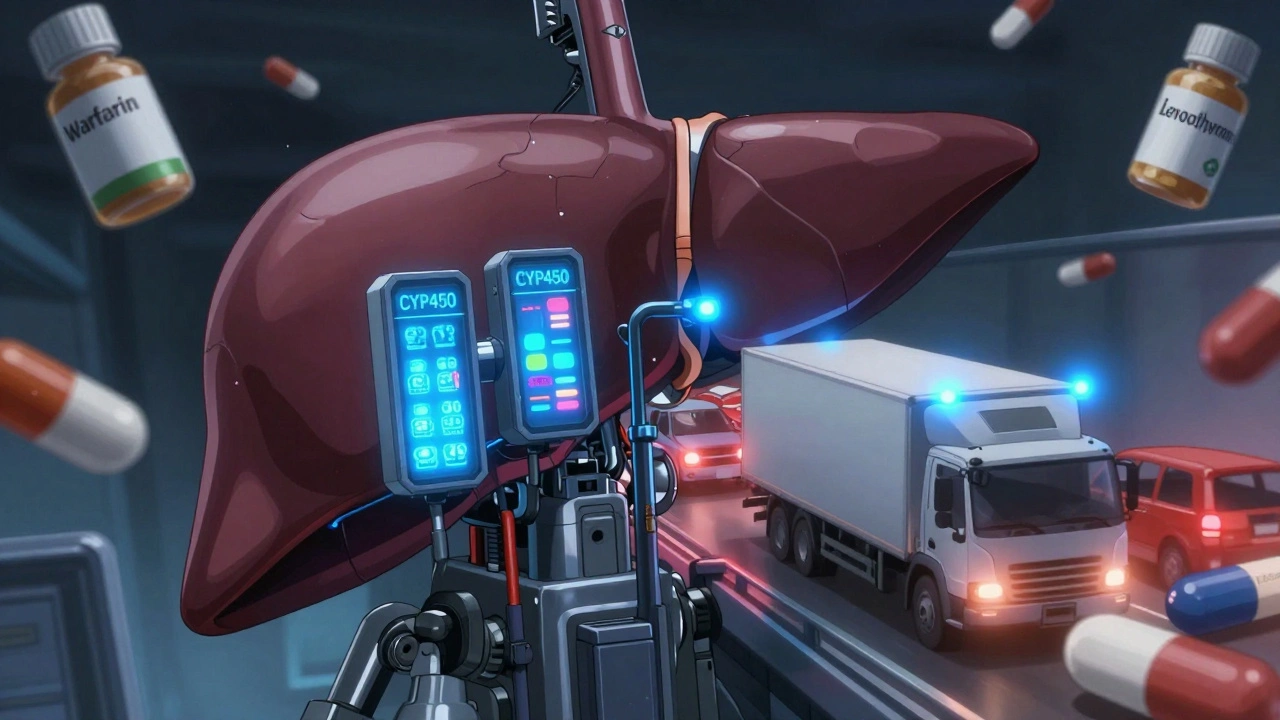
Your liver uses a group of enzymes called cytochrome P450 (CYP450) to break down about 95% of all prescription medications. CBD shuts down two of the most important ones: CYP3A4 and CYP2C19. Think of these enzymes like tollbooths on a highway. Normally, your drugs zoom through them to be processed and cleared. CBD parks a truck right in front of the booth. Everything backs up. Your meds build up in your blood, sometimes to dangerous levels.
This isn’t a minor issue. About 60% of all prescription drugs rely on these same enzymes. That includes blood thinners, heart medications, thyroid pills, and even some seizure drugs. The result? You could end up with too much of a drug in your system-without even taking more than prescribed.
Medications That Can Turn Dangerous With CBD
Some drugs are especially risky when mixed with CBD because they have a narrow therapeutic index. That means the difference between a helpful dose and a toxic one is tiny. Even a small increase in blood levels can cause serious harm.
- Warfarin (Coumadin): A blood thinner. CBD can make it too strong, leading to uncontrolled bleeding. Seven documented cases required dose changes, and two patients had serious bleeding events.
- Amiodarone: Used for irregular heartbeat. CBD can push levels into the toxic range, risking heart damage.
- Levothyroxine: For hypothyroidism. CBD can interfere with absorption, causing your thyroid levels to swing unpredictably.
- Clobazam, Valproate, Lamotrigine: Anti-seizure drugs. CBD can spike blood levels, increasing drowsiness, dizziness, and liver stress.
- Tacrolimus and Sirolimus: Immunosuppressants after organ transplants. CBD can cause toxic buildup, raising infection risk. The Portland Clinic advises avoiding CBD entirely if you take these.
Here’s a simple rule: if your pill bottle says “Avoid grapefruit”, treat CBD the same way. Both grapefruit and CBD block the same liver enzyme (CYP3A4). About 85 prescription drugs carry this warning. If yours is on that list, CBD could be dangerous.

How CBD Affects Your Liver
It’s not just about drug interactions. CBD itself can stress your liver. In clinical trials of Epidiolex-the only FDA-approved CBD drug-about 20% of patients saw elevated liver enzymes, a sign of liver strain. That’s why doctors monitor liver function regularly for people on high-dose CBD.
If you already have liver disease, even mild CBD use could make things worse. The FDA’s prescribing info for Epidiolex clearly says: avoid CBD if you have moderate to severe liver impairment. That’s not a suggestion. It’s a warning.
Sedation and the Risk of Accidents
CBD can make you sleepy. That’s why some people use it for insomnia. But if you’re already taking something that causes drowsiness-like Xanax, Benadryl, opioids, antidepressants, or even alcohol-the effects add up. You might feel fine, but your reaction time slows. Your balance falters. The risk of falls or car accidents goes up.
One patient reported falling down stairs after taking CBD with his nightly sleep aid. Another needed emergency care after combining CBD with a muscle relaxant and ended up with confusion and low blood pressure. These aren’t rare. They’re documented in peer-reviewed journals.
What You Should Do If You’re Taking Medications
If you’re on any prescription drugs and thinking about trying CBD, don’t guess. Don’t rely on Reddit advice or a wellness influencer. Here’s what actually works:
- Check your meds for grapefruit warnings. If it’s there, CBD is likely unsafe.
- Bring your full medication list to your pharmacist. Pharmacists are trained to spot interactions. They can flag risks you didn’t even know about.
- Talk to your doctor before starting CBD. Be honest. Say exactly what you’re taking, including over-the-counter pills and supplements.
- If you start CBD, begin low. Try 5-10 mg once a day. Don’t jump to 100 mg because “it’s natural.”
- Space out your doses. Take your medication at least 4 hours before or after CBD. This gives your liver time to clear one before the other hits.
- Get blood tests if you’re on critical meds. Warfarin, thyroid meds, seizure drugs-your doctor should check your levels before and after starting CBD.
What About Low-Dose CBD?
Some people say, “I only take 5 mg. It’s harmless.” But here’s the problem: there’s no safe threshold proven for interactions. One person taking 10 mg of CBD with warfarin had no issue. Another took 15 mg and ended up in the ER with bleeding. Your metabolism, liver health, and other meds all change how CBD affects you.
Even low-dose CBD can build up over time. With daily use, it lingers in your system for days. That means the interaction risk doesn’t go away after you stop taking it. It’s not like caffeine, where you feel it and then it’s gone.
What’s Being Done to Fix This?
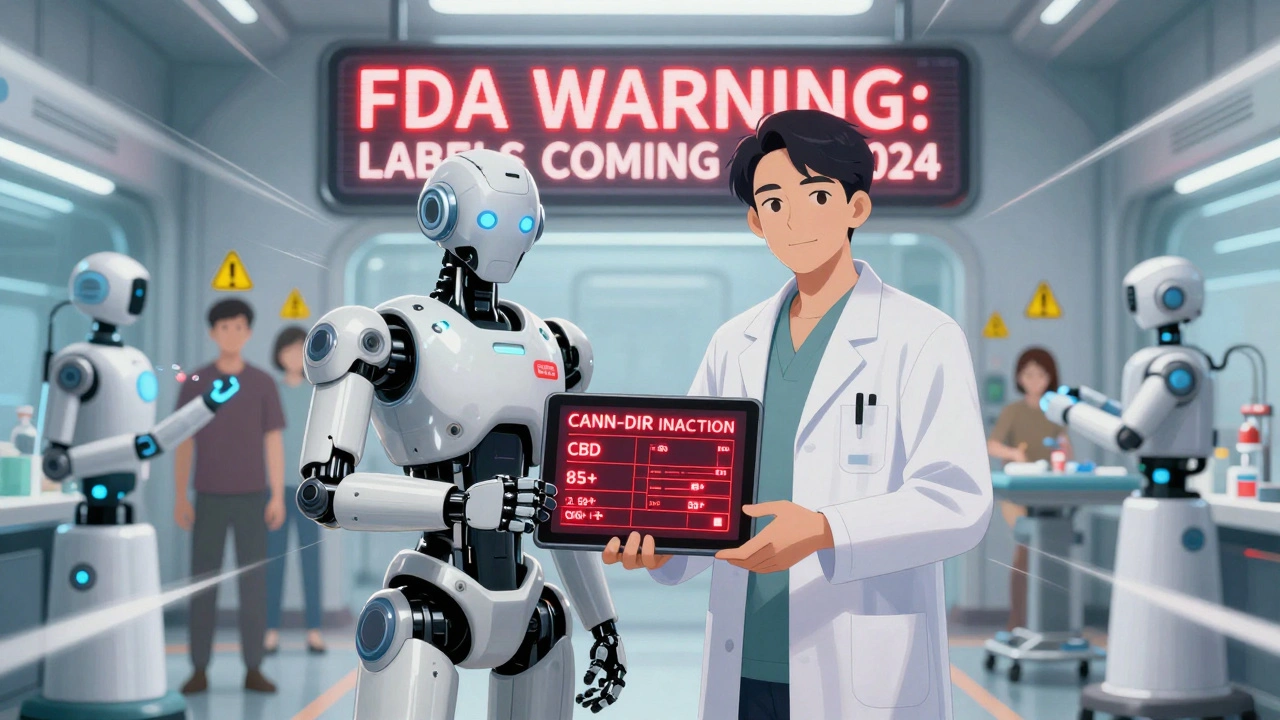
Researchers are trying to help. A team at Penn State built a free tool called CANN-DIR that lets you plug in your meds and see if CBD might interact. It’s not perfect, but it’s a start.
The FDA is also stepping in. In February 2024, they announced new rules requiring CBD product labels to include clear warnings about drug interactions by the end of Q3 2024. That’s a big shift-from “maybe risky” to “this is legally required to say.”
Meanwhile, product quality is improving. In 2020, only 32% of CBD brands offered third-party lab reports. Now, 68% do. That means you’re more likely to get what’s on the label-though it doesn’t guarantee safety with your meds.
Bottom Line: Don’t Assume It’s Safe
CBD isn’t a magic cure. And it’s not harmless just because it comes from a plant. When you mix it with prescription drugs, you’re playing with your body’s chemistry in ways you can’t see. The risks are real. The consequences can be serious.
If you’re taking meds for your heart, thyroid, seizures, or immune system, CBD could be a ticking time bomb. Don’t wait for a bad reaction to learn the hard way. Talk to your doctor. Talk to your pharmacist. Get blood tests if needed. Your safety isn’t worth guessing.
Can I take CBD with my blood thinner like warfarin?
No, not without close medical supervision. CBD can significantly increase warfarin levels in your blood, raising your risk of dangerous bleeding. At least seven documented cases required emergency dose adjustments. If you’re on warfarin, avoid CBD unless your doctor orders regular INR tests and adjusts your dose.
Is CBD safe if I only take a small amount?
There’s no proven safe low dose when mixing with medications. Even 5-10 mg of CBD can inhibit liver enzymes enough to affect drug levels. Individual metabolism varies, and CBD builds up over time. If you’re on a prescription drug with a narrow therapeutic window, even small amounts carry risk.
Why does the grapefruit warning matter for CBD?
Both grapefruit and CBD block the same liver enzyme-CYP3A4. If your medication says “avoid grapefruit,” it means that enzyme is critical for processing it. CBD does the exact same thing. So if grapefruit is dangerous, CBD is too. About 85 prescription drugs carry this warning. Treat them the same way.
Can CBD cause liver damage on its own?
Yes. In clinical trials of Epidiolex, about 20% of patients developed elevated liver enzymes, a sign of liver stress. This was more common at higher doses. If you already have liver disease, CBD is not recommended. Regular liver function tests are advised if you use CBD long-term, especially with other meds.
Should I stop CBD if I start a new prescription?
Yes, unless your doctor says otherwise. When you start a new medication, especially one with a narrow therapeutic index, pause CBD. Wait at least a week, then restart only under medical supervision. This helps your doctor determine if any side effects are from the new drug or the CBD.
What should I do if I’m already taking CBD and my doctor prescribes a new drug?
Tell your doctor you’re using CBD before they write the prescription. Bring your CBD product label and dosage info. Ask: “Does this new drug interact with CBD?” If they’re unsure, ask for a pharmacist consult. Don’t assume they know-many doctors haven’t been trained on CBD interactions.
Makenzie Keely
December 2, 2025 AT 21:28Okay, but let’s be real-CBD isn’t some magical herb from the forest. It’s a potent enzyme blocker, and if you’re on warfarin, thyroid meds, or seizure drugs, you’re playing Russian roulette with your liver.
I’m a pharmacist, and I’ve seen three patients in the last six months end up in the ER because they thought ‘natural’ meant ‘safe.’
One guy took 15mg of CBD with his Coumadin, didn’t tell his doctor, and bled out his eye socket-literally. His INR was 12. Twelve.
Don’t trust influencers. Don’t trust Reddit. Don’t trust your cousin who ‘swears by it.’
Check the grapefruit warning. If it’s there, CBD is a hard no. Period.
And if your doctor doesn’t know about this? Bring them the FDA’s Epidiolex prescribing info. They need to catch up.
Joykrishna Banerjee
December 4, 2025 AT 12:41How quaint. Another alarmist piece dressed up as medical advice. The CYP450 system is not some fragile porcelain doll-it’s a robust, redundant metabolic network. CBD’s inhibition is dose-dependent and transient in most healthy individuals.
Meanwhile, SSRIs, statins, and NSAIDs? Those are the real pharmacological sledgehammers. Yet no one screams about grapefruit with lisinopril.
Also, the FDA’s 2024 labeling mandate? A PR stunt. The real issue is the lack of standardized dosing in the CBD industry-not the pharmacology.
And yes, I’ve read the papers. The 20% liver enzyme elevation in Epidiolex trials occurred at 20mg/kg/day. That’s 1400mg for a 70kg person. You’re not taking that. You’re taking 10mg. Chill.
James Kerr
December 5, 2025 AT 09:39My grandma takes CBD for her knees and her blood pressure meds. She’s fine. No bleeding. No hospital trips.
Maybe it’s not as scary as they say?
:)
Vincent Soldja
December 6, 2025 AT 16:07Article is accurate. Risks are documented. Recommendations are sound.
End of discussion.
Francine Phillips
December 7, 2025 AT 23:46I tried CBD with my thyroid med and didn’t notice anything
Maybe I’m just lucky
Or maybe it’s fine for some people
Idk
Katherine Gianelli
December 8, 2025 AT 00:01Hey, I get it-you’re trying to feel better. Maybe you’re tired, anxious, or just want to sleep without pills.
But please don’t let your hope for relief blind you to the real risks.
I’ve sat with people in clinics after their INR spiked, after their seizures came back, after their transplants got rejected because they thought ‘natural’ meant ‘no consequences.’
You’re not alone. You’re not weird for wanting this. But your body deserves better than guesswork.
Take 5 minutes. Print out your med list. Walk into the pharmacy. Say, ‘I’m thinking of trying CBD-can you check this for me?’
That’s not weakness. That’s wisdom.
And if your doctor shrugs? Find a new one. You deserve someone who knows this stuff.
Myson Jones
December 9, 2025 AT 17:50It’s worth noting that the CYP3A4 enzyme is also inhibited by common items like grapefruit, certain antibiotics, and even some over-the-counter antifungals.
So if you’re already avoiding grapefruit and taking clarithromycin for a sinus infection, you’re already in a similar risk zone.
CBD is just another variable in a complex system.
What matters is awareness-not fear.
And if you’re on immunosuppressants? Yeah, don’t mess around. But for most people on statins or antidepressants? Monitor, don’t panic.
parth pandya
December 9, 2025 AT 18:52hey i use cbd with my bp med and no prob but i think u shud get liver test evry 3 month if u use daily
also i read somthing on reddit that cbd can help with liver inflamation but idk if its true
plz correct me if im wrong
Charles Moore
December 11, 2025 AT 13:13There’s a reason this conversation is so heated.
Because people are desperate.
Desperate for sleep. Desperate for pain relief. Desperate to feel normal again.
And the system failed them-first with opioids, then with SSRIs, then with silence from doctors who don’t know CBD.
So they turn to the internet. To gummies. To ‘natural’ solutions.
Yes, the risks are real.
But so is the suffering.
Maybe the answer isn’t just ‘don’t do it’-but ‘here’s how to do it safely.’
That’s what we need: not fear, but guidance.
And maybe, just maybe, a healthcare system that meets people where they are.
Gavin Boyne
December 13, 2025 AT 05:18So let me get this straight.
We have a multi-billion dollar industry selling a plant extract that inhibits liver enzymes-same as grapefruit-and the FDA lets them label it as ‘dietary supplement’ while simultaneously warning about drug interactions?
And we’re shocked when people get hurt?
Oh wait, no-we’re not. We’re just waiting for the next lawsuit.
Meanwhile, my doctor still thinks CBD is ‘just marijuana without the high’ and doesn’t ask about it during my annual checkup.
So yeah. The system is broken.
And you’re not the problem.
You’re just trying to survive it.