 Jan, 11 2026
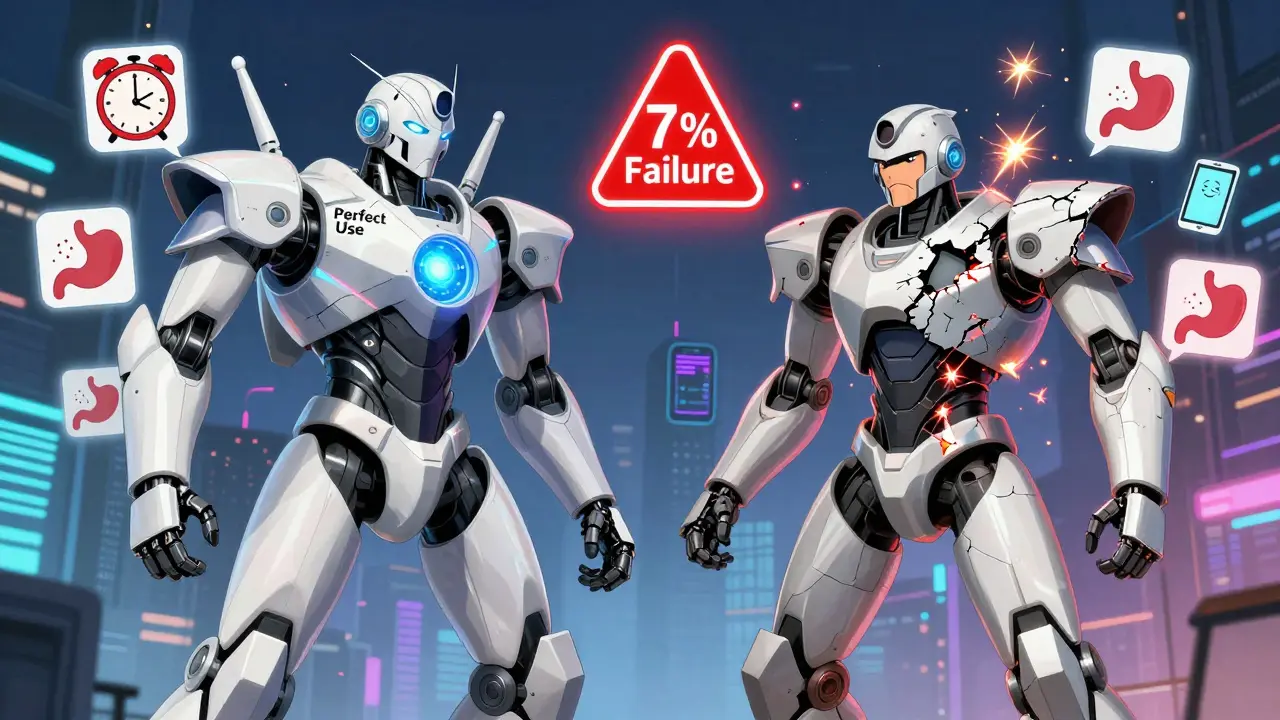
Birth control pills are one of the most common ways women in the U.S. prevent pregnancy - but they’re not as simple as popping a pill every day and forgetting about it. If you’re considering them, or already using them, you need to know the real numbers: birth control pills are 99% effective if taken perfectly. But in real life? That number drops to about 93%. That means 7 out of every 100 women who use the pill will get pregnant in a year - not because the pill doesn’t work, but because life happens. You forget. You’re sick. You take it at 11 p.m. instead of 8 a.m. And that tiny delay can change everything.
How Birth Control Pills Actually Work
There are two types: combined pills and progestin-only pills. Combined pills contain estrogen and progestin. These stop your ovaries from releasing an egg each month. They also thicken cervical mucus so sperm can’t swim through, and thin the lining of your uterus so a fertilized egg can’t stick. Progestin-only pills - sometimes called the "mini-pill" - work mostly by thickening cervical mucus and changing the uterine lining. They don’t always stop ovulation, which is why timing matters even more.Modern pills have way less estrogen than the ones from the 1960s. Back then, pills had up to 10,000 micrograms of estrogen. Today’s pills usually have 20 to 35 micrograms. That’s a 99.7% reduction. Lower doses mean fewer side effects and less risk of serious problems like blood clots. The safest combined pill for most women contains 30 micrograms of ethinyl estradiol and levonorgestrel, according to the Cleveland Clinic.
Effectiveness: Perfect Use vs. Typical Use
There’s a big gap between what the package says and what actually happens.- Perfect use: Taking the pill at the same time every day, no missed doses. Failure rate: less than 1 in 100 women per year.
- Typical use: Forgetting a pill, taking it late, vomiting after taking it, or starting a new pack late. Failure rate: about 7 in 100 women per year.
That 6% difference isn’t just a number. It’s the reason why younger women - especially those under 21 - are more likely to get pregnant on the pill. A 2021 JAMA study found they’re nearly twice as likely to experience contraceptive failure compared to women over 21. Why? Because teens and young adults are more likely to miss doses, skip pills, or not understand how to handle a missed pill.
Compare that to an IUD or implant: both are over 99% effective even with typical use. No remembering. No timing. Just set it and forget it. That’s why doctors now recommend IUDs and implants as first-line options - especially for teens and anyone who struggles with daily routines.
Side Effects: What You Might Feel
Most women don’t have serious problems, but side effects are common - especially in the first 2 to 3 months.Common side effects:
- Nausea (usually goes away after a few weeks)
- Breast tenderness
- Spotting between periods
- Mood swings or mild depression
- Headaches
- Weight gain (often water retention, not fat)
These usually fade as your body adjusts. If they stick around after 3 months, talk to your doctor. You might need a different type of pill - maybe one with a different progestin, or a lower dose.
Less common but serious risks:
- Blood clots
- Stroke
- Heart attack
These are rare - especially in healthy women under 35 who don’t smoke. But the risk goes up if you’re over 35, smoke, have high blood pressure, diabetes, or a history of blood clots. If you suddenly get severe chest pain, trouble breathing, sudden vision changes, or a bad headache with confusion, get help immediately. Don’t wait.
Drug Interactions: What Can Make the Pill Fail
The pill can lose its power if you take certain other meds. Some are obvious. Others? Not so much.Medications that can reduce effectiveness:
- Antibiotics: Only rifampin (Rifadin) and rifabutin are proven to interfere. Most other antibiotics - like amoxicillin or azithromycin - do not.
- Seizure meds: Carbamazepine, phenytoin, barbiturates, and topiramate can make the pill less effective.
- HIV meds: Some protease inhibitors and non-nucleoside reverse transcriptase inhibitors.
- St. John’s Wort: This herbal supplement for depression can speed up how your body breaks down hormones.
- Some antifungals: Griseofulvin can interfere.
If you’re prescribed anything new, always ask: "Will this affect my birth control pill?" Even if it’s just a one-time dose. If there’s any doubt, use a backup method like condoms for at least 7 days after finishing the other medication.
What the Pill Does for You Beyond Pregnancy Prevention
Many women stay on the pill not just to avoid pregnancy, but because it helps other things.- Regular periods: If your cycle is unpredictable, heavy, or painful, the pill can make it steady and lighter.
- Less PMS: Mood swings, bloating, and irritability often improve.
- Acne treatment: Pills with drospirenone (like Yaz or Beyaz) are FDA-approved for acne in women over 14.
- Endometriosis relief: By stopping ovulation and thinning the uterine lining, the pill reduces pain and bleeding.
- Cancer protection: After 5 years of use, the risk of ovarian cancer drops by 27%. Endometrial cancer risk drops by 50%. Colon cancer risk goes down by 18%. These benefits last for years after you stop.
What Happens When You Stop Taking the Pill
Some women worry they’ll be infertile after stopping. That’s not true.Most women get their period back within 30 days. By 90 days, 97% have resumed normal cycles. Fertility returns just as fast as it left. If you’re trying to get pregnant, you can start right away. There’s no waiting period.
Some women get a temporary surge in acne or mood swings as their hormones readjust. That usually settles within a few months.
When the Pill Isn’t Right for You
You shouldn’t use combined birth control pills if you:- Are over 35 and smoke
- Have a history of blood clots, stroke, or heart disease
- Have uncontrolled high blood pressure
- Have liver disease or certain types of breast cancer
- Have migraine headaches with aura (flashing lights, blind spots)
If any of these apply to you, progestin-only pills might still be an option. Or consider an IUD, implant, or non-hormonal methods like the copper IUD.
What to Do If You Miss a Pill
This is the #1 reason for unintended pregnancy.If you miss one pill: Take it as soon as you remember. Even if that means taking two pills in one day. Then keep taking the rest as normal. No backup needed unless it’s a progestin-only pill and you’re more than 3 hours late.
If you miss two pills in a row: Take two pills on the day you remember, then two pills the next day. Use condoms for the next 7 days.
If you miss three or more pills: Throw out the rest of the pack. Start a new pack the same day - or wait until your next period. Use condoms for 7 days.
For progestin-only pills, if you’re more than 3 hours late, you’re not protected. Take the missed pill right away, then continue as normal. Use condoms for the next 2 days.
Set a daily alarm. Use a pill tracker app. Keep a spare pack in your bag. These small habits make a huge difference.
Bottom Line: Is the Pill Right for You?
Birth control pills are safe, effective, and come with real health benefits - but only if you use them correctly. If you’re forgetful, have a chaotic schedule, or are under 21, you might be better off with an IUD or implant. They’re more effective, require less effort, and last longer.If you’re someone who likes routine, doesn’t mind taking a pill every day, and wants the extra perks like clearer skin or lighter periods - then the pill is still a great choice. Just know the risks. Know the interactions. Know what to do if you miss one.
And always use condoms if you’re not in a monogamous relationship. The pill doesn’t protect against STIs. That’s not a flaw - it’s just how it works.
Can birth control pills cause weight gain?
Some women notice a small increase in weight, usually due to water retention, not fat gain. Studies show the average weight gain is less than 5 pounds in the first year, and often less than 2. If you gain more than that, it’s likely due to other factors like diet, stress, or lack of sleep. Switching to a different pill formulation may help.
Do birth control pills increase the risk of breast cancer?
Current use of combined birth control pills is linked to a small increase in breast cancer risk - about 20% higher than non-users. But this risk drops back to normal within 5 to 10 years after stopping. The absolute risk remains low, especially in women under 35. For women with a strong family history of breast cancer, progestin-only pills or non-hormonal methods may be preferred.
Can I take birth control pills while breastfeeding?
Combined pills (with estrogen) are not recommended in the first 6 weeks after birth because estrogen can reduce milk supply. After that, many doctors say it’s okay - but progestin-only pills are safer and preferred for breastfeeding mothers. They don’t affect milk production and are safe for the baby.
How soon after starting the pill am I protected?
If you start on the first day of your period, you’re protected right away. If you start at any other time, you need to wait 7 days before having unprotected sex. Use condoms during that first week. For progestin-only pills, protection starts after 48 hours - but only if taken at the same time every day.
Do birth control pills affect my mood or mental health?
Some women feel more anxious, depressed, or emotionally flat on the pill. Research shows this is more likely with certain progestins like norethindrone. If you notice a change in mood that lasts more than a few weeks, talk to your doctor. Switching to a pill with drospirenone or a different hormone combination often helps. Never stop the pill abruptly if you’re feeling low - talk to a professional first.
Are there birth control pills that don’t have estrogen?
Yes. These are called progestin-only pills (POPs), or "mini-pills." They contain no estrogen and are safer for women who can’t take estrogen - like those over 35 who smoke, have high blood pressure, or are breastfeeding. They’re slightly less effective than combined pills and require strict timing - taken within the same 3-hour window every day.
Can I skip my period on birth control pills?
Yes. Many women choose to skip the placebo week and start a new pack right away. This is safe and common. You might get spotting at first, but it usually stops after a few months. Some brands, like Amethyst or Aygestin, are designed for extended use with fewer periods. Talk to your doctor before doing this long-term.
Rebekah Cobbson
January 11, 2026 AT 12:05Just wanted to say this is one of the clearest breakdowns I’ve ever read on birth control. So many people think it’s just ‘take a pill’ and call it a day, but the real-life stuff - timing, missed doses, interactions - that’s where it gets messy. Thanks for laying it out like this.
Audu ikhlas
January 11, 2026 AT 22:08USA still thinkin’ pills are the best? Lol. In Nigeria we use condoms or abstinence. Pills? Too risky. Women get fat, mood swings, then blame men. Stupid. IUDs? Even worse. Why not just stop sleepin’ around?
Sonal Guha
January 13, 2026 AT 00:1893% effective means 7% failure rate that’s 70k pregnancies yearly just from pill misuse in the US alone. No data on how many of those are teens. Also St John’s wort is a known CYP3A4 inducer so yeah it reduces efficacy. But most people don’t know what CYP3A4 is so they just take it anyway. Classic.
Alice Elanora Shepherd
January 14, 2026 AT 05:21I appreciate how you included the nuance between perfect and typical use - this is so often ignored in public health messaging. Also, the note about IUDs/implants being first-line for teens? Absolutely correct. I’ve seen too many young patients feel guilty for ‘failing’ at the pill, when really, it’s not designed for chaotic lives. The real failure is in not offering better options upfront. And yes - condoms for STIs. Always. Always. Always.
Prachi Chauhan
January 15, 2026 AT 23:51the pill is not a magic bullet. it’s a tool. like a hammer. if you use it wrong, it breaks. or you hit your thumb. same thing. people want easy fixes but biology doesn’t care about your schedule. also, the cancer protection part? that’s the secret bonus. no one talks about that. but it’s real. 5 years = half the endometrial cancer risk. that’s huge. and it sticks around. so if you’re on it, even if you stop, you’re still winning.
Jennifer Phelps
January 16, 2026 AT 17:22so if you miss a pill and its the mini pill and youre 4 hours late you need condoms for 2 days but if its the regular pill and youre 12 hours late you just take two and youre fine? why is that? whats the science behind that?
beth cordell
January 17, 2026 AT 15:51THIS. I’ve been on the pill for 8 years. Clear skin. Light periods. No more cramps. 😊 I also skip my period on purpose - no more PMS + no more pads. 🙌 And yes, I use condoms with new partners - no shame. The pill doesn’t protect you from STDs, and that’s not a bug, it’s a feature. 💡
Lauren Warner
January 19, 2026 AT 01:26Why are we still promoting hormonal birth control as a first-line option when we know it increases breast cancer risk? And don’t give me the ‘it’s only 20% higher’ line - that’s still a measurable increase. And what about the mental health side effects? Women are told to ‘just wait it out’ for mood swings, but depression isn’t something you just ‘get used to.’ We need better options, not more pills.