 Dec, 1 2025
Most people have a drawer or cabinet full of old pills-painkillers from last winter, antibiotics from a childhood infection, or that EpiPen you never used. You look at the date on the bottle and wonder: is it still safe? The answer isn’t simple. Some expired meds are fine. Others could be dangerous. And some? They could kill you.
What Does an Expiration Date Really Mean?
The date on your medicine bottle isn’t a "use-by" label like milk. It’s the last day the manufacturer guarantees the drug will work as intended and stay safe under proper storage. This isn’t arbitrary. The FDA requires companies to test drugs under heat, humidity, and light to see how long they hold up. If a pill stays stable for 24 months, that’s the expiration date. After that? No one can promise it’ll still work-or that it won’t break down into something harmful.Not All Medications Are Created Equal
Some pills sit on your shelf for years and barely change. Others fall apart fast. Here’s the breakdown:- Tablets and capsules (like ibuprofen, acetaminophen, or aspirin): These are the most stable. Studies show many retain 90% of their potency even 5 years past expiration-if kept dry and cool.
- Liquid medicines (syrups, eye drops, antibiotics): These are risky. Bacteria can grow. Chemicals can separate. Eye drops past their date have a 60% chance of being contaminated, according to the American Academy of Ophthalmology.
- Insulin and epinephrine: These are life-saving drugs. Insulin loses 10% potency per month after opening. EpiPens can drop 20-30% potency within 6 months of expiration. If you’re having a severe allergic reaction, an expired EpiPen might not save you.
- Nitroglycerin: Used for chest pain. This pill degrades so fast it loses half its strength in just 3 months after opening-even if it’s still within the expiration date.
- Tetracycline antibiotics: These are the exception that proves the rule. When they degrade, they turn into toxic compounds that can damage your kidneys. There are documented cases of people ending up in the hospital after taking expired tetracycline.
Storage Matters More Than You Think
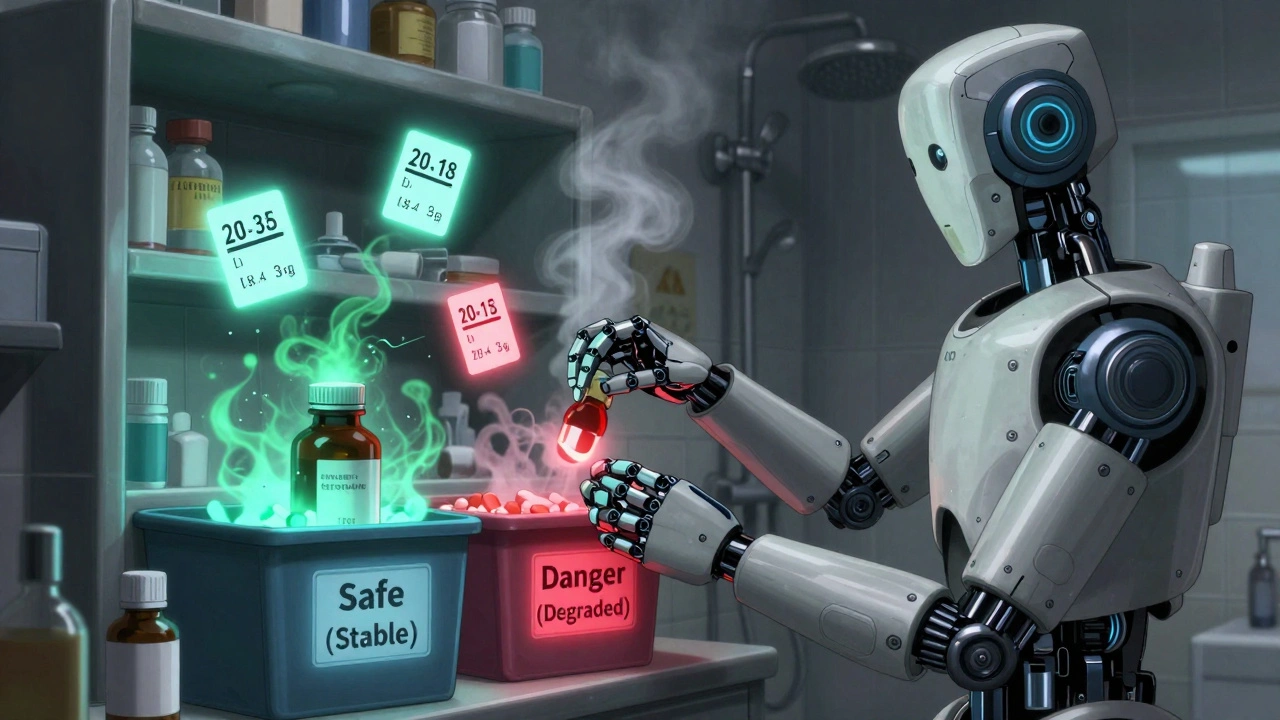
You think your bathroom cabinet is fine? It’s not. Humidity from showers, heat from the dryer, and light from the overhead bulb wreck medicine faster than you realize. The FDA says meds stored in bathrooms degrade 40% faster than those kept in a cool, dark place. Keep your pills in their original bottles. Keep them away from sinks, showers, and windows. A bedroom drawer, a kitchen cabinet away from the stove, or even the fridge (if the label says so) are better options. Amber glass bottles protect better than plastic-40% better, according to a 2022 study in the International Journal of Pharmaceutics.When Is It Okay to Use an Expired Pill?
The FDA says: never. But real life isn’t that simple. If you’ve got a headache and your ibuprofen expired 8 months ago? It’s probably fine. You’ll feel the relief. You won’t get sick. Most people who take expired painkillers or allergy meds don’t have problems. Reddit users reported using expired meds for minor issues over 1,200 times in one year-with only 3% saying anything bad happened. But here’s the line you don’t cross:- Don’t use expired insulin if you’re diabetic.
- Don’t use expired epinephrine during an allergic reaction.
- Don’t use expired antibiotics for a serious infection.
- Don’t use expired seizure meds, blood thinners, or thyroid pills.

What Happens If You Take an Expired Antibiotic?
You might think, "It’s just a little old. It’ll still kill the bacteria." But that’s how antibiotic resistance starts. When antibiotics lose potency, they don’t kill all the bacteria. They weaken them. The survivors adapt. They become stronger. The CDC found expired amoxicillin was 35-40% less effective against common pneumonia bacteria. That’s not just a failed treatment-it’s a public health risk. There are real cases where people developed drug-resistant infections because they took weak, expired antibiotics. Those infections are harder to treat. They cost more. They can kill.What About Emergencies?
If you’re having a heart attack and your nitroglycerin expired last month? Take it. If you’re choking on an allergic reaction and your only EpiPen is 2 months past its date? Use it. Don’t wait. Swedish Health Services says this clearly: "It is better to take these expired medications than nothing at all, but patients should immediately go to the emergency department." An expired EpiPen might not work as well. It might take longer to stop the swelling. But it’s better than nothing. The same goes for asthma inhalers or heart meds in a crisis. Don’t let a date stop you from acting.How to Dispose of Expired Medications Properly
Don’t flush them. Don’t toss them in the trash without prep. Don’t give them to a friend. The safest way? Take them to a drug take-back location. There are over 14,500 authorized collection sites across the U.S., mostly at pharmacies or police stations. But only 32% of Americans live within 10 miles of one. If you can’t get there, here’s what to do:- Take pills out of their original bottles.
- Mix them with something gross-used coffee grounds, cat litter, or dirt. Use a 2:1 ratio (two parts dirt, one part pills).
- Put the mix in a sealed container-a ziplock bag or a jar with a lid.
- Throw it in the trash.
- Scratch out your name and prescription number on the empty bottle before recycling it.
What Should You Do Right Now?
Here’s your simple checklist:- Check your medicine cabinet. Look at every bottle’s expiration date.
- Separate the risky ones: insulin, EpiPens, nitroglycerin, antibiotics, thyroid meds, seizure drugs.
- Replace anything expired that you might need for a serious condition.
- For painkillers or antihistamines that expired 6-12 months ago? You can probably use them-but don’t rely on them long-term.
- Dispose of everything else properly. Don’t hoard old meds.
Why Do We Even Have Expiration Dates?
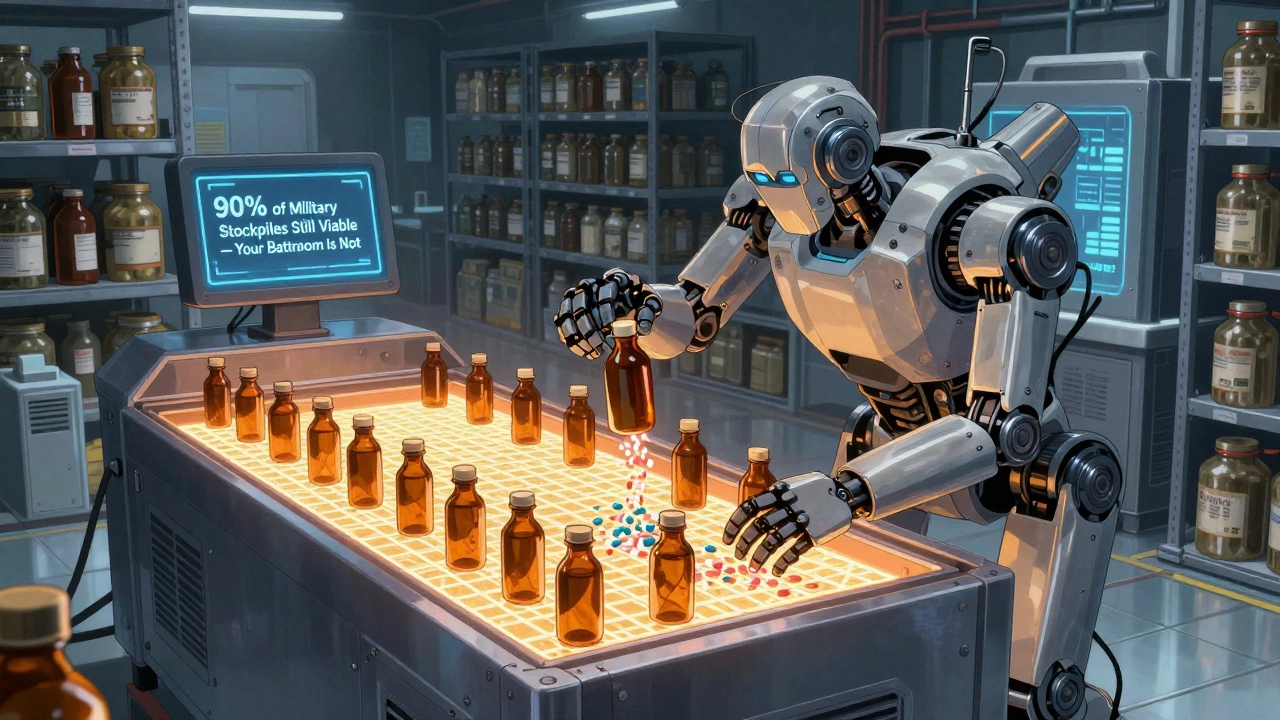
It’s not just about safety. It’s about liability. Manufacturers can’t guarantee anything after the date. The law says they have to put a date on it. The FDA doesn’t test every pill after it leaves the factory. They test samples. They assume the rest will behave the same way. The military’s Shelf Life Extension Program found 90% of stockpiled drugs worked fine 15+ years past expiration. But that’s military-grade storage-controlled temps, no humidity, sealed containers. Your bathroom? Not the same. The FDA is working on smarter expiration labels-maybe ones that change color if the drug degrades. But that’s years away. For now? Treat expiration dates like a warning light on your car. Ignore it, and you might be fine. But if you’re driving a life-or-death vehicle-like your body-you don’t risk it.Can expired pills become poisonous?
Most don’t. But a few do. Tetracycline antibiotics are the main example-they break down into toxins that can damage your kidneys. Other meds just lose strength. The risk of toxicity is rare, but it’s real for specific drugs. For the vast majority of pills, the danger is not working, not poisoning.
Is it safe to take expired painkillers like ibuprofen or Tylenol?
For minor pain or fever, yes-usually. Studies show these pills often retain 90% potency for years after expiration if stored properly. But if you’re taking them for a chronic condition, or if they’re more than 5 years old, replace them. Don’t rely on them long-term.
Why do pharmacies refuse to give you expired medicine?
Because they’re legally required to follow FDA guidelines. Even if a pill is still good, the manufacturer can’t guarantee it. Pharmacies can’t risk liability. If someone gets hurt using an expired drug they got from the pharmacy, the pharmacy could be sued. So they won’t dispense it-no exceptions.
Can I use an expired EpiPen in an emergency?
Yes-if you have no other option. An expired EpiPen may not work as well, but it’s better than nothing during a life-threatening allergic reaction. Use it immediately, then call 911 or go to the ER. Don’t wait to replace it.
How often should I check my medicine cabinet?
Every three months. Set a reminder on your phone. Check expiration dates, look for changes in color or smell, and replace anything you’re unsure about-especially emergency meds. It takes 10 minutes and could save your life.
Does refrigerating medicine make it last longer?
Some, yes. Insulin, liquid antibiotics, and certain eye drops need refrigeration to stay stable. But most pills don’t benefit from the fridge-moisture can actually hurt them. Always follow the label. If it doesn’t say "refrigerate," keep it at room temperature in a dry place.
Lucinda Bresnehan
December 2, 2025 AT 16:20I had an old EpiPen from 2020 I forgot about until my kid had a reaction last summer. I used it. Swelling went down a bit. Called 911 right after. They said it probably helped buy us time. Don't let a date stop you if you're in trouble. Just get to the hospital ASAP.
Also, I keep all my meds in a sealed plastic container in the back of my closet. No bathroom, no sun, no steam. They last way longer that way.
And yes, my ibuprofen from 2021 still works fine for headaches. No side effects. Just don't use it for a migraine you need to cure, okay?
Shannon Gabrielle
December 4, 2025 AT 07:28So let me get this straight. You're telling me I can risk my life with expired antibiotics but I can't drink milk past its date? The FDA is a circus and we're the clowns.
Meanwhile, my neighbor's dog died from eating expired chicken jerky. But expired penicillin? Oh that's fine. Sure. Whatever. I'll just swallow my pills and hope my immune system is better than my tax return.
Nnaemeka Kingsley
December 6, 2025 AT 03:07Man, this post real. I live in Nigeria and sometimes we buy meds from street vendors. No expiry date at all. Or date written in pencil. I once took an old amoxicillin for fever. Got worse. Had to walk 5km to clinic.
Now I only use meds with clear date. Even if it's expired, I ask pharmacist. They know more than the bottle.
And please stop keeping pills in bathroom. That place is a sauna. Your aspirin is crying.
Kshitij Shah
December 6, 2025 AT 19:53Wow. So the government says don't use expired meds but the military has stockpiles that work after 15 years? That's not a safety issue, that's a profit issue.
And you want me to throw my $20 ibuprofen in the trash because some bureaucrat put a date on it? I'm not stupid. I'm not a lab rat. I'm just trying to get through the day without paying for another bottle.
Also, tetracycline? Yeah, I heard that one in med school. Toxic? Yeah. But how many people actually die from it? Like, statistically, are we talking 3 people a year or 300? Don't scare me with anecdotes.
Sean McCarthy
December 7, 2025 AT 04:55Expiration dates are not suggestions. They are legal, scientific, and medical boundaries. To ignore them is to reject evidence-based practice. You are not a biochemist. You are not a pharmacist. You are not qualified to assess drug stability. The fact that you think your 2018 Tylenol is still viable is not wisdom-it is negligence. Your body is not a test subject. Your life is not a gamble. Stop it.
Walker Alvey
December 7, 2025 AT 21:49So you're telling me that if I take an expired pill and survive, I'm somehow a hero? That's not bravery. That's just dumb luck. And if I die? Then I'm a cautionary tale. There's no middle ground here. You don't get a participation trophy for surviving a stupid decision.
Also, 'I used it and it worked' is not data. It's an anecdote wrapped in denial. The placebo effect doesn't fix sepsis.
Adrian Barnes
December 8, 2025 AT 11:23It is an undeniable and empirically verifiable fact that pharmaceutical compounds degrade over time under ambient environmental conditions. The assertion that expired medications are 'probably fine' is not merely incorrect-it is a dangerous misrepresentation of pharmacokinetics, chemical stability, and public health ethics. To suggest that a layperson can intuitively assess the integrity of a drug formulation is to invite catastrophe. The FDA's stance is not arbitrary. It is the product of decades of toxicological research, clinical trials, and liability mitigation. You are not a scientist. You are not a regulator. You are a consumer. And consumers must obey the rules-even when they are inconvenient.
Declan Flynn Fitness
December 10, 2025 AT 04:21Been there. Done that. Got the expired EpiPen and the hospital bill.
Used it during a bee sting. Felt the adrenaline rush. Swelling slowed. Called 911. Got treated. Saved my life.
But I replaced it the next day. No excuses. My wife now has two. One in the car. One in my pocket.
Also, fridge for insulin? Yes. For everything else? Nah. Dry drawer. Dark. Cool. That's the sweet spot.
And yeah, I still take my 3-year-old Advil. But I don't use it for surgery-level pain. Common sense, people. Not fear.
Michelle Smyth
December 10, 2025 AT 17:35It’s fascinating how the discourse around pharmaceutical expiration has devolved into a populist epistemological crisis. The ontological instability of drug efficacy-mediated by environmental variables, molecular degradation pathways, and non-standardized storage conditions-renders any heuristic reliance on anecdotal efficacy not only irrational but epistemologically unsound.
And yet, we persist in privileging folk wisdom over pharmacopeial rigor. The irony is delicious. We have the tools to quantify degradation with HPLC and mass spectrometry, yet we trust our gut because ‘it worked once.’
It’s not about fear. It’s about the integrity of scientific epistemology.
Patrick Smyth
December 11, 2025 AT 08:30I lost my brother because he took expired antibiotics. He thought it was fine. He was wrong. He got sicker. Then he died. I don't care what Reddit says. I don't care if your ibuprofen is 'probably okay.' Some things aren't worth the risk.
Replace your meds. Every year. Especially if you're on anything for your heart or your thyroid. If you can't afford it, ask for samples. Go to a clinic. Call your doctor. But don't gamble with your life.
I'm not mad. I'm just telling you. He was 32.