 Jan, 27 2026
When your child breaks out in a rash after starting antibiotics, panic sets in fast. You see red spots, maybe some itching, and your mind races: antibiotic rash means allergy, right? Time to stop the medicine. But what if that’s the worst thing you could do?
Not All Rashes Are Allergies
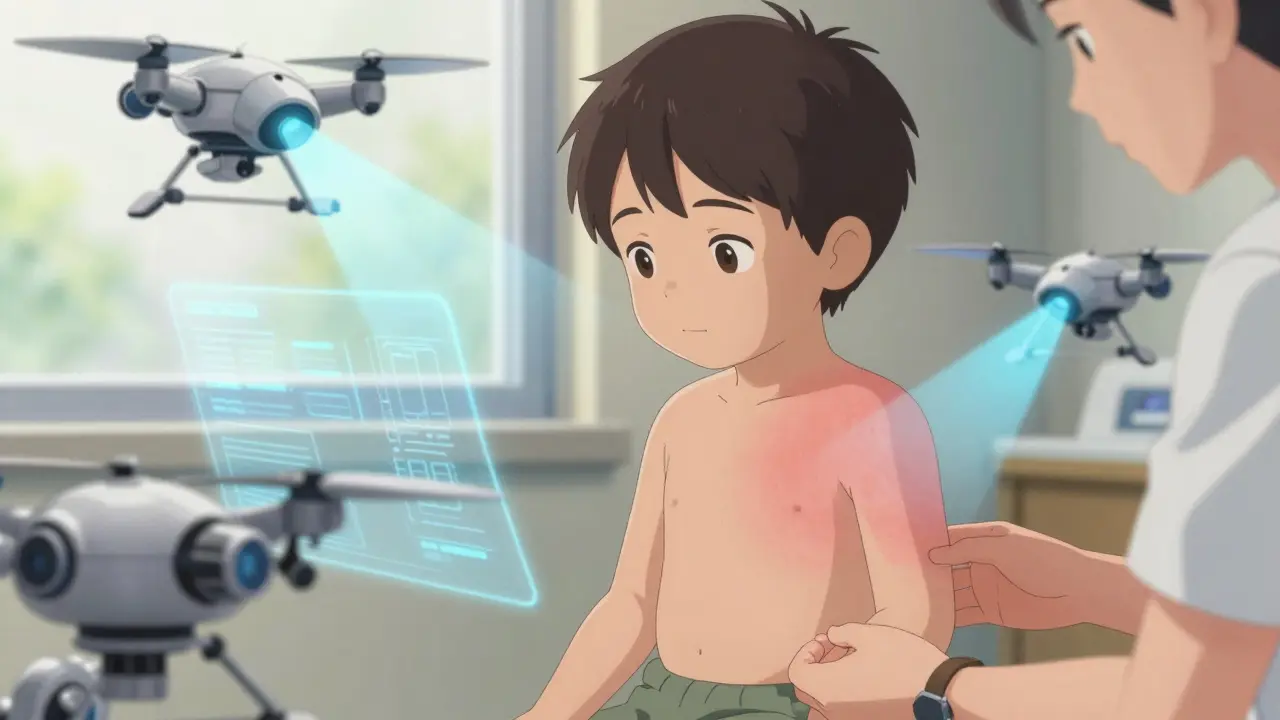
Most antibiotic rashes aren’t allergic reactions at all. In fact, about 90% of kids labeled as allergic to amoxicillin because of a rash turn out to be fine when tested properly. The rash you’re seeing? It’s likely a non-allergic reaction-common, harmless, and totally unrelated to an immune system overreaction. These rashes usually show up between days 5 and 10 of treatment. They’re flat or slightly raised, red or pink, and spread across the chest, back, or stomach. They don’t move around. They don’t come and go. And most importantly, they’re not itchy. If your child has one and is otherwise acting normal-eating, playing, no fever-there’s a very good chance you can keep giving the antibiotic. The confusion comes from how these rashes look. They can resemble hives, which are a true allergic reaction. But hives are different. They’re raised, swollen, intensely itchy, and they change shape and location within hours. If your child gets hives within an hour of taking the antibiotic, that’s a red flag. If the rash shows up on day 7 and doesn’t bother them, it’s probably not.When to Stop the Antibiotic
You should stop the antibiotic and call the doctor immediately if any of these happen:- The rash is raised, bumpy, and itchy (like hives)
- The rash appears within an hour of taking the dose
- Your child has swelling of the lips, tongue, or face
- They’re having trouble breathing, wheezing, or feel dizzy
- The rash spreads to the mouth, eyes, or genitals
- They have a fever over 38.5°C (101.3°F)
- They’re extremely tired, have swollen lymph nodes, or blisters
When to Keep Going
If the rash is flat, not itchy, shows up after day 5, and your child feels fine, keep giving the antibiotic. Stopping it unnecessarily does more harm than good. Studies show that when parents stop antibiotics because of a rash, their child is 37% more likely to have the infection come back worse. That often means switching to a stronger, broader-spectrum antibiotic like clindamycin or azithromycin. Those drugs are more likely to cause diarrhea, vomiting, or even a dangerous C. difficile infection. In fact, people wrongly labeled as penicillin-allergic are 63% more likely to get antibiotic-related diarrhea. Doctors in pediatric clinics now routinely tell parents: “If it’s not hives and your child isn’t sick, keep giving the medicine.” In one study, 95% of kids with the classic day-7 amoxicillin rash cleared their infection without issue when the antibiotic was continued.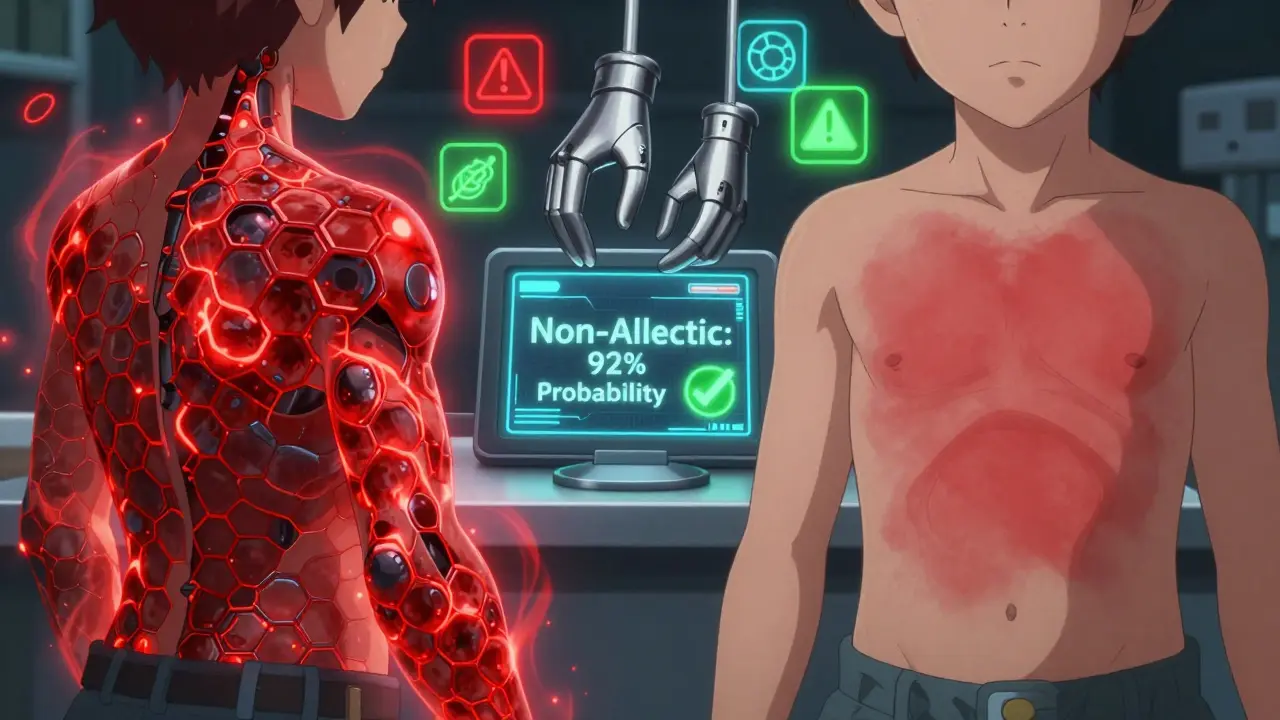
What to Do If the Rash Is Annoying
Even if the rash isn’t dangerous, it can still be uncomfortable. If your child is scratching or the skin feels dry, you can try:- Topical hydrocortisone 1% cream, applied twice a day to the affected areas
- Oral antihistamines like cetirizine (Zyrtec) or loratadine (Claritin) for mild itching
- Keeping the skin cool and moisturized with fragrance-free lotion
Don’t Label Your Child as Allergic
One of the biggest mistakes parents make is writing “allergic to penicillin” on their child’s medical record after a rash. That label sticks. It follows them for life. And it changes everything. Doctors will avoid penicillin and its cousins like amoxicillin. Instead, they’ll use alternatives that are less effective, more expensive, and harder on the gut. Patients with a mislabeled penicillin allergy get 69% more broad-spectrum antibiotics. That’s not just a cost issue-it’s a safety issue. These drugs increase the risk of C. difficile, a severe intestinal infection that can be deadly. The good news? Most people who think they’re allergic aren’t. In one study, 92% of patients with a documented penicillin allergy based on a past rash tolerated a full penicillin challenge test without reaction.How to Tell the Difference
Use this quick checklist to decide what to do:| Feature | Non-Allergic Rash | Allergic Rash (Hives) |
|---|---|---|
| Timing | Days 5-10 of treatment | Within 1 hour of dose |
| Appearance | Flat, red/pink spots, widespread | Raised, swollen, itchy bumps |
| Itchiness | Usually none | Intense |
| Movement | Stays in place | Changes location |
| Other Symptoms | None | Swelling, breathing trouble, vomiting |
| Next Step | Continue antibiotic | Stop drug, call doctor |

What to Tell Your Doctor
When you call, don’t say, “My child is allergic to amoxicillin.” Say this instead:- “My child got a rash on day 7 of amoxicillin.”
- “It’s flat, not itchy, and they’re eating and playing fine.”
- “We’re not sure if it’s an allergy.”
What Happens Next
If the rash is non-allergic, you’ll likely be told to continue the antibiotic. The rash will fade on its own in 5-7 days, even if you keep taking the medicine. It doesn’t get worse with continued use. If there’s any doubt, your doctor may refer you to an allergist. New rapid tests (like the PENtest) can confirm whether a true allergy exists in just 15 minutes. These tests are becoming more common and are covered by most insurance. And if your child does have a confirmed allergy? That’s fine. But at least now it’s accurate. No more guessing. No more unnecessary risks.Final Thought
Antibiotic rashes are scary-but most are not emergencies. The real danger isn’t the rash. It’s stopping the medicine when you shouldn’t. Mislabeling an allergy leads to worse infections, more side effects, and stronger antibiotics being used when they don’t need to be. If your child gets a rash, pause. Look. Ask: Is it hives? Is there trouble breathing? Is it itchy? Did it start on day 2? If not, keep going. Call your doctor for confirmation, but don’t stop the antibiotic unless you’re sure it’s dangerous. Your child’s infection needs to be treated. And the right antibiotic, even with a harmless rash, is still the best choice.Is an amoxicillin rash always an allergy?
No. Most amoxicillin rashes are not allergic reactions. About 90% of children who develop a rash while on amoxicillin are not truly allergic. These rashes are often caused by a virus (like Epstein-Barr) and appear 5-10 days after starting the antibiotic. They’re flat, non-itchy, and harmless. Stopping the drug unnecessarily can lead to worse infections and antibiotic resistance.
When should I stop the antibiotic immediately?
Stop the antibiotic and call your doctor or go to urgent care if the rash is raised and itchy (hives), appears within an hour of taking the dose, or if your child has swelling of the face or lips, trouble breathing, vomiting, high fever, blisters, or involvement of the mouth or eyes. These could be signs of a serious allergic reaction or a rare but dangerous condition like Stevens-Johnson Syndrome.
Can I give my child antihistamines for the rash?
Yes, if the rash is mildly itchy. Over-the-counter antihistamines like cetirizine (Zyrtec) or loratadine (Claritin) are safe for children and can help with itching. For more persistent itching, doctors may recommend a combination of H1 and H2 blockers (like cetirizine and famotidine). Topical hydrocortisone cream can also soothe the skin. But antihistamines won’t make the rash disappear faster-they just make it more comfortable.
Will the rash get worse if I keep giving the antibiotic?
No. Non-allergic rashes don’t worsen with continued antibiotic use. In fact, studies show that continuing the drug leads to faster resolution of the rash and successful treatment of the infection. Stopping the antibiotic doesn’t make the rash go away sooner-it just increases the risk of the original infection returning or getting worse.
Can my child be tested for a penicillin allergy later?
Yes. If your child had a rash while on amoxicillin, they can be tested later by an allergist. New rapid tests (like the PENtest) can confirm whether a true allergy exists in under 15 minutes. Most children who had a rash in childhood will test negative. Getting tested removes an inaccurate label and opens up safer, more effective antibiotic options in the future.
Why do doctors recommend continuing the antibiotic even with a rash?
Because stopping the antibiotic increases the risk of treatment failure. When antibiotics are stopped unnecessarily, infections like ear infections or strep throat come back worse. That often means switching to stronger, broader-spectrum drugs that cause more side effects, including severe diarrhea and C. difficile infections. Studies show that continuing the correct antibiotic leads to better outcomes and reduces overall antibiotic resistance.
Linda O'neil
January 28, 2026 AT 14:58I can't tell you how many parents I've talked to who panic the second they see a rash and stop the antibiotic cold. I'm a pediatric nurse, and I've seen kids come back with worse infections because of it. That flat, non-itchy rash on day 7? Almost always harmless. Keep the med. Your kid's body is just reacting to the drug, not having an allergic meltdown. Seriously, stop the panic.
James Dwyer
January 29, 2026 AT 02:54My daughter got that exact rash on amoxicillin last year. We kept giving it, no issues. She finished the full course, infection cleared, rash faded on its own. Best decision we ever made. Don't let fear make you choose the wrong path.
jonathan soba
January 29, 2026 AT 09:51Let's be real-this post is dangerously oversimplified. You're telling people to ignore potential hypersensitivity reactions because 90% of rashes are benign? What about the 10%? The ones who end up in the ER with DRESS? You're gambling with pediatric lives under the guise of 'common sense.' There's a reason we have protocols. This kind of advice spreads faster than the rash itself.
Chris Urdilas
January 29, 2026 AT 23:01So let me get this straight-we’re supposed to trust a medical article over our own instincts as parents, but also not trust our instincts when the kid looks like a tomato? Classic. I get the stats, I do. But if your kid’s suddenly got a red map across their chest and you’re not at least mildly concerned, you’re either a doctor or a robot. Maybe just call the damn pediatrician instead of Googling for 3 hours and then deciding to keep giving antibiotics like you’re in a survival game.
Phil Davis
January 31, 2026 AT 18:36My kid got the rash. We kept the antibiotic. Rash stayed. Kid was fine. No drama. No antihistamines. No panic. Just… kept going. And guess what? It went away. The real tragedy isn’t the rash. It’s the parents who turn a minor reaction into a full-blown medical crisis because they don’t know the difference between a hives and a heat rash. You don’t need a PhD to read the checklist. Use it.
Irebami Soyinka
February 1, 2026 AT 19:18Y’all in the West be treating rashes like they’re ghosts. 🤦♀️ In Nigeria, we don’t stop antibiotics for a little redness-unless the child’s face looks like a balloon and they can’t breathe. That’s when you run. But a flat rash on day 7? That’s just the body saying ‘I’m adjusting, chill.’ We don’t overmedicalize everything here. You think your kid’s allergic? Test them later. Don’t label them like they’re cursed. This ‘penicillin allergy’ label? It’s a Western epidemic. Stop it.
Kevin Kennett
February 2, 2026 AT 12:24I get why this is hard. As a dad, you see your kid covered in red and your brain screams ‘ALLERGY!’ But this post? It’s the exact kind of calm, clear info we need. I used to be the guy who stopped meds at the first sign of red. Now I’m the guy who checks the checklist, calls the doc, and says ‘We’re continuing.’ And you know what? My kid’s healthy. The infection’s gone. The rash faded. No drama. Don’t let fear make you choose the wrong treatment. You’re not being reckless-you’re being informed. And that’s powerful.
Jess Bevis
February 3, 2026 AT 21:12Keep going. Don’t stop.