 Feb, 21 2026
Every time you clean your home, you might be making your allergies worse - not better. Conventional cleaners don’t just remove dirt. They spread allergens, release fumes, and leave behind residues that trigger sneezing, wheezing, and skin flare-ups. If you or someone in your house has asthma, eczema, or seasonal allergies, the products you use matter more than you think.
Why Regular Cleaners Make Allergies Worse
Most store-bought cleaners are packed with chemicals designed to kill germs and cut grease. But they also release volatile organic compounds (VOCs), synthetic fragrances, and harsh residues. These aren’t just annoying - they’re triggers. A 2010 study found that people who used spray cleaners regularly had a 51% higher chance of developing adult-onset asthma. That’s not a small risk. It’s a public health issue.
And it’s not just about smell. Dry wiping a counter with a cloth? You’re not cleaning - you’re stirring up dust mites, pet dander, and even food particles like peanut or egg residue. One study showed that even after multiple wipes, 87% of surfaces still had traces of common food allergens. That’s why simply cleaning more often doesn’t help - you need to clean smarter.
What Makes a Cleaner Truly Allergy-Friendly?
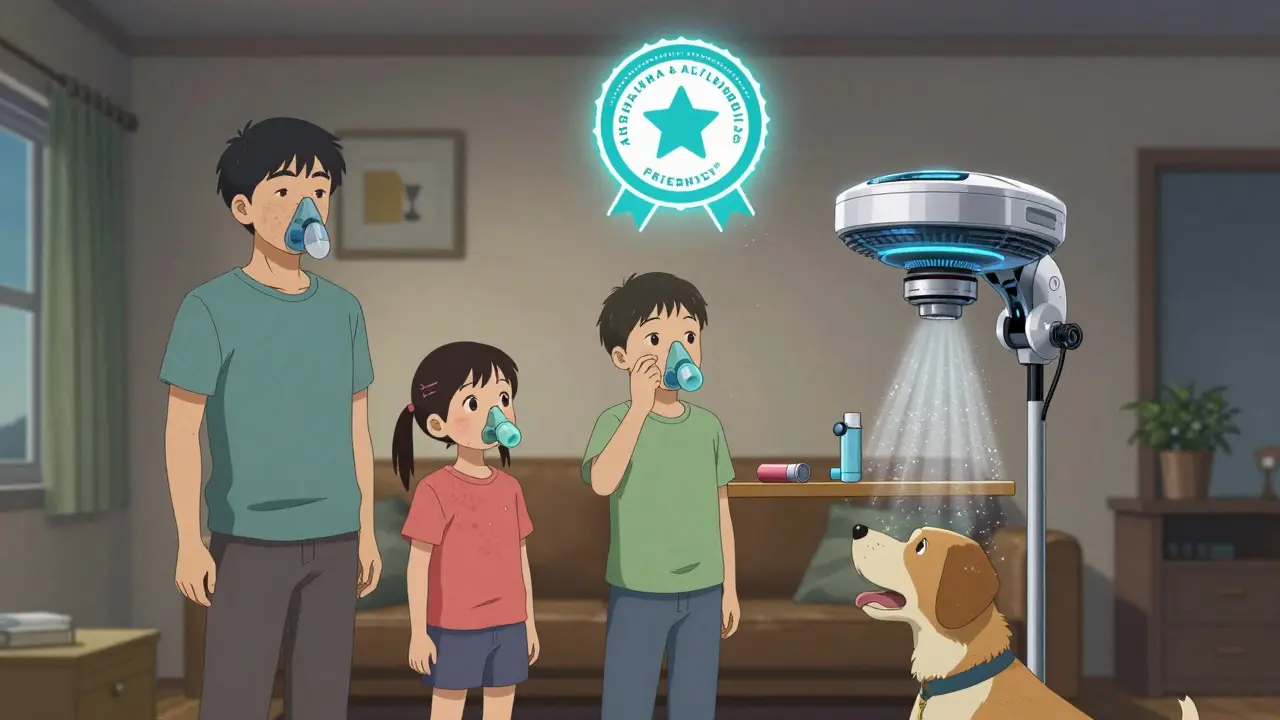
Not all “natural” or “eco-friendly” products are safe for allergies. Many still contain hidden fragrances, preservatives, or masking agents that irritate sensitive lungs and skin. The key is certification. The Asthma & Allergy Friendly® a certification program run by the Asthma and Allergy Foundation of America that tests products for their ability to remove allergens and limit chemical emissions is the gold standard.
To earn this label, a product must:
- Remove over 85% of dust mite debris, pet dander, and pollen from hard surfaces
- Keep VOC emissions under 0.5 parts per million
- Pass testing for 12+ known fragrance allergens
That’s not just marketing. These are lab-tested standards. A 2023 study at the Rochester Institute of Technology found that certified products removed 92% of allergens - compared to just 76% for regular “natural” cleaners. That gap isn’t small. It’s the difference between feeling better and still struggling.
Key Ingredients That Actually Work
Forget vague terms like “plant-based” or “non-toxic.” Look for specific ingredients that science backs up:
- Potassium cocoate (5-15%) - A gentle surfactant made from coconut oil that lifts dirt without irritating skin or lungs.
- Potassium citrate (2-8%) - Softens hard water and binds to minerals so grime doesn’t cling back to surfaces.
- Hydrogen peroxide (3-5%) - A safe oxidizer that kills mold and bacteria without the fumes of bleach or ammonia.
- Renewable ethanol (10-20%) - Derived from corn, not petroleum, it cuts grease and evaporates cleanly.
Compare that to conventional cleaners, which often use 20-30% ammonia or chlorine bleach. Those don’t just smell bad - they’re linked to worsened asthma symptoms in regular users. The same 2023 European study found that people using bleach-based cleaners had a 30-50% higher risk of asthma attacks.
Top Certified Products to Trust
Not all certified brands are created equal, but these have proven results:
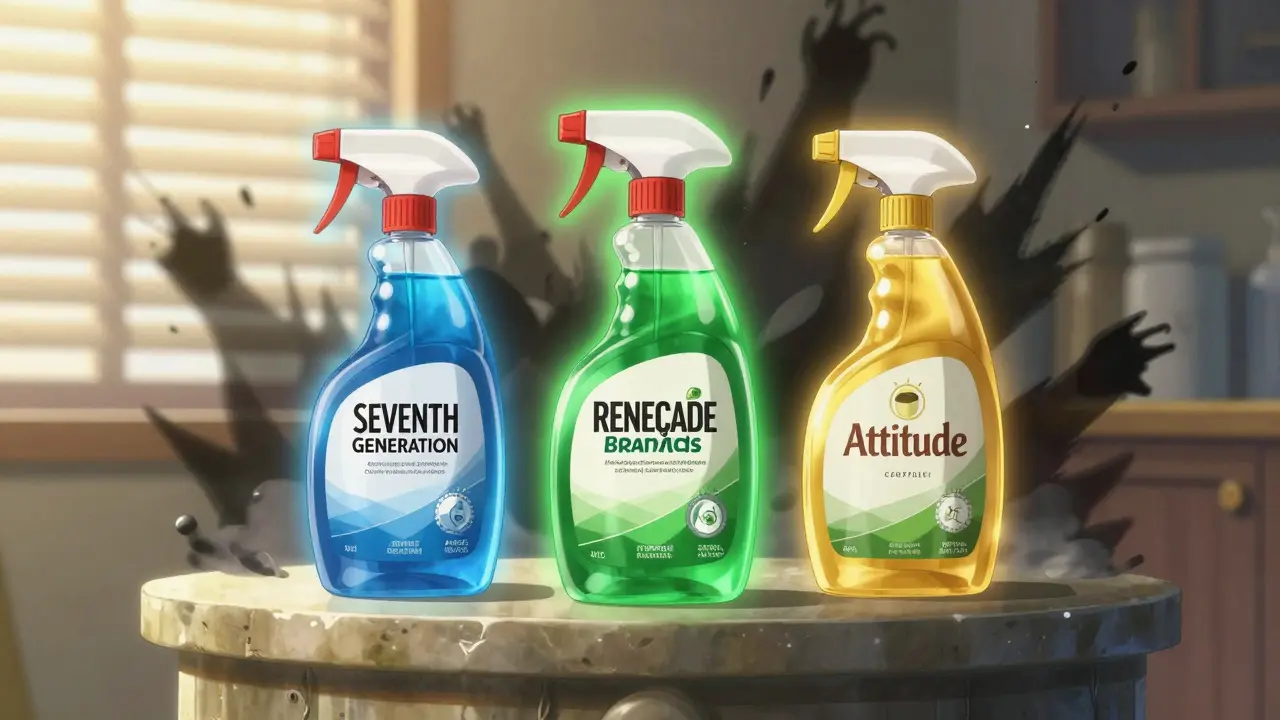
- Seventh Generation Free & Clear laundry detergent and all-purpose cleaner with Asthma & Allergy Friendly® certification - Used by families with children who have eczema and asthma. One Reddit user reported a 70% drop in their child’s flare-ups within three weeks.
- Renegade Brands Sweat-X Free & Clear laundry detergent certified to remove 92% of allergens - Known for tackling pet dander and sweat-based allergens.
- Attitude household cleaners with EWG rating of 1.2 (best possible) - Transparent about ingredients and free from all known fragrance allergens.
- Method all-purpose spray (specifically their fragrance-free line) - Widely available and meets certification standards for VOCs.
On Amazon, certified products average 4.3 stars across over 12,500 reviews. The most common praise? “Fewer sneezes,” “no more throat irritation,” and “my child can breathe better.”
What to Avoid - Even If It’s Labeled “Unscented”
Here’s the dirty secret: “Unscented” doesn’t mean fragrance-free. Many products use masking agents to cover up chemical smells. A 2022 study found that 68% of people with fragrance sensitivity had reactions to “unscented” disinfecting wipes. The same goes for “natural” cleaners that don’t carry certification.
Even vinegar-and-water solutions - popular among DIY lovers - fall short. While they’re fine for general cleaning, they only remove 67% of peanut residue. Certified products remove 89%. If you have food allergies at home, that gap is dangerous.
The Two-Cloth Method: Cleaner Than Any Product
No matter how good your cleaner is, your technique matters more. The most effective method, backed by research in the Indoor Air Journal, is the two-cloth method:
- Use one damp microfiber cloth with your allergy-friendly cleaner to lift dirt and allergens.
- Follow up with a second damp cloth - just water, no cleaner - to rinse away any residue.
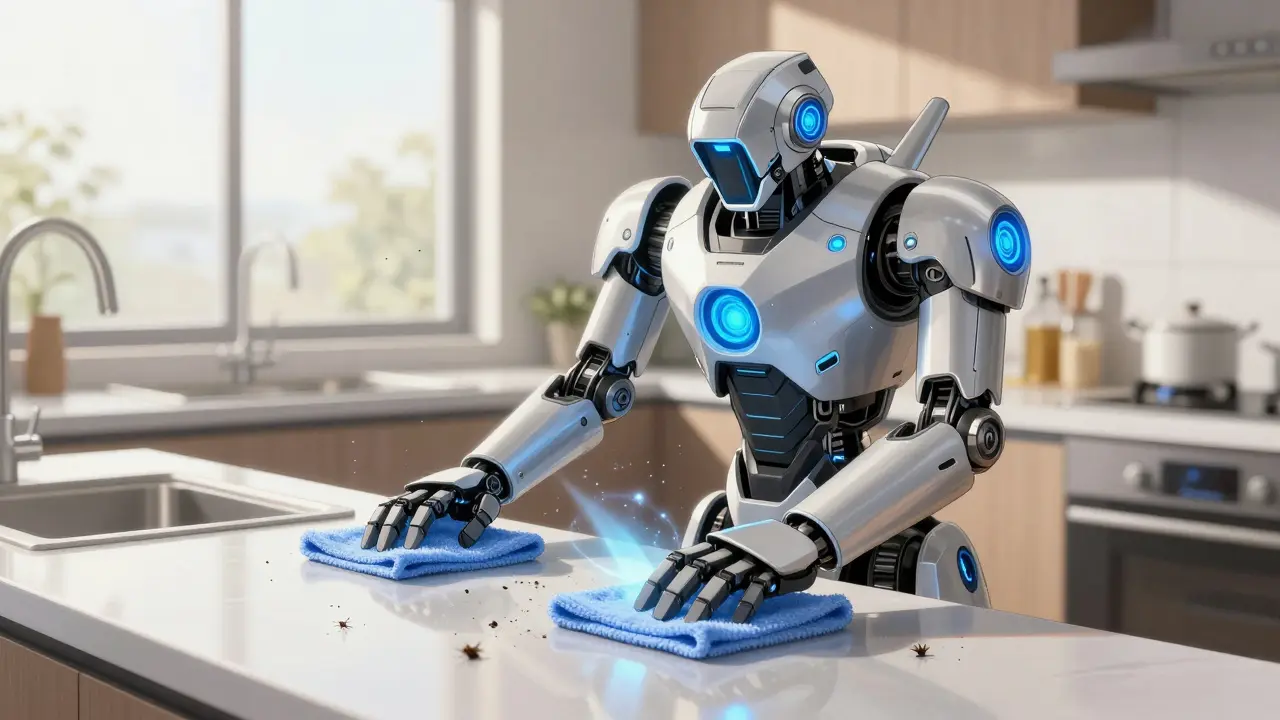
This simple switch reduces airborne allergens by 63% compared to using one cloth. It stops the cycle of stirring up dust, then letting it settle again. And it works on hardwood, tile, countertops - even baby high chairs.
Cost, Convenience, and Real Results
Yes, certified cleaners cost more. Non-certified “natural” products average $3.25 per 32oz. Certified ones? Around $5.75. But consider this: a 2023 study of 45 families with severe allergies found that switching to certified products led to a 41% drop in emergency room visits for asthma attacks over 12 months.
For most households, switching everything over costs $75-$150 upfront. That’s less than one ER visit. And the payoff? Fewer symptoms, less medication, better sleep, and fewer sick days.
Also worth noting: refill systems and concentrates are growing fast. They cut plastic waste and reduce long-term costs. A single 16oz concentrate can make 64oz of cleaner. That’s a savings of over 50% per use.
What’s Changing in 2026?
The market is evolving fast. In 2024, electrostatic sprayers designed for hypoallergenic solutions hit the market. They use 65% less product while capturing 28% more allergens. Hospitals are adopting them. So are schools.
The EU now requires full disclosure of all fragrance ingredients. The U.S. is following. By 2025, 17 common irritants will be banned from household cleaners. That’s good news - but don’t wait for regulations to protect you. Choose certified products now.
How to Start Today
You don’t need to overhaul your whole home in one day. Start here:
- Replace your laundry detergent first. It’s the biggest exposure source - 42% of allergy sufferers report skin and breathing issues from detergent residues.
- Switch to certified all-purpose cleaner for kitchens and bathrooms.
- Buy two microfiber cloths and start using the two-cloth method.
- Check labels for Asthma & Allergy Friendly® or EWG rating below 2.
- Avoid anything that says “unscented,” “fragrance-free” without certification, or lists “essential oils” - those can be triggers too.
It takes about two to three weeks for your body to adjust. After that, many people say they feel like they’re breathing for the first time in years.
Are all-natural cleaners safe for allergies?
Not necessarily. Many “natural” cleaners still contain hidden fragrances, preservatives, or irritants. Terms like “plant-based” or “eco-friendly” aren’t regulated. Only products with third-party certification like Asthma & Allergy Friendly® have been tested to prove they reduce allergen exposure.
Can I use vinegar and water instead?
Vinegar works for general cleaning and deodorizing, but it’s not strong enough for allergen removal. Studies show it removes only 67% of peanut residue - compared to 89% for certified cleaners. If you have food allergies at home, especially in kitchens or on high chairs, vinegar alone isn’t enough.
Why do some “unscented” products still trigger allergies?
“Unscented” means no noticeable smell - not no fragrance. Many products use masking agents to hide chemical odors. These agents can be just as irritating as perfumes. Only certified products are tested to ensure they contain no fragrance allergens at all.
Is it worth spending more on certified cleaners?
For households with allergies or asthma, yes. The upfront cost is $75-$150 to switch everything. But studies show a 41% drop in emergency room visits and fewer asthma attacks. That’s not just savings - it’s better health. Plus, refill systems cut long-term costs by over 50%.
What’s the best way to clean floors with allergies?
Use a damp microfiber mop with an allergy-friendly cleaner, then follow up with a second pass using just water. Avoid dry sweeping or vacuuming without a HEPA filter - both stir up allergens. Wet cleaning traps them instead of spreading them. Clean floors bi-weekly, or weekly if you have pets.
Lillian Knezek
February 22, 2026 AT 19:15Maranda Najar
February 23, 2026 AT 04:24Christopher Brown
February 23, 2026 AT 17:06Sanjaykumar Rabari
February 24, 2026 AT 13:25Kenzie Goode
February 24, 2026 AT 18:16Jacob Carthy
February 25, 2026 AT 14:17Bhaskar Anand
February 27, 2026 AT 11:30William James
February 27, 2026 AT 19:02David McKie
February 27, 2026 AT 19:20Nick Hamby
February 28, 2026 AT 10:20kirti juneja
March 1, 2026 AT 11:53Haley Gumm
March 1, 2026 AT 23:47Gabrielle Conroy
March 3, 2026 AT 12:16