 Dec, 3 2025
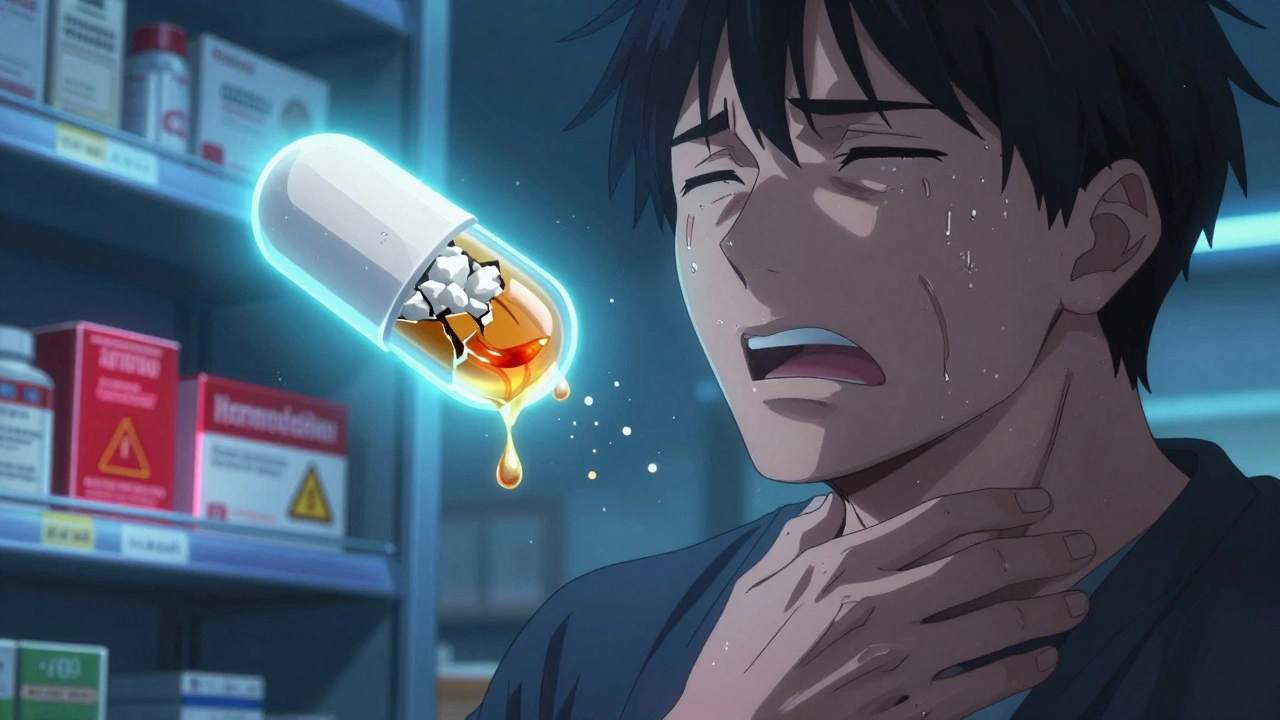
Most people assume that generic medications are just cheaper versions of brand-name drugs-and for the most part, they’re right. The active ingredient is the same. The effect on your body is meant to be identical. But here’s the part no one talks about: generic medications can trigger allergic reactions that brand-name versions don’t. And if you’ve ever broken out in hives after switching to a cheaper pill, it might not be a coincidence.
Why Generics Can Cause Allergies When Brand Names Don’t
Generic drugs must match the brand-name version in strength, dosage, and how quickly they work. But they’re allowed to use different fillers, dyes, preservatives, and binders. These are called inactive ingredients. They don’t treat your condition. But they can make your body react. Think of it like two identical cars-one built in Germany, one in Mexico. Same engine, same wheels. But one has leather seats, the other has synthetic fabric. If you’re allergic to synthetic fabric, the German car is fine. The Mexican one? Not so much. According to the FDA, 83% of generic drugs have at least one inactive ingredient that’s different from the brand-name version. And 27% of those contain ingredients known to cause allergic reactions. Common culprits include:- Lactose (found in 28% of oral generics)
- Gluten (in 12% of generics, risky for people with celiac disease)
- Tartrazine (FD&C Yellow No. 5 dye, used in 15% of liquid generics)
- Peanut oil (in 8% of injectable generics)
- Magnesium stearate (linked to reactions in people with penicillin allergies)
What Do Allergic Reactions to Generics Look Like?
Symptoms vary. Some are mild. Others can kill you. The key is knowing the difference. Mild reactions usually show up on your skin:- Rash (68% of cases)
- Hives (42%)
- Itching (57%)
- Facial swelling (29%)
- Wheezing or trouble breathing (31%)
- Nausea or vomiting (24%)
- Throat tightness (87% of cases)
- Systolic blood pressure below 90 (78%)
- Difficulty breathing (92%)
- Dizziness, fainting, or loss of consciousness
When to Call 911 or Go to the ER
Don’t wait. Don’t hope it goes away. Don’t take another antihistamine and hope for the best. If you experience any two or more of these symptoms together after taking a generic medication, call 911 immediately:- Wheezing, stridor, or breathing faster than 30 breaths per minute
- Systolic blood pressure below 90 or a drop of more than 30% from your normal baseline
- Swelling of the tongue or throat
- Feeling faint, dizzy, or confused
- Rapid heartbeat or cold, clammy skin
When to Call Your Doctor (Not the ER)
If your reaction is mild-just hives, mild itching, or a rash that doesn’t spread-you still shouldn’t ignore it. But you don’t need to rush to the hospital. Call your doctor within 24 hours if you have:- Hives lasting longer than 6 hours
- Swelling of the face, lips, or eyelids that doesn’t go down
- Nausea or vomiting that lasts more than 2 hours
- A rash that spreads beyond the first area
What You Can Do to Stay Safe
Here’s how to protect yourself if you’ve ever had a reaction-or if you’re just switching to generics for the first time. 1. Know your inactive ingredients The FDA requires manufacturers to list all inactive ingredients on the drug label. But most people don’t check. You can find them on the package insert or by searching the drug name + “inactive ingredients” on the FDA’s website. Look for:- Lactose
- Gluten
- Tartrazine (Yellow No. 5)
- Peanut oil
- FD&C Red No. 40
- Polysorbate 80
- Drug name (brand and generic)
- Reaction you had
- Specific inactive ingredient you think caused it

Why This Matters More Than You Think
Generics make up 90% of all prescriptions filled in the U.S. That means you’re likely taking one right now. And if you’ve ever switched from a brand-name drug to a generic and felt “off,” it might not be in your head. Doctors and pharmacists are getting better at asking about this. In 2019, only 42% of allergy specialists asked patients whether they’d reacted to generics. By 2023, that number jumped to 71%. But patients still need to speak up. Your reaction isn’t rare. It’s underreported. The Institute for Safe Medication Practices estimates that 15-20% of generic-related allergic reactions go unrecorded because patients don’t connect the dots. Don’t be one of them.Frequently Asked Questions
Can I have an allergic reaction to a generic drug even if I’ve taken it before without issues?
Yes. Generic manufacturers can change inactive ingredients between batches or switch suppliers. A version you took last month might be different from the one you get today. Even if you’ve taken the same generic for years, a new formula could contain a new allergen like a different dye or preservative. Always check the label when refilling.
Are brand-name drugs safer than generics?
Not necessarily. Both are required to meet the same safety and effectiveness standards for the active ingredient. But brand-name drugs often have more consistent inactive ingredients because they’re produced by a single manufacturer. Generics can vary between companies and batches. If you’ve had a reaction to a generic, switching back to the brand may help-but only if you’re allergic to an inactive ingredient, not the drug itself.
I have a peanut allergy. Should I avoid all generics?
No-but be extremely careful with injectables. Peanut oil is used in about 8% of injectable generic medications, including some versions of propofol (a common anesthetic). Oral generics rarely contain peanut oil. Always ask your pharmacist if a medication contains peanut oil or other nut-derived ingredients. If you’re scheduled for surgery, make sure your medical team knows your allergy and asks for a peanut-oil-free version.
Can I just take an antihistamine if I have a mild reaction?
It might help with itching or hives, but it won’t stop a reaction from getting worse. Antihistamines don’t treat swelling in the throat, low blood pressure, or breathing problems. If symptoms persist beyond 2 hours or spread beyond your skin, you need medical evaluation-not just a pill. Even mild reactions should be reported to your doctor to prevent future, more serious events.
How do I find out what’s in my generic medication?
Look at the drug’s package insert, which comes with the prescription. You can also search the drug name + “inactive ingredients” on the FDA’s website or use the FDA’s Inactive Ingredient Database. If you’re unsure, ask your pharmacist for a printout of the ingredients. Don’t assume the label says “free from allergens”-always confirm.
If I react to one generic, does that mean I can’t take any generic for that drug?
Not necessarily. Different companies make different versions. You might react to one manufacturer’s version because of tartrazine, but tolerate another that uses a different dye or no dye at all. An allergist can help identify which specific formulation is safe for you. Never assume all generics are the same.
Shawna B
December 4, 2025 AT 05:52I switched to generic sertraline last month and broke out in hives. Thought it was laundry detergent. Turns out it was the yellow dye. Never again.
Robert Altmannshofer
December 4, 2025 AT 11:35Wow. This is the kind of info nobody tells you when you’re trying to save a few bucks on prescriptions. I’ve had random rashes after switching generics and just assumed I was stressed. This makes total sense now. Thanks for laying it out like this.
Precious Angel
December 6, 2025 AT 10:37Oh my GOD. I’ve been suffering for YEARS and no one ever connected the dots. I switched from Lexapro to generic escitalopram and got swollen lips, chest tightness, and felt like I was drowning in my own skin. I thought I was dying. ER said ‘allergic reaction’ but never asked about the filler. Turns out it had lactose AND tartrazine. My brand-name version? Clean as a whistle. I’ve been screaming into the void for two years. Why is this not common knowledge? Why are we being fed poison and told to be grateful? This isn’t healthcare-it’s a casino where your body is the slot machine.
And don’t even get me started on how pharmacies just hand out whatever’s cheapest. No one checks. No one cares. You think your doctor knows? They’re too busy signing prescriptions to read the tiny print on the bottle. I’ve started printing out the inactive ingredient lists and handing them to pharmacists. They roll their eyes. But I don’t care. I’m not dying for a $10 savings.
And now I’m terrified to take ANYTHING new. What if the next batch changes again? What if they swap out the dye without telling me? I’ve started keeping a log like the article said-medication, reaction, ingredient, date. I feel like a detective in my own body. And honestly? I’m exhausted. This shouldn’t be my job. It should be theirs.
Why does the FDA allow this? Why do we tolerate this? I’m not anti-generic. I’m pro-survival. And if I have to pay $80 for a pill that doesn’t try to kill me, then so be it. My life is worth more than your corporate margins.
I’m telling everyone I know. This needs to be on every prescription label. Like a warning on cigarettes. ‘WARNING: THIS PILLS CONTAINS DYES THAT MAY CAUSE ANAPHYLAXIS.’ That’s not too much to ask.
I’m not mad. I’m just done being a lab rat.
Bethany Hosier
December 8, 2025 AT 04:58It is my solemn duty to inform you that the pharmaceutical industry has been systematically suppressing data on inactive ingredient allergenicity since the 1990s. The FDA’s database is incomplete, and many manufacturers exploit loopholes in the ANDA process. Furthermore, the use of peanut oil in injectables is not merely a statistical anomaly-it is a calculated risk prioritized over patient safety. The real culprit? The lobbying power of generic manufacturers, who have funded over 80% of the FDA’s advisory panels since 2015. This is not negligence. It is malfeasance.
Additionally, the claim that 38% of manufacturers offer allergen-free versions is misleading. These are typically specialty formulations available only through mail-order pharmacies, and require prior authorization. The average patient cannot access them without jumping through bureaucratic hoops. This is a design feature, not a bug.
I urge you to petition your congressional representative to mandate full disclosure of all inactive ingredients on the primary packaging, and to require batch-specific labeling. This is not an individual responsibility. It is a systemic failure.
Craig Ballantyne
December 9, 2025 AT 11:49The pharmacokinetic equivalence of generics is well-documented, but the immunological variability of excipients remains under-studied. The FDA’s 2021 guidance on inactive ingredients lacks standardized allergenicity thresholds. There’s no harmonized nomenclature across manufacturers-what one calls ‘FD&C Yellow No. 5,’ another labels as ‘E102.’ This creates diagnostic ambiguity for clinicians. We need a centralized, machine-readable database of excipients linked to adverse event reports. Until then, clinicians are flying blind.
Also, the 7.3% figure from the JACI study is likely an underestimate. Most patients don’t report reactions unless they’re severe, and many physicians don’t ask about formulation changes. We’re missing a significant portion of the signal.
Kathleen Koopman
December 10, 2025 AT 02:24OMG I had this happen!! 😱 I took generic metformin and my face swelled up like a balloon. Thought I was having a stroke. Called my mom crying. Turns out it had gluten. I have celiac. I didn’t even think to check. Now I screenshot the ingredient list every time I refill. 🙏 #genericwarning
Lyn James
December 10, 2025 AT 12:59There is a moral failure here. We live in a society that commodifies health, reduces human beings to cost centers, and treats the body as a machine that can be optimized for profit. You think your doctor is your ally? They’re paid per prescription. You think your pharmacist cares? They’re incentivized to dispense the cheapest option. And you? You’re the fool who swallows the pill without asking what’s inside. You’ve been conditioned to trust authority, to believe that ‘FDA-approved’ means safe. But safety is not a guarantee-it’s a lottery, and the house always wins.
What’s the alternative? To live in fear? To pay more? To be labeled ‘difficult’? Yes. And that’s the price of consciousness. The cost of awareness. You want to be free? Then you must be willing to fight-for your body, your life, your dignity. This isn’t about pills. It’s about autonomy. And if you’re not willing to demand it, then you deserve what you get.
Nancy M
December 12, 2025 AT 03:01In my country, we don’t have this problem. Generic drugs are regulated under the same strict standards as brand-name. Allergens are listed in bold on the outer packaging. Pharmacists are required to counsel patients on formulation changes. It’s not complicated. It’s called responsibility.
Why is it so hard here? Is it because we value profit over people? Or because we’ve normalized suffering as a side effect of ‘affordability’?
I’ve lived in both systems. The difference isn’t science. It’s culture.
gladys morante
December 12, 2025 AT 10:35I’ve been on generic levothyroxine for 10 years. Never had an issue. Then last month, I got a new bottle and my heart started racing. I thought I was having a panic attack. Turns out the new batch had a different binder. My doctor didn’t even know. Now I’m terrified to take it again. I’m going to go back to brand. Even if I have to sell my car.
Melania Dellavega
December 13, 2025 AT 14:07It’s funny how we trust our doctors to fix our bodies but never think to question what’s inside the pill. We’re taught to be passive patients. But the body remembers. It doesn’t forget a dye, a filler, a hidden allergen. I used to think allergies were just ‘bad luck.’ Now I know they’re a message. A warning. A cry from your immune system saying, ‘Something’s wrong here.’
I started keeping that medication passport after my first reaction. It’s just a note on my phone. But it’s saved me. I showed it to a new pharmacist last week. She said, ‘I’ve never seen anyone do this.’ I told her, ‘Then maybe you should start asking.’
We don’t need more laws. We need more awareness. More people speaking up. More people refusing to be silent.
You’re not crazy. You’re not overreacting. You’re awake.
Krys Freeman
December 14, 2025 AT 07:44Typical liberal nonsense. If you can’t afford brand-name, you shouldn’t be taking meds at all. Just say no to welfare prescriptions.
Jerry Ray
December 15, 2025 AT 02:54Wait-so you’re saying the FDA lets companies change the dye in my antidepressant without telling me? That’s not regulation, that’s Russian roulette. I’m not switching back to brand. I’m switching to a different generic. Maybe the one without the dye. Or maybe I’ll just stop taking it. Either way, I’m not playing guess-the-allergen anymore.
David Ross
December 15, 2025 AT 12:25This is a disaster. A complete and utter failure of regulatory oversight. The FDA is complicit. The pharmaceutical industry is complicit. And the public? The public is too distracted by TikTok to care. I’ve written to my senator. I’ve filed FOIA requests. I’ve emailed every pharmacy chain. Nobody responds. Nobody cares. But I will keep fighting. Because if I don’t, who will? My child? My neighbor? The next person who swallows a pill and wakes up in the ER? Someone has to say it: This is not acceptable.
Sophia Lyateva
December 17, 2025 AT 09:42soo i heard the gov is putting microchips in the generic pills to track us? and the dyes are laced with lithium to make us docile? i mean… why else would they hide the ingredients? its all connected…