 Aug, 20 2026
Steroid Myopathy Risk & Recovery Estimator
Enter your current or recent corticosteroid usage details to assess susceptibility.
Based on clinical guidelines, estimate how long structured physical therapy might take to show results.
Full Recovery Outlook:
-- Months
* Estimates based on standard clinical trial data for moderate-intensity resistance training (40-60% 1RM).
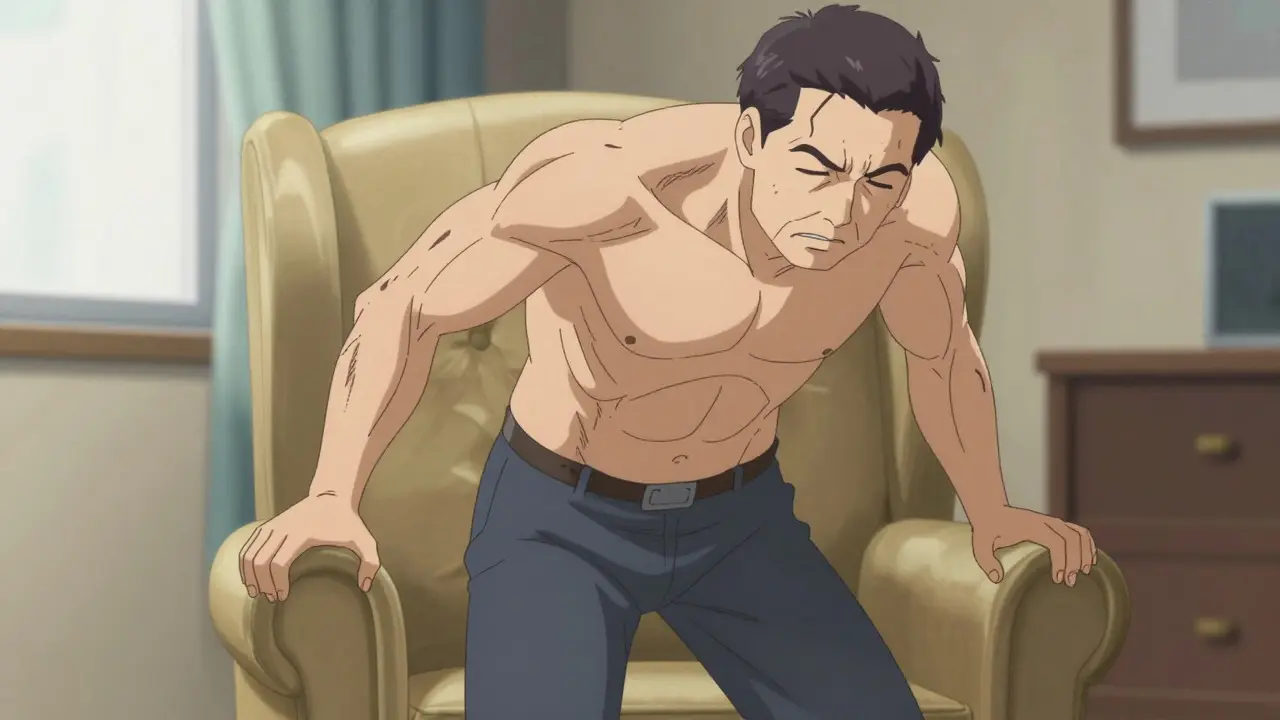
You might be taking prednisone for asthma or arthritis and feel fine, but suddenly you can’t get up from a chair without using your hands. It’s not painful, so you ignore it. You assume it’s just getting older or being out of shape. But if you’ve been on corticosteroids for more than four weeks at doses above 10 mg daily, you might be dealing with steroid myopathy. This condition affects up to 21% of long-term users, yet it’s often missed because standard blood tests come back normal. The good news? It’s reversible with the right movement strategies.
Key Takeaways
- Steroid myopathy causes painless, symmetric weakness in hips and shoulders, not legs or arms distally.
- Creatine kinase (CK) levels remain normal, distinguishing it from inflammatory muscle diseases.
- Diagnosis relies on functional tests like the timed chair rise, not blood work alone.
- Physical therapy focuses on moderate resistance training (40-60% max effort) to rebuild type 2 muscle fibers.
- Avoid high-intensity exercise initially; start low and progress slowly to prevent further breakdown.
Recognizing the Signs: It’s Not What You Think
Muscle weakness usually hurts, right? Wrong. In steroid myopathy, the weakness is completely painless. This is why patients often delay seeking help. The hallmark sign is proximal weakness, meaning muscles closest to your trunk are affected first. Your hip flexors and shoulder abductors struggle before your knees or elbows do. If you find yourself pushing off armrests to stand up or struggling to lift groceries above shoulder height, pay attention.
Here’s what patients commonly report:
- Difficulty standing from a seated position without using arms for support.
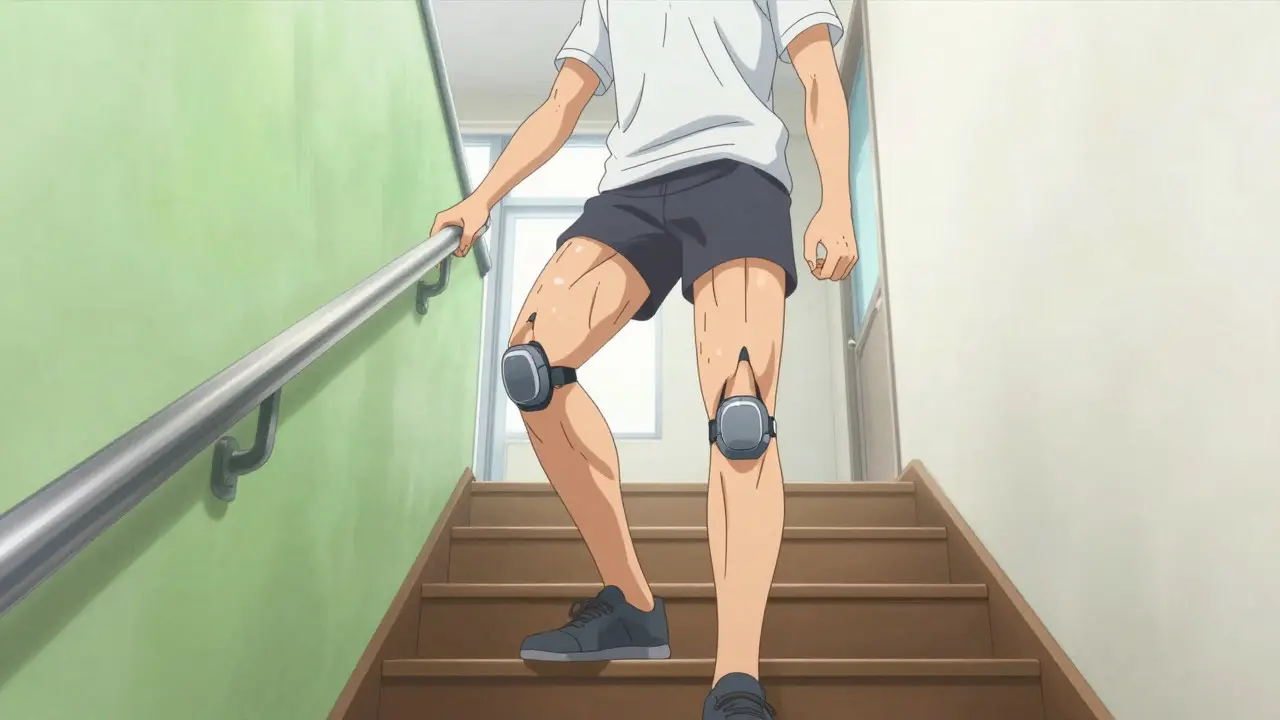
- Needing handrails to climb stairs due to weak quadriceps and glutes.
- Inability to raise arms fully overhead, such as when putting on a jacket.
- Falling more frequently due to unstable pelvic girdle muscles.
A critical distinction: if your weakness gets worse when you stop steroids, it’s likely an inflammatory condition like polymyositis. In steroid myopathy, the weakness persists or improves slowly after stopping the drug, but the damage was caused by the medication itself. About 68% of patients experience a diagnostic delay of over five months because doctors attribute these symptoms to their underlying disease rather than the treatment.
Why Steroids Cause Muscle Loss
To fix it, you need to understand the mechanism. Corticosteroids bind to receptors in your muscle cells and tell them to break down protein faster than they build it. Specifically, they target type 2b fast-twitch muscle fibers, which are responsible for power and strength. This process involves two main pathways: increased proteolysis (breaking down existing muscle) and inhibited protein synthesis (stopping new muscle growth). The result is selective atrophy of these powerful fibers, leaving you with endurance but lacking strength.
This is different from how inflammatory myopathies work. In conditions like dermatomyositis, immune cells attack the muscle, causing inflammation and enzyme leakage into the blood. In steroid myopathy, there is no inflammation. That’s why your creatine kinase (CK) levels stay within the normal range of 30-170 U/L. Standard EMG tests also appear unremarkable, missing the subtle electrical changes that occur in pure metabolic myopathies. This diagnostic blind spot is why quantitative dynamometry is becoming essential in rheumatology clinics.
Diagnosis: Beyond Blood Tests
If you suspect steroid myopathy, don’t rely solely on blood work. Your doctor should perform specific functional assessments. The gold standard for early detection includes three key tests:
- Gower’s Maneuver: Measures time and technique to stand from the floor. Patients with hip weakness will 'climb' up their own legs using their hands.
- Timed Chair Rise Test: You perform five consecutive stands from a standard chair. A normal score is under 10 seconds. Slower times indicate significant proximal weakness.
- Shoulder Abduction Strength: Testing the ability to lift arms straight out to the side against light resistance.
These tests have an 89% sensitivity for detecting early-stage myopathy. If your manual muscle testing looks normal but you fail these functional tasks, ask about quantitative strength testing. Manual exams often miss deficits until 50% of muscle function is lost.
| Feature | Steroid Myopathy | Inflammatory Myopathy |
|---|---|---|
| Pain | Painless | Painful/Tender |
| Creatine Kinase (CK) | Normal (30-170 U/L) | Elevated (>500 U/L) |
| EMG Findings | Normal or non-specific | Early recruitment/irritative |
| Muscle Biopsy | Type 2b fiber atrophy | Inflammation/Fiber necrosis |
| Response to Stopping Steroids | Improves slowly | Worsens |
Physical Therapy: The Core Treatment
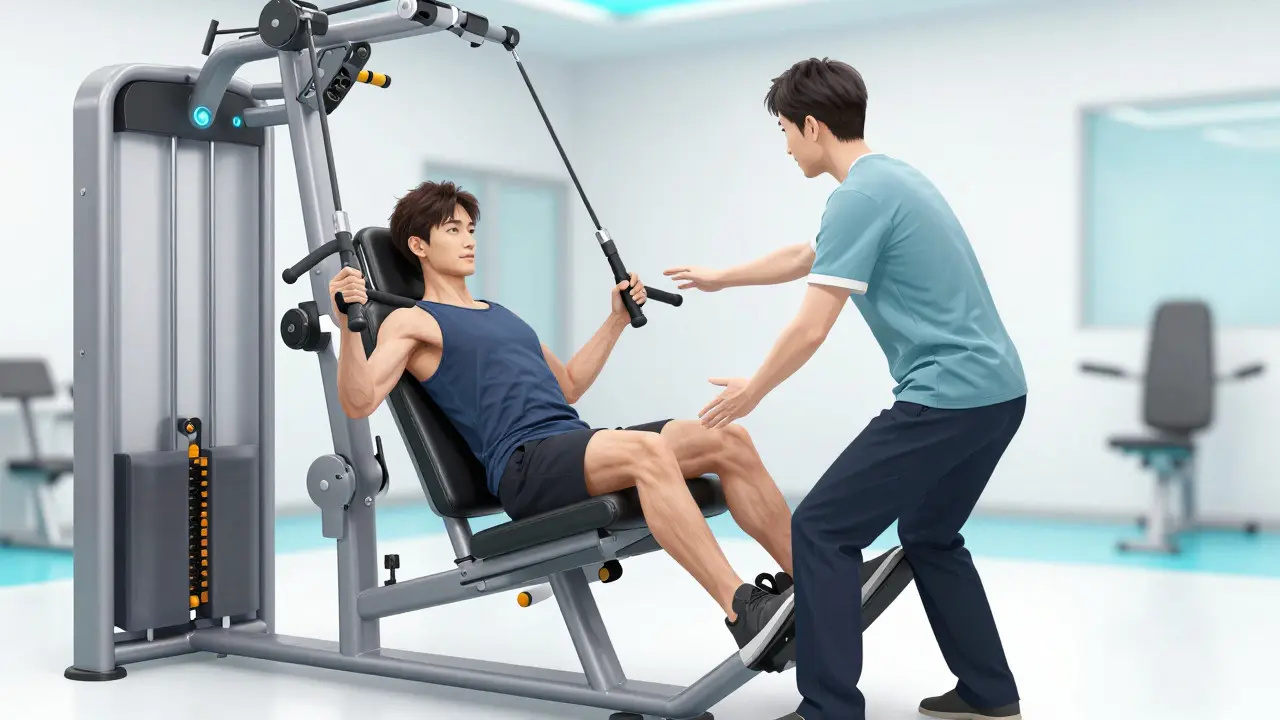
Once diagnosed, the primary intervention is physical therapy. Resting does not help; in fact, inactivity accelerates muscle loss. However, not all exercise is safe. High-intensity interval training or heavy lifting can trigger further catabolic responses. The goal is to stimulate protein synthesis without overwhelming the muscle’s repair capacity.
The American Physical Therapy Association recommends 2-3 sessions per week of moderate-intensity resistance training. Here is a practical framework based on recent clinical trials:
- Intensity: Start at 40-60% of your one-repetition maximum (1RM). If you can’t measure 1RM, use a scale where you can complete 10-12 reps comfortably but with effort.
- Progression: Increase load by 5-10% every two weeks. Do not jump ahead.
- Frequency: Allow 48 hours between sessions for the same muscle group to recover.
- Duration: Expect to see measurable improvements in 8-12 weeks. One study showed a 23.7% improvement in chair rise times after 12 weeks of supervised training.
Focus on compound movements that target the pelvic and shoulder girdles. Squats (bodyweight or assisted), step-ups, and seated rows are excellent choices. Avoid isolation exercises that place high shear stress on joints while muscles are weak. Balance training is also crucial, as falls are a major risk factor for fractures in this population.
Managing Medications and Lifestyle Factors
While rehabbing, talk to your prescribing physician about your steroid dose. Sometimes, tapering the dose or switching to a less myopathic alternative can reduce the burden. Dexamethasone, for instance, has a higher incidence of myopathy compared to prednisone due to its chemical structure. Newer agents like vamorolone show promise in Phase II trials, demonstrating 40% less muscle weakness at equivalent anti-inflammatory doses. Ask if these options apply to your condition.
Nutrition plays a supporting role. Ensure adequate protein intake (1.2-1.6 g/kg body weight) to provide the building blocks for muscle repair. Vitamin D and calcium supplementation may also be beneficial, as chronic steroid use affects bone density alongside muscle mass. Hydration is critical, especially during initial exercise phases, to support metabolic waste removal.
When to Worry: Red Flags
Most cases of steroid myopathy are manageable with outpatient therapy. However, watch for signs of acute progression, particularly if you are in a hospital setting receiving high-dose intravenous steroids. Acute steroid myopathy can develop within days and affect respiratory muscles. If you experience shortness of breath, difficulty swallowing, or sudden inability to move limbs, seek immediate medical attention. Approximately 15-20% of severe acute cases require mechanical ventilation. For chronic outpatients, red flags include rapid decline in function over weeks rather than months, or new-onset numbness/tingling, which suggests nerve involvement rather than pure myopathy.
Frequently Asked Questions
How long does it take for steroid myopathy to improve?
Improvement typically begins within 4-6 weeks of starting structured physical therapy and potentially tapering steroids. Full recovery can take 3-6 months depending on severity and adherence to the rehab program. Consistency is key; sporadic exercise yields minimal results.
Can I keep taking steroids while doing physical therapy?
Yes, in most cases. You do not need to stop steroids abruptly, which could cause adrenal crisis or flare-up of your underlying disease. Instead, manage the myopathy concurrently with exercise. Discuss dose optimization with your doctor, but continue the medication unless advised otherwise.
Is steroid myopathy permanent?
It is generally reversible. Unlike neurogenic atrophy, the muscle fibers are intact but shrunk. With proper stimulation and nutrition, type 2b fibers can hypertrophy again. However, if left untreated for years, some degree of residual weakness may persist, making early recognition vital.
What is the best exercise for steroid myopathy?
Moderate-intensity resistance training targeting large muscle groups is best. Examples include sit-to-stands, wall squats, and band-assisted rows. Avoid high-impact activities like running or jumping initially. Focus on controlled movements that emphasize the eccentric phase (lowering the weight) to stimulate muscle adaptation safely.
Do I need a muscle biopsy to diagnose this?
Usually, no. Diagnosis is clinical, based on history of steroid use, characteristic weakness pattern, normal CK levels, and exclusion of other causes. Biopsy is reserved for atypical cases where diagnosis remains unclear after standard workup. It shows type 2 fiber atrophy without inflammation.