 Mar, 21 2026
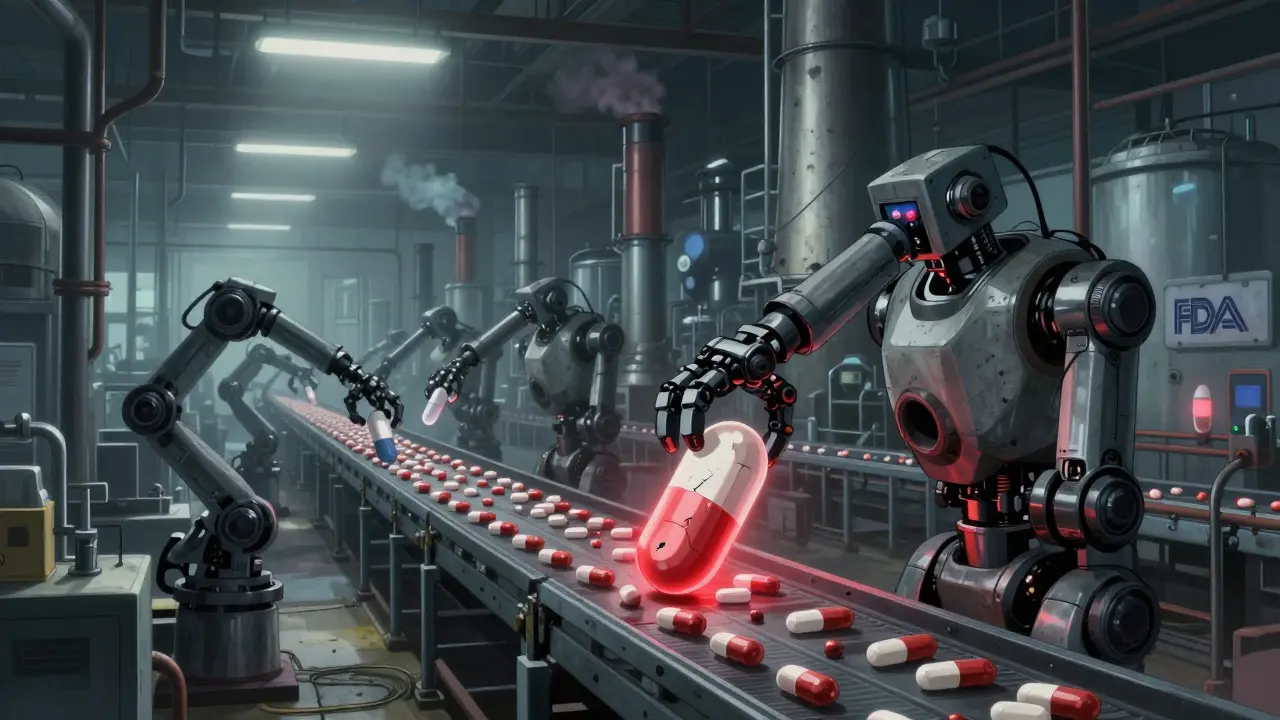
When a patient takes a generic pill, they expect the same effect as the brand-name version. But what if that pill was made in a factory halfway across the world, under inspection protocols that allow manufacturers to prepare for auditors? Clinicians are starting to ask hard questions - not because they distrust generics, but because the system behind them is changing in ways that threaten safety.
How generics became the backbone of U.S. prescribing
Since the Hatch-Waxman Act of 1984, generic drugs have been the go-to for cost savings. They’re chemically identical to brand-name drugs, approved by the FDA, and often cost 80% less. Today, nearly 9 out of 10 prescriptions filled in the U.S. are for generics. That’s a win for affordability. But behind that number is a supply chain stretched thin across continents.
Only 14% of active pharmaceutical ingredients (APIs) - the core chemical that makes the drug work - are made in the United States. More than half come from factories in India and China. These aren’t small operations. They’re massive, high-volume facilities that churn out millions of pills daily. But as competition drives prices lower, some manufacturers cut corners. And when a drug’s price drops below $0.10 per tablet, profit margins vanish. That’s when quality starts to slip.
The hidden cost of global manufacturing
Generic drugs don’t come from one factory. They’re built in pieces. One company makes the active ingredient. Another blends it with fillers. A third applies the coating. A fourth packages it. Only one name appears on the label. Patients and doctors have no idea where each step happened.
Here’s where things get risky. The FDA inspects U.S. facilities without warning. In contrast, inspections in India and China are scheduled weeks in advance. That gives manufacturers time to clean up, fix issues, or hide problems. Professor Robert S. Gray from Ohio State University found that generic drugs made in India had 54% higher rates of severe adverse events - including hospitalizations, disability, and death - compared to identical drugs made in the U.S. This wasn’t random. It was tied to older generics, where price pressure had squeezed production to the bone.
Why older drugs? Because they’ve been on the market for decades. No one’s innovating. No one’s investing. The only way to stay profitable is to reduce costs. That means using cheaper raw materials, skipping quality checks, or delaying equipment upgrades. Outdated machinery. Poorly trained staff. Inconsistent temperature controls. These aren’t conspiracy theories. They’re documented causes of drug shortages and contamination.
Why bioequivalence isn’t enough
The FDA says generics must be bioequivalent - meaning they deliver the same amount of active ingredient at the same rate as the brand-name version. That sounds solid. But bioequivalence doesn’t guarantee consistent quality over time. A pill might pass a lab test on day one but degrade faster in humid storage. Or the coating might dissolve unevenly, leading to inconsistent absorption.
Take a generic blood thinner like warfarin. Even small variations in how it’s absorbed can cause dangerous clots or bleeding. Clinicians have reported patients switching from one generic to another - both approved by the FDA - and experiencing new side effects. Not because the drug changed. But because the manufacturing process did.
There’s also the issue of contamination. In 2018, valsartan - a common blood pressure drug - was pulled from shelves after carcinogens were found in batches made overseas. The FDA traced it to a single supplier. But since multiple companies used that same supplier, hundreds of generic products were affected. Patients had no way of knowing which batch they’d received.
Advanced manufacturing could change everything
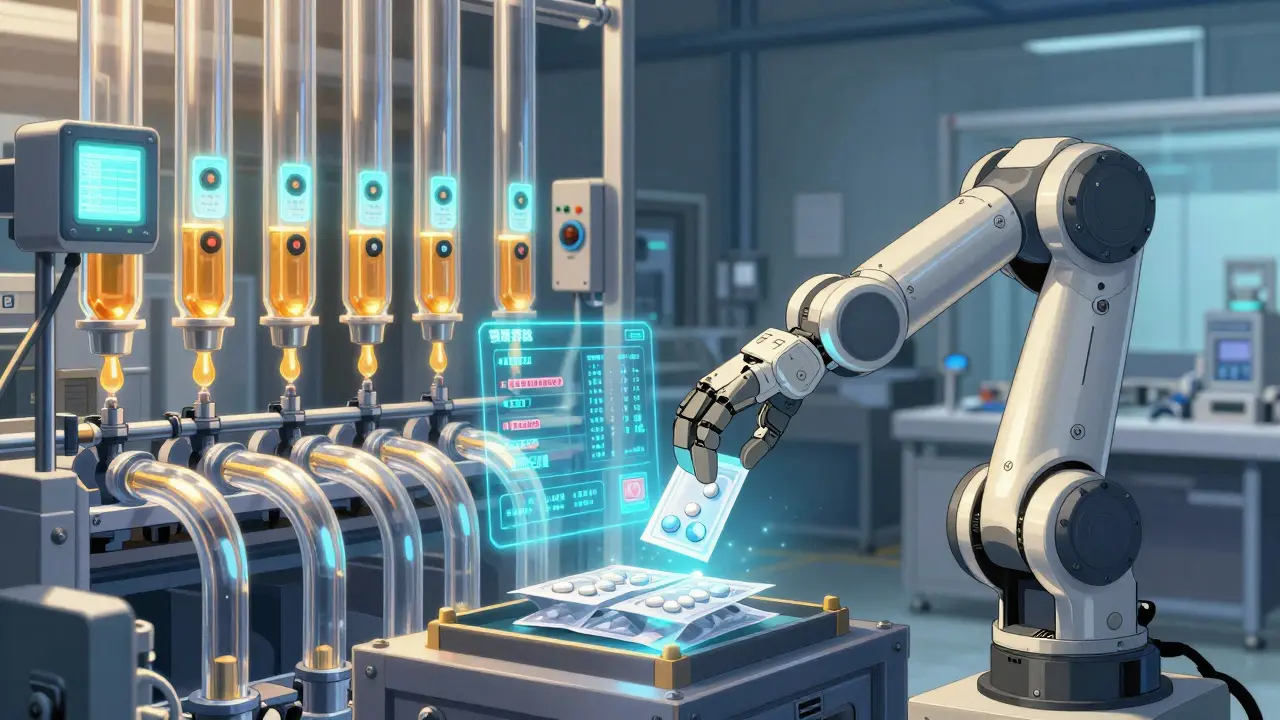
There’s a better way. Continuous manufacturing - a modern process that produces drugs in one uninterrupted flow - reduces errors, cuts costs over time, and allows real-time quality checks. Over 80% of drugs made with this technology are produced in the U.S. Why? Because the upfront investment is high. Companies overseas, locked into low-margin models, can’t afford to upgrade.
Imagine a factory where sensors monitor every step: temperature, pressure, mixing speed. If a batch starts to drift out of spec, the system stops it before it’s packaged. That’s not science fiction. It’s happening in Ohio and New Jersey. But these facilities are rare. Most generic production still runs on 20-year-old equipment.
The Duke-Margolis Center found that advanced manufacturing can actually lower per-unit costs in the long run. But only if companies are willing to invest. Right now, the market rewards the cheapest bid - not the safest one.
What clinicians are seeing on the front lines
Dr. Iyer, a pharmacist in Atlanta, says he’s noticed a pattern. Patients on long-term generic medications - especially those with chronic conditions like epilepsy or heart disease - are more likely to report sudden changes in symptoms after a refill. "It’s not always the drug," he says. "Sometimes it’s the batch. But we don’t know which one we’re giving them."
Emergency rooms are seeing more cases tied to drug shortages. Cancer patients missing doses. Diabetics rationing insulin. Nurses having to substitute medications with unknown equivalency. These aren’t rare. They’re systemic.
Harvard Health says most studies show generics are equivalent. But that’s not the whole story. Those studies often test one batch under ideal conditions. Real-world use? That’s different. A pill stored in a hot warehouse in Puerto Rico, shipped across the ocean, then sitting in a pharmacy with no climate control - that’s the reality for millions.
The regulatory gap
The FDA claims the system works. But their own data tells another story. In 2023, over 40% of inspection violations for generic drug facilities occurred overseas. U.S. facilities had a 9% violation rate. That’s not a coincidence. It’s a structural flaw.
When inspections are announced, manufacturers know what to fix. When they’re not, problems stay hidden. The Ohio State researchers argue that transparency is key: patients and prescribers should know where a drug was made. Not just the country - but the facility. That’s not about fear. It’s about accountability.
Some countries already do this. In the U.K. and Australia, pharmacists can trace a drug back to its manufacturing site. In the U.S.? No such system exists.
Is domestic production the answer?
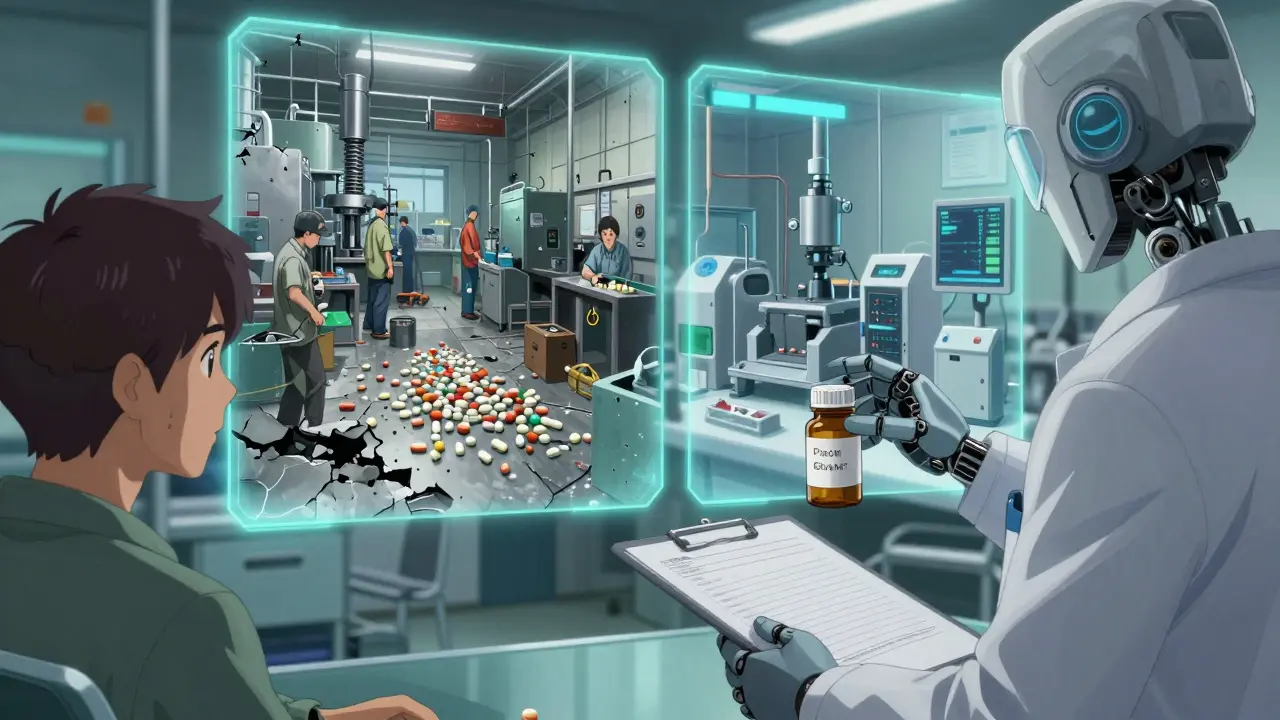
The University of Wisconsin School of Pharmacy says yes. If more generic manufacturing happened in the U.S., we’d see fewer shortages, fewer quality issues, and a more stable supply chain. It’s not about nationalism. It’s about control.
When a storm knocks out power in India, thousands of U.S. patients miss their medication. When a trade war blocks shipping, hospitals scramble for alternatives. Domestic production doesn’t eliminate risk - but it reduces exposure.
There’s also a financial argument. Advanced manufacturing, once installed, becomes cheaper to run. The U.S. could lead the world in high-quality, low-cost generic production - if policy and investment catch up.
What can be done?
- Require unannounced FDA inspections for all global manufacturing sites - not just U.S.-based ones.
- Label drugs with the country and facility of manufacture - so prescribers and patients can make informed choices.
- Incentivize manufacturers to adopt advanced technologies through tax credits or priority review.
- Stop rewarding the lowest bid in public health contracts. Quality must be part of the equation.
- Support domestic production of critical generics - especially those used in life-saving treatments.
The goal isn’t to eliminate generics. It’s to make them safe. Affordable doesn’t mean disposable. A pill that saves a life shouldn’t be treated like a commodity.
What’s next?
Change won’t come from one law or one inspection. It will come from pressure - from clinicians who speak up, from patients who ask questions, and from policymakers who stop treating drug quality as a footnote.
For now, if you’re a clinician: pay attention to batch changes. Track patient reports. Don’t assume all generics are the same. And if you see a pattern - document it. Your voice matters more than you think.
Paul Cuccurullo
March 21, 2026 AT 16:15It’s easy to dismiss this as alarmist, but the data doesn’t lie. I’ve worked in hospital pharmacy for 18 years, and I’ve seen the shift firsthand. A patient on a generic seizure med who suddenly starts having breakthrough seizures? It’s not random. It’s the batch. And we have zero way to trace it back. This isn’t about being anti-generic-it’s about being pro-safety.
When a drug costs $0.07 per tablet, someone’s cutting corners. Either the raw material is subpar, the equipment is rusting, or the QC team is asleep. The FDA’s scheduled inspections are a joke. Imagine if your car inspection was announced two weeks in advance-you’d clean the engine, fix the brakes, and hide the smoke.
We need unannounced audits globally. We need facility-level labeling. We need to stop rewarding the cheapest bid. This isn’t politics. It’s physiology. A pill doesn’t care if it was made in Ohio or Odisha. But your body sure does.
Let’s stop pretending affordability means safety. A life saved isn’t cheap. And we’re gambling with lives because we’re too lazy to pay a few extra cents.
Thomas Jensen
March 23, 2026 AT 02:20They’re lying. All of them. The FDA, the pharma giants, the WHO-they’re all in on it. Why do you think the same batches keep showing up in multiple recalls? It’s not coincidence. It’s design. The deep state wants you dependent on cheap meds so you stay docile, sick, and paying taxes. They’ve been replacing active ingredients with inert fillers for decades. You think your blood pressure med works? Nah. It’s just sugar and glitter. The real drug? It’s stored in underground bunkers in Switzerland for the elite.
And don’t get me started on 5G towers syncing with the nanoparticles in the coating to suppress your immune system. I’ve got the charts. I’ve got the videos. I’ve got the guy who works at the Indian plant who whispered it all to me in a Walmart parking lot. You think this is about quality? No. It’s about control.
Wake up. The pills are poisoned. The labels are lies. And they’re watching you right now through your phone. Check your camera light. It blinked, didn’t it?
Natali Shevchenko
March 23, 2026 AT 20:00I’ve been thinking about this a lot lately, and it’s not just about manufacturing-it’s about how we’ve turned medicine into a commodity. We treat pills like toilet paper: buy cheap, use fast, replace without thought. But a pill isn’t a paper towel. It’s a molecule that interacts with your biology, your DNA, your nervous system. It’s not interchangeable.
When you strip away the branding, you’re not just losing a logo-you’re losing accountability. Who is responsible when a woman on warfarin bleeds internally? The pharmacist? The manufacturer? The FDA? The guy who packed it in a factory in Hyderabad? No one. And that’s the real tragedy.
We’ve outsourced not just production, but moral responsibility. We don’t want to know where it’s made because then we’d have to care. And caring is inconvenient. But maybe, just maybe, if we started seeing patients as people instead of metrics, we’d demand better. Not because it’s expensive. But because it’s right.
Nicole James
March 24, 2026 AT 04:19Wait. Wait. Wait. Did you see that FDA report from 2023? 40% of violations overseas? 9% in the U.S.? That’s not a coincidence. That’s a pattern. And the fact that they only inspect when they announce it? That’s not negligence-that’s complicity. They know. They’ve always known. And they’ve been letting it happen because it’s cheaper. And now? Now they’re telling us to trust the system. Trust the system?! The same system that let contaminated valsartan into millions of prescriptions? The same system that didn’t even test for nitrosamines until 2018? I’m not a conspiracy theorist-I’m a former lab tech. I’ve seen the logs. The logs don’t lie. The logs say: they knew. And they didn’t care.
And now? Now they want us to believe that ‘bioequivalence’ is enough? Bioequivalence doesn’t care if your pill dissolves in 3 minutes or 17. It doesn’t care if it’s stored in a 110-degree warehouse in Puerto Rico. It doesn’t care if the person who pressed it had three hours of sleep and a broken glove. It just says: ‘same amount of chemical.’ But chemical isn’t medicine. Medicine is trust. And we’ve lost it.
Nishan Basnet
March 24, 2026 AT 23:42As someone from India, I want to say this with all sincerity: not all Indian manufacturers are the same. There are world-class facilities here-clean, modern, ISO-certified, with engineers who trained in the U.S. and Europe. We make over 60% of the world’s generic pills because we’re good at it. Not because we’re cheap, but because we’re precise.
But yes. There are bad actors. There are small plants with outdated machines, underpaid workers, and no oversight. And that’s the problem-not India. Not China. It’s the global race to the bottom. When a U.S. hospital buys the cheapest bid, they’re not just choosing a price-they’re choosing a risk. And we’re the ones paying for it-with our dignity, our health, our lives.
Let’s stop blaming countries. Let’s start holding corporations accountable. Let’s demand transparency. Let’s pay a little more-for quality, for safety, for humanity. Because we’re not just selling pills. We’re selling trust.
Allison Priole
March 25, 2026 AT 05:51I think we’re all kinda scared about this, honestly? Like, I take my meds every day and never think about where they come from… until now. I just assumed the FDA had it covered. But now I’m like… oh. Wait. So my blood pressure pill might’ve been made in a warehouse with no AC? And then shipped across the ocean and sat in a hot pharmacy for weeks? That’s wild.
And I get it-cheaper is better for people who can’t afford $500 pills. But maybe… maybe we need to stop pretending the cheapest option is the best one? Like, if we paid a few more cents, maybe we could actually know where our medicine comes from? I mean, we track our coffee beans. Why not our heart meds?
I’m not mad. Just… curious. And a little sad. We’re so good at fixing things when we care. Maybe we just need to care a little more?
Casey Tenney
March 25, 2026 AT 22:23Stop pretending this is complicated. It’s simple: if you’re not making drugs in America, you shouldn’t be selling them in America. Period. End of story. We have the technology. We have the workforce. We have the infrastructure. What we don’t have is the backbone to say ‘no’ to foreign cheapness.
Every time you buy a generic made overseas, you’re funding a system that exploits workers, cuts corners, and endangers lives. This isn’t economics. It’s negligence. And if you’re okay with that, you’re part of the problem.
Buy American. Or don’t buy at all.
Sandy Wells
March 27, 2026 AT 16:53Look. I read the article. It’s long. It’s emotional. It’s dramatic. But here’s the truth: 90% of generics work fine. The outliers? They’re outliers. You’re not going to die because your lisinopril came from India. You’re going to die because you stopped taking it. Or because you’re 72 with three comorbidities. Or because you’re on Medicare and your doctor won’t prescribe the brand.
This isn’t a crisis. It’s a complaint. With graphs. And fearmongering. And a whole lot of hand-wringing over something that’s been fine for 40 years.
Just take your pill. And stop overthinking it.
Bryan Woody
March 28, 2026 AT 23:19Oh wow. You mean the FDA doesn’t inspect factories like they’re doing a surprise drug test on a teenager? Shocking. Truly.
Let me get this straight: you want to know where your pill was made? Cool. So do I. But here’s the kicker-most of you wouldn’t care if it was made in a cave by monks if it cost $0.02. You want safety? You want transparency? Then pay $0.15 instead of $0.08. Stop being angry at the system and start being angry at your own wallet.
Advanced manufacturing? Yeah. It’s real. It’s in Ohio. It’s expensive. But guess what? It’s profitable if you stop bidding like you’re at a flea market. The market rewards the cheapest. So we get the cheapest. It’s not a conspiracy. It’s capitalism. And you’re the customer who screams when the product breaks.
Want better? Pay for it. Or shut up.
Chris Dwyer
March 29, 2026 AT 11:28I really appreciate how thoughtful this post is. It’s easy to get overwhelmed by all the scary stats, but here’s the thing: we can fix this. Not with outrage. Not with blame. But with smart policy, smart investment, and smart choices.
Look-I work with a nonprofit that helps rural clinics get access to high-quality generics. We’ve started tracking where the drugs come from. We’ve started asking suppliers for facility codes. And guess what? The good manufacturers are happy to provide them. They’re proud. They want to be known.
It’s not about nationalism. It’s about dignity. Every pill deserves to be made with care. And every patient deserves to know they’re getting it.
Let’s stop seeing this as a problem and start seeing it as an opportunity. We can lead the world in safe, affordable, transparent drug manufacturing. We just have to choose to.
Timothy Olcott
March 30, 2026 AT 05:11