 Mar, 5 2026
Every year, thousands of workers breathe in dust and fibers they can’t see - and by the time they feel sick, it’s often too late. Silicosis and asbestosis aren’t rare old-school illnesses. They’re happening right now, in construction sites, factories, and demolition crews across the country. And the worst part? They’re 100% preventable.
What Exactly Are Silicosis and Asbestosis?
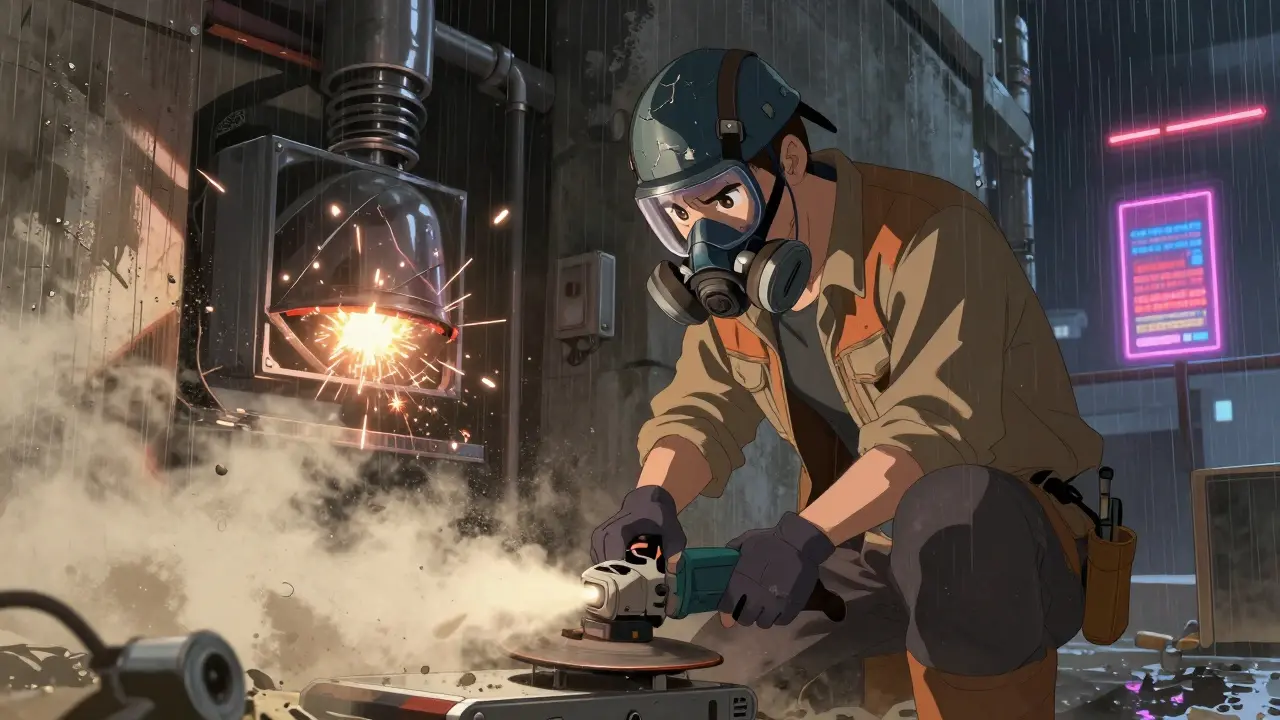
Silicosis happens when you breathe in tiny pieces of crystalline silica - the kind found in sand, stone, concrete, and brick. These particles don’t just irritate your lungs. They cut into lung tissue, triggering scarring that gets worse over time. People working with cutting, grinding, or drilling stone, tile, or concrete are at highest risk. A construction worker who’s been sandblasting for 10 years might not feel anything until their lungs start failing - often in their 50s or 60s.
Asbestosis is caused by asbestos fibers. These are long, thin, and sharp. Once inhaled, they stick in the lungs and slowly cause scar tissue to build up. This makes breathing harder, like trying to inhale through a clogged straw. Asbestos was used everywhere - insulation, pipes, roofing, even some brake pads. Workers in shipbuilding, demolition, and older building maintenance are still at risk today.
Both diseases are progressive. That means they get worse even after you stop being exposed. There’s no cure. Once the scarring starts, it doesn’t reverse. The only real option is to slow it down - and that starts with stopping exposure before it begins.
Why These Diseases Are Still Happening in 2026
You’d think we’d have figured this out by now. But here’s the truth: we haven’t. In the U.S. alone, around 1,200 people die from silicosis every year. Asbestosis kills another 1,100 or so. Most of these workers were never told they were at risk. Or worse - they were told to just wear a dust mask and get back to work.
One reason? Cutting corners. A Reddit user in r/Construction said, “My company got wet saws last year, but the foreman still yells at us for taking too long with water.” That’s not just negligence - it’s deadly. Wet cutting reduces silica dust by 90%. But if workers are rushed, they skip it. Same with asbestos. In older buildings, there are an estimated 733,000 public structures still containing asbestos. Removing it safely costs money. So some contractors just seal it off - and hope no one cuts into it.
Another reason? PPE doesn’t work if it’s not used right. OSHA says N-95 masks filter 95% of particles 0.3 microns in size. P-100 masks? 99.97%. But here’s the problem: 68% of worker complaints about respirators are about discomfort. Workers in 90-degree heat don’t want to wear a tight, sweaty P-100. So they loosen the straps. Or they use an old mask they found. Or they don’t wear one at all. A 2022 CDC report found that 32% of workers modified their masks to make them “more comfortable” - which means they’re not protecting themselves at all.
The Hierarchy of Controls: What Actually Works
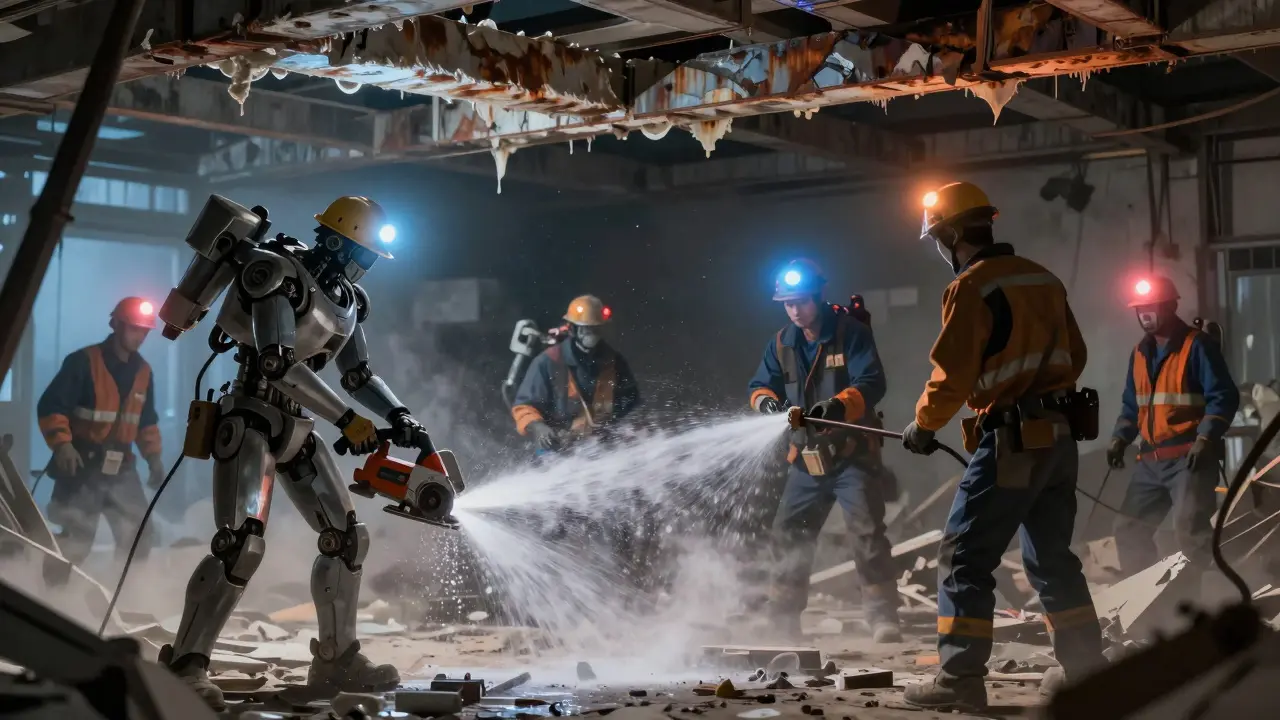
There’s a simple, proven system for stopping workplace hazards. It’s called the hierarchy of controls. And it goes like this:
- Elimination - Remove the hazard. Replace concrete with a silica-free alternative. This is ideal - but not always possible.
- Substitution - Swap the dangerous material. Use a less toxic abrasive in sandblasting.
- Engineering Controls - Change how the work is done. This is where you get the biggest win.
- Administrative Controls - Change how people work. Rotate jobs. Limit exposure time.
- PPE - Last line of defense. Masks, respirators, goggles.
Here’s the hard truth: PPE is the weakest link. It only works if it’s worn correctly, fits right, and is replaced regularly. Engineering controls? They’re the real game-changer.
Local exhaust ventilation on a hand-held grinder? Reduces silica exposure by 70-80%. Wet cutting? Cuts dust by 90%. Sealing off a cutting area to contain 95% of dust? That’s NIOSH’s gold standard. These aren’t fancy gadgets. They’re simple, reliable, and cost-effective. A ventilation system for one workstation? $2,000-$5,000. The average workers’ compensation claim for silicosis? Over $200,000. The math isn’t even close.
What Workers and Employers Need to Do
It’s not enough to have a policy. You need action.
For employers:
- Install local exhaust ventilation on every tool that creates dust. Don’t wait for OSHA to show up.
- Use water when cutting, grinding, or drilling stone or concrete. Wet methods are cheaper and safer.
- Provide P-100 respirators - not N-95s - for high-risk tasks. And make sure they’re fit-tested annually.
- Train workers for at least 4 hours, not the OSHA minimum of 2. Show them real examples. Let them practice putting on respirators.
- Track exposure. Use air monitors. If dust levels are high, stop work. Fix it. Then restart.
- Make safety part of the culture. Supervisors must wear PPE 100% of the time. If the boss doesn’t wear a mask, workers won’t either.
For workers:
- Ask: “Is there a wet method? Is there a ventilation system?” If not, say something.
- Don’t accept a dust mask as protection for silica or asbestos. It’s not enough.
- Get a baseline spirometry test. Then get one every year if you’re exposed. This catches lung damage before you feel it.
- If you smoke, quit. Smoking increases your risk of developing these diseases by 50-70%.
- Report unsafe conditions. OSHA’s whistleblower program protects you. You have rights.
The Bigger Picture: Why This Matters
Occupational lung diseases make up 15-20% of all workplace illnesses in the U.S. Construction, mining, and manufacturing account for 75% of those cases. And it’s not just about health - it’s about money. Every silicosis case costs employers hundreds of thousands in medical bills, lost productivity, and legal fees.
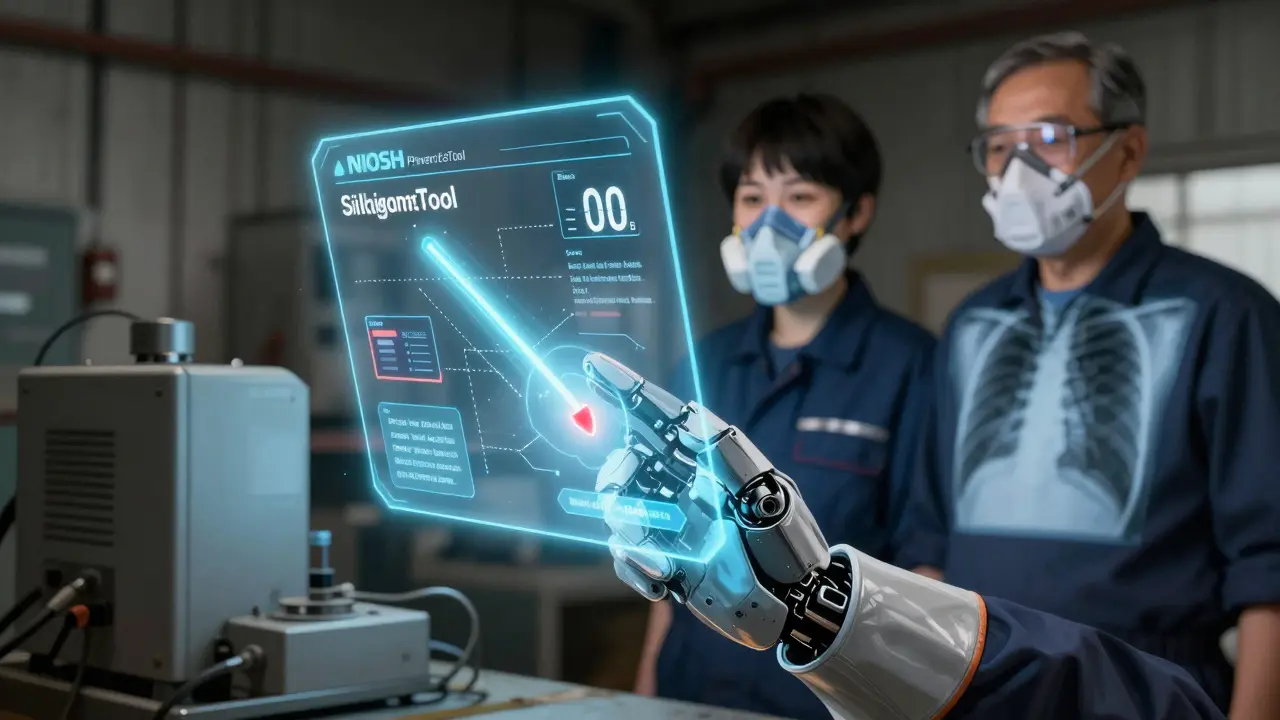
There’s hope. NIOSH’s new Prevent eTool digital platform has already cut respiratory incidents by 40% in pilot companies. Germany’s pilot program cut new cases by 55% with mandatory health checks and exposure monitoring. The European Union is tightening asbestos limits again by 2025. And OSHA’s 2022 National Emphasis Program on silica led to over 980 citations - and $3 million in fines.
But real change doesn’t come from citations. It comes from culture. When safety is treated like a box to check, people die. When safety is treated like a core value - like quality or speed - lives are saved.
The technology exists. The guidelines are clear. The cost of prevention is tiny compared to the cost of disease. So why are we still seeing this? Because we’ve let convenience win over care.
What’s Next?
We’re entering a new era. Wearable sensors are now being tested to give workers real-time dust exposure alerts. AI is being used to predict which job sites are most at risk. And more companies are starting to see worker health as a competitive advantage - not a cost center.
But none of that matters if we don’t act today. The next worker who gets silicosis won’t be some distant statistic. They’ll be someone you know. Maybe even someone you work with.
Don’t wait for them to get sick. Don’t wait for OSHA to show up. Start now. Fix the ventilation. Use the water. Fit-test the mask. Train your team. Protect your people.
Because no job is worth your lungs.
Can you get silicosis from one-time exposure?
No, silicosis usually takes years of repeated exposure. But there’s a rare form called accelerated silicosis that can develop in 5-10 years with high exposure. And there’s even rarer acute silicosis - which can happen after just a few months of intense exposure, like in sandblasting without protection. So even short-term, high-dose exposure can be dangerous.
Is asbestosis the same as mesothelioma?
No. Asbestosis is scarring of the lung tissue from asbestos fibers. Mesothelioma is a cancer of the lining of the lungs, heart, or abdomen. Both are caused by asbestos, but they’re different diseases. Mesothelioma is rarer but more aggressive. There’s no safe level of asbestos exposure - even one fiber can theoretically trigger cancer decades later.
Do N-95 masks protect against silica and asbestos?
N-95 masks filter 95% of particles 0.3 microns - which is good for many dusts. But for silica and asbestos, which are often smaller and more dangerous, P-100 masks are recommended. P-100 filters 99.97% of particles and are oil-resistant. OSHA requires P-100s for high-risk tasks like demolition or asbestos abatement. N-95s are not enough.
Can you test yourself for silicosis or asbestosis at home?
No. These diseases can’t be diagnosed at home. You need a chest X-ray, CT scan, and spirometry test done by a doctor. Early signs are subtle - shortness of breath during light activity, a dry cough, fatigue. If you’ve worked in high-risk jobs and have these symptoms, see a pulmonologist. Don’t wait until you’re gasping for air.
Are younger workers at risk?
Yes. In fact, there’s been a rise in silicosis among workers under 40. Why? New trends like engineered stone countertops - which contain up to 90% silica - have created a new wave of exposure. Workers cutting these countertops without wet methods or ventilation are getting sick in their 30s. This isn’t an old man’s disease anymore.
What if my employer won’t provide proper protection?
You have legal rights. OSHA requires employers to provide proper controls and PPE. If they don’t, you can file a confidential complaint online or by phone. OSHA is legally required to investigate. You can’t be fired or punished for reporting unsafe conditions. The Whistleblower Protection Program exists for exactly this reason.
phyllis bourassa
March 5, 2026 AT 23:53Tim Hnatko
March 6, 2026 AT 02:45Joey Pearson
March 6, 2026 AT 15:53Jeff Mirisola
March 7, 2026 AT 22:27Susan Purney Mark
March 8, 2026 AT 22:27Ian Kiplagat
March 9, 2026 AT 14:01Amina Aminkhuslen
March 11, 2026 AT 06:31amber carrillo
March 13, 2026 AT 00:43Aaron Pace
March 14, 2026 AT 02:20Roland Silber
March 16, 2026 AT 02:16Patrick Jackson
March 17, 2026 AT 05:52Adebayo Muhammad
March 17, 2026 AT 06:41Pranay Roy
March 19, 2026 AT 01:19Joe Prism
March 20, 2026 AT 18:53Bridget Verwey
March 21, 2026 AT 11:21