 Mar, 17 2026
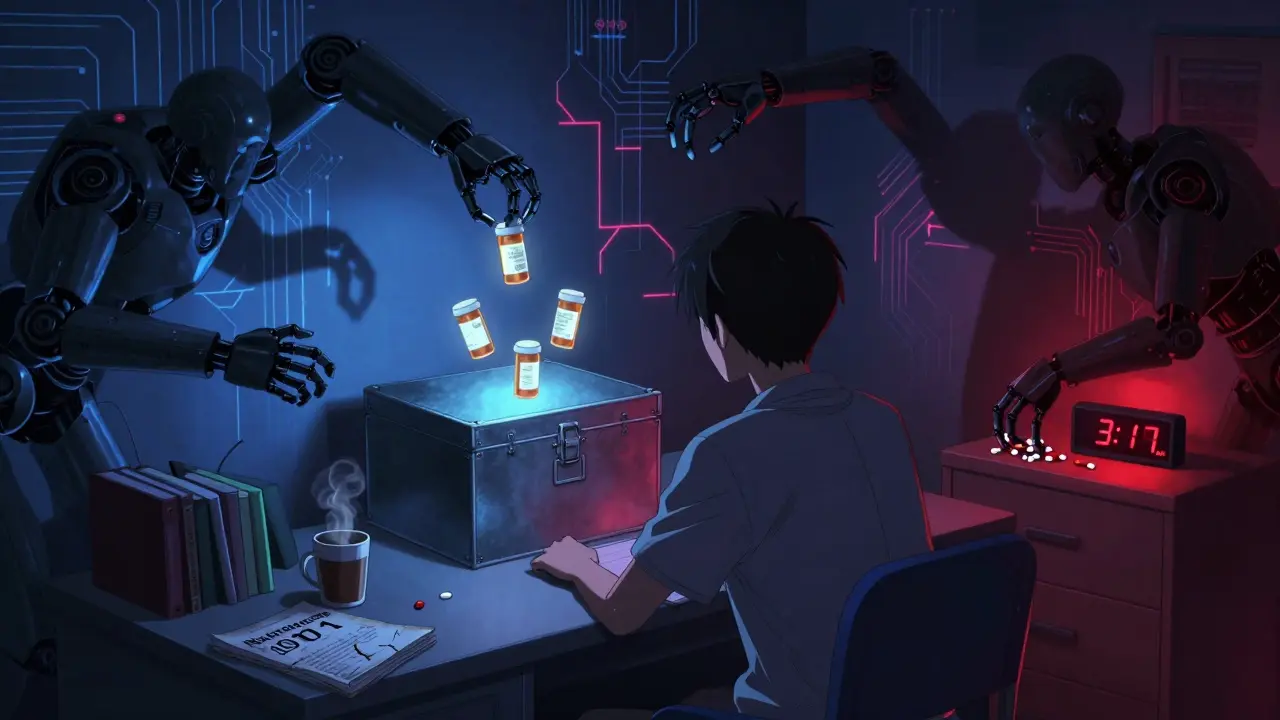
Every year, millions of college students and young adults start juggling classes, part-time jobs, social lives, and sleepless nights. In the middle of all that, many also start taking prescription medications - sometimes for the right reasons, sometimes not. What happens when a student takes someone else’s Adderall to pull an all-nighter? Or keeps leftover painkillers in their dorm drawer? Or doesn’t know how to safely get rid of an old prescription? These aren’t just harmless choices. They’re risks with real consequences.
Why This Matters More Than You Think
Young adults aged 18 to 25 are the most likely age group to misuse prescription drugs. According to the National Survey on Drug Use and Health, over 28% of college-aged people have used a prescription medication without a prescription at least once in their life. That’s not a small number. That’s nearly one in three.
Stimulants like Adderall and Ritalin are the most commonly misused. Why? Because students believe they’ll help them study better, stay awake longer, or crush exams. But here’s the truth: if you don’t have ADHD, these drugs don’t make you smarter. They just make your heart race, your anxiety spike, and your sleep vanish. A 2020 study from Johns Hopkins found that stimulant misuse has been linked to serious heart problems, panic attacks, and even addiction.
And it’s not just stimulants. Painkillers like OxyContin and Vicodin, and sedatives like Xanax and Valium, are also frequently shared or taken without a prescription. In fact, 60% of students who misuse prescription drugs get them from friends, roommates, or classmates. Not pharmacies. Not doctors. Just someone’s leftover pills.
The Real Cost of Sharing Pills
It’s easy to think, “It’s just one pill,” or “My friend has a prescription, so it’s safe.” But prescription drugs aren’t candy. They’re powerful chemicals designed for specific medical conditions and dosages. Taking someone else’s medication means you have no idea:
- What the correct dose is for your body
- How it might interact with other meds or supplements you’re taking
- Whether you have an allergy or underlying health condition that makes it dangerous
One University of Michigan student told a campus health team: “I took my roommate’s Adderall before finals. I thought I’d feel focused. Instead, I had chest pain and ended up in the ER.” That’s not rare. Emergency room visits related to stimulant misuse among college-aged people tripled between 2005 and 2010.
And it’s not just physical health. Misusing these drugs can hurt your grades. A 2022 study found that students who regularly used stimulants without a prescription were more likely to report poor sleep, increased anxiety, and lower academic performance than those who didn’t. The drug might help you stay awake, but it makes it harder to retain what you’ve studied.
Where Does It Come From?
Most students don’t buy these drugs online or from dealers. They get them from people they know. A 2021 survey of 312 college students found that 75% of misuse cases involved stimulants, and nearly two-thirds of those came from friends or roommates. Some students are even offered pills before exams - like they’re just part of the college experience.
Here’s what that looks like in real life:
- A student with ADHD gets prescribed Adderall, but takes less than prescribed and saves the rest.
- They leave the bottle on their desk.
- A roommate sees it, asks for one, and says, “I’ll give it back after finals.”
- That one pill turns into two, then three, then weekly use.
And here’s the scary part: 42% of students surveyed at UC campuses knew exactly where to get stimulants without a prescription on campus. That’s not luck. That’s a system.
How to Keep Your Medication Safe
If you have a prescription, here’s how to keep it safe - for you and everyone around you:
- Store it securely. Don’t leave pills on your nightstand or in your backpack. Use a lockbox, a small padlock safe, or even a locked drawer. The University of Florida’s “Safe Meds” program gave out free lockboxes to students and cut stimulant misuse by 18% in two years.
- Don’t share. Even if someone asks nicely. Even if they’re stressed. Even if you think it’s “just this once.”
- Know your dosage. If you’re taking a prescription, know how much you’re supposed to take and when. Don’t adjust it because you feel tired or overwhelmed.
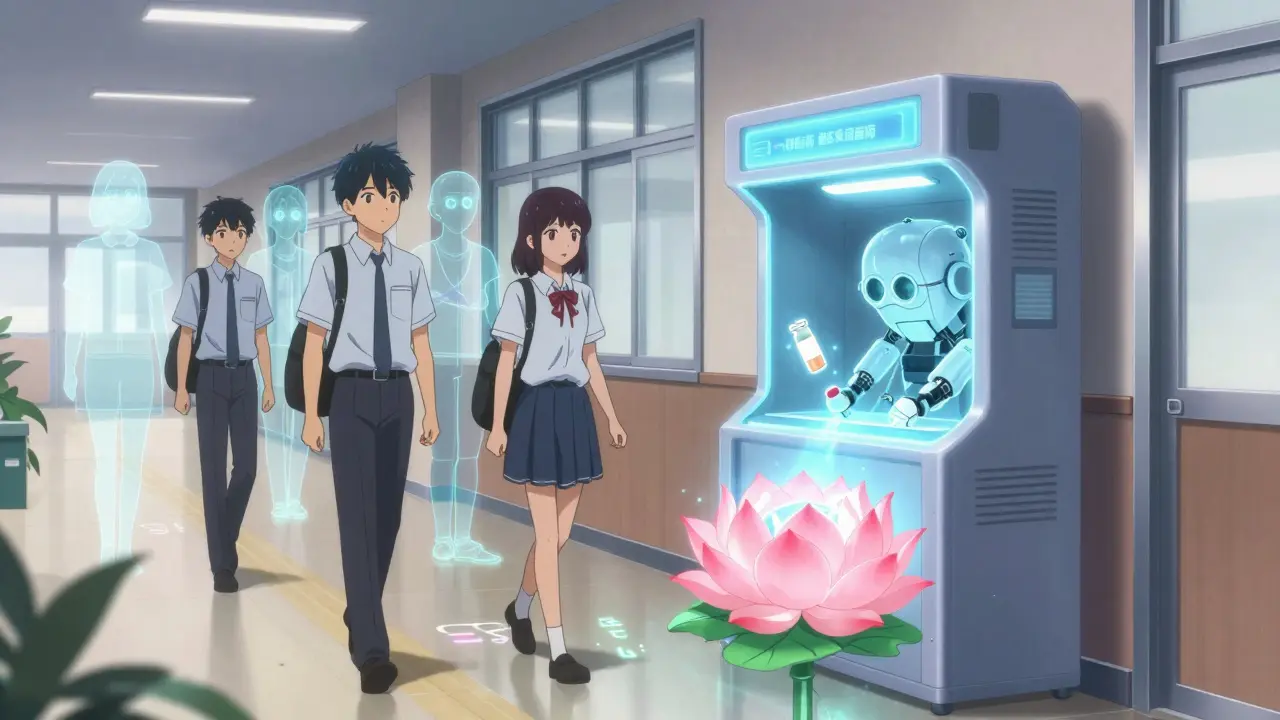
- Dispose of leftovers properly. Don’t flush them. Don’t throw them in the trash. Many campuses now have drug disposal kiosks - like the ones at pharmacies or student health centers. If your school doesn’t have one, check with local police stations or pharmacies. The CDC says proper disposal reduces accidental poisonings and environmental harm.
And if you’re not on a prescription? Don’t take someone else’s. Period.
What Colleges Are Doing About It
More schools are waking up. In 2010, only 28% of colleges had a dedicated staff member for medication safety. By 2023, that number jumped to 73%. Many now offer:
- Free lockboxes for students
- Disposal kiosks in dorms and health centers
- Peer-led education programs
- Workshops on stress management and sleep hygiene
The University of Michigan’s “Wolverine Wellness” program is one of the most effective. It didn’t just preach about drug safety - it gave students free academic coaching, sleep resources, and mental health check-ins. Result? Stimulant misuse dropped 22%, and more students used tutoring services than ever before.
Pharmaceutical companies are also stepping in. Shire Pharmaceuticals, maker of Adderall, donated $4.2 million to college health programs in 2022. And the FDA approved new “abuse-deterrent” formulations of stimulants in 2022 - pills that are harder to crush or snort. Early data from Purdue University shows a 15% drop in misuse of these new versions.
What You Can Do Right Now
You don’t need to wait for your school to fix this. Start with these three steps:
- Check your meds. If you have a prescription, make sure it’s stored safely. If you have old pills, find out where to dispose of them.
- Talk to your friends. If someone’s sharing pills, ask them why. Maybe they’re stressed, too. Point them to campus resources - not more pills.
- Know your limits. Sleep, food, and study breaks are not luxuries. They’re your best tools for academic success. No pill replaces them.
And if you’re feeling overwhelmed? Talk to someone. A counselor. A professor. A health advisor. You don’t need to take a pill to get through finals. You just need to know you’re not alone.
What’s at Stake
Prescription drug misuse isn’t just a “college thing.” It’s a gateway. The CDC found that 14% of high school students have misused opioids - and that trend follows them into college. The cost? Over $1.8 billion a year in healthcare, lost grades, and campus security costs in the U.S. alone.
But here’s the good news: we know what works. Safe storage. Proper disposal. Honest conversations. Academic support. And saying no - not because you’re weak, but because you’re smart.
You’re not supposed to need a drug to be successful. You’re supposed to be supported so you don’t feel like you need one.
Is it illegal to share prescription medication with a friend?
Yes. In the U.S., giving or selling your prescription drugs to someone else is a federal crime under the Controlled Substances Act. Even if you don’t get paid, it’s still illegal. Penalties can include fines, probation, or even jail time - and it can show up on your record, affecting future jobs, grad school, or housing.
Can I get in trouble if I’m caught with someone else’s prescription?
Yes. Possessing a prescription drug without a valid prescription is illegal. If campus police or health staff find you with someone else’s pills - even if you didn’t steal them - you could face disciplinary action from your school, or even legal charges. Some schools treat this like drug possession, regardless of how you got it.
What if I need help with focus or sleep - but I don’t have a prescription?
Most college health centers offer free or low-cost counseling, sleep hygiene workshops, and academic coaching. Many schools now have programs that help students manage stress, improve time management, and build better routines - without drugs. Talk to your campus health provider. You’re not the only one struggling, and help exists.
How do I safely dispose of unused medication?
Look for a drug disposal kiosk on campus - many student health centers, pharmacies, or police stations have them. If none are available, mix pills with kitty litter or coffee grounds, put them in a sealed container, and throw them in the trash. Never flush them down the toilet - it pollutes water systems. The FDA and CDC both recommend this method for home disposal.
Are abuse-deterrent pills really safer?
Yes. New formulations of stimulants are designed to be harder to crush, snort, or dissolve. Early studies show a 15% drop in misuse among students who use them. They’re not foolproof, but they make it harder to abuse the drug in dangerous ways. If your doctor prescribes a new version, ask if it’s abuse-deterrent - it’s a step toward safer use.
Medication safety isn’t about fear. It’s about control. You control your health. You control your choices. And you don’t need a pill to prove you’re capable.
lawanna major
March 18, 2026 AT 12:57It’s wild how we’ve normalized borrowing pills like they’re pens or snacks. I used to think one Adderall was harmless-until I saw a friend spiral into anxiety so bad she couldn’t eat for days. It’s not about willpower. It’s about systems failing us. We’re told to grind, to hustle, to perform-and then we’re left alone with a bottle of someone else’s medicine as the only ‘solution.’
We need better support, not better drugs. Sleep isn’t lazy. Rest isn’t weakness. And asking for help isn’t failure-it’s the bravest thing you can do.
Ryan Voeltner
March 19, 2026 AT 10:09Linda Olsson
March 20, 2026 AT 19:32Ayan Khan
March 22, 2026 AT 17:17Emily Hager
March 23, 2026 AT 00:57Melissa Starks
March 23, 2026 AT 09:21okay so i just wanna say this: i used to take my roommate's ritalin because i was failing bio and i thought i had no choice. i thought i was being smart. turns out i was just scared. and lonely. and i didn't know how to say that. now i go to the campus wellness center every tuesday and they help me make a schedule and i sleep 6 hours a night and i'm not perfect but i'm alive. and yeah, i still have panic attacks. but now i have a therapist who doesn't judge me. and i don't need a pill to prove i'm not lazy. i just needed someone to say: hey, you're allowed to be human.
also i threw out all the leftover pills. and i told my roommate. she cried. we hugged. it was messy. but it was real.
Lauren Volpi
March 25, 2026 AT 02:31Kal Lambert
March 25, 2026 AT 14:35Melissa Stansbury
March 26, 2026 AT 06:54cara s
March 26, 2026 AT 11:50it's funny how we treat medication like it's some kind of moral test when really it's just chemistry. if you have a broken leg you don't judge someone for taking painkillers. why do we judge someone for taking something that helps them think? the problem isn't the pill. it's that we don't give people the tools to succeed without them. we don't teach time management. we don't teach sleep hygiene. we don't teach how to say no. we just hand out pills and call it a day. then we act shocked when someone gets hurt.
also i'm not saying take them. i'm saying fix the system. because right now it's designed to break people.
Amadi Kenneth
March 27, 2026 AT 11:01Shameer Ahammad
March 28, 2026 AT 14:59Alexander Pitt
March 29, 2026 AT 03:46