 Jun, 18 2026
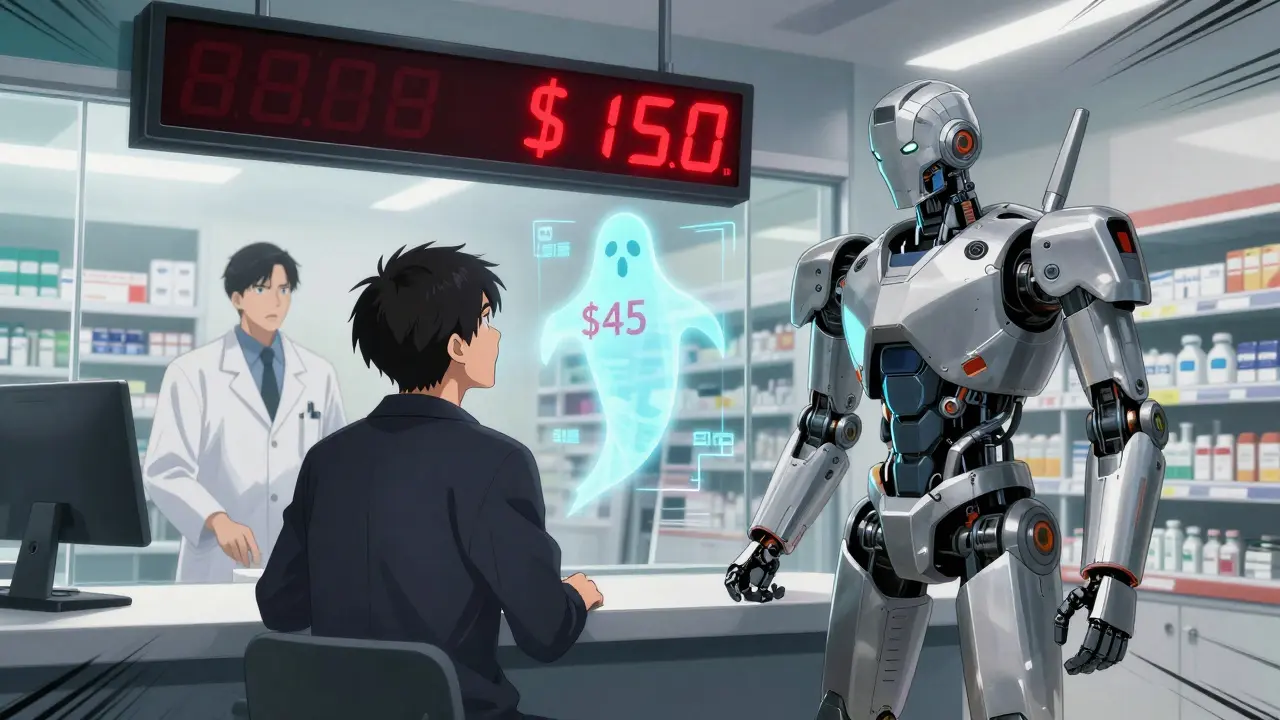
You pick up your prescription, hand over your card, and the pharmacist says the cost is $150. You blink. Last month it was $45. What changed? Often, the answer lies in a confusing distinction between two types of lower-cost medications: traditional generic drugs are FDA-approved medications containing the same active ingredients as brand-name drugs, manufactured after patent expiration and authorized generics (AGs) are identical versions of brand-name drugs marketed under a generic label by the brand company itself or through a partner. Knowing the difference-and knowing exactly what to ask your pharmacist-can save you hundreds, if not thousands, of dollars annually.
The U.S. healthcare system saved $408 billion on generic and biosimilar medicines in 2022 alone, according to the FDA’s 2022 report. Yet, despite these massive systemic savings, many patients still pay high out-of-pocket costs. Why? Because the path from 'low list price' to 'low patient copay' is blocked by complex insurance rules, rebate structures, and a lack of clear communication at the pharmacy counter. This guide breaks down how to navigate that maze.
Understanding the Difference: Traditional vs. Authorized Generics
To save money, you first need to know what you are buying. Both traditional generics and authorized generics must meet strict FDA standards for safety and efficacy. They contain the same active ingredient as the brand-name drug. However, their origin and pricing mechanics differ significantly.
Traditional Generics: These are produced by third-party manufacturers after the original brand-name patent expires. The Hatch-Waxman Act of 1984 established the modern generic drug approval pathway through Abbreviated New Drug Applications (ANDAs), allowing generics to reference existing brand safety and efficacy data. Competition among multiple manufacturers drives prices down sharply. Within one year of entry, prices typically fall by more than 75% compared to brand names.
Authorized Generics (AGs): These are the exact same product as the brand-name drug, often made in the same facility, but sold under a different label by the brand manufacturer or a partner. They usually launch right when the patent expires. While they are cheaper than the brand, they may be more expensive than traditional generics because there is only one seller (the brand company) rather than a competitive market.
| Feature | Traditional Generic | Authorized Generic (AG) |
|---|---|---|
| Manufacturer | Third-party companies | Brand-name manufacturer |
| Price Driver | Market competition (multiple sellers) | Single seller strategy |
| List Price | Often lowest available | Lower than brand, higher than traditional generic |
| Insurance Rebates | High (aggressive PBM negotiations) | Variable (may have fewer rebates) |
| Patient Copay Impact | Usually lower tier | May be placed in higher tier depending on plan |
Why Your Copay Might Not Match the List Price
Here is where it gets tricky. You might see an authorized generic listed for $30, while the brand is $150. But when you swipe your insurance card, the copay for the AG is $45, and the traditional generic is $10. How is this possible?
It comes down to Pharmacy Benefit Managers (PBMs) are intermediaries that negotiate drug prices and rebates between insurers and pharmacies. PBMs negotiate rebates with drug manufacturers. Brand-name drugs often have high list prices but offer large rebates to PBMs. When a patient pays a copay, it is often calculated based on the net price after rebates, not the sticker price.
Traditional generics, being cheap, don't have much room for rebates. Authorized generics sit in a gray area. As noted in a 2023 case study by DrugPatentWatch, AGs may not be subject to the same rigorous rebate agreements as traditional generics. If your insurance plan has a 'coinsurance' model (where you pay a percentage of the drug cost) rather than a flat copay, the lack of rebates on an AG could mean you pay more out-of-pocket than expected. Even with flat copays, insurance formularies might place AGs in a higher cost tier than traditional generics.
The Exact Questions to Ask Your Pharmacist
Most pharmacists are busy and focused on dispensing accuracy. They may not proactively explain the nuance between an AG and a traditional generic. You need to advocate for yourself. Here is the script to use next time you fill a prescription:
- "Is there a traditional generic version available for this medication?" Don't just ask for 'a generic.' Specify 'traditional' to ensure you aren't automatically getting the authorized version if both exist.
- "Is this specific pill an authorized generic?" Ask them to check the National Drug Code (NDC). If the NDC matches the brand manufacturer, it’s likely an AG.
- "How does my insurance treat authorized generics versus traditional generics?" Ask specifically about formulary tiers. Is the AG on Tier 2 (standard generic) or Tier 3 (brand/non-preferred)?
- "Can I save money by switching to the traditional generic manufacturer?" If multiple traditional generic manufacturers exist, ask if one offers a better cash price or copay structure.
A 2023 study in the Journal of the American Pharmacists Association found that patients who specifically asked about authorized generics saved 15-25% more than those who only inquired about generics generally. Asking changes the outcome.

Using Tools to Compare Real Costs
Don't rely solely on the pharmacist's initial quote. Use digital tools to verify prices before you leave the pharmacy.
- GoodRx or SingleCare: These apps compare cash prices across pharmacies. Look for the specific NDC number of the generic. You will often see listings for 'Generic [Drug Name] - Manufacturer A' and 'Generic [Drug Name] - Manufacturer B.' One might be an AG, the other a traditional generic. Compare the cash prices.
- Your Insurance Portal: Log in to your insurer's website and look up the drug in the formulary. Check the tier status for both the brand and the generic. Some plans explicitly list 'Authorized Generic' as a separate category with different cost-sharing rules.
- Manufacturer Savings Cards: For some authorized generics, the brand manufacturer may offer a savings card that reduces the copay, especially if the AG is priced close to the brand. Check the brand's website for 'patient assistance' programs.
When Authorized Generics Make Sense
While traditional generics are usually cheaper, there are scenarios where an authorized generic is the better choice:
- No Traditional Generic Available: Sometimes, a brand launches an AG before any third-party generic hits the market. In this window, the AG is the only lower-cost option.
- Sensitivity to Fillers: Although rare, some patients react to inactive ingredients (dyes, binders) in traditional generics. Since AGs are chemically identical to the brand, they use the same inactive ingredients. If you had issues with a traditional generic, the AG might be tolerated better.
- Cash Pay Scenarios: If you are paying out-of-pocket without insurance, the list price of an AG might be lower than the brand, even if it's higher than a traditional generic. Always check the cash price.

Common Pitfalls to Avoid
Assuming 'Generic' Means Cheapest: As discussed, an AG is technically a generic, but it may not be the cheapest option for your specific insurance plan. Always confirm the type.
Ignoring Formulary Changes: Insurance plans update their formularies quarterly. A drug that was Tier 1 last month might move to Tier 2 this month. Check your plan's current document.
Failing to Switch Manufacturers: If you are stuck with an expensive AG, ask your doctor to write the prescription with 'Dispense as Written' crossed out, or specify 'Substitution Allowed.' Then, ask the pharmacist to source a traditional generic from a different manufacturer if available.
Future Trends: Biosimilars and Policy Changes
The landscape is shifting. While small-molecule generics dominate today, biosimilars are biologic equivalent medications that are highly similar to reference biologics are growing rapidly. With over 30 approved products, biosimilars generated over $7 billion in savings in recent years, with average prices 50% below reference biologics. Expect similar confusion around 'authorized biosimilars' in the future.
Policy debates are also heating up. The FTC has identified reverse payment settlements costing consumers billions in delayed generic competition. New legislation aims to tie U.S. drug prices to international benchmarks, which could further impact how generics and AGs are priced. Stay informed about changes in your state's laws regarding generic substitution mandates.
Are authorized generics as safe as brand-name drugs?
Yes. Authorized generics are chemically identical to the brand-name drug. They are often manufactured in the same facilities and follow the same production processes. The FDA requires them to meet the same strict standards for quality, strength, purity, and stability as the brand-name product.
Why would a brand company sell an authorized generic?
Brand companies launch authorized generics to capture some of the generic market share immediately after patent expiration. It allows them to keep revenue flowing while potentially delaying the entry of third-party competitors who might drive prices down even further. It is a strategic business move to manage the transition from monopoly to competition.
How can I tell if my prescription is an authorized generic?
Check the National Drug Code (NDC) on the bottle. If the manufacturer listed is the same as the brand-name drug's manufacturer, it is likely an authorized generic. You can also ask your pharmacist directly. They can look up the NDC in their system to confirm the source.
Do all insurance plans cover authorized generics?
Most plans do cover them, but the cost-sharing varies. Some plans treat AGs like brand-name drugs, resulting in higher copays. Others place them in the standard generic tier. You must check your specific plan's formulary to see how AGs are categorized relative to traditional generics.
What should I do if my insurance charges me more for an AG than a traditional generic?
Ask your pharmacist to switch you to a traditional generic from a different manufacturer. If none is available, contact your insurance provider's pharmacy benefits department. Explain that you are willing to pay the cash price for a traditional generic if it is lower than the copay for the AG. Use tools like GoodRx to find the best cash price.