 Apr, 7 2026
Imagine taking a blood pressure pill every morning for years, only to find out that millions of those tablets contained a probable carcinogen. This isn't a hypothetical scenario; it happened during the 2018 valsartan recall. When generic drug quality issues arise, it's rarely because of a single mistake. Instead, it's usually a systemic collapse of safety monitoring and manufacturing standards that can put millions of patients at risk. Whether it's a contaminant in a vat of chemicals or a falsified lab report, these plant-level failures have real-world consequences for people relying on affordable medication.
| Failure Type | Common Cause | Typical Outcome |
|---|---|---|
| Impurity Contamination | Poor chemical synthesis or contaminated raw materials | Mass product recalls (e.g., Nitrosamines) |
| Bioequivalence Gaps | Incorrect active ingredient dosage or release rate | Therapeutic failure or inconsistent blood levels |
| Data Integrity Issues | Falsifying test results to pass inspections | FDA Warning Letters and plant shutdowns |
| Stability Failures | Poor packaging or improper storage conditions | Drug degrades before the expiration date |
The Root of the Problem: cGMP Failures
At the heart of every quality disaster is a failure in cGMP (Current Good Manufacturing Practices). These aren't just suggestions; they are regulations enforced by the FDA, the agency responsible for drug safety in the US. When a plant ignores cGMP, they aren't just cutting corners-they are compromising the molecular integrity of the medicine.
Common technical failures often show up in "Form 483" reports, which are the notices the FDA issues after an inspection. In 2022, nearly 19% of these observations were tied to unacceptable analytical methods. This means the plants weren't even testing their drugs correctly. Another 15.6% of issues stemmed from a lack of long-term stability data. If a manufacturer doesn't know how a drug behaves over two years in a plastic bottle, they can't guarantee it will actually work when you take it from your medicine cabinet.
The Global Supply Chain Gap
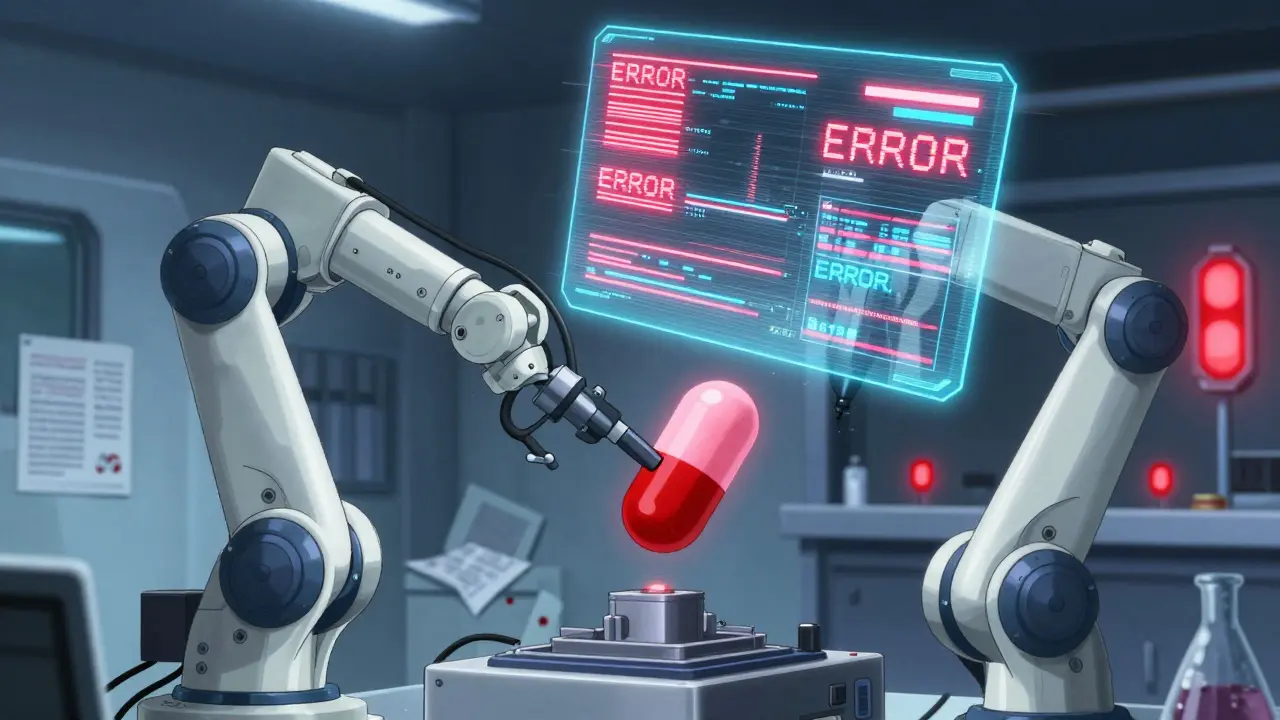
The US relies heavily on foreign soil for its medicine. Currently, about 80% of active pharmaceutical ingredients (APIs) and 40% of finished dosages come from overseas, primarily from China and India. This creates a massive oversight challenge. While the FDA can walk into a US plant unannounced, they generally have to give foreign plants a heads-up due to diplomatic protocols. This "warning shot" allows some facilities to hide evidence or temporarily clean up a messy floor before inspectors arrive.
This gap in monitoring has tangible results. A study from Ohio State University found that generics made in India were linked to 23.7% more severe adverse events than their US-made equivalents. The disparity isn't just about geography; it's about the ability to actually see what's happening inside the walls of the factory. In one shocking 2022 inspection at an Intas Pharmaceuticals facility in India, an inspector literally saw an employee pouring acid into a trash can full of quality control documents. That is the extreme end of a systemic failure in safety monitoring.
Why Some Drugs Are Riskier Than Others
Not all generics are created equal. Simple tablets are relatively easy to make, but "complex generics" and Narrow Therapeutic Index (NTI) drugs are a different story. NTI drugs are those where a tiny change in dose can lead to a toxic reaction or a complete lack of effect. Because the margin for error is so slim, these drugs account for 37% of the FDA's bioequivalence-related rejection letters.
Take tacrolimus capsules as an example. Research published in JAMA Internal Medicine showed that some generic versions had 28.4% higher variability in blood concentration levels compared to the brand-name version. For a patient transplant recipient, that kind of inconsistency isn't just a "quality issue"-it's a life-threatening risk.
The Pressure Cooker: Price vs. Quality
Why is this happening now? Follow the money. The global generic drug market is worth hundreds of billions, but prices are plummeting. Between 2018 and 2022, generic prices dropped by an average of 18.3% annually. When profit margins shrink, quality budgets are often the first thing to go. On average, manufacturers slashed their quality control spending by nearly 23% during that same period.
This financial pressure leads to a dangerous cycle: companies cut staff training and ignore CAPA (Corrective and Preventive Action) systems to save money. When a mistake happens, they don't fix the root cause; they just patch the symptom. This is why we see the same problems-like poor data integrity and inadequate password protection on electronic records-appearing in nearly 80% of data-related deficiencies.
Modern Solutions: Building Quality In
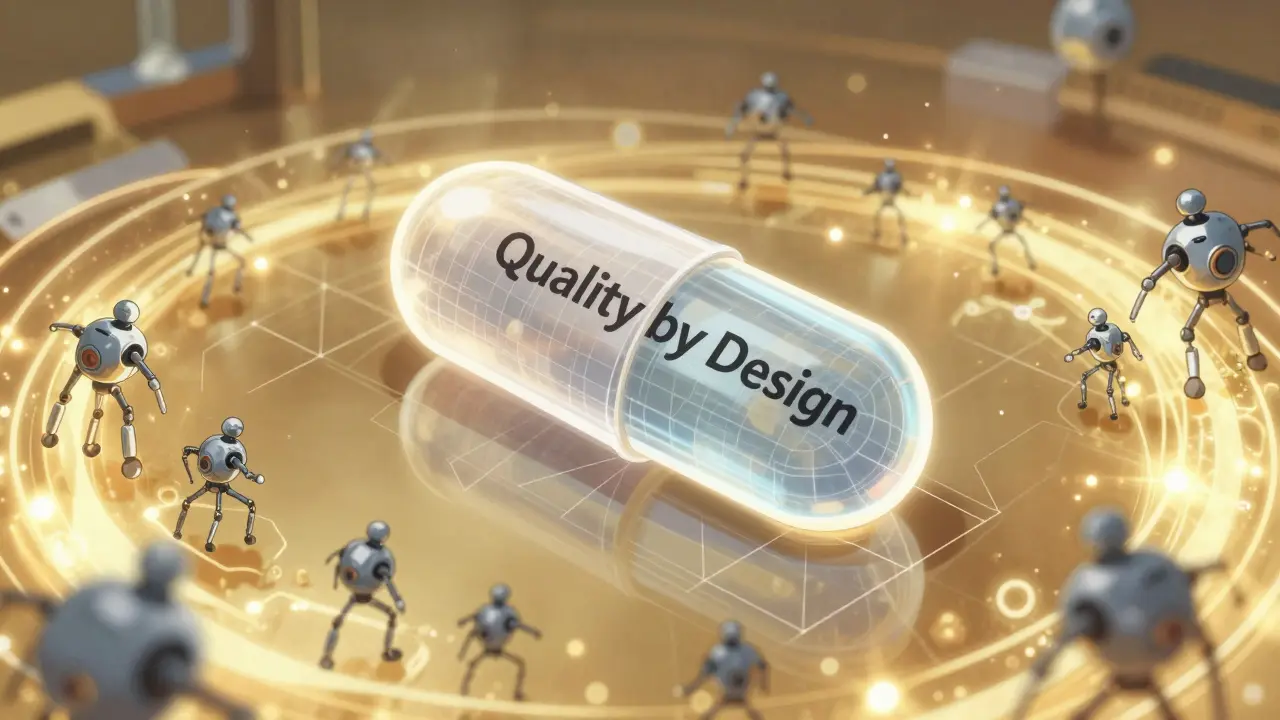
The industry is trying to move away from "testing for quality" at the end of the line and toward Quality by Design (QbD). Instead of making a batch of 10,000 pills and testing five of them to see if they're good, QbD builds quality into the process from the start. It involves setting a Quality Target Product Profile (QTPP) and monitoring Critical Process Parameters (CPPs) in real-time.
However, switching to a QbD system isn't cheap or fast. It takes about 18 to 24 months to implement, with costs averaging around $2.7 million per facility. Because of this high barrier to entry, only about 23.8% of generic manufacturers have fully adopted this approach. Those who do, however, are likely to survive the increasing regulatory crackdown, as McKinsey predicts they will capture a much larger share of the market by 2027.
What exactly are nitrosamines and why are they a problem?
Nitrosamines, like NDMA, are chemical impurities that can form during the manufacturing process or through contamination. They are classified as probable human carcinogens. The 2018 valsartan recall happened because these impurities were found in heart medications, primarily due to changes in the chemical synthesis process at foreign plants.
Does a "generic" label mean the drug is less effective?
In theory, no. Generics must be bioequivalent to the brand-name drug. However, in practice, some generics-especially NTI drugs-show higher variability in how they are absorbed by the body, which can lead to differences in effectiveness for some patients.
Why doesn't the FDA test every single batch of imported drugs?
The volume of imports is simply too high. Currently, only about 0.02% of imported drug shipments undergo laboratory analysis. The FDA relies heavily on the manufacturer's own reported data and periodic site inspections rather than testing every single pill that enters the country.
What is a Form 483 and should I worry if my drug's plant received one?
An FDA Form 483 is a list of observations made by an inspector showing that a facility is violating cGMP regulations. While not every 483 leads to a recall, a high number of observations-especially regarding data integrity or sterility-indicates a higher risk of quality failure.
How can patients tell if their generic drug is from a high-risk plant?
It is very difficult for a consumer to know the specific plant of origin just by looking at the bottle. The best approach is to stay informed about FDA recall notices and report any unusual side effects or lack of efficacy to your healthcare provider immediately.
Next Steps for Patients and Providers
If you are a healthcare provider, keep a close eye on patients using NTI drugs. If a patient's condition suddenly destabilizes after a pharmacy switches their generic manufacturer, don't assume it's disease progression-consider the possibility of therapeutic inequivalence. For patients, always report "ineffective" results to your doctor. When enough reports hit the FDA Adverse Event Reporting System (FAERS), it triggers the investigations that eventually lead to recalls and plant improvements.
Danielle Kelley
April 8, 2026 AT 20:55This is just the tip of the iceberg! The FDA doesn't "miss" things, they're in on it. Why do you think they give "heads-up" to foreign plants? It's a coordinated effort to flood our bodies with toxins while we're told it's just "quality issues." Absolute joke!
Toby Sirois
April 9, 2026 AT 00:25Everyone knows the system is broken because people are too lazy to research. You can't just trust a pill and hope for the best. It's basic common sense to avoid these generic traps if you actually care about your health.
Del Bourne
April 10, 2026 AT 10:44For those who are feeling anxious after reading this, remember that the FDA's recall system is actually quite robust once a signal is detected. It is always a good idea to ask your pharmacist for the specific manufacturer of your generic medication and keep a record of it. If you notice your symptoms returning or new side effects appearing after a pharmacy switch, document the date and the brand and bring that log to your next appointment. This helps your provider pinpoint whether it is a therapeutic inequivalence issue or something else. Being proactive with your medical records makes a huge difference in how your doctor can treat you!
Stephen Luce
April 12, 2026 AT 04:01That sounds terrifying, especially for transplant patients.
Alexander Idle
April 12, 2026 AT 19:32Honestly, this whole thing is such a disaster. Like, imagine the sheer chaos of someone just dumping documents into acid? It's practically a movie plot. Truly scandalous that we're just casually accepting this as the status quo of modern medicine. I am absolutely shook by the lack of basic oversight here!
GOPESH KUMAR
April 13, 2026 AT 10:30The pursuit of profit always eclipses the pursuit of truth. We live in a world where the cost of a pill is measured in cents, so the value of a human life is diminished accordingly. It is an inevitable cycle of capitalism where the margins dictate the morality of the manufacturer. One must accept that instability is the only constant in these global supply chains.
Darius Prorok
April 13, 2026 AT 20:54Basically, the cheap stuff is risky because the companies cut corners to make money. Simple as that.
Windy Phillips
April 14, 2026 AT 16:39It's just so typical... that we trust these entities blindly... The negligence is simply appalling... One really wonders where the actual accountability lies in this mess...!!!
Kathleen Painter
April 16, 2026 AT 15:07I think it's important to remember that while these failures are scary, the move toward Quality by Design is a really positive step forward for everyone involved. It's okay to be concerned, but maybe we can focus on supporting policies that make this transition easier for all manufacturers, regardless of where they are located, so that patients everywhere get the same standard of care without having to worry about where their meds come from. Let's try to stay positive and push for systemic changes together.
Ruth Swansburg
April 16, 2026 AT 16:12We must advocate for better transparency now!