 Mar, 12 2026
More than 90% of prescriptions filled in the U.S. are for generic drugs. Yet, many doctors still hesitate to prescribe them - not because they don’t understand the science, but because of what they think they know. The gap between what generics are and what some providers believe they are is wider than most people realize.
What Doctors Actually Believe About Generic Drugs
A 2017 survey of 134 physicians in Greece found that more than 25% of doctors believed generic drugs were less effective than brand-name versions. Even more concerning: 27.3% doubted that generics could match the therapeutic performance of their branded counterparts. These aren’t outliers. Similar numbers popped up in studies across the U.S., Australia, and Portugal.
It’s not about cost. Most doctors know generics save money - for patients and the system. It’s about trust. Many worry that a pill made in a different factory, with slightly different inactive ingredients, might behave differently in the body. Some think generics cause more side effects. Others believe they need higher doses to work. These beliefs aren’t based on evidence. They’re based on experience, rumor, and fear.
One doctor in a rural clinic told a patient, “I’d rather you take the brand name. I’ve seen too many people get sick after switching.” That patient stopped taking the medication altogether. This isn’t rare. The CDC found that 41.7% of patients in rural areas discontinued their meds because they didn’t trust the generic version - and their doctor never corrected them.
Who’s Most Skeptical? The Numbers Don’t Lie
Not all doctors feel the same way. The data shows clear patterns. Male physicians are more likely to distrust generics than female ones. Doctors with over 10 years of experience are more resistant than those with less. Specialists - especially in cardiology, neurology, and endocrinology - are far more skeptical than primary care providers.
Why? Experience can breed caution. A doctor who’s seen a patient have a bad reaction after switching from brand to generic levothyroxine remembers it. They don’t remember the 97 other patients who switched without issue. That one case sticks. And when you’re treating someone with a narrow-therapeutic-index drug - where small changes in blood levels can cause real harm - hesitation feels rational.
But here’s the problem: those cases are rare. The FDA requires generics to be within 80-125% of the brand’s absorption rate. That’s a wide range. The European Medicines Agency is stricter - 90-111%. Even so, most generic drugs perform identically in real-world use. The issue isn’t science. It’s perception.
The Education Gap
Only 43.7% of primary care doctors in one Oxford study could correctly explain what bioequivalence actually means. Yet, 78.4% said they were familiar with regulatory standards. That’s not a knowledge gap - that’s a confidence gap.
Medical schools barely teach this. Only 38.7% of U.S. medical schools include structured training on generics. Most doctors learned what they know from pharmacists, colleagues, or drug reps - not from evidence.
And when they do get educated? The results are dramatic. In Greece, a single 90-minute workshop on bioequivalence and real-world data led to a 22.5% increase in generic prescribing over six months. The biggest boost? Doctors with 5-10 years of experience. They weren’t stuck in old habits - they just hadn’t been given the facts.
Doctors who received clear, visual data on patient outcomes after switching - not just lab numbers, but real stories - changed their minds. One cardiologist told researchers: “I thought I was protecting my patients. Turns out, I was costing them more and not helping them at all.”

What Doctors Really Want
It’s not that doctors hate generics. Most want to prescribe them. But they need more than reassurance. They need tools.
- 63.4% asked for detailed comparative efficacy data before prescribing more generics.
- 57.8% worried about inconsistent quality between different generic manufacturers.
- 74.3% said they don’t have time during appointments to explain the switch.
- 86.1% admitted they haven’t had any formal training on generics since medical school.
And they’re not asking for much. They want a quick reference guide. A one-pager on which generics have solid real-world data. A way to know if the generic made by Company A is just as safe as Company B’s. Right now, that doesn’t exist.
Reddit threads from doctors show real frustration. One post from r/medicine (October 2023) had 1,200 upvotes: “I had a patient on warfarin switch generics. INR spiked. I blamed the generic. Turned out it was a new diet. But now I’m terrified to switch anyone.” That’s the kind of fear that sticks.
Why This Matters More Than You Think
Generics make up 90.1% of prescriptions but only 22.7% of drug spending. That’s $528 billion in global sales - and billions saved for patients. But if doctors won’t prescribe them, or if they prescribe them half-heartedly, those savings vanish.
And it’s not just money. It’s access. A diabetic in Ohio can’t afford $400 for insulin. The generic version costs $12. But if the doctor doesn’t push it - or worse, warns against it - the patient goes without. That’s not a pricing issue. It’s a trust issue.
Patients learn from their doctors. When a provider says, “I don’t trust this generic,” the patient hears: “This might hurt you.” That message overrides every FDA stamp, every clinical trial, every cost chart. And once that doubt takes root, it’s hard to undo.
What’s Changing - and What Could Change Faster
The FDA’s 2023 GDUFA III rules now require better post-market data on generics. That’s a big deal. At Johns Hopkins, when doctors got real-time updates on how generics performed in actual patients - not just lab tests - prescribing jumped 28.6% for newly approved generics.
The American Medical Association’s 2024 push for simpler generic names - replacing “levofloxacin” with “Levo” - is another step. Doctors hate chemical names. Patients hate them too. A name you can say out loud feels more real.
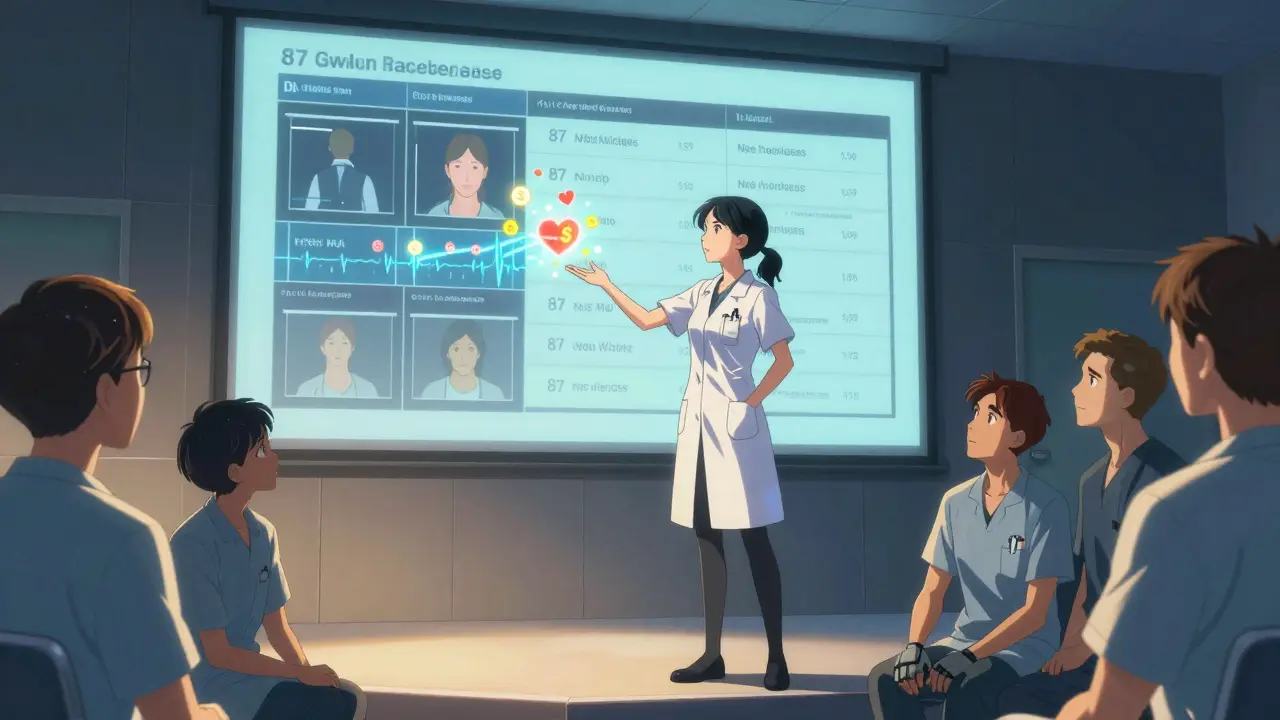
But the biggest change won’t come from regulators. It’ll come from doctors themselves. Peer educators - physicians who switched their own prescribing habits - had 43.2% more influence than outside trainers. One internist in Minnesota started sharing her patient stories at grand rounds: “I switched 87 patients from brand to generic statins. Zero adverse events. $15,000 saved last year.” That’s what moves the needle.
Real-world evidence. Peer stories. Simple education. That’s all it takes. Not more regulations. Not more ads. Just better information - delivered by someone they trust.
What You Can Do
If you’re a patient: Ask your doctor why they’re prescribing a brand name. If they say, “It’s better,” ask for the data. If they say, “I’ve seen better results,” ask if they’ve looked at the studies. You have a right to know.
If you’re a provider: Don’t assume your patients understand. Don’t assume your instincts are right. Check the data. Talk to your pharmacist. Try switching one patient. See what happens.
The science is clear. Generics work. But trust doesn’t come from a label. It comes from a conversation - and a doctor who’s willing to change their mind.
Byron Boror
March 13, 2026 AT 20:57Let me get this straight - we’re trusting pills made in some foreign factory with zero oversight just to save a few bucks? Meanwhile, our own pharma industry gets crushed by regulations while China and India flood the market with cheap knockoffs. This isn’t science - it’s economic surrender. I’ve seen patients crash after switching. You think the FDA’s 80-125% range is safe? That’s a 45% swing. That’s not a drug - that’s Russian roulette with your heart.
And don’t give me that ‘90% of prescriptions’ nonsense. Numbers don’t feel pain. People do. I’m not anti-generic - I’m pro-survival.
Lorna Brown
March 14, 2026 AT 13:34There’s a deeper layer here nobody talks about - it’s not about the drug, it’s about control. Doctors are trained to be decisive, to be the authority. But generics force them into a position where they have to admit they don’t know everything. That’s terrifying. It’s ego, not evidence.
I’ve been in clinics where a doctor refused to switch a patient from brand-name insulin because ‘they’ve always taken it.’ No data. No testing. Just habit. And patients? They internalize that. They start believing their own body can’t handle anything ‘lesser.’ That’s not pharmacology - that’s psychology. And we’re ignoring it.
Maybe the real problem isn’t the pill. It’s the power dynamic in the exam room.
Rex Regum
March 15, 2026 AT 17:27Oh wow. So now we’re supposed to trust a generic version of a life-saving drug because… a study? A 90-minute workshop? You know what else had a 90-minute workshop? The 2003 Iraq WMD briefing. That worked out great.
And let’s not forget - every time a generic fails, it’s a patient who dies. Every time a brand-name works, it’s just ‘business as usual.’ Confirmation bias isn’t a bug - it’s a feature of human survival. We don’t remember the 97 who did fine. We remember the one who turned blue.
Also - who funded this study? Big Pharma? The FDA? A think tank with ties to the Indian generic industry? You didn’t say. I’m not buying this ‘education fixes everything’ fairy tale. This is manipulation dressed as progress.
Emma Nicolls
March 17, 2026 AT 12:06i just had to switch my blood pressure med to generic last year and honestly? no difference at all. my doc was skeptical too but i was like ‘lets try it’ and now i save like 80 bucks a month. i dont get why everyone’s making this so complicated. if it works and its cheaper why not? also my pharmacist said the stuff is tested way harder than you think
also side note: i think doctors forget how scared patients are. we dont know what bioequivalence means. we just want to live. so when they say ‘i dont trust this’ it feels like a betrayal. not a medical opinion. a personal one.
Jimmy V
March 19, 2026 AT 09:17Stop romanticizing the brand-name. It’s not magic. It’s a patent. The active ingredient is identical. The FDA doesn’t approve generics based on hope - they test them like nuclear reactors. If your generic doesn’t deliver within 80-125% of the brand, it’s tossed. Period.
And yes - some patients react. But 99% of those cases are due to non-adherence, diet changes, or comorbidities. Not the pill.
Doctors need data dashboards. Real-time feedback. Not lectures. Show them a graph: 10,000 patients switched. 12 adverse events. 3 were unrelated. 9 were from non-compliance. That’s not scary. That’s confidence.
Also - stop calling them ‘generic.’ Call them ‘bioequivalent.’ The name itself is the problem.
Richard Harris
March 20, 2026 AT 00:46Interesting piece. I'm a GP in the UK and we've used generics for decades. No real issues. The NHS has strict monitoring - if a batch causes even a slight uptick in side effects, it's pulled. We don't have the drama you describe.
But I do wonder - is this really a US problem? Or is it tied to how fragmented our healthcare system is? In the UK, we don't have drug reps in our clinics. No marketing. Just data. Maybe that's the real difference.
tamilan Nadar
March 20, 2026 AT 08:06in india we use generics because we have to. no choice. but here's the thing - we have better access than you. because we don't have insurance battles. we don't have doctors afraid to prescribe. we just give the pill. and people take it. no drama.
your problem isn't science. its money. its fear. its marketing. we don't have 50 brands of metformin. we have one. cheap. effective. no one debates it.
you overthink. we just survive.
Ali Hughey
March 21, 2026 AT 09:29🚨 ALERT 🚨
THIS ISN’T ABOUT DRUGS - IT’S ABOUT THE GLOBALIST ELITE! 🌍💊
The FDA, WHO, and Big Pharma are ALL connected! They want you on generics so they can track you through microchips embedded in the fillers! 📡🧠
Remember: 2020 - they said masks worked. Then they said vaccines worked. Now they say generics are ‘just as good’ - but the REAL science? The REAL data? It’s buried! 🔍
Why do you think they changed the name from ‘generic’ to ‘bioequivalent’? To confuse you! They don’t want you asking questions! 😱
And who funds these ‘studies’? The same people who profit from the generic supply chain! 🤑
DO YOUR OWN RESEARCH. QUESTION EVERYTHING. DON’T TRUST THE SYSTEM. 🛡️
P.S. I switched my thyroid med back to brand and my energy went from 2/10 to 9/10. Coincidence? I think NOT. 💉🔥