 Aug, 11 2026
Imagine waking up with a sharp, stabbing pain in your lower left abdomen. It’s not just a stomach ache; it feels like something is wrong deep inside. You might have a fever, nausea, or an urgent change in your bowel habits. For millions of people, this is the terrifying reality of diverticulitis, a condition where small pouches in the colon become inflamed or infected. While it was once considered a disease of old age, recent data shows it is striking younger adults at alarming rates. Understanding what happens inside your body and knowing the modern treatment landscape can mean the difference between a quick recovery and a complicated hospital stay.
What Is Diverticulitis? The Anatomy of Inflammation
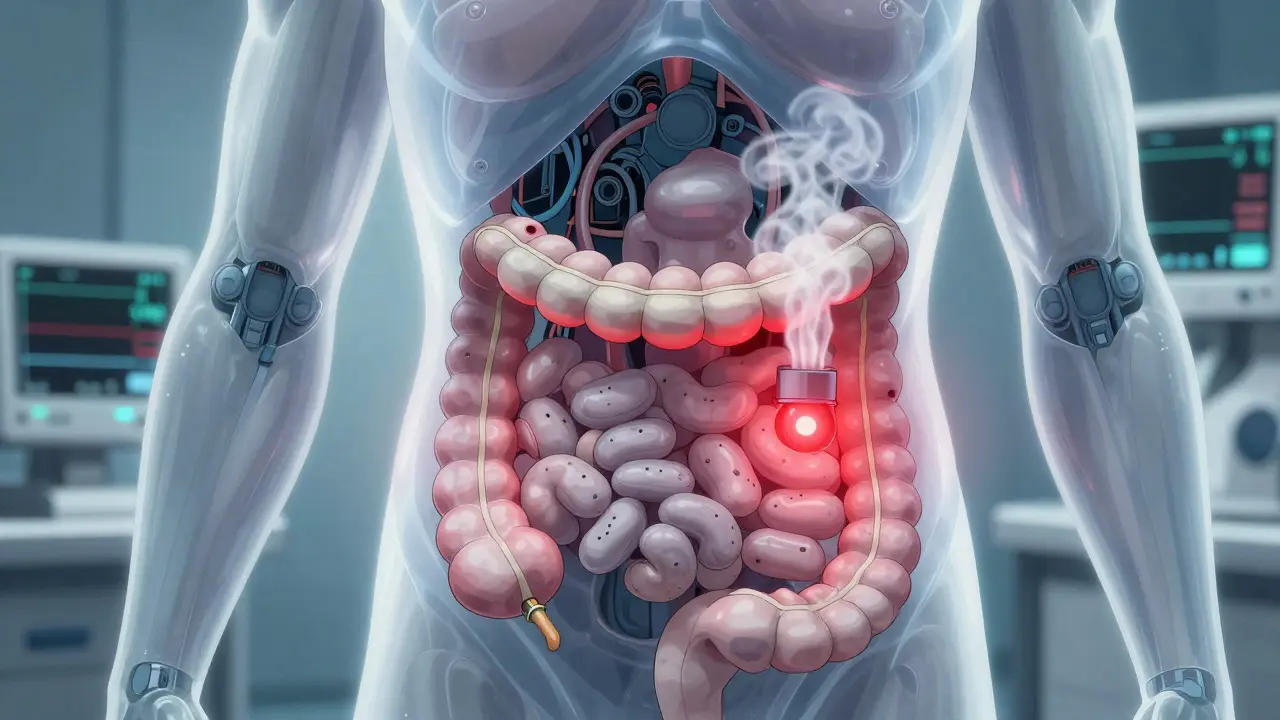
To understand the condition, you first need to know about diverticula. These are tiny sacs or pouches that bulge outward through weak spots in the wall of your large intestine (colon). Think of them like inner tubes bulging out through the walls of a tire. Having these pouches is called diverticulosis. Surprisingly, many people have diverticulosis without ever knowing it. According to the National Institute of Diabetes and Digestive and Kidney Diseases (NIDDK), about 35% of U.S. adults aged 50 or younger have these pouches, and that number jumps to 58% for those over 60.
The problem starts when one of these pouches gets blocked by stool or bacteria. This blockage leads to swelling, infection, and inflammation-this is diverticulitis. Most of these pouches form in the sigmoid colon, which is why the classic symptom is pain in the lower left side of your belly. However, anatomy varies. People of Asian descent, for example, are more likely to develop pouches on the right side of the colon, leading to right-sided pain.
The root cause often ties back to pressure inside the colon. Chronic constipation or a diet low in fiber can increase intraluminal pressure, forcing the mucosal lining to protrude through the muscular layer. It’s a mechanical issue that turns into an inflammatory crisis.
Recognizing the Symptoms: When to Worry
Diverticulitis doesn’t always announce itself gently. In most cases, symptoms appear suddenly. The hallmark sign is persistent abdominal pain, usually on the lower left side. Unlike the crampy, coming-and-going pain of irritable bowel syndrome (IBS), diverticulitis pain is often constant and worsens with movement. About 70-80% of patients also experience a fever, typically above 38°C (100.4°F).
Other common signs include:
- Nausea and vomiting
- A sudden change in bowel habits, such as constipation or diarrhea
- Bloating and gas
- An urge to pass stool but being unable to do so
If you have a history of IBS, distinguishing between an IBS flare-up and diverticulitis can be tricky. But here is the key differentiator: IBS rarely causes a high fever or significant localized tenderness where pressing on your abdomen hurts sharply. If you have a fever and that specific type of pain, seek medical attention immediately. Misdiagnosis is common; studies show that 25% of acute left lower quadrant pain cases are initially misidentified, sometimes confused with ovarian cysts in women or kidney stones.
How Doctors Diagnose Diverticulitis
Getting the right diagnosis quickly is crucial to preventing complications like abscesses or perforations (holes in the colon wall). Doctors typically rely on a combination of physical exams, blood tests, and imaging.
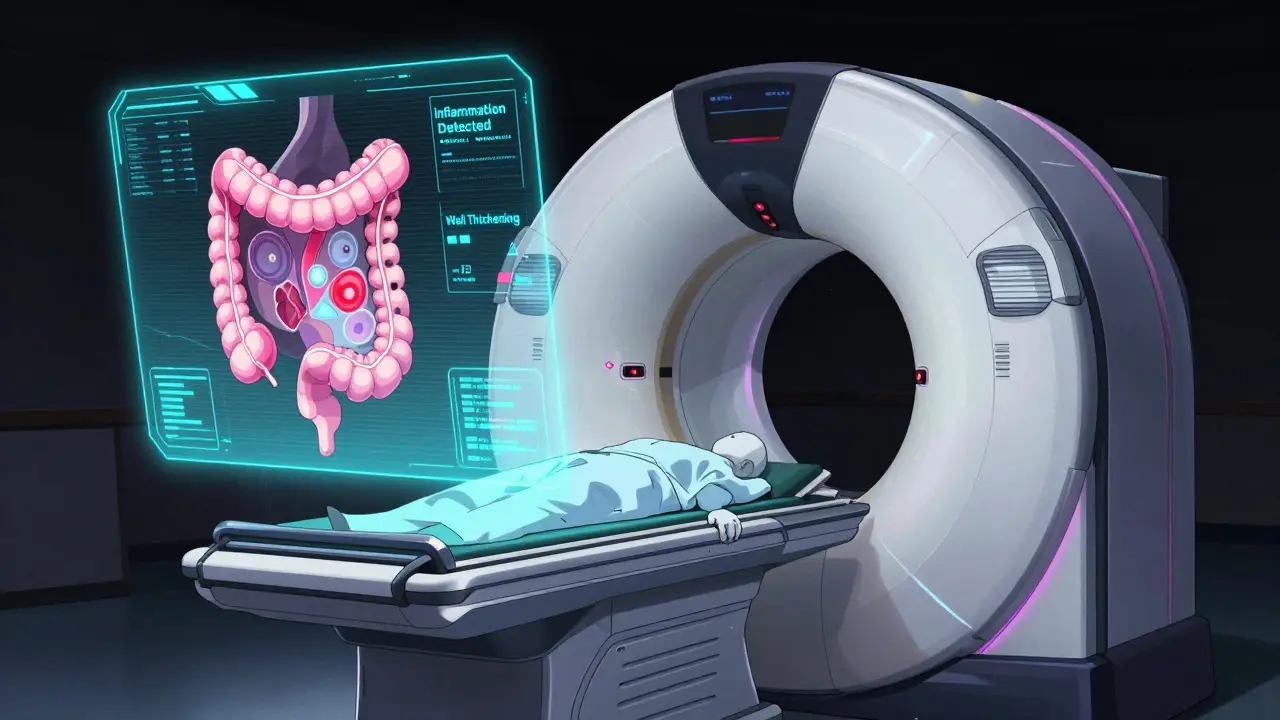
A simple blood test can reveal leukocytosis, which is an elevated white blood cell count (usually above 11,000 cells/µL), indicating your body is fighting an infection. However, the gold standard for diagnosis is a CT scan (computed tomography) of the abdomen and pelvis. A CT scan provides a detailed view of the colon, showing inflammation around the diverticula, thickening of the colon wall, or the presence of abscesses.
Why not just use an ultrasound or X-ray? While cheaper, they often miss the subtle signs of early diverticulitis. A CT scan costs between $1,200 and $1,800 in the U.S., but it prevents costly mistakes. Misdiagnosing the condition can lead to unnecessary surgeries or delays in treatment, which can cost thousands more and risk your health.
Doctors classify the severity of the disease using the Hinchey classification system:
- Stage I: Localized inflammation or a small abscess (<3cm).
- Stage II: Larger pelvic abscess (3-5cm).
- Stage III: Generalized purulent peritonitis (pus in the abdominal cavity).
- Stage IV: Fecal peritonitis caused by a perforation (hole) in the colon.
This staging helps determine whether you can be treated at home or need hospitalization.
| Feature | Mild (Uncomplicated) | Complicated |
|---|---|---|
| Hinchey Stage | Stage I | Stage II, III, or IV |
| Treatment Setting | Often outpatient (home) | Hospitalization required |
| Antibiotics Needed? | Optional for mild cases | Mandatory (IV or oral) |
| Surgery Risk | Low | High (depending on stage) |
| Diet During Acute Phase | Clear liquids | NPO (nothing by mouth) + IV fluids |
Modern Treatment Approaches: Antibiotics Are Not Always Necessary
For decades, the standard response to diverticulitis was immediate antibiotics. That has changed. Recent guidelines from the American Gastroenterological Association (AGA) and data from the DIVERT trial published in the New England Journal of Medicine show that for mild, uncomplicated cases, antibiotics may not speed up recovery. The study found no significant difference in recovery time between patients who took antibiotics (mean 7.3 days) and those who didn’t (mean 7.0 days).
So, what is the current protocol?
For Mild Cases (Hinchey Ia): The focus is on "bowel rest." This means switching to a clear liquid diet for 48 to 72 hours. Clear liquids include water, broth, gelatin, and pulp-free juices. As pain subsides, you slowly reintroduce low-fiber foods. Pain management usually involves acetaminophen (Tylenol). Doctors generally advise avoiding NSAIDs (like ibuprofen or naproxen) during an acute attack because they may increase the risk of bleeding or perforation.
For Moderate to Severe Cases: If you have a high fever, severe pain, or signs of an abscess, antibiotics are necessary. Hospitalization may be required for intravenous (IV) antibiotics, such as piperacillin-tazobactam. If an abscess forms (Stage II), doctors might drain it using a needle guided by CT imaging rather than performing open surgery.
For Complicated Cases (Stage III-IV): These are medical emergencies. Perforation leads to leakage of intestinal contents into the abdomen, causing peritonitis. Surgery is almost always required. Procedures may include removing the affected part of the colon (resection) and creating a temporary colostomy bag, though laparoscopic lavage (washing out the abdomen) is becoming an option for select patients.
Prevention and Lifestyle Changes After Recovery
Once the acute inflammation settles, the goal shifts to prevention. Recurrence is real; 15-30% of patients experience another attack after their first. The good news is that lifestyle changes can significantly reduce this risk.
Fiber Is Your Friend Historically, doctors told patients to avoid nuts, seeds, corn, and popcorn, fearing they would get stuck in the pouches. This advice has been debunked. An 18-year Nurses' Health Study tracking 47,000 participants found no increased risk from eating these foods. Instead, the focus should be on increasing overall dietary fiber. Aim for 25-35 grams of fiber daily. Good sources include whole grains, fruits, vegetables, and legumes. Fiber adds bulk to stool and reduces pressure in the colon, making it harder for pouches to become blocked.
Stay Active Sedentary lifestyles are a major risk factor. Research shows that people who exercise less than two hours a week have a 38% higher incidence of diverticulitis. Regular physical activity helps keep bowel movements regular and reduces intracolonic pressure.
Quit Smoking and Manage Weight Smoking doubles the risk of developing diverticulitis and increases the likelihood of complications. Obesity (BMI >30) also raises the risk by more than double. Maintaining a healthy weight and quitting smoking are among the most effective steps you can take.
Medication Considerations New treatments are emerging. Mesalazine (Pentasa®) has shown promise in reducing recurrence rates by 31% in some trials. Additionally, researchers are investigating the role of the gut microbiome. Preliminary data suggests that patients with diverticulitis have lower levels of beneficial bacteria like Faecalibacterium prausnitzii. Probiotics may play a future role in maintenance therapy, though more research is needed.
When Is Surgery the Right Choice?
Elective surgery-removing the diseased part of the colon before an emergency strikes-is a topic of debate. In the past, doctors recommended surgery after three attacks. Today, the American Society of Colon and Rectal Surgeons (ASCRS) suggests considering elective surgery after just two attacks if they required hospitalization. The decision depends on your age, overall health, and how much the condition impacts your quality of life. If you’re missing work or living in fear of the next attack, surgery might offer peace of mind. Laparoscopic surgery is now the standard, offering faster recovery times and smaller scars compared to traditional open surgery.
After any episode of diverticulitis, especially if you are over 50, a colonoscopy is recommended 6-8 weeks later. This isn’t to treat the diverticulitis, but to rule out colorectal cancer, which can mimic the symptoms. Studies show a small but significant detection rate of malignancy in patients presenting with diverticulitis-like symptoms.
Living With Diverticular Disease
Diverticulitis can be scary, but it is manageable. By understanding the symptoms, seeking prompt diagnosis, and adhering to modern treatment guidelines, you can recover fully. The shift away from mandatory antibiotics for mild cases reflects a more nuanced, patient-centered approach. Meanwhile, long-term prevention relies on simple, sustainable habits: eating more fiber, staying active, and avoiding smoking. If you’ve had an attack, don’t wait for the next one. Work with your gastroenterologist to create a plan that keeps your colon healthy and your life uninterrupted.
Can you eat nuts and seeds if you have diverticulitis?
Yes. Recent large-scale studies, including an 18-year Nurses' Health Study, have debunked the old myth that nuts, seeds, corn, and popcorn cause diverticulitis. These foods do not get stuck in the pouches. In fact, they are good sources of fiber, which helps prevent future episodes.
Do you always need antibiotics for diverticulitis?
Not necessarily. For mild, uncomplicated cases, recent guidelines suggest that antibiotics may not be required. Many patients recover with bowel rest (clear liquid diet) and hydration alone. However, if you have a high fever, severe pain, or signs of an abscess, antibiotics are essential.
What is the difference between diverticulosis and diverticulitis?
Diverticulosis is the presence of small pouches (diverticula) in the colon wall, which is very common and often asymptomatic. Diverticulitis occurs when one or more of these pouches become inflamed or infected, causing pain, fever, and other symptoms.
How long does it take to recover from diverticulitis?
Recovery time varies based on severity. For mild cases treated at home, symptoms often improve within 2 to 3 days, with full recovery in about a week. More severe cases requiring hospitalization or IV antibiotics may take 10 to 14 days or longer to fully resolve.
Is surgery common for diverticulitis?
Surgery is not common for every case. It is typically reserved for complicated cases involving perforation, abscesses that cannot be drained, or frequent recurrent attacks that significantly impact quality of life. Elective surgery may be considered after two severe attacks.
Ella Mentry
August 11, 2026 AT 20:59Oh honey, you really think a CT scan is the only way to know what's going on in your gut? Please. I've been tracking my own inflammation markers for years and frankly, half these doctors are just looking for billable hours. You could be eating perfectly fine and they'll still tell you it's diverticulitis because they don't want to admit they missed something else entirely. It's all about control, isn't it? They want you scared so you listen to them.
Samuel Hershberger
August 12, 2026 AT 21:28Actually, Ella, while skepticism is healthy, the Hinchey classification mentioned in the post is standard medical practice for a reason. Misdiagnosis rates of 25% are real, and a CT scan is currently the most reliable non-invasive method to rule out perforation or abscesses before they become life-threatening. It’s not about billable hours; it’s about preventing sepsis. That said, if someone has classic symptoms and no red flags, some guidelines now support outpatient management with oral antibiotics rather than immediate imaging, but that requires a very careful patient history.
Saher Ghattas
August 12, 2026 AT 22:45The 'standard' is just corporate medicine trying to keep you dependent on their diagnostic machinery. Have you ever considered that the high fiber diet advice is a lie pushed by grain lobbyists? The body doesn't need all that roughage. In fact, the increase in younger adults getting this might be linked to environmental toxins or even vaccine adjuvants altering gut microbiome diversity. Wake up people. The pharmaceutical industry profits when you believe you have a chronic condition that needs lifelong management instead of just detoxing.
Darcy Galway
August 14, 2026 AT 09:13In my culture we eat lots of rice and lentils and rarely hear about this problem until old age. Maybe it is not just fiber but also the type of food. We cook slowly and eat warm foods which helps digestion. Cold salads every day like Americans do seems harsh on stomach. My grandmother never went to doctor for belly pain she just drank ginger tea and rested. Simple things work best often.
Mathew Stuckey
August 14, 2026 AT 14:29I had this last year and it was scary 😟 But Samuel is right about the CT scan saving me from surgery. I thought it was just gas at first 🤢 Then the fever hit. Don't ignore the fever guys! It's your body screaming for help. Hope everyone stays healthy 🙏
Ella Mentry
August 16, 2026 AT 07:33Mathew, you're so naive. You think a scan fixes anything? It just labels you. Once you're labeled 'diverticulitis patient' you're stuck in that system forever. I bet you took those antibiotics too, didn't you? Destroying your good bacteria along with the bad. Typical. Nobody thinks two steps ahead anymore. They just follow the script.
Samuel Hershberger
August 18, 2026 AT 05:03Ella, with all due respect, untreated bacterial infections can lead to peritonitis, which has a significant mortality rate. While probiotics are great for maintenance, acute infection requires targeted antibiotic therapy to clear the pathogen load. It’s not black and white, but dismissing evidence-based diagnostics as 'labeling' ignores the reality of acute abdominal emergencies. Many patients recover fully and return to normal lives without chronic issues if treated correctly early on.
John Divers
August 19, 2026 AT 18:49The philosophical implication here is interesting. We treat the body as a machine to be fixed rather than a system to be understood. However, practicality must prevail. If the pain is severe, intervention is necessary. Balance is key.
Ambria St louis
August 20, 2026 AT 00:30It is fascinating how our bodies communicate distress through such specific mechanisms!! One must listen closely to these signals!!! Ignoring them leads to greater suffering later in life!!! Prevention is truly better than cure!!!
Dennis Leeftink
August 20, 2026 AT 04:41You guys are overcomplicating it. It's inflamed pouches. Take pills. Feel better. Stop reading conspiracy theories and go to the doctor if it hurts. Simple.
Traci Bobbitt
August 21, 2026 AT 19:41Okay but seriously, who eats seeds and nuts if they have this? I read somewhere that small particles get stuck in the pouches. So does that mean I have to give up my favorite trail mix forever? That sounds awful. I guess I'll just hope for the best and avoid popcorn then?
Samuel Hershberger
August 22, 2026 AT 13:58Traci, recent studies actually suggest that nuts, seeds, and whole grains do NOT increase the risk of diverticulitis and may even decrease it. The old advice to avoid them was based on theoretical concerns rather than clinical data. So yes, you can likely enjoy your trail mix! Just ensure you're drinking enough water to help move everything along smoothly.
Sansaray Jones
August 24, 2026 AT 04:02i just rest when my stomach hurts. usually goes away. dont see why people make such a big deal out of it unless its really bad though.
Michelle Alavaski
August 26, 2026 AT 03:42The establishment wants you to believe that natural remedies are ineffective so that you remain reliant on their expensive treatments. The truth is suppressed. Look into the historical use of herbal anti-inflammatories before modern medicine co-opted the narrative. They profit from your ignorance.