 Aug, 27 2026
Missing your eye check-up because the nearest specialist is 75 miles away or you hate the dilation drops? You are not alone. For millions of people living with diabetes, a condition that affects how the body processes blood sugar, the eyes are often the first place damage shows up. This damage, known as diabetic retinopathy, can lead to blindness if caught too late. The good news? More than 90% of this vision loss is preventable if you get screened on time.
But here is the problem: only about 60% of patients actually keep up with their recommended annual exams. Why? It’s usually a mix of distance, cost, and discomfort. That’s where teleophthalmology comes in. It’s changing the game by bringing high-quality eye care to your local clinic or even your home. In this guide, we’ll break down exactly how often you need to be screened, what the new technology offers, and how to make sure you never miss another appointment.
Key Takeaways
- Type 1 diabetes: Get your first comprehensive eye exam within 5 years of diagnosis, then annually.
- Type 2 diabetes: Get an eye exam immediately upon diagnosis, then annually unless your doctor advises otherwise.
- Teleophthalmology: Uses digital retinal photos sent to specialists for review; it’s FDA-approved and nearly as accurate as in-person visits for detecting mild-to-moderate issues.
- The gap: Rural patients are far less likely to get screened (49%) compared to urban patients (82%), making remote options critical.
- AI integration: New AI tools can now flag retinopathy automatically, speeding up results and reducing the need for immediate specialist intervention in low-risk cases.
How Often Do You Really Need an Eye Exam?
It’s not a one-size-fits-all answer. Your frequency depends on your type of diabetes, your current eye health, and how well your blood sugar is controlled. According to the American Diabetes Association (ADA) 2025 Standards of Care, here is the breakdown:
| Condition / Status | Recommended Frequency | Notes |
|---|---|---|
| Type 1 Diabetes (New Diagnosis) | Within 5 years of onset | First exam should be dilated and comprehensive. |
| Type 2 Diabetes (New Diagnosis) | At time of diagnosis | Damage may have already occurred before symptoms appear. |
| No Retinopathy or Mild NPDR | Annually | Standard protocol for most stable patients. |
| Well-Managed Type 2 (HbA1c < 7%) | Every 1-2 years | Only if previous annual exams showed no retinopathy. |
| Moderate NPDR | Every 3-6 months | Closer monitoring needed due to progression risk. |
| Severe NPDR or Proliferative DR | Every 1-3 months | High risk of vision loss; requires active treatment monitoring. |
| Diabetic Macular Edema (DME) | Every 1 month or more frequently | Fluid leakage in the retina requires tight control. |
Notice the shift from "annual" to "more frequent" as the disease progresses. If you have been diagnosed with type 2 diabetes, don’t wait five years like type 1 patients might. Your risk is higher from day one because many people live with undiagnosed type 2 diabetes for years before catching it. That means damage could already be brewing in your retinas.
What Is Teleophthalmology and How Does It Work?
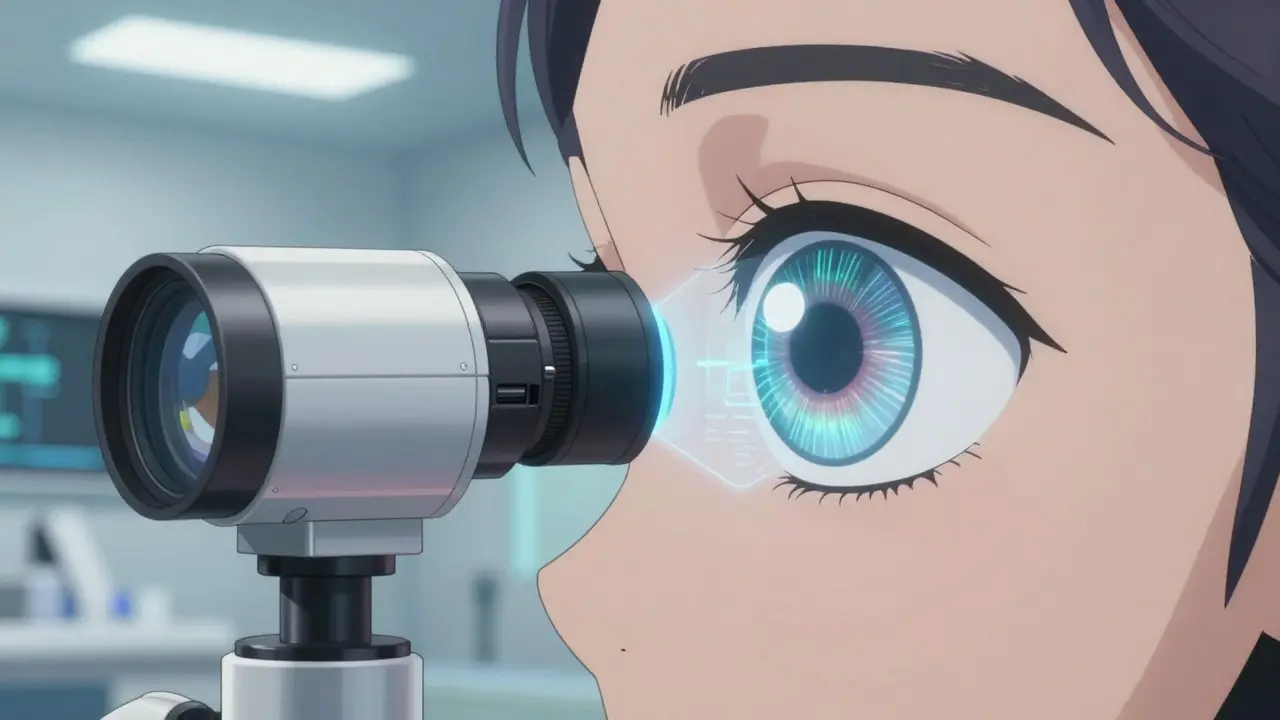
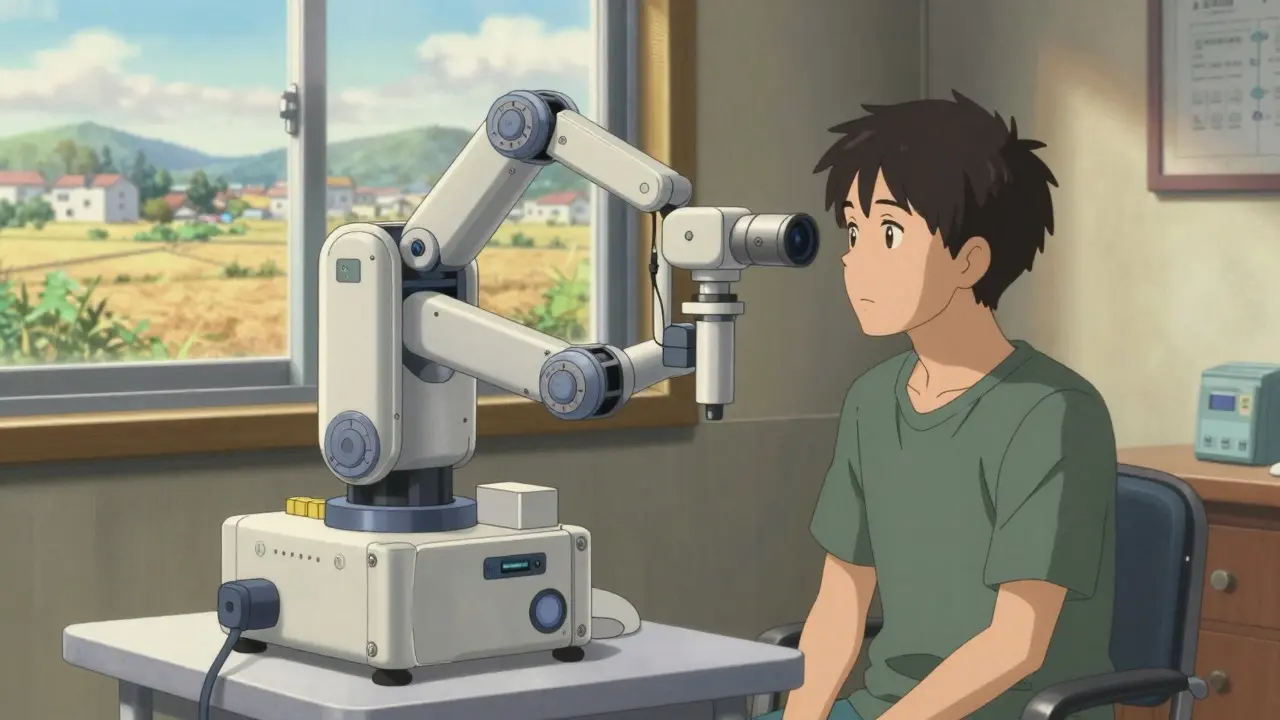
Teleophthalmology is the use of telecommunications technology to provide eye care services remotely, primarily through digital retinal photography. Instead of driving to a specialist’s office, you visit a primary care clinic, a pharmacy, or even a community center equipped with a non-mydriatic camera. This camera takes sharp images of the back of your eye without needing dilation drops. Those images are then transmitted securely to an ophthalmologist or optometrist who reviews them off-site.
This model has exploded in popularity because it solves the biggest barrier to care: access. A 2023 study in Health Affairs found that while traditional ophthalmology practices still hold 78% of the market, teleophthalmology providers are growing fast. Companies like ClearImage Telemedicine and EyeCheck now handle a significant portion of these remote screenings. The accuracy is impressive. In pivotal trials, FDA-authorized AI systems used in these programs showed a sensitivity of 87.2% and specificity of 90.7% for detecting more-than-mild diabetic retinopathy. That’s close enough to in-person exams that the ADA now officially recognizes it as a valid alternative for initial screening.
But is it perfect? Not quite. Teleophthalmology is best for detecting changes in the retina. It isn’t always the best tool for checking other parts of the eye, like the lens or optic nerve head, in complex cases. So, while it’s great for routine monitoring, you might still need an in-person visit if something looks unusual or if you’re being treated for advanced disease.
Why Adherence Is Failing and How Tech Fixes It
Let’s be honest: getting your eyes checked is boring, inconvenient, and sometimes painful. A survey by the National Federation of the Blind found that 68% of diabetes patients skip appointments because of transportation issues. Another 42% dislike the pupil dilation process, which leaves you blurry and sensitive to light for hours. One user on the ADA community forum shared that they missed three years of exams because the nearest specialist was 75 miles away. Then their local clinic added teleophthalmology, and suddenly, getting screened took just 10 minutes during a regular diabetes visit.
That’s the power of removing friction. When the Veterans Health Administration rolled out teleophthalmology across 136 facilities, screening completion rates jumped by 32%. It’s not just about convenience; it’s about equity. Urban patients have an 82% screening rate, but rural patients lag at 49%. By bringing the tech to the patient, we bridge that gap.
The Role of AI in Modern Screening
Artificial intelligence is no longer a buzzword in eye care; it’s a standard part of the workflow. Systems like LumineticsCore (formerly IDx-DR) were the first to get FDA clearance to detect diabetic retinopathy without a physician in the loop for the initial read. Today, AI covers 22% of Medicare diabetes screenings, up from just 8% in 2022.
Here’s how it works in practice:
- You take the photo.
- AI analyzes the image for signs of microaneurysms, hemorrhages, or exudates.
- If the AI flags a potential issue, a human specialist reviews it immediately.
- If the AI says "clear," the result is often confirmed by a second algorithm or a quick human check, depending on the program.
This speed matters. In traditional models, you might wait days for results. With AI-assisted teleophthalmology, you can leave the clinic knowing if you need a follow-up. For low-risk patients, this means fewer unnecessary trips. For high-risk patients, it means faster intervention.

Practical Tips for Staying on Track
Knowing the guidelines is one thing; actually doing it is another. Here are some practical ways to ensure you don’t fall behind:
- Ask about telehealth options: Call your primary care provider and ask if they partner with a teleophthalmology service. Many major health systems, including Kaiser Permanente, have integrated these into their EHRs.
- Set automated reminders: Studies show that SMS reminders sent 21, 14, and 7 days before an appointment reduce no-shows by 27%. Ask your clinic to add you to their reminder list.
- Check your insurance: Coverage varies. As of 2024, only 63% of private insurers covered teleophthalmology services. Confirm your plan covers remote eye exams before you book.
- Don’t ignore HbA1c: If your HbA1c is consistently above 7%, your doctor may want to see you more often than once a year. Keep your blood sugar logs handy for every visit.
- Know your baseline: If you’ve never had an eye exam since your diagnosis, get one done ASAP. Don’t assume you’re fine just because you can see clearly. Early retinopathy is silent.
Common Myths About Diabetic Eye Care
A 2024 University of Michigan study found that 58% of diabetes patients believe that keeping their blood sugar normal is enough to prevent all eye complications. It’s a comforting thought, but it’s wrong. Genetics, duration of diabetes, and blood pressure all play a role. Even with perfect glucose control, some patients develop retinopathy faster than others. That’s why regular imaging is non-negotiable.
Another myth: "If I don’t feel my vision change, I’m fine." Diabetic retinopathy rarely causes symptoms until it’s advanced. By the time you notice blurriness or floaters, you may have already lost some vision that could have been saved. Screening is about prevention, not treatment.
Frequently Asked Questions
Is teleophthalmology as accurate as an in-person eye exam?
For detecting diabetic retinopathy, yes. FDA-cleared AI systems used in teleophthalmology have shown over 87% sensitivity and 90% specificity for more-than-mild retinopathy. However, in-person exams are still preferred for diagnosing complex conditions or when detailed physical examination of the eye structure is needed.
Do I need pupil dilation for teleophthalmology?
Usually, no. Most teleophthalmology cameras are non-mydriatic, meaning they take pictures without using dilation drops. This makes the process faster and more comfortable, allowing you to drive home immediately after the scan.
How soon will I get my results from a remote eye screen?
With AI-assisted systems, preliminary results can be available within minutes to hours. If the AI flags an issue, a specialist will review it, and you may receive a call within 24-48 hours. For clear scans, confirmation may come via patient portal within a few days.
Can I skip my annual exam if my blood sugar is well-controlled?
Maybe, but only with your doctor’s approval. If you have type 2 diabetes, well-managed HbA1c (below 7%), and no history of retinopathy, guidelines allow extending the interval to every 1-2 years. However, individual risk factors like age, duration of diabetes, and family history may require annual checks regardless of glucose levels.
Does insurance cover teleophthalmology?
Coverage is improving but inconsistent. Medicare now accepts teleophthalmology for Quality Measure #117 compliance. Private insurance coverage varies by state and plan; as of 2024, about 63% of private plans include it. Always verify with your insurer before booking.