 Apr, 23 2026
Why Does Hearing Fade as We Age?
Our ears are incredibly complex, and the magic happens in the cochlea, where thousands of tiny hair cells act as sensors. We're born with about 16,000 of these cells, but here's the catch: they don't grow back. After age 30, most of us start losing about 1% of these cells every year. When these cells die off, especially those that handle high-frequency sounds, you start losing the ability to hear things like doorbells, smoke alarms, or the sharp "s" and "th" sounds in speech. It's not just about the clock ticking, though. A few things can speed up the process. If you've spent years working in a loud factory or around heavy machinery-anything consistently over 85 decibels-your risk of developing presbycusis jumps by 40%. Health issues also play a role. Diabetes can increase your risk by 28%, while high blood pressure adds another 23% to the likelihood of hearing decline. Even smoking has a measurable impact, raising the risk by about 15%.The Warning Signs You Shouldn't Ignore
Hearing loss doesn't happen overnight. It's a slow creep that often makes us adapt without realizing it. One of the clearest signs is struggling in noisy environments. You might find that your ability to understand speech drops by 25% the moment you step into a crowded restaurant. You might also notice that you're constantly asking people to repeat themselves, or that the TV volume has reached levels that make your spouse cringe-often exceeding 65 decibels just to make the dialogue clear. Then there's Tinnitus , which is a ringing or buzzing sound in the ears that occurs without an external source. Nearly 60% of people with age-related hearing loss also deal with this phantom noise. Perhaps more concerning is the safety risk. A study from Johns Hopkins found that 37% of older adults with untreated loss missed critical warning sounds, like a car horn or a fire alarm, in the last year. It's a wake-up call that this isn't just a convenience issue; it's a safety issue.The Hidden Cost of Silence
When we can't follow a conversation, our instinct is often to withdraw. This leads to a dangerous cycle of social isolation. People with untreated hearing loss are over five times more likely to feel isolated, and depression rates can climb by 32% because of it. It's not just about feeling lonely; there's a heavy cognitive toll. A 2020 Lancet Commission report highlighted a staggering correlation: untreated hearing loss is linked to a 50% increased risk of dementia. Why? Because the brain has to work overtime just to decode sounds, leaving fewer resources for memory and thinking. There's even a financial side to this. Data shows that untreated hearing loss can correlate with an average annual income reduction of $30,000. Whether it's missing critical information in a meeting or feeling less confident in a professional setting, the impact hits the wallet as well as the mind.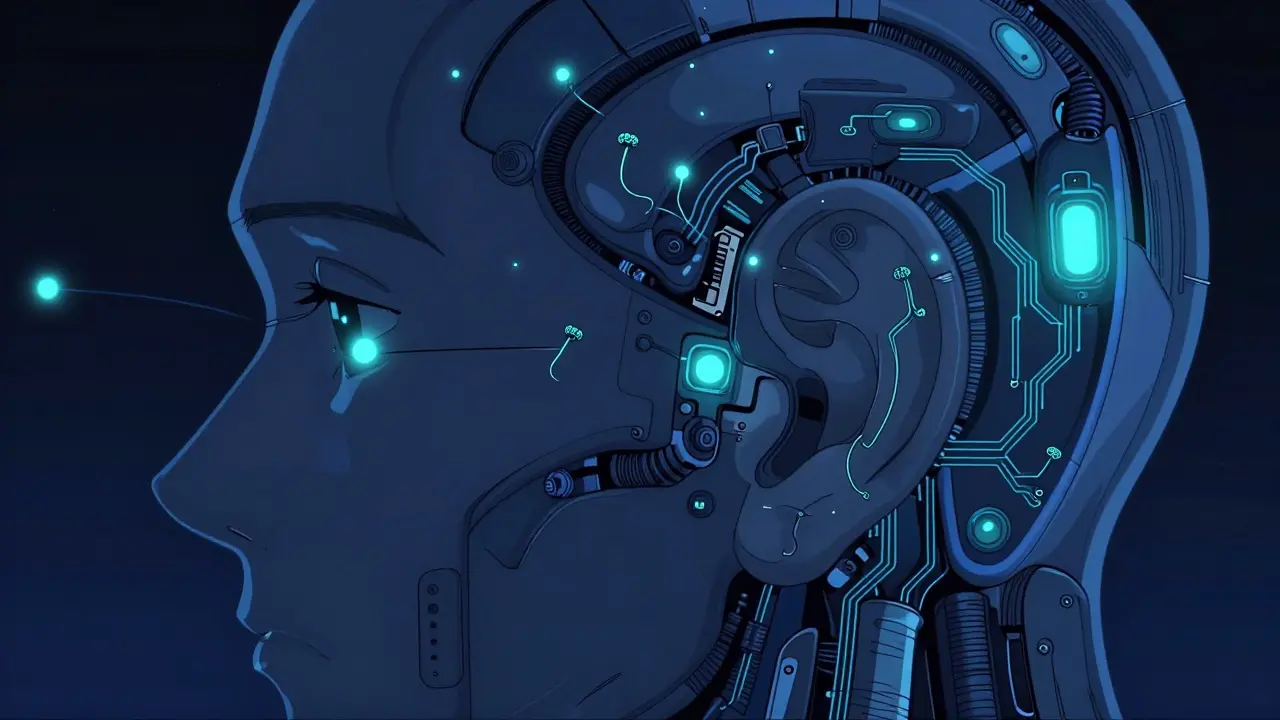
Choosing the Right Amplification Strategy
This is where Hearing Aids come in. These aren't the bulky, whistling devices from thirty years ago. Today's models are essentially tiny computers that use digital signal processing to selectively boost the frequencies you're missing while suppressing background noise. For many, a properly fitted pair can improve speech understanding by up to 60% in quiet rooms. Depending on your budget and your level of loss, you generally have two paths: prescription and over-the-counter (OTC).| Feature | Prescription Hearing Aids | OTC Hearing Aids |
|---|---|---|
| Typical Cost | $1,800 - $3,500 per ear | $200 - $1,000 per pair |
| Fitting Process | Professional Audiologist fitting | Self-fitted / App-guided |
| Technology | Custom channels, AI processing | Standard amplification |
| Best For | Severe loss, complex ear shapes | Mild to moderate loss |
Getting Used to the New Sound
Buying the device is only the first step. The real work is the "acclimation period." Your brain has likely spent years ignoring certain sounds, and suddenly, they're all back. This can be overwhelming. Most people find that they reach 80% adaptation within four to six weeks. If you're getting prescription aids, don't expect a "one-and-done" appointment. The American Academy of Audiology suggests a 30-to-60 day trial with follow-ups at one, two, and four weeks. This fine-tuning is critical because a poor fit is the number one reason people stop using their devices (accounting for 45% of drop-outs). Whether it's adjusting for wind noise or tweaking the volume for a specific environment, these tweaks make the difference between a device you love and one that gathers dust in a drawer.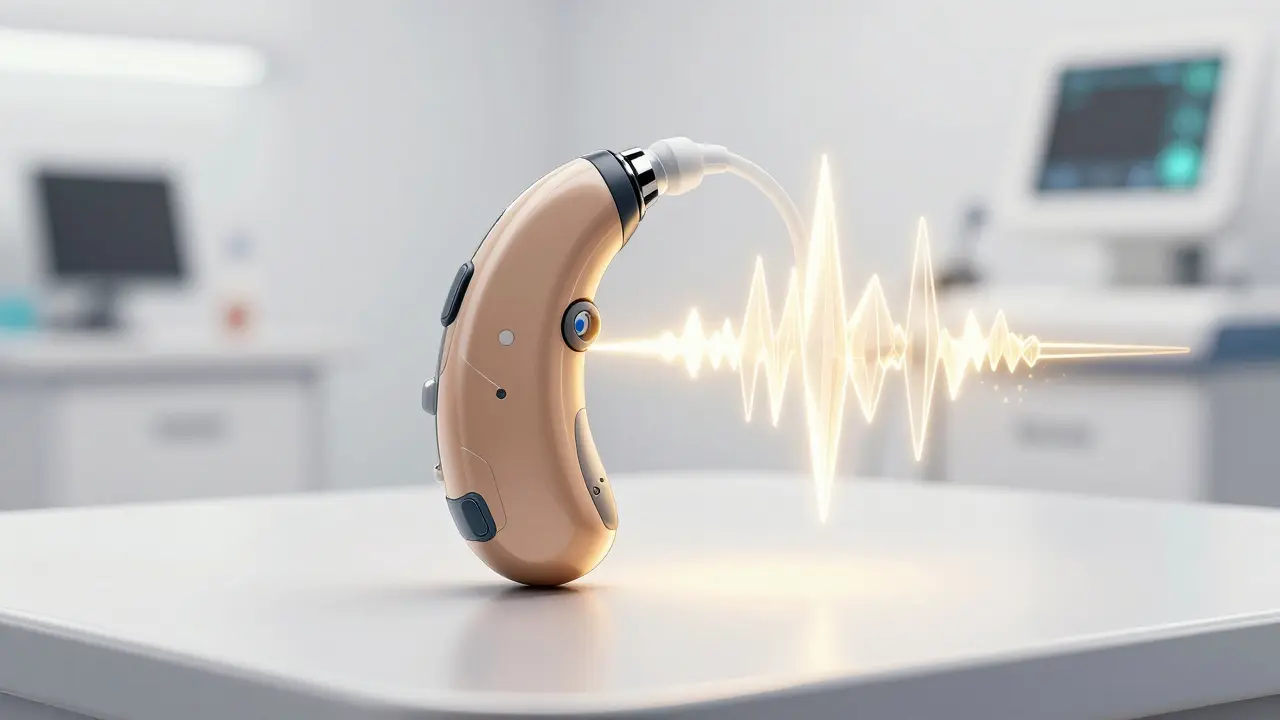
The Future of Hearing Health
We're moving into an era where hearing health is integrated into overall wellness. AI is now being used to reduce the "listening effort" required to understand speech in crowds, with some platforms reducing that mental strain by 20%. We're even seeing devices that track physical activity and social engagement, turning a hearing aid into a general health monitor. The biggest hurdle remains the treatment gap. Despite the risks of dementia and isolation, many primary care doctors don't routinely screen for hearing loss. The best move you can make is to be proactive. Starting amplification at age 60 rather than 70 could potentially reduce your dementia risk by 8-10% over the following decade. It's an investment in your brain just as much as it is in your ears.Can presbycusis be reversed?
Unfortunately, no. Because presbycusis involves the death of hair cells in the cochlea, and these cells cannot regenerate, the hearing loss is permanent. However, amplification through hearing aids or cochlear implants can effectively manage the symptoms and restore communication abilities.
How do I know if I need a prescription aid or an OTC one?
OTC aids are generally designed for adults with perceived mild-to-moderate hearing loss. If you have severe hearing loss, a complex ear canal shape, or other medical issues like chronic ear infections, a prescription aid fitted by an audiologist is necessary to ensure safety and effectiveness.
Will hearing aids make me feel like I'm underwater?
Some people experience a "plugged" feeling initially, especially with custom molds. This is why a gradual fitting process and professional fine-tuning are so important. Modern digital processing and venting options in the devices help minimize this sensation.
Do hearing aids have batteries that need changing?
Yes, but it depends on the model. Traditional zinc-air batteries usually last between 3 and 14 days. However, many modern devices are now rechargeable, typically offering 16 to 20 hours of use on a single charge.
At what age should I get my first hearing test?
The American Speech-Language-Hearing Association (ASHA) recommends a baseline hearing screening at age 50, followed by check-ups every two years. Early detection helps preserve neural pathways in the brain.
Jon Moss
April 23, 2026 AT 14:29Man, that part about the social isolation really hits home. It's a quiet struggle that a lot of people just don't get until they're in it.
Sharyl Foster
April 24, 2026 AT 13:17Imagine actually believing these a-list brands are the only way to go. I've seen generic models that do the exact same thing for a fraction of the price because the 'AI' they brag about is basically just a fancy volume knob for specific frequencies.
Edwin Perez
April 25, 2026 AT 15:58Just another way for big pharma and tech giants to keep us dependent on their batteries and subscriptions while they harvest our auditory data for some secret algorithm. Total scam.
Vijay AGarwal
April 27, 2026 AT 08:01The sheer tragedy of losing those hair cells is absolutely devastating! We are talking about the biological architecture of our very connection to the world crumbling piece by piece! It is a catastrophic failure of the human body that demands our utmost attention and immediate action before the silence becomes absolute!
Eric Mwiti
April 28, 2026 AT 02:12Oh sure, because spending four grand on a pair of plastic buds is definitely the 'investment' everyone is dreaming of in this economy.
Nila Sawyer
April 29, 2026 AT 00:05Oh my goodness, this is such a wonderful and enlightening guide for everyone to read! 🌟 It is just so heart-warming to know that technology is evolving to help our dear grandparents feel included in the family laughter again, and I honestly believe that if we all just encourage our loved ones to take that first step toward a hearing test, we can bring so much joy and vibrancy back into their lives which is just the most beautiful thing ever! ✨💖🌈
Andre Ojakäär
April 29, 2026 AT 01:02actually the cochlea physics is way more complex than this post lets on... the sheer horror of the degradation process is just wild... no one tells you how it feels when the world just turns into a muddy mess of sounds
Majestic Blue Band
April 30, 2026 AT 13:19I simply cannot trust these FDA approved OTC devices because you have to wonder who is actually paying for these regulations and why they are pushing us toward self-fitting apps that probably track every single word we hear in our private homes to sell to advertisers, and frankly, the idea that a little chip in your ear can stop dementia is just a convenient lie to get old people to spend their savings on plastic widgets that probably leak radiation into the brain anyway.
Brittney Prince
May 1, 2026 AT 04:35Whatever. Most of these 'modern solutions' are just overpriced paperweights that whistle the second you turn your head. Total waste of time.
Michael Deane
May 1, 2026 AT 10:38It's a damn shame that we're seeing this kind of decline in the workforce when American grit used to mean powering through any obstacle, but I guess these new-age gadgets are the only way some folks can keep up these days, although I bet the high-end stuff is made in some factory halfway across the world instead of being built right here in the USA where we actually know how to make things that last for more than a couple of years!
Karyn Tindall
May 2, 2026 AT 02:38The thought of missing a fire alarm is absolutely terrifying! I cannot even imagine the anxiety of not knowing if the world around you is screaming for you to run!
Michael Chukwuma
May 2, 2026 AT 05:21I totally agree with the point about the cognitive load. It really does make a difference when you aren't straining just to hear a basic sentence.
sachin singh
May 2, 2026 AT 08:10It is truly fascinating to learn about the correlation between systemic health issues like diabetes and sensory decline. The integration of AI to reduce listening effort is a most promising development for the elderly population.