 Mar, 3 2026
Why do so many patients stop taking their medication-even when it’s free or prescribed by their doctor? It’s not because they don’t understand the risks. It’s not because they’re lazy. It’s because human decision-making doesn’t work the way economists assumed it would. Behavioral economics reveals that when people choose drugs, they’re not cold calculators weighing costs and benefits. They’re emotional, biased, and easily influenced by how choices are presented. This isn’t theory-it’s why millions skip pills, why expensive drugs still dominate shelves, and why simple tweaks in how prescriptions are offered can save lives.
Why Patients Ignore the Best Deal
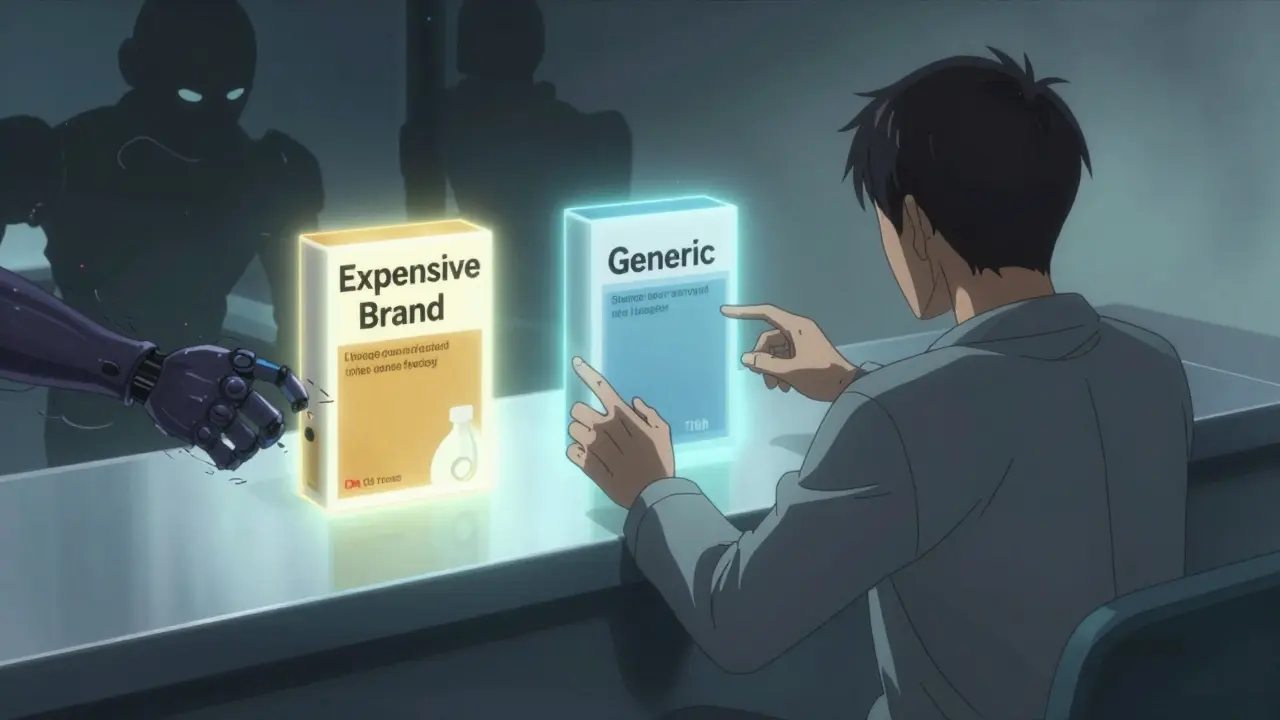
Traditional economic models assume people act rationally. If Drug A works just as well as Drug B but costs 30% less, logic says everyone switches. But real life doesn’t follow logic. A 2022 study found that 68% of patients stick with their current medication-even when a cheaper, equally effective alternative exists. Why? Loss aversion. People feel the pain of losing something they already have more than they feel the gain of saving money. Switching meds feels like risking what’s working. Even if the new drug has the same success rate, the mind says: "What if it doesn’t work?" That fear outweighs savings.Then there’s confirmation bias. Patients often believe more expensive drugs are better. A 2022 study by Cubanski & Newman showed prescription prices have risen 47% faster than general inflation since 2010-and patients didn’t just accept it, they expected it. Higher price = higher trust. One patient told researchers, "I don’t trust generics. They’re not the same." Even when clinical trials prove otherwise, the belief sticks.
The Hidden Forces Behind Non-Adherence
Only half of patients take their meds as prescribed. That’s not ignorance. It’s psychology. Present bias is a big culprit: the brain values immediate comfort over future health. If you’re not feeling sick today, taking a pill feels like a hassle with no visible reward. A 2023 analysis found 33% of prescriptions go completely unfilled-not because of cost, but because the patient didn’t feel like dealing with it that day.Complexity makes it worse. Each extra medication cuts adherence by 8.3%. Someone on five pills? Their odds of sticking to the plan drop sharply. Dosing frequency matters too. A study showed a near-perfect linear relationship: more daily doses = lower adherence (r=0.87). One pill once a day? Easy. Three pills at different times? Forgetful. The brain doesn’t like friction.
And then there’s mental health. Depression cuts adherence by 28.4%. Anxiety makes patients avoid anything that reminds them they’re sick. If your medication feels like a daily reminder of illness, it’s easier to skip it than to face the emotion it triggers.
How Small Changes Make Big Differences
Behavioral economics doesn’t just diagnose problems-it fixes them. And the fixes are simple. Take defaults. In hospitals, when standard prescription order sets automatically include a cheaper, equally effective drug during shortages, substitutions jump by 37.8%. The clinician can still choose the original, but the default nudges them toward better outcomes. No coercion. Just smarter design.Framing works too. In a 2021 trial, presenting a vaccine as "95% effective" increased uptake by 18.4 percentage points compared to "5% ineffective." The same fact, flipped. People respond to loss more than gain, but they also respond to how the message is wrapped.
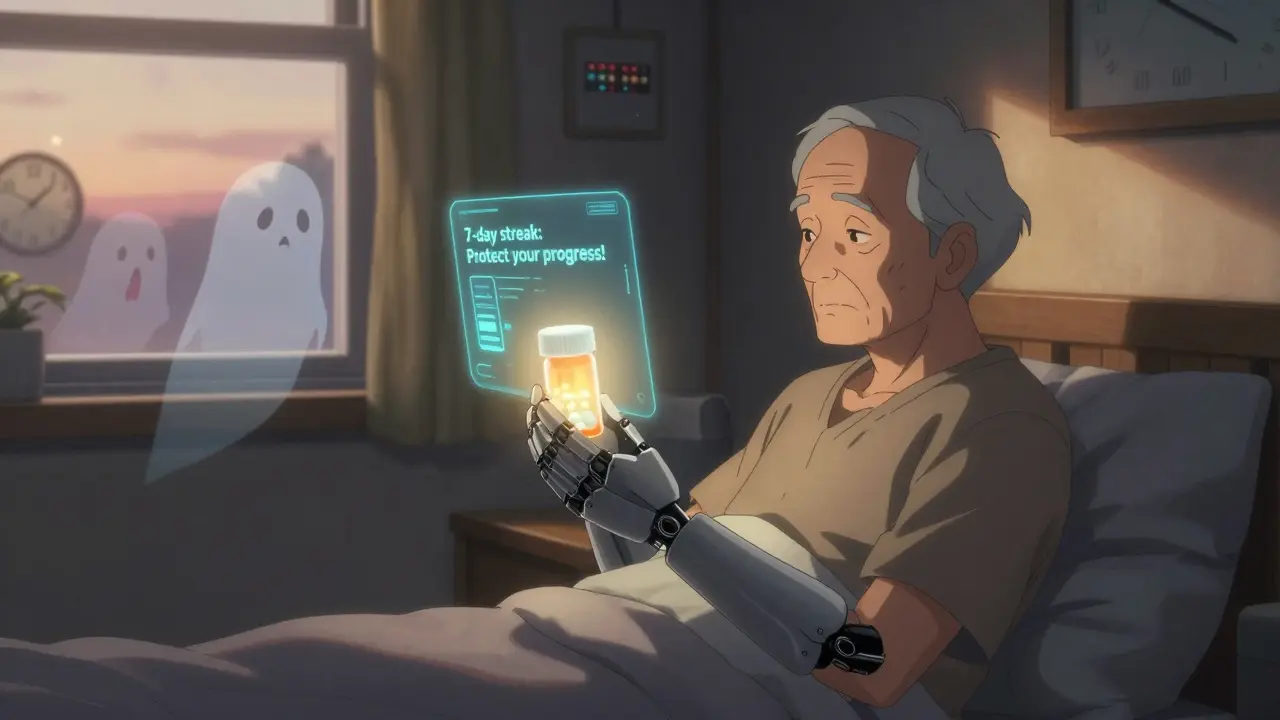
Even tiny digital nudges help. One 2021 study tested SMS reminders. "Take your medication" got a 6% improvement. "Don’t lose your streak!"-a message playing on loss aversion and habit-boosted adherence by 19.7%. It wasn’t the reminder. It was the framing. The patient wasn’t being told to do something. They were being asked to protect something they’d already built.
Why Education Alone Fails
Most clinics spend hours teaching patients about their meds. Brochures. Videos. One-on-one counseling. And yet, these programs typically improve adherence by only 5-8%. Behavioral interventions? They improve it by 20% or more. Why the gap?Because education assumes people will act on knowledge. Behavioral economics assumes people need help acting. You can tell someone smoking is bad. But if they’re stressed, tired, or anxious, they’ll still light up. Similarly, telling a diabetic to take insulin won’t fix the mental fatigue of managing a chronic condition. But a system that auto-sends refill reminders, ties adherence to a reward, or makes the pill bottle glow when it’s time? That works.
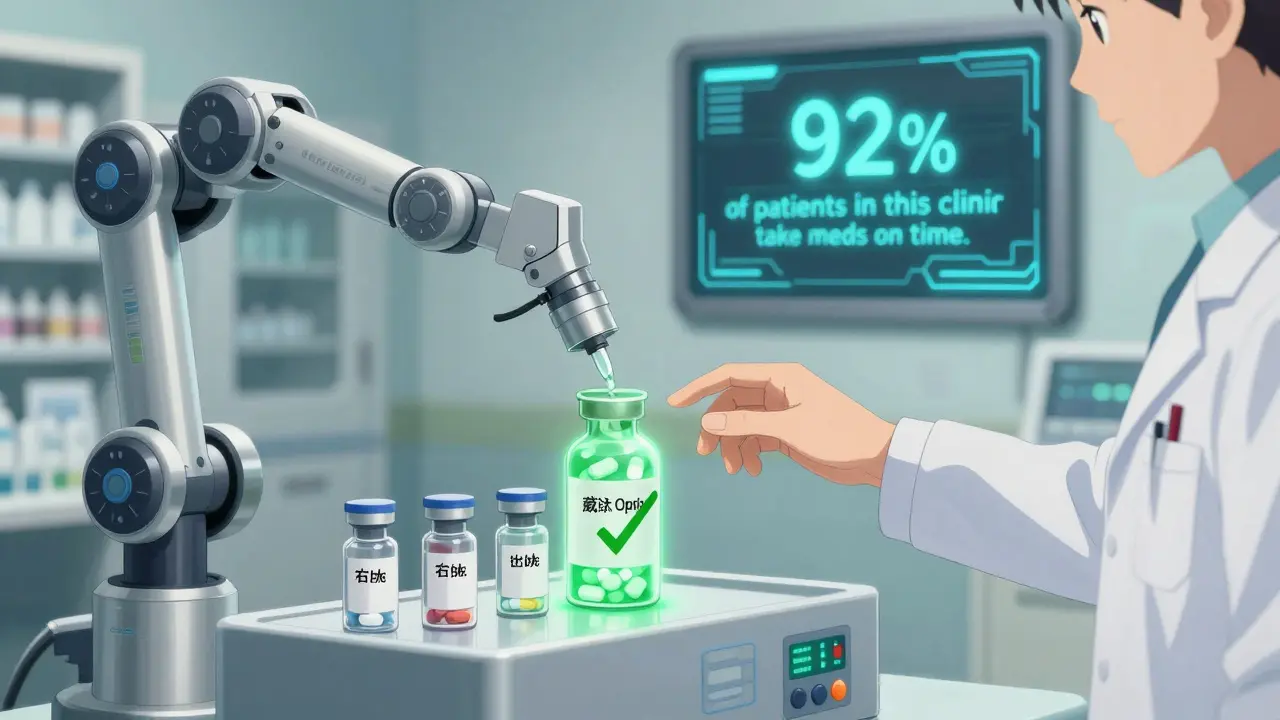
A 2022 review of 44 studies found behavioral interventions improved prescribing behavior in 92.3% of cases. Defaults led the pack, improving appropriate prescribing by 28.6% on average. Social norms (like showing patients how many others in their clinic take meds on time) helped by 21.4%. Framing helped by 17.2%. Education? Barely moved the needle.
Real-World Wins: From Diabetes to HIV
The most powerful examples come from real programs. In diabetes care, where daily dosing is routine, clinics that added loss-aversion incentives saw 14.3% higher adherence. One program let patients earn cash rebates for consistent refills. Those who missed a dose? No money. Those who stayed on track? $20 a month. The result? 23.8% higher persistence with statins, according to a 2021 NEJM study.In HIV treatment, clinics posted public adherence boards. Not names. Just percentages. "92% of patients in this clinic take meds on time." The social pressure worked. Adherence jumped 22.3%. People didn’t want to be the outlier.
Even in oncology-where treatment is brutal and side effects are severe-behavioral nudges help. One hospital changed its formulary to make biosimilars the default option. Before? 12% switching rate. After? 29.4%. Patients didn’t feel pressured. They just got the cheaper option first. And 89% of them stayed on it.
What Doesn’t Work-and Why
Not all behavioral tricks work everywhere. In complex, high-stress environments like cancer care, patients are overwhelmed. Nudges that rely on routine-like daily reminders-fail when the patient’s whole life is chaos. And in populations with severe mental illness, behavioral interventions lose 31.4% of their effectiveness. The brain is too overloaded to respond to subtle cues.Also, if there’s no good alternative? Nudges don’t help. If your only option is an expensive drug with no generic, you can’t nudge someone into switching. You need policy change, not psychology.
And then there’s ethics. Some doctors worry that nudging patients is manipulative. But as Dr. Aaron Kesselheim points out, these interventions preserve choice. No one is forced. They’re just guided toward better outcomes. And if a patient really wants the expensive drug? They can still get it.
The Business Side: Why Pharma Is Investing
Pharmaceutical companies aren’t doing this out of charity. They’re doing it because it works. McKinsey & Company found that drugmakers using behavioral economics in patient support programs saw 17.3% higher persistence and 22.8% lower discontinuation rates. That’s billions in saved revenue from repeat prescriptions.The market is exploding. From $187 million in 2018, the behavioral economics consulting market for healthcare hit $432 million in 2022. Pharma companies make up nearly 60% of clients. Why? Because adherence = revenue. A patient who stays on a drug for five years is worth far more than one who stops after three months.
And regulators are catching up. In 2023, CMS added behavioral economics to Medicare Part D quality metrics. Plans must now use at least two evidence-based behavioral interventions for high-risk patients. The FDA’s 2023 draft guidance now requires drug sponsors to evaluate how dosing frequency and administration routes affect patient decisions. This isn’t a trend. It’s becoming standard.
The Future: Personalized Nudges
The next frontier? Personalization. Machine learning is now being trained to predict which patients respond to which nudges. A 72-year-old with diabetes and mild depression? They might respond to financial incentives. A 28-year-old with anxiety? They might need simpler packaging and fewer daily reminders. Early 2023 pilot studies show personalized behavioral interventions can boost effectiveness by 42.3%.Smart pill bottles that light up, apps that track adherence and send gentle reminders, EHR systems that auto-suggest alternatives-all of this is becoming mainstream. The goal isn’t to control patients. It’s to reduce friction. To make the right choice the easiest one.
Behavioral economics isn’t about tricking people. It’s about designing systems that work with how humans actually think. And in healthcare, where adherence saves lives, that’s not just smart. It’s essential.
Why don’t patients switch to cheaper drugs even when they’re just as effective?
Patients often stick with expensive drugs due to loss aversion-the fear of losing something they already have-even if the cheaper alternative works just as well. Confirmation bias also plays a role: many believe higher price equals better quality. Studies show 68% of patients won’t switch even when a 30% cheaper option is available and clinically equivalent.
How much does medication non-adherence cost the healthcare system?
In the U.S., medication non-adherence costs an estimated $289 billion annually and contributes to about 125,000 avoidable deaths each year. These costs come from emergency room visits, hospitalizations, and worsening conditions that could have been prevented with consistent treatment.
Do behavioral interventions work better than patient education?
Yes. Traditional patient education typically improves adherence by only 5-8%. Behavioral interventions-like defaults, loss aversion nudges, and social norms-improve adherence by 20% or more. A 2022 review of 44 studies found behavioral approaches improved prescribing behavior in 92.3% of cases, while education barely moved the needle.
Can behavioral economics be used in mental health conditions?
It’s less effective. Patients with severe depression or anxiety show 31.4% lower response to behavioral interventions. Their cognitive load is too high, and negative beliefs about medication are stronger. Success requires combining behavioral nudges with mental health support-not replacing it.
Are behavioral nudges unethical?
No, if they preserve choice. Behavioral nudges don’t force anyone. They simply make the better option easier to choose. A doctor can still override a default. A patient can still refuse a rebate. Ethical nudges respect autonomy while reducing harmful inertia. As experts note, the alternative-doing nothing-is often worse.
What’s the most effective behavioral intervention for medication adherence?
Defaults. When the preferred, lower-cost drug is pre-selected in electronic prescribing systems, appropriate substitutions increase by 37.8%. This simple change requires no patient action and works across all demographics. It’s the most consistent, scalable, and impactful behavioral tool in clinical settings.
Why do some patients stop taking meds for asymptomatic conditions?
Because there’s no immediate feedback. If you don’t feel sick, taking a pill feels pointless. Research shows adherence rates are 32.7% lower for asymptomatic conditions like high blood pressure or high cholesterol. Behavioral nudges-like streak tracking or reminders tied to daily routines-help bridge this gap by making adherence feel meaningful.
Behavioral economics isn’t magic. But it’s real. And in a system where lives hang on whether someone remembers to take a pill, understanding why they don’t-and how to gently guide them-is no longer optional. It’s the next frontier in healthcare.
Milad Jawabra
March 3, 2026 AT 12:50Look, I've seen this in my clinic every damn day. Patients don't stop meds because they're dumb-they're tired. They're overwhelmed. They're scared. And yeah, loss aversion? Totally real. I had a guy on statins for 8 years refuse to switch to a generic because he 'felt' the brand-name worked better. We didn't argue. We just made the generic the default in the EHR. He got it. Didn't even notice. That's the magic. No lecture. No guilt. Just a smarter system.
And don't get me started on those 'take your pill' texts. They're useless. But 'Don't break your 30-day streak'? That hits different. People don't want to lose momentum. They want to feel like they're winning. We're not manipulating. We're designing for humans. Finally.
marjorie arsenault
March 5, 2026 AT 11:15I work in primary care and this article nailed it. We spend so much time educating patients, but if their brain is in survival mode-depression, anxiety, just plain exhausted-knowledge doesn't stick. What works? Simplicity. One pill. One time a day. A pillbox that lights up. A text that says, 'You got this.' Not 'You must take your meds.' We're not teachers. We're architects of ease. And honestly? The $20/month incentive for diabetes patients? Genius. Real. Human. Not charity. Just smart.
Deborah Dennis
March 6, 2026 AT 19:18Shivam Pawa
March 8, 2026 AT 04:41Donna Zurick
March 9, 2026 AT 08:36Tobias Mösl
March 9, 2026 AT 14:12Justin Rodriguez
March 10, 2026 AT 23:00Real-world data shows defaults work because they reduce cognitive load. That’s not manipulation-it’s cognitive ergonomics. Humans have limited executive function. Adding friction-like requiring active choice for a generic-creates decision fatigue. Defaults don’t remove autonomy. They preserve it by preventing burnout. The 37.8% increase isn’t magic. It’s math. And yes, it’s scalable. A single EHR tweak can impact millions. That’s not sinister. It’s responsible design.
Also, the HIV adherence board? Social norms work because humans are tribal. We want to belong. That’s biology, not brainwashing. And if someone wants the expensive drug? They still can. The system just doesn’t make them fight for the better option.
Raman Kapri
March 10, 2026 AT 23:25