 Aug, 4 2026
That red, spreading patch on your leg isn't just a bug bite. That crusty yellow sore on your child's face isn't just dry skin. These are likely bacterial skin infections, which occur when bacteria like Staphylococcus aureus or Streptococcus pyogenes breach the skin barrier. Millions of people deal with these conditions every year, from toddlers in daycare to adults with chronic health issues. The good news? Most are treatable. The bad news? Getting the treatment wrong can lead to serious complications.
We often lump all skin infections together, but they behave very differently. Impetigo is a superficial infection that stays on the surface of the skin, while Cellulitis digs deeper into the tissues beneath. Knowing which one you have dictates whether you need a simple cream or strong oral antibiotics. Let's break down exactly what these infections are, how to spot them, and why choosing the right antibiotic matters more than ever in 2026.
Understanding Impetigo: The Contagious Surface Infection
Impetigo, often called "school sores," is highly contagious and primarily affects children aged 2 to 5 years. It stays confined to the epidermis, the outermost layer of skin. You’ll typically see it around the nose and mouth, though it can appear anywhere. There are two main types: nonbullous and bullous.
The nonbullous form accounts for about 70% of cases. It starts as small blisters or pustules that burst quickly. Within a few days, they turn into erosions covered by a distinctive honey-yellow crust. This crust is the hallmark sign. If you see this, think impetigo. The bullous form is less common and mostly affects infants under 2. It creates larger, thin-walled blisters (2-5 cm) that rupture to leave raw, red areas with a ring-like border.
- Cause: Mostly Staphylococcus aureus (80-90% of cases), sometimes with Streptococcus pyogenes.
- Transmission: Direct contact with sores or sharing towels/clothing.
- Contagious Period: Highly contagious until 24 hours after starting antibiotics.
- Healing Time: Usually clears up within 10-14 days with treatment.
A critical point: Impetigo is not just a nuisance; it can lead to post-streptococcal acute glomerulonephritis (AGN) in 1-5% of cases. This is a kidney inflammation that happens after the infection. While rare, it’s a reason to treat promptly rather than waiting for it to "go away on its own."
Understanding Cellulitis: The Deep Tissue Threat
If impetigo is a surface issue, Cellulitis is a deep tissue emergency. It involves the dermis and subcutaneous fat. Unlike impetigo, cellulitis is generally not contagious because it usually arises from bacteria already living on your skin entering through a break-like a cut, insect bite, or crack between toes from athlete’s foot.
You’ll recognize cellulitis by its lack of clear borders. It presents as a spreading area of redness (erythema), warmth, tenderness, and swelling. About 70% of adult cases affect the lower legs. It’s often unilateral, meaning it only happens on one side of the body. If you draw a line around the redness, it will likely expand beyond that line within hours if untreated.
- Cause: Primarily Streptococcus pyogenes (60-80%), followed by Staphylococcus aureus (20-30%).
- Risk Factors: Diabetes, obesity, chronic venous insufficiency, and recent surgery or trauma.
- Complications: Bacteremia (blood poisoning), necrotizing fasciitis (flesh-eating disease), and sepsis.
- Urgency: Requires immediate medical attention to prevent systemic spread.
Cellulitis can progress rapidly. Fever, chills, and expanding redness are red flags. In severe cases, hospitalization for IV antibiotics is necessary. Don’t wait. If the redness is spreading fast or you feel systemically ill, seek care immediately.
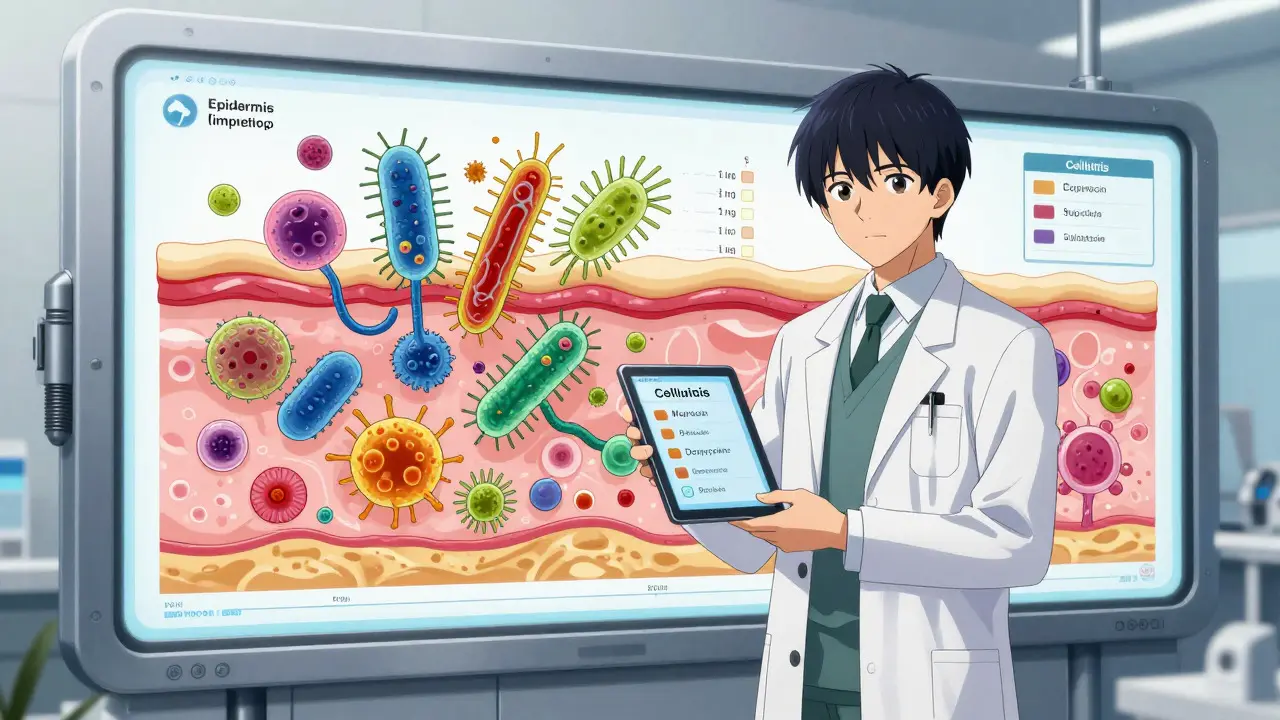
Why Antibiotic Choice Matters More Than Ever
Historically, penicillin was the go-to drug for skin infections. Today, it’s largely useless against the most common culprit, Staphylococcus aureus. Nearly all contemporary strains produce an enzyme called penicillinase, which destroys penicillin. Studies show traditional penicillin fails in about 68% of cases. This shift has forced doctors to change their prescribing habits.
For impetigo, topical antibiotics are often enough. Mupirocin (Bactroban) applied three times daily for five days cures about 92% of localized cases. For more extensive impetigo, oral antibiotics like cephalexin are used. However, resistance is creeping in. Some staph strains are now resistant to mupirocin too, making accurate diagnosis crucial.
Cellulitis almost always requires systemic antibiotics because the infection is deep. Mild cases might be treated with oral cephalexin or dicloxacillin. But here’s the kicker: Methicillin-resistant Staphylococcus aureus (MRSA) is a growing threat. In the US, 50% of community-acquired staph skin infections involve MRSA. Standard beta-lactam antibiotics don’t work against MRSA. Doctors now often prescribe doxycycline or trimethoprim-sulfamethoxazole as first-line treatments for suspected MRSA skin infections.
| Feature | Impetigo | Cellulitis |
|---|---|---|
| Primary Treatment | Topical Mupirocin or Oral Cephalexin | Oral Cephalexin/Dicloxacillin or IV Cefazolin |
| MRSA Coverage Needed? | Only if widespread/resistant | Often yes (use Doxycycline/Bactrim) |
| Duration | 5-7 days | 5-14 days (longer if severe) |
| Hospitalization Rate | Rare | Common for severe cases |
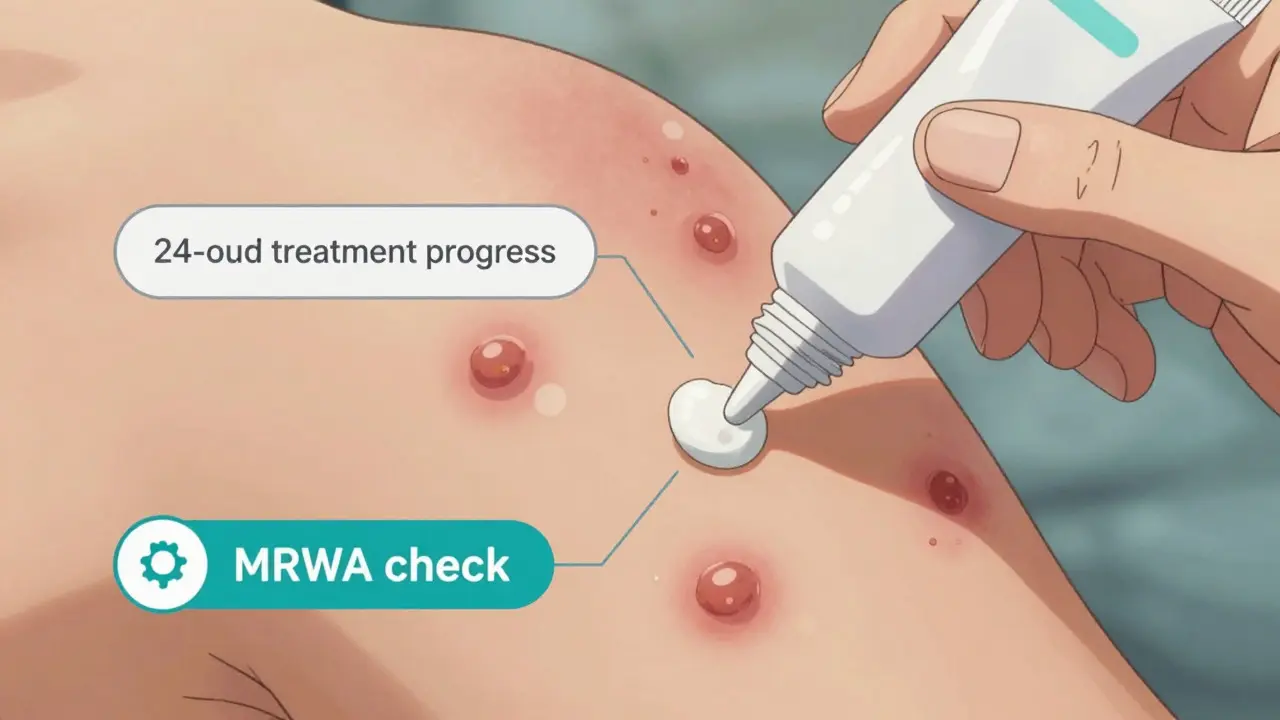
Diagnosis: What to Look For and When to Worry
Doctors usually diagnose impetigo clinically. If it looks like a duck and quacks like a duck, it’s impetigo. A bacterial culture is rarely needed unless the infection doesn’t respond to treatment or there’s an outbreak in a school/daycare. For cellulitis, diagnosis is trickier because it mimics other conditions like deep vein thrombosis or stasis dermatitis. Doctors look for the classic signs: heat, pain, swelling, and redness without a clear edge.
If you’re treating a child at home, keep an eye on their temperature. A fever over 101°F (38.3°C) suggests the infection might be spreading beyond the skin. Also, watch for rapid expansion of the red area. If the redness spreads more than 2 cm in a day, call your doctor. For cellulitis, mark the border of the redness with a pen. Check it every few hours. If it moves past the line, you need stronger intervention.

Prevention and Hygiene Practices
Prevention is simpler than treatment. Keep skin clean and intact. Wash minor cuts and scrapes with soap and water immediately. Apply an antiseptic solution if available. For impetigo outbreaks in households or schools, avoid sharing towels, clothing, or bedding. Daily washing with antibacterial soap can help reduce transmission during outbreaks.
For cellulitis prevention, focus on foot care, especially if you have diabetes or poor circulation. Treat athlete’s foot promptly, as cracks between toes are common entry points for bacteria. Wear shoes in public showers. Keep nails trimmed to avoid accidental scratches. If you have chronic skin conditions like eczema, moisturize regularly to maintain the skin barrier.
Emerging Trends in 2026
The landscape of skin infection treatment is shifting due to antibiotic resistance. The World Health Organization reports rising resistance to erythromycin and clindamycin. Newer topical options like retapamulin (Altabax) are showing promise, with 94% efficacy in recent trials. Researchers are also developing rapid point-of-care diagnostics that can identify bacteria and resistance patterns in 30 minutes. This could drastically reduce unnecessary antibiotic use by targeting therapy precisely.
Antimicrobial stewardship is a major focus for dermatologists in 2026. The goal is to reduce unnecessary prescriptions for mild skin infections by 30%. This means using topical creams when possible and reserving strong oral antibiotics for confirmed bacterial infections. Patients should expect their doctors to ask detailed questions about their symptoms and history before prescribing.
How long does impetigo last without treatment?
Without treatment, impetigo can last 2-3 weeks and may spread to other parts of the body or other people. With appropriate antibiotic treatment, it usually clears up within 7-10 days.
Is cellulitis an emergency?
Yes, cellulitis can become life-threatening if it spreads to the blood (sepsis) or deep tissues (necrotizing fasciitis). Seek immediate medical attention if you have fever, chills, rapid spreading redness, or severe pain.
Can I swim with impetigo?
It is best to avoid swimming pools and communal baths until 24 hours after starting antibiotic treatment. Chlorine doesn't kill the bacteria instantly, and you risk infecting others.
What causes recurrent cellulitis?
Recurrent cellulitis is often linked to underlying conditions like lymphedema, chronic venous insufficiency, diabetes, or persistent skin breaks like athlete's foot. Treating the underlying cause is key to prevention.
Are natural remedies effective for bacterial skin infections?
Natural remedies like honey or tea tree oil may help with minor irritation but are not proven to cure bacterial infections like impetigo or cellulitis. Delaying proper antibiotic treatment can lead to serious complications.