 Jul, 16 2026
You pop two ibuprofen for a headache. You take acetaminophen for back pain after work. It feels harmless because you bought the bottle at the supermarket, not the pharmacy counter. But what if that routine is silently eroding your kidneys? This isn't scaremongering; it is a medical reality known as analgesic nephropathy, which is a form of chronic kidney disease caused by long-term, excessive use of pain medications. For decades, doctors have watched patients lose their kidney function to over-the-counter pills they believed were safe.
The term itself sounds technical, but the mechanism is straightforward. Your kidneys filter blood using tiny vessels called glomeruli. They need healthy blood flow to do this job. When you take certain painkillers, specifically nonsteroidal anti-inflammatory drugs (NSAIDs) or high doses of acetaminophen, you interfere with that blood flow. Over time, this reduced circulation causes oxidative damage, leading to scarring and eventually, tissue death in specific parts of the kidney. The result is a condition that was once responsible for up to 10% of all end-stage kidney disease cases in countries like Australia.
How Painkillers Damage Kidneys: The Mechanism
To understand why these drugs are risky, you have to look at how they work. NSAIDs, such as ibuprofen, naproxen, and aspirin, block enzymes called cyclooxygenases (COX). These enzymes produce prostaglandins, chemicals that cause inflammation and pain. However, prostaglandins also keep the blood vessels in your kidneys dilated (open). When you block them, those vessels constrict. Blood flow drops. In a healthy person taking an occasional pill, this doesn't matter much. But if you take them daily for years, the constant lack of oxygen and nutrients damages the kidney tissue.
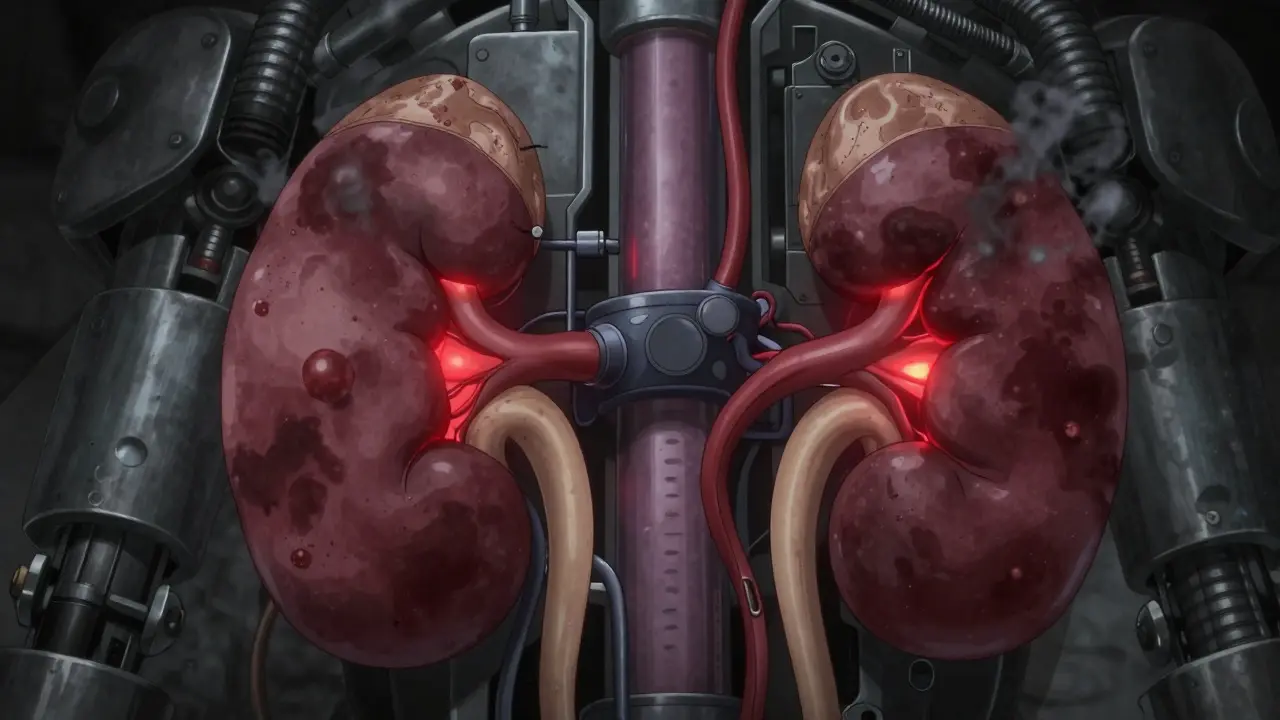
The damage usually starts in the renal papillae-the cone-shaped tips of the kidney's collecting ducts. These areas are already prone to low oxygen levels. With reduced blood flow from NSAIDs, they undergo necrosis (tissue death). This process is called renal papillary necrosis, which is the death of kidney tissue due to ischemia, often caused by analgesic overuse. As the tissue dies, it can slough off, causing bleeding, obstruction, and infection. Eventually, the surrounding tissue becomes inflamed and scarred, leading to chronic interstitial nephritis. This scarring is irreversible. Once the filtering units (nephrons) are gone, they do not grow back.
Acetaminophen works differently-it does not reduce blood flow significantly-but in high doses, it depletes antioxidants in the kidney cells. This leads to oxidative stress and cell death. While historically considered "safer" for the stomach, its impact on kidneys when abused is severe. The key takeaway here is that no oral painkiller is truly neutral for your kidneys if used chronically and excessively.
Who Is at Risk? Identifying the Danger Zones
You might think this only affects people who abuse drugs, but the data tells a different story. Analgesic nephropathy disproportionately affects women between the ages of 35 and 55. Why? Because women are more likely to suffer from chronic conditions like migraines, menstrual pain, and fibromyalgia, leading to regular, long-term use of OTC pain relievers. Studies show that women account for roughly 72% of diagnosed cases.
Age is another major factor. Most patients are older than 45. This is because the damage is cumulative. It takes years of consistent exposure to reach the threshold where kidney function declines noticeably. If you have been taking painkillers since your twenties, your forties might be when the problems surface.
Certain health conditions make you even more vulnerable. If you have hypertension (high blood pressure), diabetes, or existing mild chronic kidney disease (CKD), your kidneys are already under stress. Adding NSAIDs to the mix accelerates the decline. Even standard therapeutic doses can reduce renal blood flow by 25-40%. For someone with compromised kidneys, that drop is catastrophic.
| Risk Factor | Why It Matters | Mitigation Strategy |
|---|---|---|
| Female Gender | Hormonal cycles and higher prevalence of chronic pain conditions lead to higher usage rates. | Track monthly pill counts; consult a doctor for preventive strategies. |
| Age > 45 | Kidney function naturally declines with age; cumulative drug exposure adds insult to injury. | Annual kidney function tests (eGFR and creatinine). |
| Hypertension/Diabetes | These conditions already strain kidney filtration systems. | Avoid NSAIDs entirely; use acetaminophen sparingly or topical alternatives. |
| Combination Products | Pills with caffeine/codeine mask pain, leading to higher consumption without realizing it. | Stick to single-ingredient medications when possible. |
Symptoms: The Silent Progression
The most dangerous aspect of analgesic nephropathy is that it is silent in the early stages. You will not feel your kidneys shrinking. You will not feel the papillae dying. By the time you notice symptoms, significant damage has likely occurred.
In the initial phase, the only sign might be slightly elevated creatinine levels on a routine blood test. Creatinine is a waste product from muscle wear and tear. Healthy kidneys filter it out efficiently. If levels rise, it means filtration is slowing down. Many people ignore this because they feel fine.
As the disease progresses, you may develop:
- Hypertension: Damaged kidneys struggle to regulate fluid balance, raising blood pressure.
- Anemia: Kidneys produce erythropoietin, a hormone that tells your body to make red blood cells. Failing kidneys produce less, leading to fatigue and weakness.
- Nocturia: The loss of concentrating ability means you urinate frequently at night.
- Flank Pain: If a necrotic papilla breaks loose, it can block the ureter, causing sharp pain in the side or back.
- Hematuria: Blood in the urine, visible or microscopic, indicating tissue damage.
If you experience unexplained fatigue, swelling in your legs, or changes in urination patterns while regularly taking painkillers, do not assume it is just aging or stress. Get your kidney function checked.

Diagnosis and Detection
Diagnosing analgesic nephropathy requires connecting the dots between your medication history and clinical findings. Doctors look for a specific pattern: chronic kidney injury with minimal protein in the urine (non-nephrotic proteinuria) and a bland urinary sediment (no heavy casts or cells). Sterile pyuria (white blood cells in urine without infection) is also a common clue.
Imaging plays a crucial role. A noncontrast CT scan is the gold standard. It can reveal calcifications in the renal papillae with high sensitivity (87%) and specificity (97%). These calcifications are scars left behind by the dead tissue. Ultrasound may show shrunken kidneys with irregular surfaces, but it is less precise for early detection.
Newer diagnostic tools are emerging. In 2023, the FDA approved point-of-care urine tests like NephroCheck, which detect biomarkers of acute kidney injury. While primarily designed for hospital settings, similar technology could soon allow for earlier detection of subclinical damage in primary care.
Safer Pain Control Strategies
If you have chronic pain, stopping medication abruptly is not the answer. Unmanaged pain leads to sleep deprivation, depression, and increased stress, which also harm your health. The goal is to manage pain without destroying your kidneys. Here is a stepwise approach recommended by rheumatologists and nephrologists.
1. Prioritize Non-Pharmacological Interventions
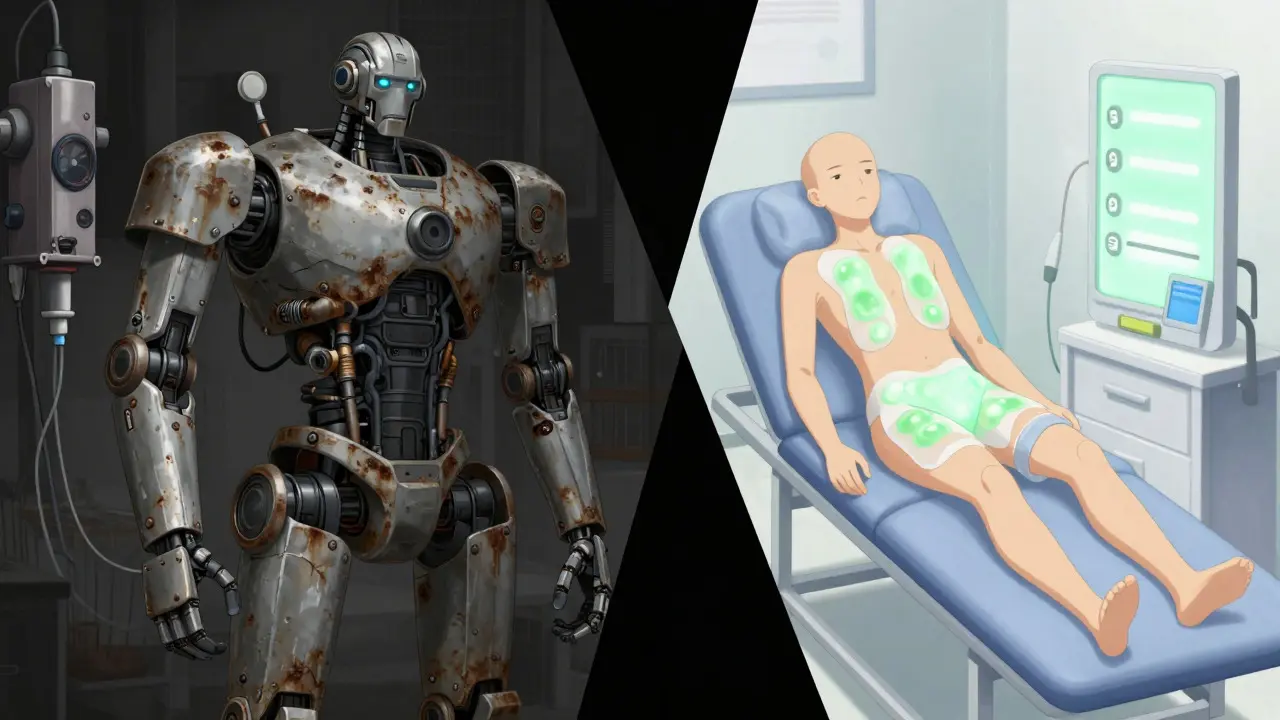
Before reaching for a pill, try physical therapies. Physical therapy can strengthen muscles supporting painful joints. Cognitive behavioral therapy (CBT) helps change how your brain processes pain signals. Heat therapy devices, such as ThermaCare wraps, have been shown to reduce osteoarthritis pain by 40-60% without any systemic drug exposure. Acupuncture and massage therapy also offer relief for many patients.
2. Use Topical NSAIDs
If you need an NSAID, apply it topically. Gels and patches containing diclofenac or ibuprofen deliver the drug directly to the site of pain. A 2021 trial in *Arthritis & Rheumatology* found that topical NSAIDs provide equivalent pain relief to oral versions for joint pain but reduce systemic exposure by 90%. This means far less drug reaches your kidneys.
3. Follow Strict Dosing Limits
If you must take oral medications, adhere to these limits:
- NSAIDs: No more than 1,200 mg of ibuprofen or 750 mg of naproxen per day. Never take them daily for more than 10 days without a doctor's supervision.
- Acetaminophen: Do not exceed 3,000 mg per day. Lower limits (2,000 mg) apply if you drink alcohol or have liver issues.
- Frequency: Limit NSAID use to 3 days per week maximum unless prescribed otherwise.
4. Monitor Regularly
If you require chronic pain management, you need monitoring. Check your serum creatinine and eGFR every 6 months. If you have high-risk factors, check monthly during the first year of therapy. Early detection allows you to switch treatments before permanent damage occurs.
5. Explore Alternative Medications
For nerve pain, medications like gabapentin or pregabalin do not carry the same renal risks as NSAIDs, though they require dose adjustments in CKD. For migraines, CGRP inhibitors (prescription-only) offer effective relief without renal toxicity. While expensive (~$650/month), they may be cost-effective compared to dialysis ($90,000/year).
The Economic and Personal Cost
Analgesic nephropathy is not just a personal health issue; it is a massive economic burden. In the United States alone, it contributes to 15,000-20,000 new CKD cases annually. The cost of managing early-stage disease is around $18,500 per patient per year. Once dialysis is required, that jumps to $90,000 annually. This money could be better spent on preventive education and safer pain management resources.
On a personal level, the loss of kidney function is life-altering. Dialysis requires three sessions a week, each lasting four hours. It restricts diet, travel, and employment. Transplantation offers hope, but waiting lists are long. Preventing this outcome is vastly superior to treating it.
Conclusion: Take Control of Your Pain Management
Your kidneys are resilient, but they are not invincible. The convenience of over-the-counter painkillers comes with a hidden price tag. By understanding the risks of analgesic nephropathy, you can make informed choices. Talk to your doctor about your pain management plan. Ask for kidney function tests. Explore non-drug therapies. Protect your kidneys today so you don't pay for it tomorrow.
Is one pill of ibuprofen bad for my kidneys?
No, occasional use of ibuprofen is generally safe for healthy individuals. The risk arises from chronic, daily use over months or years. Single doses do not cause permanent damage unless you have pre-existing severe kidney disease.
Can I reverse analgesic nephropathy?
Once kidney tissue is scarred (fibrosis), it cannot be reversed. However, stopping the offending medications early can stabilize kidney function and prevent further decline. About 73% of patients who stop analgesics upon early diagnosis maintain stable function for five years.
Which painkiller is safest for kidneys?
Acetaminophen is traditionally considered safer than NSAIDs for kidney health, but it still poses risks at high doses (>3,000 mg/day) over long periods. Topical NSAIDs are the safest option for localized pain as they minimize systemic absorption.
What are the early signs of kidney damage from painkillers?
Early signs are often subtle: slight increases in blood pressure, fatigue, or frequent nighttime urination. The most reliable indicator is an elevated creatinine level or decreased eGFR on a blood test, often detected before symptoms appear.
Do combination painkillers pose a higher risk?
Yes, significantly. Combination products containing caffeine or codeine mask pain effectively, leading users to take more pills than necessary. Studies show these formulations are 3.7 times more likely to cause nephropathy than single-ingredient drugs.
How often should I get my kidney function checked if I take painkillers regularly?
If you take NSAIDs or acetaminophen daily, you should have your serum creatinine and eGFR checked every 6 months. If you have additional risk factors like hypertension or diabetes, monthly monitoring is recommended during the first year of therapy.